Blog · Storage
Can You Freeze Rosemary? Methods, Storage Time and What the Research Shows
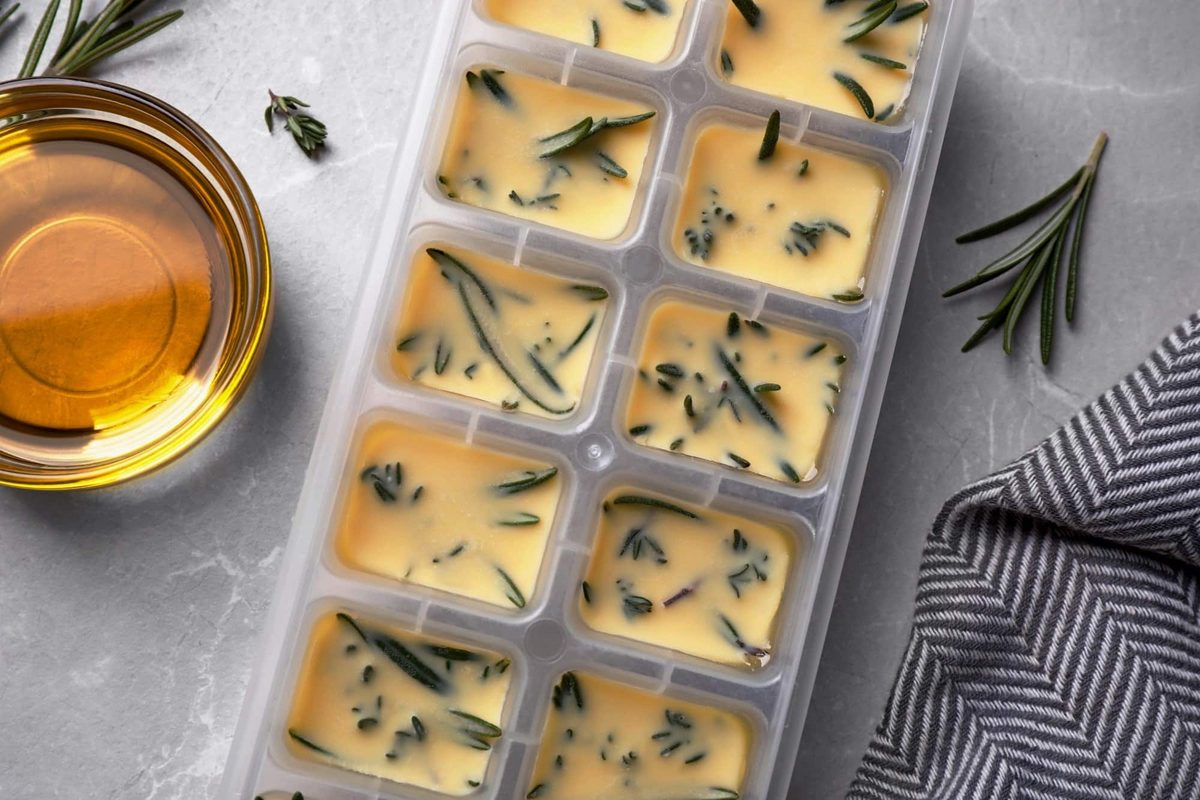
Yes, rosemary freezes well, and it is one of the herbs the sources single out for it. Ohio State University Extension describes freezing as the method used for hearty herbs such as thyme and rosemary,1 and America’s Test Kitchen says sturdy herbs such as rosemary, sage and thyme work best for herb ice cubes.2 A small Italian study found that frozen rosemary kept its essential oil better over nine months than air-dried or freeze-dried rosemary.3
Like every frozen herb, rosemary softens when it thaws, so it is for cooking, not garnishing.1 For the best quality, Ohio State advises using frozen herbs within 3 to 6 months.1
At a glance
| Question | Short answer |
|---|---|
| Can it be frozen? | Yes. Penn State notes rosemary can even be frozen on the stem.4 |
| Best methods | Whole sprigs on a tray, then bagged; or chopped leaves in ice cube trays under water or oil.452 |
| Freezer temperature | 0°F or below.15 |
| How long | For best quality, 3 to 6 months (Ohio State). Other figures below. |
| Thaw first? | No. Add it frozen to cooked dishes.4 |
| Oil cubes | Keep them frozen; once thawed, refrigerate and use within 4 days.6 |
How to freeze rosemary
Prepare it. Rinse the sprigs, then pat or spin them dry.4 Freeze rosemary at its peak freshness.1
Method 1: whole sprigs, tray-frozen. Rosemary can be frozen on the stem.4 Spread the well-drained sprigs in a single layer on a tray and freeze until firm, then transfer them to labeled bags or containers, pressing out as much air as possible before sealing.5 Freezing them spread out first keeps the sprigs from freezing into one clump, so you can take out a single sprig (editorial). Once frozen, the needles strip easily from the stem; that is common practice, not a sourced claim.
Method 2: ice cubes. America’s Test Kitchen chops the herbs, puts 2 tablespoons in each well of an ice cube tray, covers them with water or oil, and freezes them, then moves the cubes to a zipper-lock freezer bag.2 ATK suggests oil cubes when they will start a sauté and water cubes for pan sauces, soups and stews.2 Penn State’s caution is that herbs frozen in cubes cook unevenly as the cube melts.4
Method 3: in oil. Penn State’s ratio for herbs in oil is about ⅓ to ½ cup of oil to 2 cups of chopped herbs, frozen in cube trays, small jars, or flat in a zip-top bag.4 Oil should only be added to herbs that will be frozen.4
Label and date the bags.41 Rosemary is strongly scented; Penn State suggests double-wrapping strong-smelling herbs in foil, or using airtight glass jars, so the odor does not spread to other food.4
How long frozen rosemary keeps
| Source | What it covers | Figure |
|---|---|---|
| Ohio State University Extension1 | Frozen herbs, best quality | Use within 3 to 6 months; may be safe after a year or longer |
| Usai et al., 20093 | Rosemary frozen and held at -18°C, tested every 3 months | Smallest essential oil loss of the three methods over 9 months; no shelf-life figure |
| Colorado State University Extension5 | Frozen vegetables in general, at 0°F or below | High quality for 12 to 18 months; no figure given for herbs |
| USDA freezing fact sheet7 | Frozen food in general | Safe almost indefinitely; storage times are for quality only |
Figures such as “good for about a year, best within three months” circulate for frozen rosemary, but we could not trace either number to a named source. These sources don’t contradict each other so much as answer different questions: Ohio State gives a quality window for herbs, Colorado State’s figure is for vegetables, and the USDA fact sheet speaks to safety.
What the research shows
The only study we found that froze rosemary and followed it over time comes from Sardinia. Researchers split fresh rosemary and thyme into batches that were air-dried, frozen, or freeze-dried, and stored them for nine months, analyzing the volatile oil every three months. The frozen herbs were packed in polyethylene bags and held in the dark at -18°C.3
- For rosemary, essential oil yield fell most in the freeze-dried samples, and the frozen samples showed the least reduction.3
- The authors concluded that freezing was the best way to stabilize both herbs, and called their results preliminary.3
The paper is a short conference-style report: it names the compounds that changed but gives no yield figures, and it did not test flavor with tasters. It supports freezing as the method that best holds rosemary’s oil; it does not tell you how long frozen rosemary stays good.
Freezing still changes the leaf. The water in the leaves expands as it freezes, which is why thawed herbs are limp.4 Herbs frozen in oil keep their color better than herbs frozen on their own.4
Garden hardiness is a separate question. Illinois Extension calls ‘Arp’ one of the more cold-tolerant rosemary varieties, hardy perhaps to zone 6.8 That describes a living plant overwintering outdoors. It says nothing about how cut sprigs fare in a freezer, which is covered above (editorial).
Food safety
Rosemary in oil. Low-acid foods such as herbs, stored in oil, sit in an oxygen-free environment. Oregon State explains that such mixtures must be stored correctly to prevent botulism, caused by Clostridium botulinum, a bacterium found in soil, water and air.6 Its rule for homemade herbs in oil is to refrigerate and use within 4 days, or freeze for long-term storage.69 A 2011 review concluded that freezing is the safest recommendation for home-prepared herbs in oil.9 Do not store herbs in oil at room temperature.4
ATK notes that oil cubes can be thawed and drizzled over food.2 That is fine if you thaw them in the refrigerator and use them within the 4-day limit;6 don’t leave a thawed cube of rosemary oil out on the counter.
Thawing. Usually you won’t need to: Penn State says not to thaw herbs before adding them to cooked dishes.4 If you do thaw rosemary, the USDA fact sheet names three safe ways: in the refrigerator, in cold water, or in the microwave.7 Warm water is not among them. Freezing at 0°F inactivates bacteria, yeasts and molds, but once thawed they can become active again,7 so handle thawed rosemary as fresh food.1
Refreezing. Food thawed in the refrigerator is safe to refreeze without cooking, though it may lose some quality from moisture lost in thawing.7 So refreezing rosemary is a quality question, not a safety one; freezing in small portions avoids it (editorial).
Using frozen rosemary
- Add it frozen, in the same amount you would use fresh.4
- Cook with it. Ohio State lists soups, stews, sauces and other cooked dishes as the best uses for frozen herbs.1 LSU AgCenter groups rosemary with the less delicate herbs that tolerate heat,10 so frozen rosemary can go in early in roasts, braises and stews (editorial).
- Oil cubes suit dishes that start with oil in the pan.2
- Not as a garnish. Thawed herbs are limp and generally unattractive on a plate.4
See cooking with rosemary and rosemary uses.
Freezing or drying rosemary?
Rosemary is one of the herbs that also dries well. America’s Test Kitchen lists it among the hardier herbs that dry well,11 and in its fresh-versus-dried tasting, dried rosemary fared reasonably well in long-cooked dishes.12 In the Sardinian study, freezing held rosemary’s essential oil better than either drying method.3 Drying gives a jar that needs no freezer space. Both are reasonable (editorial). See how to dry rosemary, dried rosemary vs. fresh and how to store rosemary.
Not yet measured
- A storage time for frozen rosemary based on flavor or aroma; the one study found gives oil trends without yield figures.
- How long thawed rosemary keeps in the refrigerator.
- How long fresh rosemary keeps in the refrigerator.
- Whether ice cubes, oil or dry-pack freezing keeps rosemary best.
Related
- Rosemary
- How to store rosemary
- How to dry rosemary
- Dried rosemary vs. fresh
- Rosemary substitutes
- Too much rosemary?
- Can you freeze thyme?
- Can you freeze oregano?
Footnotes
-
Preserving Herbs: Freezing and Drying (HYG-5360), Ohio State University Extension. ohioline.osu.edu · Reference work ↩ ↩2 ↩3 ↩4 ↩5 ↩6 ↩7 ↩8 ↩9
-
Everyone Should Have Herb Ice Cubes in Their Freezer, America’s Test Kitchen. americastestkitchen.com · Publication ↩ ↩2 ↩3 ↩4 ↩5 ↩6
-
Usai et al., Italian Journal of Food Science, 2009. iris.uniss.it · Peer-reviewed ↩ ↩2 ↩3 ↩4 ↩5 ↩6
-
Freezing Herbs, Penn State Extension. extension.psu.edu · Reference work ↩ ↩2 ↩3 ↩4 ↩5 ↩6 ↩7 ↩8 ↩9 ↩10 ↩11 ↩12 ↩13 ↩14 ↩15 ↩16
-
Preserve Smart: Freezing Herbs, Colorado State University Extension. apps.chhs.colostate.edu · Reference work ↩ ↩2 ↩3 ↩4
-
Herbs and Vegetables in Oil (SP 50-701), Oregon State University Extension Service. extension.oregonstate.edu · Reference work ↩ ↩2 ↩3 ↩4
-
Focus on Freezing, USDA fact sheet (copy hosted by the North Carolina Department of Agriculture). ncagr.gov · Regulator ↩ ↩2 ↩3 ↩4
-
Rosemary, University of Illinois Extension. extension.illinois.edu · Reference work ↩
-
Nummer et al., Food Protection Trends, 2011. foodprotection.org · Peer-reviewed ↩ ↩2
-
Flavorful Herbs, LSU AgCenter. lsuagcenter.com · Reference work ↩
-
When You Should Actually Use Dried Herbs, America’s Test Kitchen. americastestkitchen.com · Publication ↩
-
Science: Substituting Dried Herbs for Fresh, America’s Test Kitchen. americastestkitchen.com · Publication ↩