Cooking · Cooking with
Cooking With Rosemary: Timing, Prep, Amounts and the Dishes It Suits
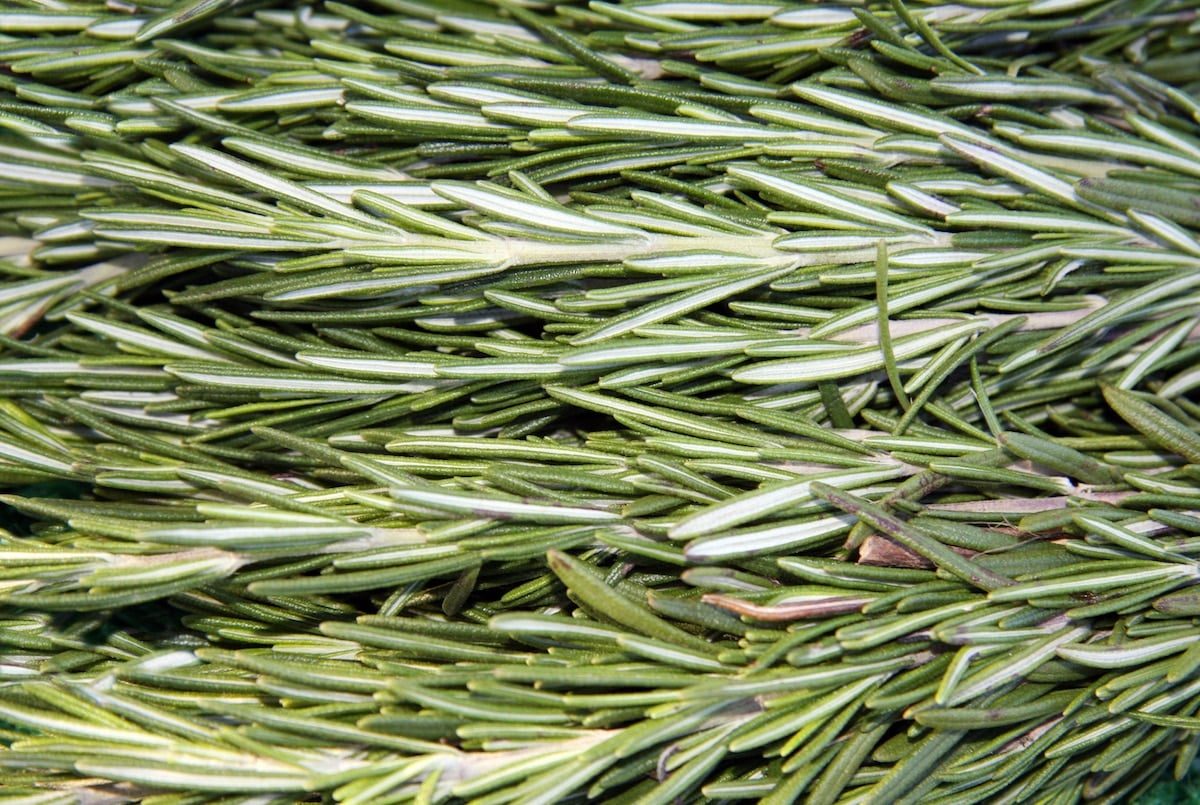
Rosemary is a strong, resinous herb from the Mediterranean that stands up to heat, which makes it one of the easier herbs to cook with and one of the easier ones to overdo.12 Britannica describes its taste as pungent and slightly bitter and lists meats, vegetables, soups and beverages among its uses, along with baking, infused oils and herbal teas.3 This page covers when to add it, how to prepare it, how much to use, which dishes it suits in named recipes, and how to keep it. For the plant and its chemistry, see rosemary.
At a glance
| Question | Short answer |
|---|---|
| Hearty or delicate? | Hearty: America’s Test Kitchen adds it early in cooking4 |
| Fresh or dried? | Both work; dried holds up in dishes that cook over 20 minutes in liquid5 |
| Fresh-to-dried ratio | 3 parts fresh to 1 part dried, by volume5 |
| Strength | Delaware Extension puts it among the strong herbs and warns too much is “extremely objectionable”2 |
| Classic uses | Lamb, roast potatoes, focaccia, paella, soups6789 |
| Storage | Keep fresh sprigs dry in the refrigerator; freeze on the stem; herbs in oil must be refrigerated and used within 4 days, or frozen41011 |
When to add rosemary
America’s Test Kitchen classes rosemary as a hearty herb to add early in cooking, and explains that the volatile flavor compounds in hearty herbs are somewhat more heat-stable than those in delicate ones.4 Other extension guides put the addition later:
| Source | Advice |
|---|---|
| America’s Test Kitchen | Add hearty herbs, rosemary among them, early in cooking4 |
| LSU AgCenter | Less delicate herbs like rosemary can go in about the last 20 minutes12 |
| University of Delaware | For long simmering, add herbs during the last 45 minutes2 |
These are general herb rules, not tests of rosemary. In practice, a whole sprig in a braise from the start gives a rounded background note and can be lifted out; chopped leaves stirred in near the end taste sharper (our judgment). The Visit València paella recipe adds a sprig of rosemary and lets it cook for about 5 minutes.8
Fresh vs. dried
Rosemary is one of the herbs that dries well. In America’s Test Kitchen’s tests across 24 recipes, dried oregano, rosemary, sage and thyme fared reasonably well in dishes that cooked for more than 20 minutes with a good amount of liquid, though tasters still preferred fresh in nearly every case.5 Another ATK guide says bay leaf, thyme, oregano, rosemary, marjoram and sage work just fine dried in moist preparations.13
ATK found 1 part dried herb to 3 parts fresh gave the closest match in strength.5 So 1 teaspoon of dried rosemary replaces about 1 tablespoon of fresh. Because dried rosemary is stronger by volume, an overdose is at least as likely with dried as with fresh. See dried rosemary vs. fresh.
A common claim says dried rosemary turns a dish bitter or overpowering if it cooks too long. We found no test showing that; ATK’s results point the other way for long-cooked, liquid dishes.5 Burning is a different matter. ATK’s focaccia recipe buries tufts of rosemary in the dough specifically to protect them from burning in the oven.6 Rosemary sprinkled on the surface of a hot roasting tray is exposed in the same way (our judgment).
Preparing rosemary
- Stripping. Hold the top of the sprig and pull your fingers down the stem against the direction the needles grow; they come off easily. This is common practice.
- Chopping. The needles stay firm even after cooking, so mince them finely for anything eaten as is, such as a rub, dressing or bread (our judgment).
- Whole sprigs. The stems are woody. Use them to infuse a braise, a pan of potatoes or a pot of beans, then remove them before serving (our judgment).
- Dried. Crush dried rosemary before using it. Taste of Home’s roasted rosemary sweet potatoes call for the dried herb crushed,14 and the University of Illinois Extension’s herb potato soup toasts crumbled dried rosemary and thyme in a dry skillet until fragrant.9
How much
The University of Delaware’s extension guide puts rosemary in its group of strong herbs, with bay leaf and sage, and warns that the flavor can be extremely objectionable if too much is used.2 Named recipes give a sense of scale (Attributed):
| Dish | Rosemary | Source |
|---|---|---|
| Herb potato soup | 1/2 teaspoon crumbled dried rosemary, with 1 teaspoon dried thyme | University of Illinois Extension9 |
| Roasted sweet potatoes | 1 teaspoon dried rosemary, crushed | Taste of Home (Kristin Stone)14 |
| Valencian paella | A sprig, cooked about 5 minutes | Visit València8 |
| Focaccia | 1 bunch fresh rosemary, picked into small tufts of 3 to 5 needles | America’s Test Kitchen (Andrew Janjigian)6 |
| Roman leg of lamb | Fresh rosemary and “lots of” sliced garlic stuffed into incisions; no amount given | Saveur7 |
If a dish has gone over, see too much rosemary.
Dishes and pairings
- Lamb. Saveur’s Roman lamb leg is studded all over with garlic and fresh rosemary before roasting.7 See spices for lamb.
- Bread. In ATK’s focaccia, Andrew Janjigian presses tufts of rosemary deep into the dough before the final rise, a technique the recipe credits to Nancy Silverton.6
- Paella. The Valencian recipe includes a rosemary sprig among its few seasonings.8 See paella spices for the full list.
- Potatoes and soups. Rosemary seasons both the Illinois Extension potato soup and the Taste of Home sweet potatoes above.914
- Blends. Rosemary is 26% of the Label Rouge herbes de Provence blend, with savory, oregano and thyme,15 and it is in McCormick’s poultry seasoning with thyme, sage, marjoram, black pepper and nutmeg.16 See herbes de Provence and poultry seasoning.
A common claim says rosemary suits goat in particular. We found no named recipe for that, though the reasoning for lamb would apply. Garlic, lemon, olive oil, thyme and sage are the classic partners; beyond the blends and recipes above, that is cooking judgment. Comparisons: rosemary vs. thyme, rosemary vs. sage and rosemary vs. lavender.
Keeping rosemary
Fresh, in the refrigerator. ATK explains that hearty herbs take in moisture through their leaves, so it is important to keep them dry; it stores them in their original packaging or an open zipper-lock bag in the refrigerator.4 Figures for how long sprigs last vary with scope:
| Source | Scope | Figure |
|---|---|---|
| Government of Canada | Fresh herbs in general, home crisper drawer | Up to 5 days17 |
| UC Davis Postharvest Center | Most fresh herbs in commercial storage | 3 weeks at 0°C (32°F); 2 weeks at 5°C (41°F)18 |
A “three weeks in the fridge” figure for home rosemary circulates widely; the closest sourced number is UC Davis’s, which is for commercial storage just above freezing. See how to store rosemary.
Freezing. Penn State Extension says rosemary can be frozen on the stem, and that frozen herbs can be used in the same proportion as fresh.10 South Dakota State University Extension says herbs are good for up to six months when kept frozen.19 See can you freeze rosemary?
Dried. NCHFP’s advice is to keep dried herbs in airtight containers in a cool, dry, dark area.20 See how to dry rosemary.
Rosemary oil. Herbs in oil can be a source of Clostridium botulinum, so Oregon State University Extension says homemade herb oil must be refrigerated and used within 4 days, or frozen.11 Never keep it at room temperature.
Rosemary vinegar. Colorado State University Extension lists rosemary among the herbs for flavored vinegar. Its method calls for 3 to 4 sprigs per pint, vinegar heated to just below boiling, and sterilized containers.21 The vinegar keeps up to three months in a cool, dark place or six to eight months refrigerated; discard it at any sign of mold or fermentation.21
If you have none
Dried rosemary is the best stand-in for fresh at a third of the volume. Thyme and sage can cover some of its role. See rosemary substitutes, tarragon vs. rosemary and rosemary uses.
Footnotes
-
Salvia rosmarinus Spenn., Plants of the World Online, Royal Botanic Gardens, Kew. powo.science.kew.org · Reference work ↩
-
“Using Herbs and Spices”, University of Delaware Cooperative Extension, 2025. udel.edu · Reference work ↩ ↩2 ↩3 ↩4
-
“Rosemary”, Encyclopaedia Britannica, 2026. britannica.com · Reference work ↩
-
Liz Bomze, “Our Guide to Fresh Herbs”, America’s Test Kitchen, 2019. americastestkitchen.com · Publication ↩ ↩2 ↩3 ↩4 ↩5
-
“Science: Substituting Dried Herbs for Fresh”, America’s Test Kitchen. americastestkitchen.com · Publication ↩ ↩2 ↩3 ↩4 ↩5
-
Andrew Janjigian, “Freshly Milled Wheat Flour Focaccia with Rosemary, Fennel, and Sea Salt”, America’s Test Kitchen. americastestkitchen.com · Publication ↩ ↩2 ↩3 ↩4
-
“Roman Lamb Leg”, Saveur, 2007. saveur.com · Publication ↩ ↩2 ↩3
-
“Traditional Valencian Paella Recipe”, Visit València. visitvalencia.com · Publication ↩ ↩2 ↩3 ↩4
-
“Herb Potato Soup”, University of Illinois Extension. extension.illinois.edu · Reference work ↩ ↩2 ↩3 ↩4
-
Martha Zepp, “Freezing Herbs”, Penn State Extension, 2025. extension.psu.edu · Reference work ↩ ↩2
-
“Herbs and Vegetables in Oil”, SP 50-701, Oregon State University Extension Service, 2025. extension.oregonstate.edu · Reference work ↩ ↩2
-
“Flavorful Herbs”, LSU AgCenter. lsuagcenter.com · Reference work ↩
-
“Using Dried Herbs”, America’s Test Kitchen. americastestkitchen.com · Publication ↩
-
Kristin Stone, “Roasted Rosemary Sweet Potatoes”, Taste of Home, 2023. tasteofhome.com · Publication ↩ ↩2 ↩3
-
Sylvie Carriat, “Les vraies herbes de Provence raniment la flamme”, Réussir Les Marchés, 2008. reussir.fr · Publication ↩
-
Poultry Seasoning, McCormick Culinary. mccormick.com · Merchant ↩
-
“Food safety tips for fresh herbs”, Government of Canada, 2013. oc4h.ucanr.edu · Regulator ↩
-
Cantwell and Reid, “Herbs (Fresh Culinary)”, UC Davis Postharvest Research and Extension Center, 2001. postharvest.ucdavis.edu · Reference work ↩
-
“Preserving Herbs”, South Dakota State University Extension, 2022. extension.sdstate.edu · Reference work ↩
-
“Drying Herbs”, National Center for Home Food Preservation. nchfp.uga.edu · Reference work ↩
-
“Making Flavored Vinegar”, Fact Sheet 9.340, Colorado State University Extension, 2021. foodsmartcolorado.colostate.edu · Reference work ↩ ↩2