Spice Fixes · Fix
Too Much Rosemary? How to Fix the Dish, Fastest Fix First
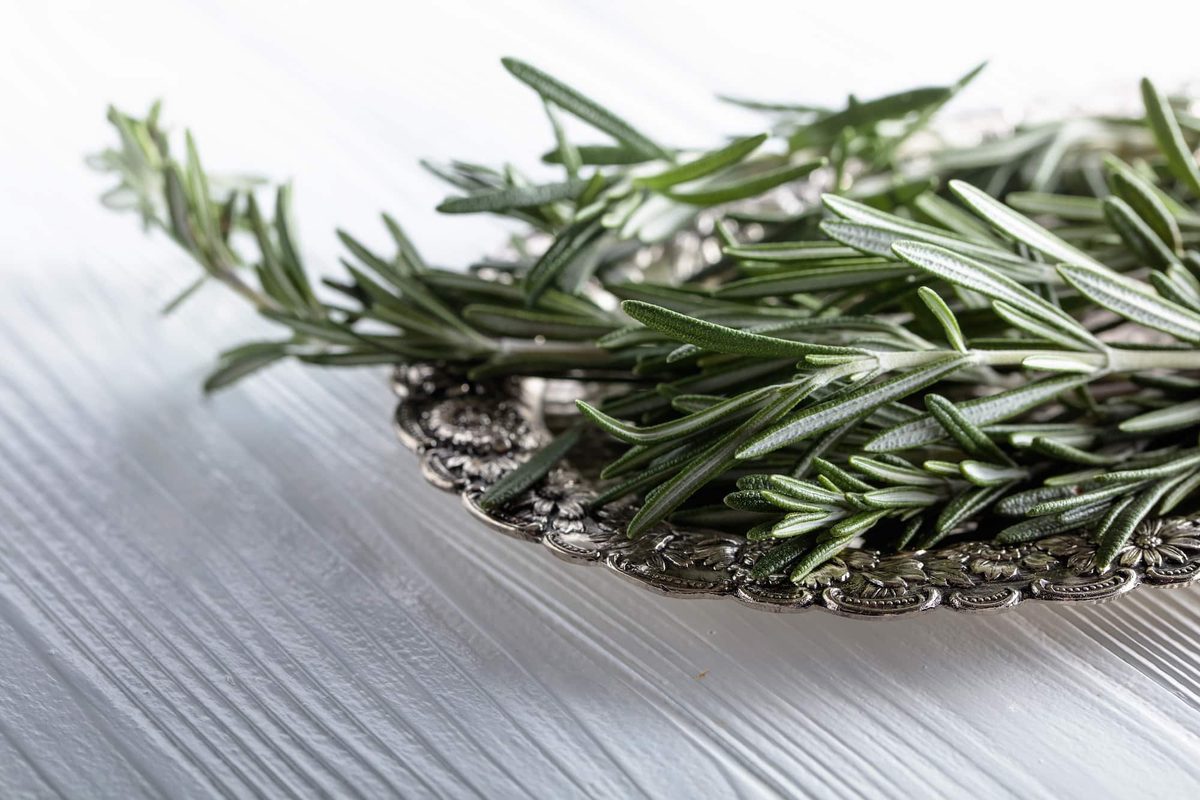
Too much rosemary tastes piney, resinous and harsh, sometimes with a bitter finish, and it can push every other flavor in the dish to the background. The good news is that rosemary is often cooked as whole sprigs, which come straight out. Fastest fixes come first.
Quick answer
| What’s wrong | Fastest fix | If that’s not enough |
|---|---|---|
| Sprigs in the pot or under a roast | Pull them out now | Dilute |
| Chopped leaves in a soup, stew or sauce | Skim what floats, then add more of everything else | Make a second, rosemary-free batch and combine |
| Bitter edge | A pinch of sugar or a little more salt | Honey or fruit where they suit the dish |
| Caked on meat, potatoes or bread | Scrape or brush off the excess | Don’t rinse raw meat or poultry under the tap |
Why rosemary takes over
Rosemary’s essential oil is dominated by two compounds. In a 2017 study of oils distilled from rosemary collected in six countries, α-pinene (13.5 to 37.7%) and 1,8-cineole (16.1 to 29.3%) led the composition, with camphor at 0.7 to 7.0%; the authors found at least five chemotypes, so the balance varies from plant to plant.1 In our judgment, an oil led by those two compounds is what you are tasting when an overdose reads as resinous or medicinal. The figures are for distilled oil from the samples in that study, not for a sprig in your hand.
The University of Delaware’s extension guide puts rosemary in its group of strong or dominant flavors, alongside bay leaf and sage, and warns that an herb’s flavor “can be extremely objectionable if too much is used.”2
Sheer volume: too much rosemary for the dish
Take out what you can. Whole sprigs lift out with tongs, and the sooner they come out, the sooner they stop flavoring the dish. Chopped or crumbled leaves are harder: skim a soup or sauce with a fine strainer and pick leaves off large pieces of meat or vegetables.
Don’t count on cooking it off. America’s Test Kitchen classes rosemary as a hearty herb to add early, and notes that the volatile flavor compounds in hearty herbs are more heat-stable than those in delicate herbs.3 We found no test showing that longer cooking brings down a rosemary overdose.
Dilute. Add more of the dish’s other ingredients, minus the rosemary: more stock and vegetables in a soup, more beans or meat in a stew, more potatoes in a roasting tray. If the pot can’t take more, the second-batch method Tasting Table gives for too much garlic applies just as well: cook a batch without rosemary and combine the two.4 Freeze the extra. A splash of cream or a spoon of sour cream can help a stew take more liquid without turning thin; treat that as kitchen judgment, since we found no source showing dairy binds rosemary’s aroma compounds.
Balance with savory or tart ingredients. Soy sauce, Worcestershire, a little MSG or a stock cube can make a stew taste deeper so the rosemary stands out less. Tomato, lemon juice, vinegar or yogurt can brighten it. These are balancing techniques: none removes rosemary, and we found no source showing that umami or acid neutralizes pinene or cineole.
Bitter edge
If too much rosemary has turned the dish bitter, sweetness and salt are better bets than acid. In controlled taste tests with pure solutions, sugar and sodium salts both suppressed bitterness, with sugar the strongest suppressor of other tastes; citric acid was the weakest.5 That was a laboratory study, not a test on food, so add a little at a time: honey in a glaze, a pinch of sugar in a tomato sauce, roasted squash or apple where they fit.
Check whether it scorched. Dried, crumbled rosemary on a hot tray or in hot oil can burn, and ground spices in general turn bitter quickly under intense heat.6 If the bitterness is burnt rather than herbal, move the food away from the scorched bits before you try to balance it.
Caked on the surface
Scrape or brush excess rosemary off a roast, chicken, roasted potatoes or focaccia, then re-season lightly. Don’t rinse raw meat or poultry under the tap: the USDA does not recommend washing raw poultry, beef, pork, lamb or veal before cooking, because rinsing raises the risk of cross-contamination.7
Fixes that don’t hold up
A potato to soak it up. The raw-potato trick comes from oversalted soup, and even there a Tasting Table writer who uses it calls it “more of an aid than a final answer.”8 We found no test of a potato absorbing rosemary. Extra potato is still dilution, so if it suits the dish, leave it in.
Dairy to “intensify the sweetness” of rosemary. It is sometimes suggested that cream or butter brings out a sweetness in rosemary that offsets it. We found no source for this. Dairy can add body and richness; that is all we can say for it.
Preventing it next time
Use sprigs, not chopped leaves, in long-cooked dishes. A sprig can be pulled the moment the dish tastes right. Common practice, and the easiest insurance against this problem.
Go lighter than you would with a medium herb. The University of Delaware guide groups rosemary with the strong flavors and suggests 1 to 2 teaspoons for 6 servings only for its medium group;2 it gives no amount for strong herbs. That makes a lower starting point sensible: begin well under a teaspoon of chopped fresh rosemary for a dish serving six, taste after it has simmered a few minutes, and add more if you want it. That starting point is ours, not a measured figure.
Mind dried versus fresh. Dried herbs are stronger than fresh because their flavor chemicals are more concentrated, and the same guide gives a rough equivalence of 3/4 to 1 teaspoon dried crumbled herb to 2 to 3 teaspoons fresh.2 More in dried rosemary vs. fresh.
Add dried herbs late in long simmers. The guide suggests adding herbs during the last 45 minutes when a recipe calls for long simmering,2 which gives you a chance to taste before the pot has finished.
Related
Footnotes
-
Satyal P et al., Chemotypic Characterization and Biological Activity of Rosmarinus officinalis, Foods, 2017. mdpi.com · Peer-reviewed ↩
-
Using Herbs and Spices, University of Delaware Cooperative Extension, 2025. udel.edu · Reference work ↩ ↩2 ↩3 ↩4
-
Our Guide to Fresh Herbs, Liz Bomze, America’s Test Kitchen, 2019. americastestkitchen.com · Publication ↩
-
Simple Ways To Tone Down The Pungency Of Garlic, Harmony Colangelo, Tasting Table, 2023. tastingtable.com · Publication ↩
-
Green BG et al., Taste Mixture Interactions: Suppression, Additivity, and the Predominance of Sweetness, Physiology & Behavior, 2010. pmc.ncbi.nlm.nih.gov · Peer-reviewed ↩
-
How To Improvise Instant Pot Seasoning Without Burning Your Spices, Marco Rossi, Tasting Table, 2023. tastingtable.com · Publication ↩
-
Washing Food: Does it Promote Food Safety?, USDA Food Safety and Inspection Service. fsis.usda.gov · Regulator ↩
-
How To Fix An Oversalted Soup, Alison Spiegel, Tasting Table, 2016. tastingtable.com · Publication ↩