Cooking · Cooking with
Cooking With Sumac: Salads, Onions, Grilled Meat and Za’atar
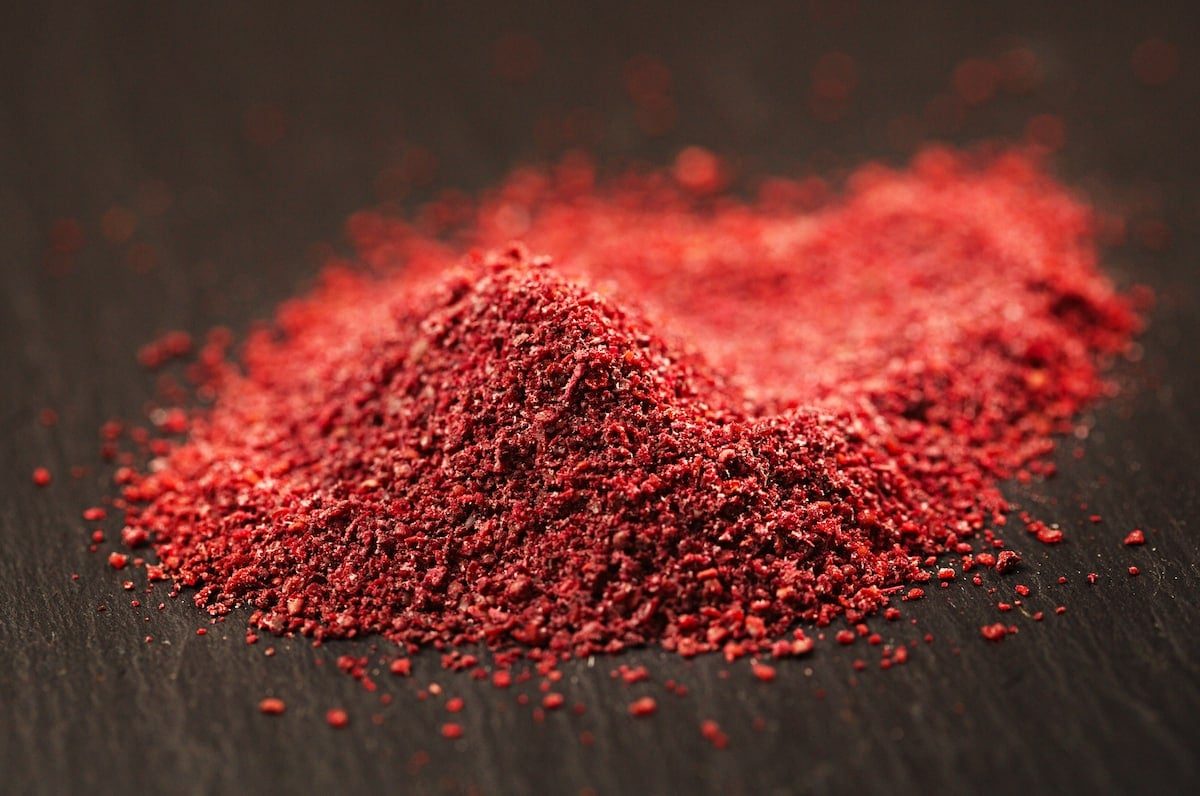
Sumac is the dried, ground fruit of Rhus coriaria, a shrub native from Macaronesia and the Mediterranean to Afghanistan.1 Gernot Katzer describes its taste as tart and sour with slightly astringent overtones,2 and one review credits the sourness mainly to malic acid.3 What makes it useful in the kitchen is simple: it brings acidity in dry form, so you can add sourness without the liquid that lemon juice or vinegar would bring. This page covers the dishes it belongs in, how much published recipes use, and two cautions.
Where sumac goes
Onions. Katzer notes that sumac mixed with freshly cut onions is a frequent appetizer.2 Sliced raw onion rubbed with sumac and salt is the simplest way to learn what it tastes like.
Grilled and roast meat. Döner kebab is sometimes flavored with sumac powder, Katzer says.2 A 2022 review describes sumac rubbed on meat, chicken or fish in North Africa.4 Which meats suit it best is a matter of taste; no source we found singles out lamb or duck.
Rice. Katzer reports ground sumac sprinkled liberally over rice,2 and calls sumac a very popular condiment in Turkey and Iran.2
Salads. In fattoush, a salad of toasted flatbread, lettuce, tomato, cucumber and herbs, sumac goes into the dressing. Angela Nahas’s recipe for SBS whisks 2 teaspoons of sumac with the juice of a lemon, 80 ml olive oil and a teaspoon of water, for a salad that serves six, then lets the dressed salad stand 10 minutes before serving.5 Her recipe describes sumac as having a zesty lemon flavor.5
Za’atar. Ground sumac is often part of za’atar, Katzer says.2 America’s Test Kitchen’s version uses 1 1/2 tablespoons of sumac with 2 tablespoons of dried thyme plus oregano, toasted sesame and salt.6 See also cooking with za’atar.
Sour liquid. In Lebanon, Syria and Egypt, Katzer writes, the fruits are cooked with water down to a thick, very sour essence, a practice he dates to Roman times.2 North American Rhus fruits were used by Native peoples for sour drinks, according to Katzer,2 but those are different species from the Mediterranean spice.1 Widely repeated suggestions to put sumac in Bloody Marys or brew it as tea have no source behind them that we could find.
How much to use
These amounts are Attributed to named recipes. No reference work gives a standard amount.
| Use | Sumac | Source |
|---|---|---|
| Fattoush dressing, serves 6 | 2 teaspoons | Angela Nahas, SBS Food5 |
| Za’atar blend, one batch | 1 1/2 tablespoons, with 2 tablespoons thyme | America’s Test Kitchen6 |
Our starting point (Method) for a finishing sprinkle: about 1/2 teaspoon over a plate of rice, salad or grilled meat for two, then taste. Sumac is gentle compared with lemon juice, so it can sit up front or stay in the background; that is our judgment.
Technique notes
- Add it at the end or raw. Most sumac uses above are uncooked: dressings, onion salads, a sprinkle over rice. That is common practice; we found no study of what heat does to sumac’s flavor.
- Use it for color. Sumac fruits are red drupes,7 and the ground spice gives pale food, such as yogurt, hummus or eggs, a dark red finish. Using it this way, the way paprika is used, is our suggestion rather than a sourced tradition.
- Check the label for salt. Katzer notes that ground sumac is often mixed with salt.2 If yours is, cut back on other salt in the dish.
- Out of sumac? The Spice House suggests lemon juice or vinegar at about half the volume, adding more to taste.8 More options on sumac substitutes.
Storage
No published shelf-life figure for sumac was found. General guidance for ground spices from America’s Test Kitchen and the University of California Cooperative Extension is 1 year,910 and the UC extension names air, light, moisture and heat as what speeds flavor and color loss.10 Keep sumac sealed and away from light, and judge it by color and sourness.
Two cautions
Allergies. Sumac belongs to the cashew family, Anacardiaceae.7 The 2022 review suggests that people allergic to related foods take caution with it.4 It does not establish that a cashew or mango allergy means a sumac allergy; ask an allergist if this applies to you.
Poison sumac is a different plant. Poison sumac was once placed in the genus Rhus but now belongs to Toxicodendron.7 Its fruit is a dull yellowish-white,11 and Katzer notes that Toxicodendron fruits are white to pale ochre, not red.2 Contact causes skin redness, itching, blistering and swelling.11 Culinary sumac comes from red-fruited Rhus species, but never forage sumac without a reliable identification.
Related
Footnotes
-
Rhus coriaria L., Plants of the World Online, Royal Botanic Gardens, Kew. powo.science.kew.org · Reference work ↩ ↩2
-
Gernot Katzer, “Sumac”, Gernot Katzer’s Spice Pages. gernot-katzers-spice-pages.com · Reference work ↩ ↩2 ↩3 ↩4 ↩5 ↩6 ↩7 ↩8 ↩9 ↩10
-
Alsamri et al., “Pharmacological and Antioxidant Activities of Rhus coriaria L. (Sumac)”, Antioxidants, 2021. mdpi.com · Peer-reviewed ↩
-
Batiha et al., “Rhus coriaria L. (Sumac), a Versatile and Resourceful Food Spice with Cornucopia of Polyphenols”, Molecules, 2022. openscholar.ump.ac.za · Peer-reviewed ↩ ↩2
-
Angela Nahas, “Fattoush”, SBS Food. sbs.com.au · Publication ↩ ↩2 ↩3
-
Bryan Roof, “Za’atar”, America’s Test Kitchen, 2017. americastestkitchen.com · Publication ↩ ↩2
-
“Sumac”, Encyclopaedia Britannica. britannica.com · Reference work ↩ ↩2 ↩3
-
“Sumac Substitute”, The Spice House, 2018. thespicehouse.com · Merchant ↩
-
“Keeping Spices and Dried Herbs Fresher Longer”, America’s Test Kitchen. americastestkitchen.com · Publication ↩
-
Anna Martin, “Add a Little Spice to Your Life! Part II”, University of California Cooperative Extension, 2002. ucanr.edu · Reference work ↩ ↩2
-
“Toxicodendron vernix”, North Carolina Extension Gardener Plant Toolbox, NC State University. plants.ces.ncsu.edu · Reference work ↩ ↩2