Spice Substitutes · Substitutes
Lovage Substitutes: Celery, in the Right Form for the Job
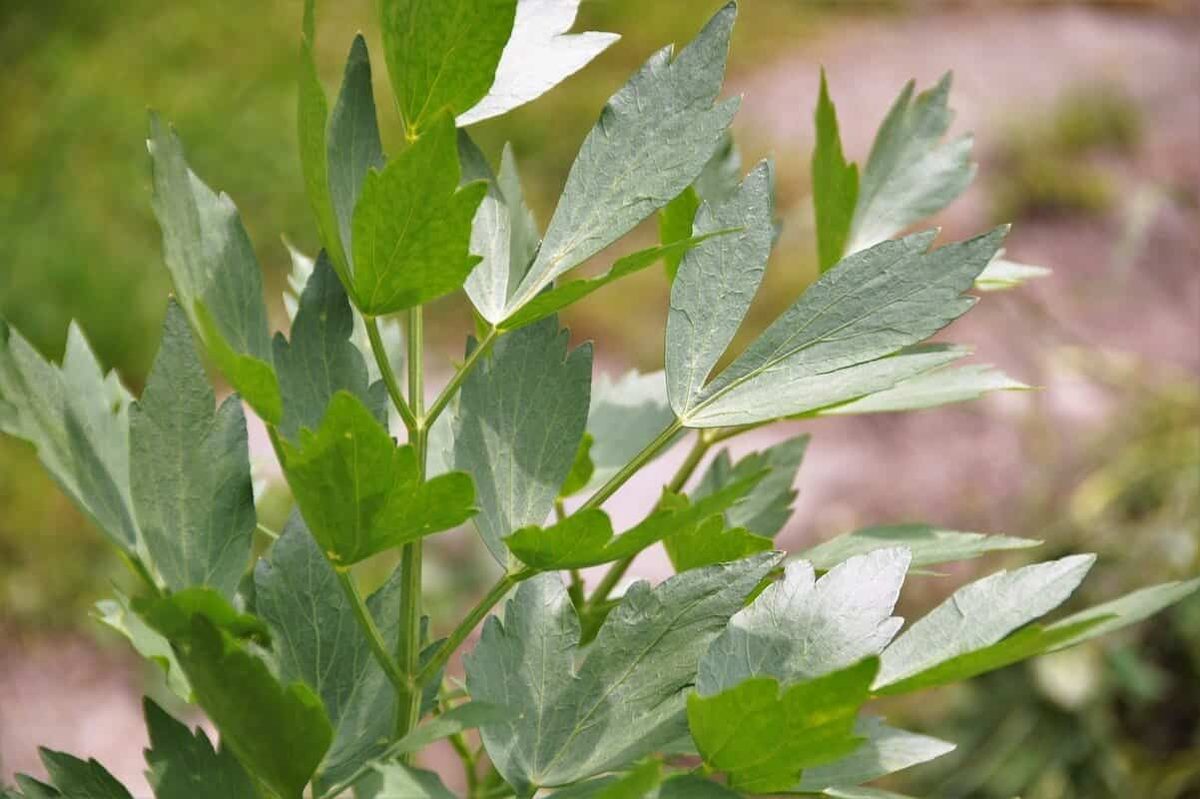
Lovage, Levisticum officinale, is a perennial herb of the parsley family (Apiaceae).1 Britannica describes its flavor as sweet and similar to celery,1 and CooksInfo says it has even more of a celery taste than celery itself, so it should be used sparingly at first.2 Its leaves and stalks are used as a vegetable, for herbal tea and to flavor food, and its seeds flavor sweets and liqueurs.1
Because lovage tastes like strong celery, the celery plant is the natural substitute, in whichever form matches the part of lovage your recipe uses: leaf, stalk or seed.
Quick answer
| What lovage is doing | Best substitute | Starting amount, per 1 part lovage | Treatment |
|---|---|---|---|
| Leaves cooked in a soup, stock or stew | Celery leaves, plus a pinch of celery seed | 2 parts celery leaves, then taste | Method |
| Chopped raw leaves in potato salad, eggs or greens | Celery leaves with a little flat-leaf parsley | 2 parts, mostly celery leaf, then taste | Method |
| Stalks cooked as a vegetable | Celery stalks | 1 part | Method |
| Seeds in breads, pickles or dressings | Celery seed | 1 part, then taste | Method |
| No fresh celery on hand, cooked dish | Celery seed for the leaves | 1/2 teaspoon seed per 2 tablespoons celery leaf you would have used | Attributed (seed to leaf) |
The rest of the page explains each choice.
How the ratios on this page are labeled
Every ratio carries one of four labels.
- Computed: based on a measurable physical relationship, with the source named.
- Attributed: a named source publishes this ratio. We quote it as theirs.
- Disputed: named sources give different answers to the same swap. We show each one and do not average them.
- Method: we found no published ratio. We give a direction and a cautious starting point, and say so.
CooksInfo names celery leaves as the substitute for lovage leaves and celery seed for lovage seed, but gives no amounts.2 We found no credible source that publishes a lovage-to-celery ratio. The one Attributed figure on this page converts between two forms of celery, not between lovage and celery.
Why celery works
The two plants share a family and a class of aroma compounds. Gernot Katzer credits celery’s characteristic fragrance to phthalides, naming 3-butylphthalide.3 A 2019 review of Apium plants likewise says a series of phthalide derivatives gives celery essential oil its characteristic odor.4 In lovage, a 2017 study notes that phthalides are among the main components of the oil and that alkylphthalides are credited with its characteristic odor.5 The same study found n-butylphthalide at 4.3 percent of the oil from plants at the vegetative stage, though less at flowering and none at the seed stage.5 A study of lovage fruits found phthalides were one of the two main groups of compounds in the seed oil, led by cis-ligustilide.6
That shared chemistry fits what cooks report: lovage tastes like celery, only stronger.12 No published study compares the strength of the two directly, so the amounts below are starting points.
If lovage leaves are going into a cooked dish
1. Celery leaves, plus a pinch of celery seed
CooksInfo names celery leaves first.2 Katzer notes that celery leaves are often cooked in soups or sauces to improve the taste of the dish, and that all parts of the celery plant are strongly aromatic.3 Because lovage is the stronger of the two,2 you need more celery leaf than the lovage called for. A small pinch of celery seed helps close the gap: Katzer describes the seeds as having “a similar, but much stronger aroma.”3
Where it falls short: celery leaf is milder and lacks lovage’s sweetness,1 so the dish will taste of celery rather than lovage.
Ratio (Method): We found no published ratio. Start with about twice as much chopped celery leaf as lovage, add a small pinch of celery seed if the dish needs more depth, and taste. CooksInfo notes that long cooking destroys lovage’s flavor and suggests adding the leaves at the last minute;2 add celery leaves toward the end too.
2. Celery seed alone
If you have no fresh celery, celery seed can carry the celery note in a soup or stew. The Spice House, writing about the reverse swap, says to use 2 tablespoons of minced celery tops for every 1/2 teaspoon of celery seeds.7
Ratio (Attributed, seed to leaf): Work out how much celery leaf you would have used for the lovage, then use The Spice House’s conversion: 1/2 teaspoon of celery seed in place of each 2 tablespoons of celery tops.7 McCormick says the pungent, somewhat bitter flavor of celery seed goes a long way,8 so start at the low end and taste.
3. Celeriac (celery root)
Katzer uses “celeriac” for the root form of celery and says the root, like the leaves, suits soups and sauces.3 In our judgment, peeled and diced celeriac adds celery flavor and body to a soup or stew, but it does nothing for a raw dish.
Ratio (Method): No published ratio was found. Add a small piece of celeriac to the pot with the other vegetables, then taste and adjust the next time.
4. Maggi seasoning
Lovage’s German name is Maggikraut, and its Dutch name is Maggiplant.2 CooksInfo reports that some people feel lovage gives a flavor similar to Maggi sauce.2 The resemblance can be used in reverse: a few drops of Maggi can give a broth some of the savory depth lovage brings. We found no source on whether Maggi products contain lovage.
Where it falls short: it has no fresh green note, and it is a seasoning sauce, so check the label and adjust the salt.
Ratio (Method): No published ratio was found. Add a few drops to the finished broth and taste before adding more.
If raw lovage leaves are the point
In potato salad, egg dishes or a green salad, chopped lovage is a fresh herb, not a background flavor.
1. Celery leaves with flat-leaf parsley
Use the pale, tender inner celery leaves, and add a little flat-leaf parsley for green freshness. Parsley belongs to the same family as celery and lovage.91 Britannica describes parsley as mildly aromatic,9 so it adds freshness rather than the celery note. The mix is our kitchen judgment, not a sourced formula.
Ratio (Method): No published ratio was found. Start with about twice as much of the mix as the lovage called for, mostly celery leaf, and taste.
If lovage stalks are being cooked as a vegetable
Britannica notes that lovage leaves and stalks are eaten as a vegetable.1 Celery stalks are the obvious stand-in, and CooksInfo notes that lovage stalks hold their flavor longer in cooking than the leaves do.2
Ratio (Method): No published ratio was found. Use about the same amount of sliced celery stalk as lovage stalk. Expect a milder celery flavor.
Fennel, for texture only
Fennel stalks give a similar crunch, but not the same flavor. In fennel, anethole is responsible for the anise fragrance and sweet taste,10 which is a different direction from celery. Use fennel only where an anise note suits the dish.
Ratio (Method): No published ratio was found. If you use it, replace no more than half of the lovage stalk with fennel and make up the rest with celery.
If the recipe uses lovage seed
CooksInfo says lovage seeds can be used as celery seed in cooking,2 and the swap works the other way too. Celery seed is the seed of celery, Apium graveolens, and its essential oil is about 3 percent of the seed’s dry weight.4
A widely repeated claim says that commercial celery seed and celery salt are really made from lovage seed. We found no source showing this. McCormick’s celery salt label lists salt and celery seed.11
Ratio (Method): No published ratio was found. Start with the same amount of celery seed as lovage seed and taste. If you use celery salt instead, cut the other salt in the recipe.
Dried lovage
If you have dried lovage, it is a weak stand-in for fresh. CooksInfo says lovage does not dry well and recommends freezing it instead.2
What isn’t known
- No credible published ratio for substituting celery, parsley, celeriac or Maggi for lovage was found. Every amount above except The Spice House’s seed-to-leaf figure is a starting point for tasting.
- No study comparing the flavor strength of lovage and celery was found.
- Whether Maggi seasoning contains lovage is not documented in any source we found.
Related
- Lovage
- Celery leaves and celery leaves substitutes
- Celery seeds, celery seed substitutes and celery seed uses
- Celery salt and celery powder
- Parsley and fennel seed
Footnotes
-
“Lovage”, Encyclopaedia Britannica. britannica.com · Reference work ↩ ↩2 ↩3 ↩4 ↩5 ↩6 ↩7
-
“Lovage”, CooksInfo, updated 2020. cooksinfo.com · Publication ↩ ↩2 ↩3 ↩4 ↩5 ↩6 ↩7 ↩8 ↩9 ↩10 ↩11
-
Gernot Katzer, “Celery (Apium graveolens)”, Gernot Katzer’s Spice Pages. gernot-katzers-spice-pages.com · Reference work ↩ ↩2 ↩3 ↩4
-
Salehi et al., “Apium Plants: Beyond Simple Food and Phytopharmacological Applications”, Applied Sciences, 2019. mdpi.com · Peer-reviewed ↩ ↩2
-
Mohamadi et al., “Essential Oil Composition and Antioxidant Activity of Levisticum officinale Koch. at Various Phenological Stages”, Journal of Medicinal Plants, 2017. jmp.ir · Peer-reviewed ↩ ↩2
-
Dyduch et al., “Fruits of lovage (Levisticum officinale Koch.) as a medicinal and seasoning plant, Pt. 1”, Folia Horticulturae (abstract via FAO AGRIS). agris.fao.org · Peer-reviewed ↩
-
“Celery Seed Substitute”, The Spice House, 2018. thespicehouse.com · Merchant ↩ ↩2
-
McCormick Whole Celery Seed, product page, McCormick. mccormick.com · Merchant ↩
-
“Parsley”, Encyclopaedia Britannica. britannica.com · Reference work ↩ ↩2
-
Purwaningsih et al., Foeniculum vulgare, Plant Resources of South-East Asia (PROSEA). uses.plantnet-project.org · Reference work ↩
-
McCormick Celery Salt, label ingredients, via Stop & Shop product listing. stopandshop.com · Merchant ↩