Spice Substitutes · Substitutes
Rose Petal Substitutes: Rose Water First, Then Other Flowers
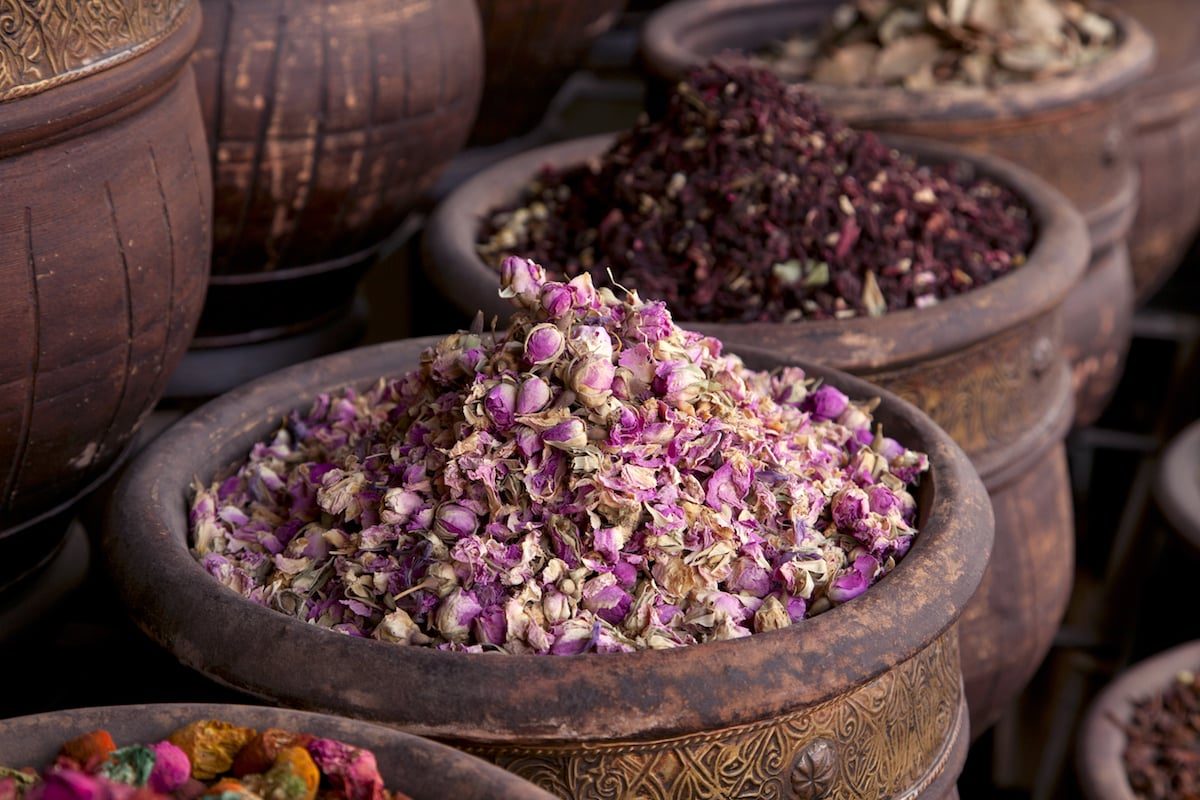
Rose petals do two things in a dish: they perfume it, and they decorate it. Rose petals and rose water have been part of Persian cooking since ancient times,1 and dried petals turn up in spice blends such as Persian advieh, where Tina Wasserman says they give a light, sweet, floral accent.2 For flavor, the substitute is rose water, which is how rose usually reaches the kitchen anyway. For looks, nothing replaces a rose petal except another edible flower.
Quick answer
| What rose petals are doing | Best substitute | Starting amount | Treatment |
|---|---|---|---|
| Rose flavor in sweets, syrups, drinks and jams | Rose water | A few drops, then taste | Method |
| Rose note in rice or a savory dish | Rose water, sprinkled near the end | A few drops, then taste | Method |
| One ingredient in a spice blend (advieh, ras el hanout) | Leave it out, or finish the dish with rose water | Not applicable | Method |
| Color and garnish | Unsprayed garden rose petals, or violets | By eye | Method |
How the ratios on this page are labeled
- Computed: based on a measurable physical relationship, with the source named.
- Attributed: a named source publishes this ratio. We quote it as theirs.
- Disputed: named sources give different answers to the same swap. We show each and do not average them.
- Method: we found no published ratio. We give a direction and a cautious starting point, and say so.
We found no published ratio for replacing dried or fresh rose petals with rose water or anything else. Every amount on this page is a starting point.
If rose petals are there for flavor
Rose water
Rose water is mostly made by distilling fresh flowers of the damask rose, Rosa × damascena.3 Gernot Katzer notes that in the kitchen, rose is normally used as an alcoholic extract or a water-based distillate rather than as petals.4
The reason rose water tastes like the flower is chemical. Katzer explains that 2-phenylethanol is characteristic of the fresh flower’s scent, and that it is lost from rose oil during steam distillation and collects in the rose water instead.4 Rose oil, by contrast, is dominated by geraniol, citronellol and nerol, which is why Katzer says rose oil and rose water do not equal each other exactly.4
Rose water is strong. America’s Test Kitchen describes it as intensely floral and typically used quite sparingly.5 When ATK tested it in place of vanilla, an equal swap was too intense for most tasters, and half the vanilla amount gave a more subtle result.5 Strength varies by brand, and no source we found measures how much.
Ratio (Method): No published ratio for rose water in place of petals was found. The Nigella.com team, flavoring jam with rose water, advises adding it carefully, a few drops at a time.6 Do the same: start with a few drops, stir, taste, and stop well short of where you think you’ll end up.
Add it late. The Nigella.com team says rose water tends to evaporate very quickly if added to very hot jam.6 That is their kitchen observation, not a measurement, but it is a sensible reason to add rose water off the heat.
For savory dishes. Katzer notes that rose water often gives a light, floral fragrance to Arabic and Iraqi rice dishes.4 A few drops sprinkled over rice as it rests is a reasonable stand-in for petals cooked into the dish; that is kitchen judgment.
Lavender
Lavender is another flower used in beverages and sweets,7 but it does not taste like rose. Linalool and linalyl acetate are the principal constituents of English lavender oil,8 while the rose’s characteristic notes come from 2-phenylethanol and, in the oil, geraniol, citronellol and nerol.4 Use lavender only if you want a different floral note, not a rose substitute. The Herb Society of America notes that it is easier to add lavender as you go.9
Ratio (Method): No published ratio was found. Start with a quarter of the rose petal amount.
If rose petals are part of a spice blend
Rose is one ingredient among many in blends such as Persian advieh, where Wasserman uses dried rose petals,2 and Moroccan ras el hanout, where the Oxford Companion to Food says rosebuds are usually included.10
Ratio (Method): No published ratio was found. Mix the blend without the rose, cook the dish, and finish it with a few drops of rose water if you miss the floral note. In a blend with several warm spices, the missing petals are less noticeable than in a dish where rose leads; that judgment is ours.
If rose petals are there for color and decoration
On a cake, a bowl of yogurt or a plate of rice, petals are mostly visual, and rose water can’t help.
Petals from your own unsprayed roses
The New York Botanical Garden’s librarian notes that heirloom roses taste best and dark red varieties can taste too strong, and warns not to eat roses that have been sprayed.11 It also warns not to eat flowers from florists or nurseries,11 so supermarket bouquets are out. The FDA lists rose buds, flowers and hips from four rose species, including Rosa damascena, among substances generally recognized as safe as natural extractives.12
Violets
The same NYBG list describes sweet violets as scented and used mainly in desserts.11 They give a different color and a different scent, but they do the decorative job.
Ratio (Method): No published ratio was found. Use by eye. The NYBG advises not to use large amounts of any edible flower at first.11
What isn’t known
- No published ratio for rose water in place of fresh or dried rose petals was found.
- No source measures how strength varies between brands of rose water.
- It is sometimes said that rose water was discovered by Islamic chemists in the Middle Ages, and that rose water keeps its flavor longer than petals. No source reviewed here supports either claim.
- Rose hips are sometimes suggested as a rose petal substitute. The FDA lists them as generally recognized as safe,12 but we found no source describing their flavor against rose petals’.
- Lilac is sometimes suggested as a substitute. None of the sources reviewed here, including the NYBG edible-flower list, covers it, so we don’t recommend it.
Related
- Rose petals
- Lavender, lavender substitutes and cooking with lavender
- Barberry and barberry substitutes
- Saffron
Footnotes
-
Low, Najmieh’s Persian Pantry, ckbk, 2021. ckbk.com · Publication ↩
-
Wasserman, Persian Advieh Spice Mix, ReformJudaism.org. reformjudaism.org · Publication ↩ ↩2
-
Mahboubi and Lu, Rose water, quality control, and its application, Journal of Medicinal Plants, 2024. jmp.ir · Peer-reviewed ↩
-
Rose (Rosa damascena Mill.), Gernot Katzer’s Spice Pages. gernot-katzers-spice-pages.com · Reference work ↩ ↩2 ↩3 ↩4 ↩5
-
Rose Water: What It Is and How to Use It, America’s Test Kitchen. americastestkitchen.com · Publication ↩ ↩2
-
What can I use instead of rose jam?, Ask Nigella.com, 2023. nigella.com · Publication ↩ ↩2
-
Lavender, Encyclopaedia Britannica. britannica.com · Reference work ↩
-
Pokajewicz et al., Essential oil of new Lavandula angustifolia cultivars, Molecules, 2021. mdpi.com · Peer-reviewed ↩
-
Legarre, Lavender in the Kitchen, The Herb Society of America, 2025. blog.herbsociety.org · Publication ↩
-
Ras-el-hanout, The Oxford Companion to Food. app.ckbk.com · Reference work ↩
-
Finkle, Which flowers are edible?, LuEsther T. Mertz Library, New York Botanical Garden. libanswers.nybg.org · Reference work ↩ ↩2 ↩3 ↩4
-
21 CFR 182.20, US Food and Drug Administration. ecfr.gov · Regulator ↩ ↩2