Cooking · Cooking with
Cooking With Lavender: Which Lavender, How Much and How to Infuse It
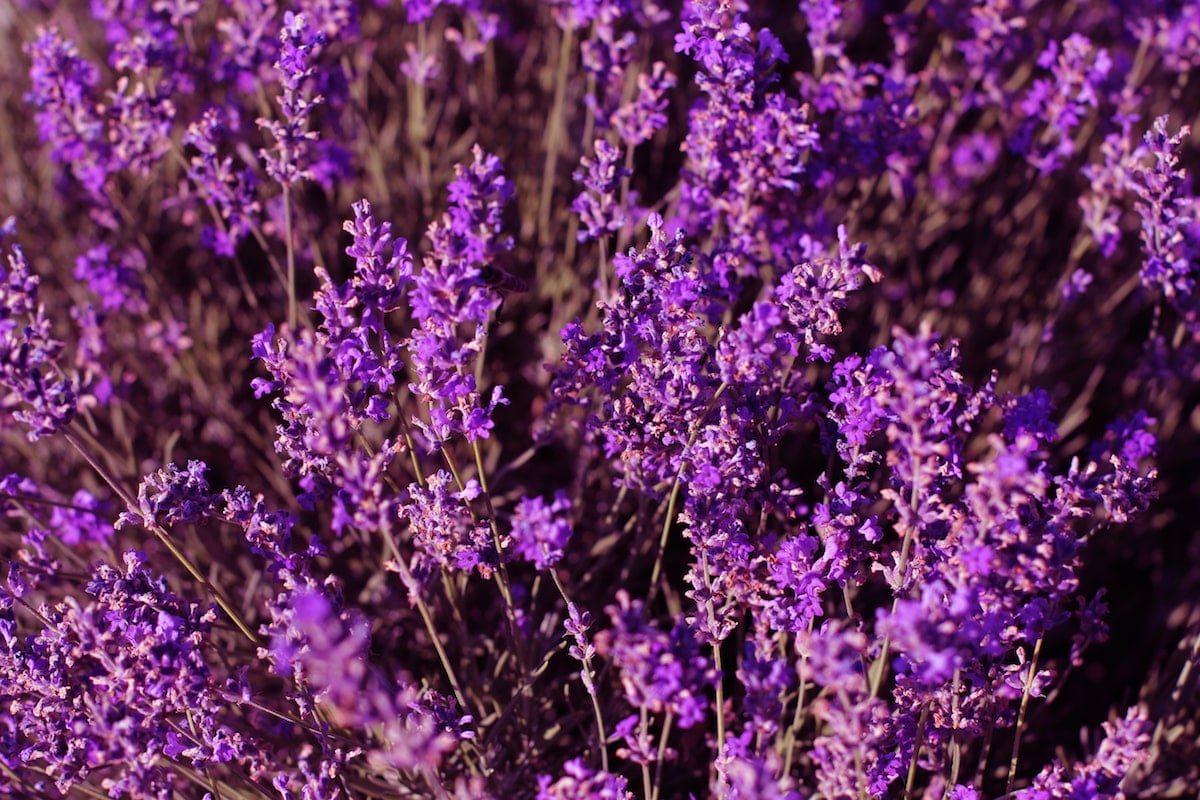
Lavender is easy to overdo and hard to undo. The Herb Society of America’s advice is to use less than you think and add it as you go,1 and University of Illinois Extension says to use it sparingly because a little goes a long way.2 Get the species right, measure carefully, and infuse it rather than chewing on it, and it works in sweets, drinks and a few savory dishes.
At a glance
| Question | Short answer |
|---|---|
| Which lavender? | English (true) lavender, Lavandula angustifolia; the Herb Society calls it the most delightful species to cook with1 |
| Which part? | The flower buds, usually dried31 |
| Fresh vs. dried | Dried buds are about three times as strong as fresh (Herb Society; Maureen Abood)14 |
| Easiest method | Infuse it: syrup, honey, sugar, cream or milk, then strain15 |
| Pairs with | Lemon or orange juice, cream and custard; rosemary, sage and thyme in savory dishes1 |
| Is it safe to eat? | NCCIH says lavender is likely safe in the amounts used in food6 |
| In herbes de Provence? | Not in the French Label Rouge recipe; added to some commercial blends7 |
Choose the right lavender
Lavandula angustifolia, English or true lavender, is a mint-family plant native from northeastern Spain to Italy.83 The Herb Society names it the most delightful species to cook with and ties that to higher levels of linalyl acetate and linalool in its oil.1 Lavandins (L. × intermedia) and L. stoechas are generally high in cineole and camphor, which give a strong, astringent aroma and a bitter taste.1 A few lavandin cultivars, such as ‘Provence’ and ‘Gros Bleu’, are lower in both and can work in savory dishes.1
Common names are a trap. Britannica calls L. stoechas French lavender, while the Herb Society calls it Spanish lavender,31 so “French” on a label tells you little. Look for the botanical name, or for buds sold as culinary lavender. Maureen Abood warns that lavender that is not an edible variety will taste too strong and camphorous.4 Lavender grown for crafts or bought from a florist may have been sprayed; buy food-grade buds or use your own unsprayed plants (practical caution, not a sourced finding).
For cultivar picks by flavor, see the lavender profile.
How much to use
Start small. These are named sources’ amounts (Attributed):
| Source | Use | Amount |
|---|---|---|
| US Lavender Growers Association (Mt Airy Lavender recipe)5 | Simple syrup | 2 tablespoons dried culinary buds per 2 cups water and 2 cups sugar |
| Maureen Abood4 | Lavender sugar | 1 teaspoon dried buds, or 1 tablespoon fresh, per 1 cup sugar |
Fresh vs. dried. The Herb Society says dried buds are three times more concentrated than fresh blooms,1 and Abood likewise uses about a third as much dried as fresh.4 So if a recipe calls for dried lavender and you have fresh, use about three times as much, and the other way round. Neither source says how the figure was reached.
For a recipe of your own with no guide, our Method starting point is 1/2 to 1 teaspoon of dried buds for a batch of cookies or a quart of custard base, tasted and increased next time. That is a starting point, not a measurement.
Infuse it
Steeping lavender in a liquid, fat or sugar and then straining it out gives the aroma without the papery buds.
- Syrup. In the US Lavender Growers Association recipe, water and sugar are brought to a boil until the sugar dissolves, the pan comes off the heat, the buds are stirred in and steeped 1 to 6 hours, and the syrup is strained and kept refrigerated up to three weeks.5 Steeping time is the control: taste at an hour and strain when it is strong enough (our judgment).
- Honey. The Herb Society suggests infusing lavender in simple syrup or honey and using it in lemonade, iced tea, coffee, cocktails or meringue.1
- Cream and custard. The Herb Society also infuses lavender before adding it to pudding, custard, crème fraîche, ice cream or whipped cream.1 Warm the dairy, steep, strain, then proceed with the recipe (common practice).
- Sugar. Abood layers buds with sugar in a clean jar and lets it rest a day before using it; she says it keeps six months or longer and suggests shaking the jar now and then.4 A common instruction says to leave it at least a week; in Abood’s method a day is enough to start using it. Sift out the buds before baking if you want a smooth texture (our judgment).
Lavender sugar is a forgiving way to start, because the flavor is spread through the sugar rather than concentrated in a few buds (editorial).
Flavors that work with it
- Citrus. The Herb Society suggests balancing lavender with something bright, like lemon or orange juice.1 Lavender lemonade is a good first project.
- Dairy and sweets. Cookies, cakes, custards, ice cream and meringue are all on the Herb Society’s list.1 Britannica notes that lavender is sometimes used to flavor beverages and sweets.3
- Savory. The Herb Society suggests lower-camphor lavandins blended with other herbs under the skin of a roast chicken, or with beef, especially alongside rosemary, sage and thyme.1 Illinois Extension lists pork, fish and chicken dishes.2 Lamb is a natural fit in our judgment, though we found no source that names it.
Avoid the soapy taste
Too much lavender is the usual failure. Our description is soapy, perfumy and bitter; the Herb Society attributes the harsh, bitter edge of some lavenders to cineole and camphor,1 which is one more reason to use L. angustifolia. Beyond choosing the right plant:
- Measure; do not eyeball.
- Infuse and strain rather than leaving whole buds in a dish.
- Grind buds finely, or chop them, if they stay in a dough, so no one bites into a whole bud (common practice).
- Add more next time rather than more now, as the Herb Society advises.1
Lavender and herbes de Provence
A common claim puts lavender at the center of herbes de Provence. The French Label Rouge specification for the blend lists thyme, rosemary, savory, oregano and basil, with no lavender,7 though some commercial blends include it. See cooking with herbes de Provence.
Safety
FDA lists lavender among spices generally recognized as safe,9 and NCCIH says lavender is likely safe in the amounts typically used in foods.6 The health research on lavender concerns concentrated oil products and aromatherapy, not food; see the lavender profile.
Storage
We found no published shelf-life figure for dried culinary lavender. Keep the buds airtight and away from light and heat, and judge by smell. See how to store lavender and how to dry lavender.
Not yet measured
- A general amount of lavender per serving; only individual recipe amounts exist.
- The basis of the three-to-one dried-to-fresh figure.
- How cultivar choice changes the right amount.
- How long lavender syrup or sugar keeps its aroma, beyond the recipe authors’ own guidance.
Related
- Lavender
- Lavender substitutes
- How to dry lavender and how to store lavender
- Hyssop vs. lavender, rosemary vs. lavender and sage vs. lavender
- Cooking with herbes de Provence and cooking with hyssop
Footnotes
-
Paola Legarre, Lavender in the Kitchen: Flavor Profiles Across Species and Cultivars, The Herb Society of America, 2025. blog.herbsociety.org · Publication ↩ ↩2 ↩3 ↩4 ↩5 ↩6 ↩7 ↩8 ↩9 ↩10 ↩11 ↩12 ↩13 ↩14 ↩15 ↩16 ↩17 ↩18
-
Herb Gardening: Lavender, University of Illinois Extension. extension.illinois.edu · Reference work ↩ ↩2
-
Lavender, Encyclopaedia Britannica. britannica.com · Reference work ↩ ↩2 ↩3 ↩4
-
Maureen Abood, How to make lavender sugar, 2013. maureenabood.com · Publication ↩ ↩2 ↩3 ↩4 ↩5
-
Lavender Simple Syrup (Mt Airy Lavender), US Lavender Growers Association. uslavender.org · Publication ↩ ↩2 ↩3
-
Lavender, National Center for Complementary and Integrative Health, 2025. nccih.nih.gov · Regulator ↩ ↩2
-
Label Rouge Herbes de Provence (LA 02/03), specification modification request, INAO, 2014. extranet.inao.gouv.fr · Regulator ↩ ↩2
-
Lavandula angustifolia Mill., Plants of the World Online, Royal Botanic Gardens, Kew. powo.science.kew.org · Reference work ↩
-
21 CFR 182.10, US Food and Drug Administration. ecfr.gov · Regulator ↩