Spice Substitutes · Substitutes
Lavender Substitutes, Ranked by the Job Lavender Is Doing
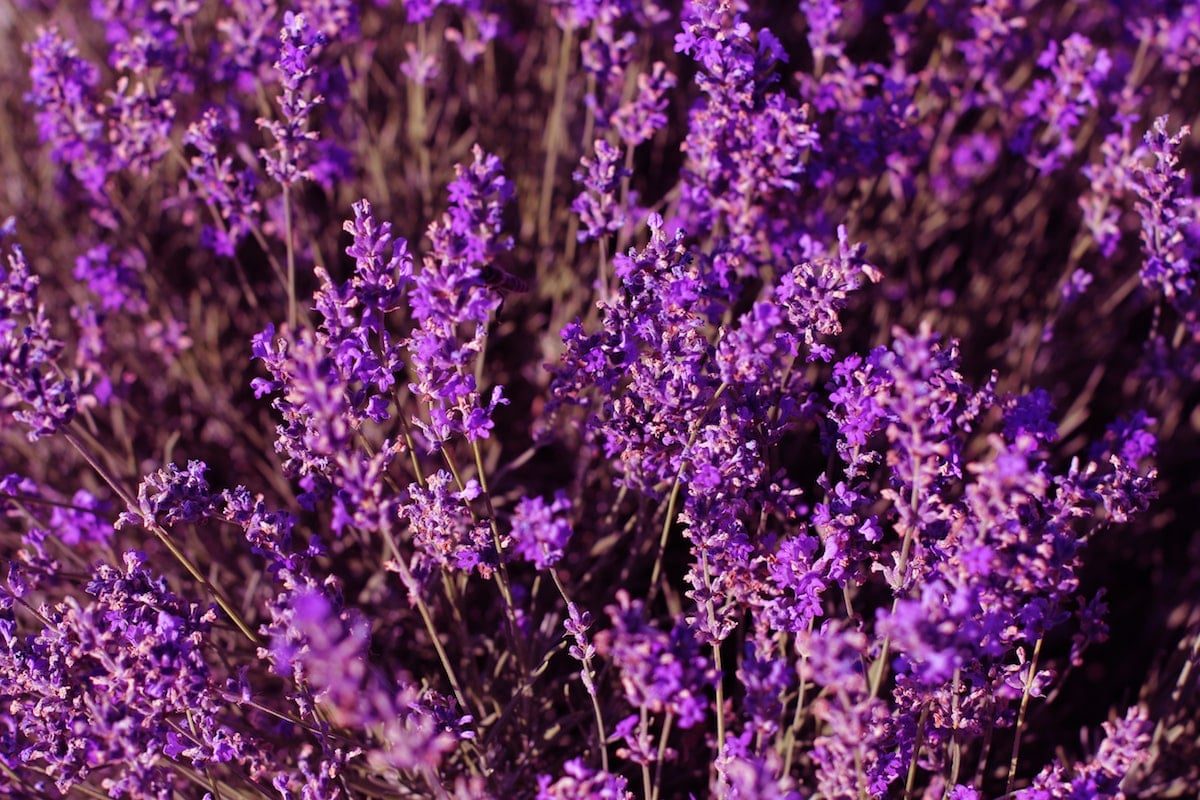
Culinary lavender is usually the dried flower buds of English lavender, Lavandula angustifolia, a mint-family plant native from northeastern Spain to Italy.1 The Herb Society of America credits its pleasant kitchen flavor to linalool and linalyl acetate, and blames the harsher taste of other lavenders on cineole and camphor.2 No common herb is built on the same pair of compounds, so every substitute below covers only part of what lavender does. Which part you need depends on the dish.
Quick answer
| What lavender is doing | Best substitute | Starting amount, per 1 part dried lavender | Treatment |
|---|---|---|---|
| Herbal, resinous note in savory dishes (roast chicken, lamb, rubs) | Rosemary | 1/2 part, then taste | Method |
| One herb in a savory blend | Herbes de Provence whose label lists lavender | 1 part, then taste | Method |
| Floral note in sweets, syrups and drinks | Dried rose petals sold for eating | 1/2 part, then taste | Method |
| Brightness in sweets and drinks | Finely grated lemon or orange zest | 1 part, then taste | Method |
| You have fresh flowers, not dried buds | Fresh culinary lavender | 3 parts fresh | Attributed |
How the ratios on this page are labeled
- Computed: based on a measurable physical relationship, with the source named.
- Attributed: a named source publishes this ratio. We quote it as theirs.
- Disputed: named sources give different answers to the same swap. We show each one and do not average them.
- Method: we found no published ratio. We give a direction and a cautious starting point, and say so.
We found no published ratio for replacing lavender with any other ingredient. Every Method amount below is a starting point, not a measured equivalence. The Herb Society’s general advice for lavender applies to its substitutes too: use less than you think and add as you go.2
If lavender is a savory herb
The Herb Society suggests the lower-camphor lavandins ‘Provence’ and ‘Gros Bleu’ for savory cooking, “especially when pairing with rosemary, sage, and thyme.”2 Those herbs are the natural stand-ins.
1. Rosemary
Rosemary, now classified as Salvia rosmarinus, is in the same plant family as lavender, the Lamiaceae, but a different genus.13 What links the two in a roasting pan is lavender’s resinous side, not its floral one. Analyses of rosemary oil found it dominated by α-pinene (13.5 to 37.7 percent) and 1,8-cineole (16.1 to 29.3 percent), with camphor at 0.7 to 7.0 percent.4 PROSEA credits rosemary’s warm, piny scent to α-pinene.5 Cineole and camphor are the compounds the Herb Society associates with the harsher, more astringent lavenders,2 while English lavender oil is valued for being low in camphor and is led by linalool and linalyl acetate.6
So rosemary gives a dish the piney edge of lavender without its sweet, floral top note. Britannica describes rosemary’s taste as pungent and slightly bitter,7 so too much shows quickly.
Ratio (Method): No published ratio was found. Start with half as much rosemary as lavender, finely chopped or crumbled, then taste and add more. Dried rosemary suits slow cooking: in America’s Test Kitchen’s tests, dried rosemary, sage and thyme fared reasonably well in dishes cooked for more than 20 minutes with a good amount of liquid.8
2. Thyme or lemon thyme
Common thyme’s oil is characterized by thymol and carvacrol,9 which makes it sharper and more savory than lavender. Lemon thyme, another mint-family herb,10 adds a citrus overtone to the usual thyme flavor,11 and that brightness covers a little more of what lavender brings to a roast chicken. Use either one only in savory dishes.
Ratio (Method): No published ratio was found. Start with half as much thyme as lavender, then taste.
3. Herbes de Provence, if the label lists lavender
Lavender is often assumed to be part of herbes de Provence. The French Label Rouge specification for the blend lists thyme, rosemary, savory, oregano and basil, and no lavender.12 Outside that label, blends vary. The Takeout’s Leah Kaplan writes that some makers add lavender “to appease tourists,” which is her account of the blend’s history.13 The Spice House’s own recipe uses 1 teaspoon of dried lavender among about 7 teaspoons of dried herbs and fennel seed, plus a bay leaf.14 Even a blend that contains lavender is mostly thyme, savory and other herbs.
Ratio (Method): No published ratio was found. Use the same amount of blend as the lavender called for, taste, and expect a more thyme-forward result. This option does not suit sweets.
4. Ras el hanout, in North African dishes
Some ras el hanout blends contain lavender. World Spice Merchants lists it on its label alongside cardamom, cloves and red chile flake.15 Because the blend also brings warmth and heat, it belongs in tagines and spice rubs, not in a lavender shortbread.
Ratio (Method): No published ratio was found. Start with half the lavender amount, because the blend’s other spices add up quickly.
If lavender is the floral note in sweets and drinks
Britannica notes that lavender is sometimes used to flavor beverages and sweets,16 and the Herb Society’s suggestions run from cookies, custards and ice cream to lemonade and iced tea.2 Here lavender is the flavor you notice, and nothing in the spice cabinet reproduces it. You can pick another edible flower, or shift the flavor toward citrus or mint.
1. Dried rose petals
Rose is the other common culinary flower. Its oil is led by geraniol, citronellol and nerol rather than linalool,17 and Gernot Katzer describes its taste as flowery, perfume-like and sweet.17 It gives a cake, syrup or tea a floral character, but the result will taste of rose, not lavender. Buy petals sold for eating.
Ratio (Method): No published ratio was found. Start with half as much dried rose as lavender, then taste.
2. Lemon or orange zest
The Herb Society suggests balancing lavender’s flavor with something bright, such as lemon or orange juice.2 Citrus is a familiar partner, and zest brings the citrus aroma without extra liquid. That is kitchen judgment: zest will not taste floral, so the dish becomes a citrus dessert rather than a lavender one.
Ratio (Method): No published ratio was found. Start with about the same volume of finely grated zest as lavender, then taste.
3. Mint
In cooking, “mint” usually means peppermint or spearmint.18 Peppermint’s character comes mainly from menthol and menthone, and spearmint is rich in carvone.19 Mint tastes cool and fresh rather than floral, so it works best where lavender would have been paired with lemon, as in lemonade or iced tea. Add fresh mint late: LSU AgCenter groups it with the delicate herbs and notes that prolonged heat costs flavor and aroma.20
Ratio (Method): No published ratio was found. Start with about the same volume of chopped fresh mint as dried lavender, then taste.
If you have a different form or a different lavender
Fresh flowers for dried buds (Attributed): The Herb Society says dried buds are three times more concentrated than fresh blooms.2 By that figure, use 3 parts fresh flowers for 1 part dried buds. It is their rule of thumb; they do not say how it was measured.
Garden lavandin for English lavender: The Herb Society describes most lavandins as high in cineole and camphor, with a strong, astringent aroma and bitter taste, but names ‘Provence’ and ‘Gros Bleu’ as lower in both and usable in savory dishes.2 If garden lavender is all you have, find out which kind it is, and use it in savory cooking rather than in a custard. Avoid lavender grown for crafts or treated with garden chemicals; that is a practical caution, not a sourced finding.
What isn’t known
- No published measurement compares the strength of lavender with any substitute. Every Method amount above is a starting point.
- Parfait Amour liqueur is sometimes suggested as a lavender stand-in for desserts. Marie Brizard describes its Parfait Amour as made from distilled sweet oranges, orange blossom and an infusion of vanilla, and does not mention lavender.21 We found no source for a version made with lavender.
- Coriander seed oil is mostly linalool, 60 to 80 percent terpene alcohols in one review,22 and linalool is one of lavender’s two main compounds.6 We found no source that tests coriander as a lavender substitute, so it is not ranked here.
- The claim that lavender holds its flavor through long cooking better than other herbs could not be traced to a source.
Related
- Lavender, cooking with lavender, how to dry lavender and how to store lavender
- Rosemary vs. lavender, sage vs. lavender and hyssop vs. lavender
- Rosemary, thyme, lemon thyme, mint, rose petals and coriander
- Herbes de Provence, herbes de Provence substitutes and ras el hanout
- Rosemary substitutes and hyssop substitutes
Footnotes
-
Lavandula angustifolia Mill., Plants of the World Online, Royal Botanic Gardens, Kew. powo.science.kew.org · Reference work ↩ ↩2
-
Paola Legarre, “Lavender in the Kitchen: Flavor Profiles Across Species and Cultivars”, The Herb Society of America, 2025. blog.herbsociety.org · Publication ↩ ↩2 ↩3 ↩4 ↩5 ↩6 ↩7 ↩8
-
Salvia rosmarinus Spenn., Plants of the World Online, Royal Botanic Gardens, Kew. powo.science.kew.org · Reference work ↩
-
Satyal et al., “Chemotypic Characterization and Biological Activity of Rosmarinus officinalis”, Foods, 2017. mdpi.com · Peer-reviewed ↩
-
C.C. de Guzman, Rosmarinus officinalis, Plant Resources of South-East Asia (PROSEA). uses.plantnet-project.org · Reference work ↩
-
Pokajewicz et al., “Chemical Composition of the Essential Oil of the New Cultivars of Lavandula angustifolia Mill. Bred in Ukraine”, Molecules, 2021. mdpi.com · Peer-reviewed ↩ ↩2
-
“Rosemary”, Encyclopaedia Britannica. britannica.com · Reference work ↩
-
“Science: Substituting Dried Herbs for Fresh”, America’s Test Kitchen. americastestkitchen.com · Publication ↩
-
S.H. Widodo, Thymus vulgaris, Plant Resources of South-East Asia (PROSEA). uses.plantnet-project.org · Reference work ↩
-
Thymus citriodorus (Lemon Thyme), North Carolina Extension Gardener Plant Toolbox, NC State University. plants.ces.ncsu.edu · Reference work ↩
-
Busbee, Andrews and Criss, “Lemon Thyme”, UF/IFAS Extension, 2024. sfyl.ifas.ufl.edu · Reference work ↩
-
Label Rouge “Herbes de Provence” (LA 02/03), specification modification request, INAO, 2014. extranet.inao.gouv.fr · Regulator ↩
-
Leah Kaplan, “What Is Herbs De Provence, Really?”, The Takeout, 2025. thetakeout.com · Publication ↩
-
“Herbes De Provence Substitute”, The Spice House. thespicehouse.com · Merchant ↩
-
“Ras El Hanout”, World Spice Merchants. worldspice.com · Merchant ↩
-
“Lavender”, Encyclopaedia Britannica. britannica.com · Reference work ↩
-
“Rose (Rosa damascena Mill.)”, Gernot Katzer’s Spice Pages. gernot-katzers-spice-pages.com · Reference work ↩ ↩2
-
“Mint (plant)”, Encyclopaedia Britannica. britannica.com · Reference work ↩
-
Singh and Pandey, “Prospective of Essential Oils of the Genus Mentha as Biopesticides: A Review”, Frontiers in Plant Science, 2018. frontiersin.org · Peer-reviewed ↩
-
“Flavorful Herbs”, LSU AgCenter. lsuagcenter.com · Reference work ↩
-
“Parfait Amour”, Marie Brizard. mariebrizard.com · Merchant ↩
-
Al-Khayri et al., “Essential Oil from Coriandrum sativum: A Review on Its Phytochemistry and Biological Activity”, Molecules, 2023. mdpi.com · Peer-reviewed ↩