Spice Substitutes · Substitutes
Vanilla Paste Substitutes: Beans, Extract or Powder, and How Much
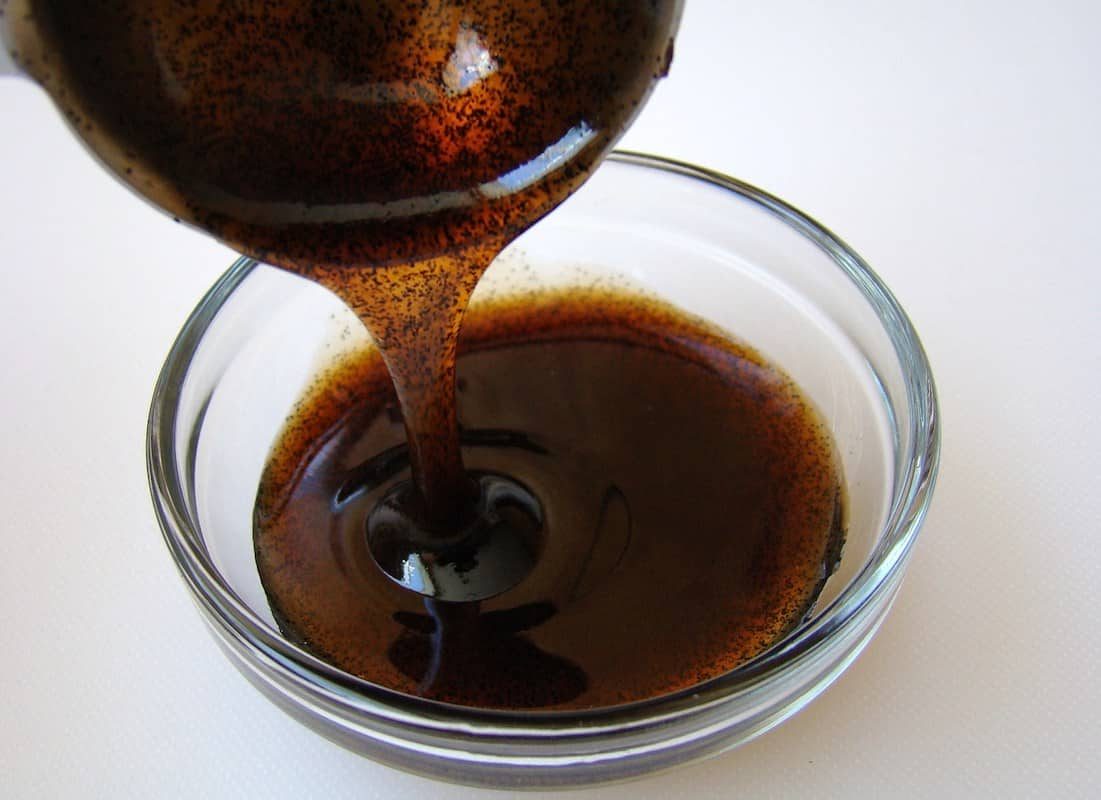
Vanilla bean paste is vanilla extract and vanilla seeds held in a sweet, thick base. Nielsen-Massey’s paste, for example, lists cane sugar, water, vanilla extract, vanilla bean seeds and gum tragacanth as a thickener.1 It does two jobs: it flavors, and it leaves the black specks that show a dessert was made with real bean. Every substitute below covers the flavor. Only a whole bean also gives you the specks.
Quick answer
| What the paste is doing | Best substitute | Starting amount, per 1 Tbsp paste | Treatment |
|---|---|---|---|
| Flavor plus visible specks (custard, ice cream, panna cotta) | Whole vanilla bean, seeds scraped | 1 bean | Attributed |
| Flavor only, in a moist dessert or batter | Vanilla extract | 1 Tbsp | Attributed |
| Flavor in a dry mix, with no added liquid | Vanilla powder | 1/2 to 1 Tbsp | Disputed |
| Flavor on a budget | Imitation vanilla or vanilla flavoring | 1 to 2 Tbsp | Disputed |
How the ratios on this page are labeled
Every ratio carries one of four labels.
- Computed: based on a measurable physical relationship, with the source named.
- Attributed: a named source publishes this ratio. We quote it as theirs.
- Disputed: named sources give different answers to the same swap. We show each one and do not average them.
- Method: we found no published ratio. We give a direction and a cautious starting point, and say so.
We found no US standard of identity for vanilla paste, so its strength is whatever each maker decides. The ratios below are merchants’ and food writers’ rules of thumb, and none says how it was arrived at.
If the paste is there for flavor and specks
Custards, crème brûlée, ice cream, puddings and gelato are the uses Nielsen-Massey suggests for its paste.1 In a pale dessert like these, the specks are part of the point.
1. A whole vanilla bean
Paste gets its specks from vanilla seeds,1 so a scraped bean is the closest match. Split the pod lengthwise and scrape the seeds out with the back of a knife. For a custard or ice cream base, you can also steep the empty pod in the warm milk or cream and lift it out before chilling. That is common practice. Beans are the costly option: hand pollination outside Mexico and a long, labor-intensive cure make vanilla one of the most expensive spices.2
Ratio (Attributed): Nielsen-Massey says to use 1 tablespoon of its paste for every whole vanilla bean,1 so one bean replaces 1 tablespoon of paste. A US tablespoon is three teaspoons (14.79 mL against 4.93 mL),3 so one bean covers 3 teaspoons of paste, or a third of a bean per teaspoon.
If the paste is there for flavor only
In a cake, cookie dough or chocolate dessert, nobody will see the specks. Any form of real vanilla will do.
1. Vanilla extract
Paste is built on extract,1 so the flavor is the same family. In the US, vanilla extract is a solution of the flavor of vanilla beans in water and ethyl alcohol, with at least 35 percent alcohol by volume.4 A paste made with extract is not necessarily alcohol-free either, so check the label if that matters to you. You lose the specks and the paste’s slight sweetness and body.
Ratio (Attributed): Nielsen-Massey says its paste can directly replace extract,1 Wilton gives 1 teaspoon of paste per teaspoon of extract,5 and Healthline 1 tablespoon per tablespoon.6 All three put the swap at one to one, in either direction.
2. Vanilla powder
US rules define vanilla powder as ground vanilla beans or vanilla oleoresin, or both, blended with a carrier.7 Nielsen-Massey’s powder lists maltodextrin and vanilla bean extractives.8 Powder adds no liquid, which suits cookies and dry baking mixes, and Nielsen-Massey says its powder dissolves easily in liquids too.8
Ratio (Disputed):
| Source | Powder per 1 Tbsp paste |
|---|---|
| Nielsen-Massey | 1 Tbsp (it equates 1 Tbsp of extract, paste and powder)18 |
| Healthline | 1/2 to 1 Tbsp, by combining its two figures: 1 Tbsp paste, or 1/2 to 1 Tbsp powder, per 1 Tbsp extract6 |
Starting point (Method): Start with half the volume of powder and taste where you can. Neither source says which powder it measured, and powders differ in carrier and strength.
If you need something cheaper
Imitation vanilla or vanilla flavoring
On a US label, vanilla flavoring is made like extract but with less than 35 percent alcohol,9 while imitation vanilla is not a standardized name at all, so the ingredient list tells you what it is. If it lists vanillin, that compound can be made synthetically or taken from vanilla pods.10 Vanillin is vanilla’s main aroma compound, but natural vanilla flavor has more than 200 components,11 so expect a simpler taste.
Ratio (Disputed): Because paste swaps one to one for extract (above), the extract figures apply. Wilton says 1 1/2 to 2 teaspoons of vanilla flavoring or imitation extract per teaspoon of pure extract;5 Healthline says one to one.6 Start with the same amount and taste.
What not to use
Tonka beans and vanilla products that list tonka. FDA deems any food with added coumarin, including coumarin added as a constituent of tonka beans or tonka extract, to be adulterated,12 and Katzer reports that tonka extract turns up regularly in vanilla extract in Mexico.2 More on this on the vanilla extract substitutes page.
What isn’t known
- No published measurement compares the flavor strength of paste with beans, extract or powder. All the ratios above are rules of thumb.
- Paste has no US standard of identity that we could find, so strength and sweetness vary by brand.
- It is sometimes said that powder made from ground beans is stronger than powder made from extract. We found no source that measured this.
Related
- Vanilla and too much vanilla
- Vanilla extract substitutes, vanilla powder substitutes and vanilla sugar substitutes
- Vanilla powder vs. vanilla paste and vanilla powder vs. vanilla extract
- Vanilla sugar uses
Footnotes
-
Pure Vanilla Bean Paste, Nielsen-Massey Vanillas. nielsenmassey.com · Merchant ↩ ↩2 ↩3 ↩4 ↩5 ↩6 ↩7
-
Gernot Katzer, Vanilla (Vanilla planifolia), Gernot Katzer’s Spice Pages. gernot-katzers-spice-pages.com · Reference work ↩ ↩2
-
NIST Guide to the SI, Appendix B.9, National Institute of Standards and Technology. nist.gov · Standard ↩
-
21 CFR 169.175, Vanilla extract, eCFR. ecfr.gov · Regulator ↩
-
“Clever Substitutes for Vanilla Extract”, Wilton, 2025. wilton.com · Merchant ↩ ↩2
-
Cecilia Snyder, “Vanilla extract substitutes”, Healthline, 2021. healthline.com · Publication ↩ ↩2 ↩3
-
21 CFR 169.179, Vanilla powder, eCFR. ecfr.gov · Regulator ↩
-
Pure Vanilla Powder, Nielsen-Massey Vanillas. nielsenmassey.com · Merchant ↩ ↩2 ↩3
-
21 CFR Part 169 Subpart B, sections 169.175 to 169.182, eCFR. ecfr.gov · Regulator ↩
-
“Vanille, Vanilla und Vanillearoma: Was sind die Unterschiede?”, Verbraucherzentrale, 2026. verbraucherzentrale.de · Publication ↩
-
Cai et al., “Metabolite Transformation and Enzyme Activities of Hainan Vanilla Beans During Curing to Improve Flavor Formation”, Molecules, 2019. mdpi.com · Peer-reviewed ↩