Spice Substitutes · Substitutes
Vanilla Extract Substitutes, Ranked by the Job Vanilla Is Doing
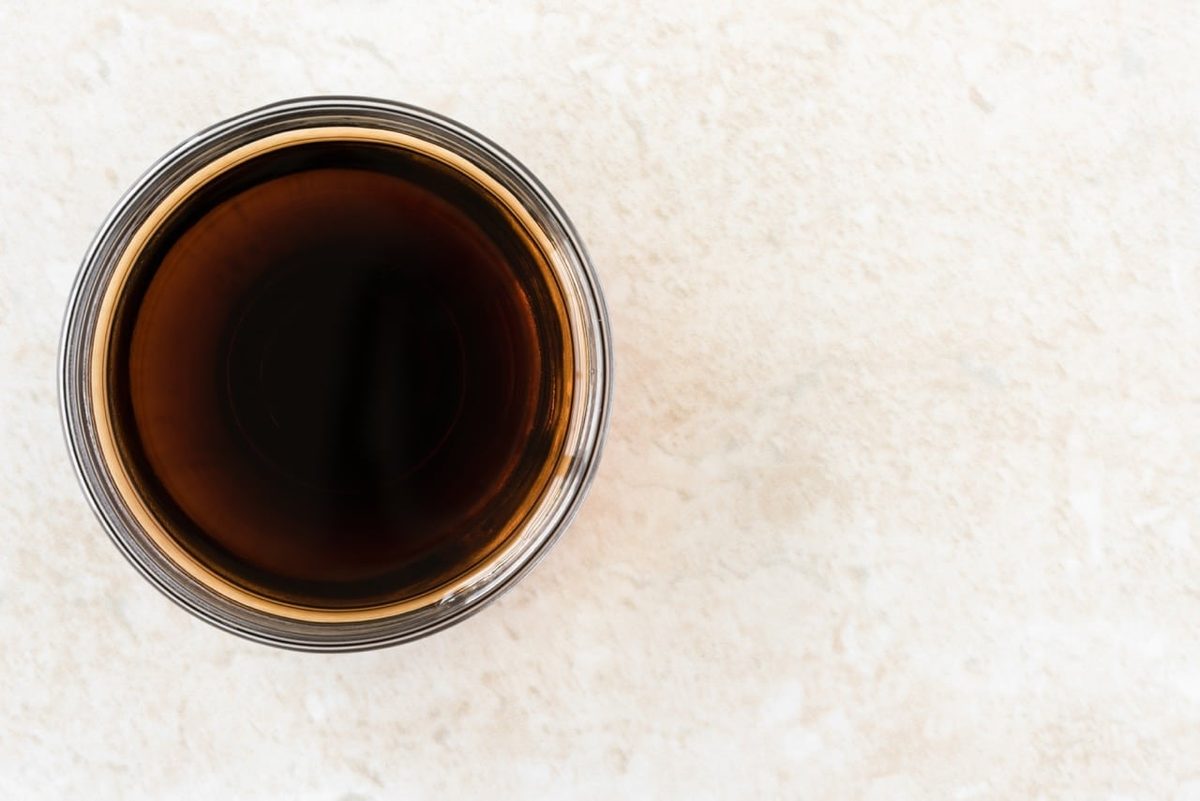
In the US, vanilla extract is a solution of vanilla bean flavor in water and ethyl alcohol, with at least 35 percent alcohol by volume.1 Its main aroma compound is vanillin, about 2 percent of a fully cured bean,2 but natural vanilla flavor is a mix of more than 200 components.3 That gap between one compound and two hundred is what separates the substitutes below. Which one to use depends on whether vanilla is the flavor of the dish or one note among several.
Quick answer
| What vanilla extract is doing | Best substitute | Starting amount, per 1 tsp extract | Treatment |
|---|---|---|---|
| Lead flavor (custard, ice cream, vanilla cake) | Vanilla bean paste | 1 tsp | Attributed |
| Lead flavor, with time to infuse | Whole vanilla bean | About 1/3 bean (1 bean per tablespoon) | Attributed |
| Lead flavor in a dry mix | Vanilla powder | 1/2 to 1 tsp | Disputed |
| Background note in a batter or dough | Maple syrup | 1 tsp | Attributed |
| Background note, on a budget | Imitation vanilla or vanilla flavoring | 1 to 2 tsp | Disputed |
| No vanilla in the house | Almond extract, or leave it out | 1/2 to 1 tsp | Disputed |
How the ratios on this page are labeled
Every ratio carries one of four labels.
- Computed: based on a measurable physical relationship, with the source named.
- Attributed: a named source publishes this ratio. We quote it as theirs.
- Disputed: named sources give different answers to the same swap. We show each one and do not average them.
- Method: we found no published ratio. We give a direction and a cautious starting point, and say so.
None of the published vanilla ratios below say how they were arrived at. They are merchants’ and food writers’ rules of thumb. Federal law sets a minimum vanilla content for extract and for powder, which lets us compute one comparison, but no published study compares the flavor strength of vanilla extract with any substitute.
If vanilla is the lead flavor
Here you want real vanilla in another form. All of the options in this section come from the same cured bean.
1. Vanilla bean paste
Nielsen-Massey’s paste lists cane sugar, water, vanilla extract, vanilla bean seeds and gum tragacanth, a thickener.4 It is extract plus seeds in a sweet gel, so it gives you the same flavor and the black specks of a scraped bean. The company suggests it for crème anglaise, crème brûlée, custards, puddings, gelato and ice cream.4
Ratio (Attributed): Nielsen-Massey says to use the same amount of its paste as the extract called for.4 Wilton gives 1 teaspoon of paste per teaspoon of extract,5 and Healthline 1 tablespoon per tablespoon.6 All three agree. Because paste contains sugar, you are adding a little sweetness too; at a teaspoon or two this rarely matters, in our judgment.
2. A whole vanilla bean
Split the pod lengthwise, scrape out the seeds, and add them to the batter, or steep the split pod in warm milk or cream for a custard or ice cream base. That is common practice. A bean gives you the full flavor of the cured pod without any alcohol.
Ratio (Attributed): Nielsen-Massey equates 1 whole vanilla bean with 1 tablespoon of extract.4 Wilton says 1 large vanilla bean equals about 3 teaspoons of pure extract,5 and Healthline says to use the seeds of 1 whole bean to replace 1 tablespoon of extract.6 A US tablespoon is three teaspoons (14.79 mL against 4.93 mL),7 so the three sources agree. For 1 teaspoon of extract, that works out to about a third of a bean.
Beans are not uniform. VanillaPura, which sells beans, reports seeing anywhere from 2 to 15 beans per ounce,8 so “one bean” is a loose unit. For a recipe where vanilla is the star, a plump bean is a safer bet than a thin one.
3. Vanilla powder
Under US rules, vanilla powder is ground vanilla beans or vanilla oleoresin, or both, blended with a carrier.9 Nielsen-Massey’s version lists maltodextrin and vanilla bean extractives,10 so not every powder is simply ground pods. Powder adds no liquid and no alcohol, which makes it handy in dry baking mixes and icings, two uses Nielsen-Massey suggests.10
Ratio (Disputed):
| Source | Powder per 1 Tbsp extract |
|---|---|
| Nielsen-Massey (its own powder) | 1 Tbsp (“the same measurement”)10 |
| Healthline | 1/2 to 1 Tbsp6 |
What the federal minimums imply (Computed): A US “unit of vanilla constituent” is everything extractable from one unit weight of beans, which is 13.35 ounces at no more than 25 percent moisture.11 Extract must hold at least one unit per gallon,1 and powder at least one unit per 8 pounds.9 Converted to metric (13.35 oz is 378.5 g; a gallon is 3,785 mL; 8 pounds is 3,629 g),7 that is about 0.100 g of beans per milliliter of extract and 0.104 g per gram of powder. So at the legal minimum, 1 teaspoon of extract carries about as much vanilla as 4.7 g of powder. This is our arithmetic from the standards. It describes minimum-strength products only, and many products are stronger. It also compares the weight of beans extracted, not how strong the flavor tastes.
Starting point (Method): Start with half the volume of powder, taste the batter if you can, and add more. That sits inside both published figures.
4. Homemade vanilla extract
If you have beans and a few months, you can make your own. US extract must contain at least 35 percent alcohol by volume.1 VanillaPura advises a spirit of at least 40 percent alcohol (80 proof)8 and says to let it infuse for 12 months or more for full potency.8 Vodka keeps the flavor to the bean; bourbon, rum or brandy will add their own character. That last point is our judgment.
How many beans (Computed and Attributed): The federal minimum for single-strength extract, one unit per gallon,1 works out to about 100 g of beans per liter of finished extract (378.5 g per 3.785 L).117 VanillaPura recommends 1 ounce of beans per 8 ounces (1 cup) of alcohol.8 Weigh the beans rather than counting them, given the range in bean size above. The standard’s unit weight assumes beans at no more than 25 percent moisture;11 Cook’s Vanilla sells “extract grade” beans in the 22 to 27 percent range.12
The bean’s origin shapes the result. Katzer describes Bourbon-type beans from Madagascar and Réunion as the most intense, balanced and somewhat “dark” in flavor, Mexican beans as softer and fresher, and Tahitian beans as more floral.2
If vanilla is a background note
In chocolate chip cookies, brownies, pancakes and spice cakes, vanilla rounds out the other flavors rather than leading. Here a sweet, warm stand-in can fill the gap.
1. Maple syrup
Maple syrup’s flavor develops as the sap is evaporated into syrup.13 One study notes that vanillin and syringaldehyde are flavor-bearing compounds in maple products, thought to come from lignin, and that their levels vary considerably with origin and processing.13 So maple shares vanillin with vanilla, at levels no source here quantifies, alongside many other compounds of its own. Expect maple flavor, not vanilla.
Ratio (Attributed): Wilton says 1 teaspoon of maple syrup for 1 teaspoon of pure extract.5 Healthline gives 1 tablespoon of syrup per tablespoon of extract,6 and Tasting Table’s Jasmine France also calls for a one-to-one swap.14 All three agree. Maple syrup is sweet, but at a teaspoon or so the added sugar is small; in a large batch, you can trim the sugar slightly (our judgment).
2. Imitation vanilla or vanilla flavoring
These are two different things on a US label. Vanilla flavoring is made like vanilla extract but with less than 35 percent alcohol.15 Imitation vanilla is not one of the standardized vanilla names, so the ingredient list is your only guide to what is in it. Vanillin can be made synthetically as well as taken from vanilla pods,16 for instance from paper-industry wood waste, according to Katzer.2 FDA lists vanillin and ethyl vanillin as synthetic flavoring substances generally recognized as safe.17 A product that blends real extract with added vanillin must be labeled vanilla-vanillin and state “contains vanillin, an artificial flavor (or flavoring).”15
Vanillin alone gives the main vanilla note without the other components of the bean,23 which is why it tastes recognizably vanilla but simpler. In a cookie with brown sugar and chocolate, that difference is easy to miss; in a custard it is not. That is our judgment.
Ratio (Disputed):
| Source | Imitation per 1 tsp pure extract |
|---|---|
| Wilton | 1 1/2 to 2 tsp of vanilla flavoring or imitation extract5 |
| Healthline | 1 tsp (1:1)6 |
Starting point (Method): Start with the same amount and taste. Strength varies by brand, and neither source says which products it had in mind.
3. Vanilla sugar
In the US, vanilla sugar is a legal name for vanilla powder blended with sugar.9 Healthline suggests leaving out the extract and using vanilla sugar in place of some of the recipe’s sugar, or sprinkling it on top.6
Ratio (Computed): Using the same federal minimums as for powder above, about 4.7 g of minimum-strength vanilla sugar carries the vanilla of 1 teaspoon of minimum-strength extract.197 Many vanilla sugars sold in the US and Europe are made to other specifications, so check the label. See vanilla sugar for the difference between bean-based and vanillin sugar.
4. Bourbon, rum or brandy
Spirits bring alcohol and their own barrel or fruit flavors, with no vanilla bean. They make sense in a recipe where that flavor fits.
Ratio (Attributed): Wilton says 2 teaspoons of alcohol for 1 teaspoon of pure extract.5 Healthline lists brandy, rum and bourbon without giving an amount.6
If you have no vanilla at all
1. Almond extract
Almond extract is a different flavor, not a vanilla stand-in. It works where nuts, cherries or stone fruit already suit the dish. In our judgment it is far stronger than vanilla, so go easy.
Ratio (Disputed):
Starting point (Method): Start with Wilton’s half and taste. Adding more later is easy; taking it out is not.
2. Warm spices
Wilton suggests 1/2 to 1 teaspoon of baking spices per teaspoon of extract.5 That is a lot of cinnamon or nutmeg for most recipes. In our judgment, start at 1/4 teaspoon and treat it as a new flavor rather than a vanilla replacement.
3. Leave it out
Ratio (Method): In a recipe with chocolate, brown sugar, spices or fruit, a teaspoon of vanilla is usually a supporting note. Leaving it out will make the result a little flatter, not ruin it. In custards, panna cotta and vanilla ice cream, where vanilla is the point, wait until you can get some. This is our judgment, not a tested finding.
What not to use
“Mexican vanilla” of unknown makeup, and tonka beans. FDA deems any food with added coumarin to be adulterated, including coumarin added as a constituent of tonka beans or tonka extract.18 Katzer reports that tonka extract turns up regularly in vanilla extract in Mexico,2 and in 2008 FDA warned that coumarin may be dangerous for people taking blood thinners.19 Avoid any vanilla product that lists tonka, or has a vague ingredient list or none. The concern is tonka, not vanilla grown in Mexico. For the same reason, tonka beans are not a legal stand-in for vanilla in food sold in the US.18
What isn’t known
- No published study compares the flavor strength of vanilla extract with paste, powder, beans, maple syrup or vanillin products. Every Attributed and Disputed ratio above is a rule of thumb.
- The Computed comparisons use the federal minimum vanilla content. They do not describe any particular brand, and they measure extracted bean weight, not taste.
- No source we found measures how much vanillin maple syrup contains relative to vanilla extract.
- It is often said that vanilla powder is stronger than extract. At the federal minimums, a gram of powder and a milliliter of extract carry nearly the same weight of bean extractives, so the claim depends entirely on the product.
Related
- Vanilla and too much vanilla
- Vanilla paste substitutes, vanilla powder substitutes and vanilla sugar substitutes
- Vanilla powder vs. vanilla extract and vanilla powder vs. vanilla paste
- Vanilla sugar and vanilla sugar uses
- Spices to add to chocolate chip cookies
Footnotes
-
21 CFR 169.175, Vanilla extract, eCFR. ecfr.gov · Regulator ↩ ↩2 ↩3 ↩4 ↩5
-
Gernot Katzer, Vanilla (Vanilla planifolia), Gernot Katzer’s Spice Pages. gernot-katzers-spice-pages.com · Reference work ↩ ↩2 ↩3 ↩4 ↩5
-
Cai et al., “Metabolite Transformation and Enzyme Activities of Hainan Vanilla Beans During Curing to Improve Flavor Formation”, Molecules, 2019. mdpi.com · Peer-reviewed ↩ ↩2
-
Pure Vanilla Bean Paste, Nielsen-Massey Vanillas. nielsenmassey.com · Merchant ↩ ↩2 ↩3 ↩4
-
“Clever Substitutes for Vanilla Extract”, Wilton, 2025. wilton.com · Merchant ↩ ↩2 ↩3 ↩4 ↩5 ↩6 ↩7
-
Cecilia Snyder, “Vanilla extract substitutes”, Healthline, 2021. healthline.com · Publication ↩ ↩2 ↩3 ↩4 ↩5 ↩6 ↩7 ↩8
-
NIST Guide to the SI, Appendix B.9, National Institute of Standards and Technology. nist.gov · Standard ↩ ↩2 ↩3 ↩4
-
“How Many Vanilla Beans Do You Need for DIY Vanilla Extract?”, VanillaPura, 2025. vanillapura.com · Merchant ↩ ↩2 ↩3 ↩4
-
21 CFR 169.179, Vanilla powder, eCFR. ecfr.gov · Regulator ↩ ↩2 ↩3 ↩4
-
Pure Vanilla Powder, Nielsen-Massey Vanillas. nielsenmassey.com · Merchant ↩ ↩2 ↩3
-
21 CFR 169.3, Definitions, eCFR. ecfr.gov · Regulator ↩ ↩2 ↩3
-
“How are Madagascar vanilla beans graded?”, Cook’s Vanilla, 2023. cooksvanilla.com · Merchant ↩
-
Jerković et al., “Volatiles from a Rare Acer spp. Honey Sample from Croatia”, Molecules, 2010. mdpi.com · Peer-reviewed ↩ ↩2
-
Jasmine France, “Maple Syrup Is The Vanilla Extract Substitute You’ve Been Looking For”, Tasting Table, 2024. tastingtable.com · Publication ↩
-
21 CFR Part 169 Subpart B, sections 169.175 to 169.182, eCFR. ecfr.gov · Regulator ↩ ↩2
-
“Vanille, Vanilla und Vanillearoma: Was sind die Unterschiede?”, Verbraucherzentrale, 2026. verbraucherzentrale.de · Publication ↩
-
21 CFR 182.60, Synthetic flavoring substances and adjuvants, eCFR. ecfr.gov · Regulator ↩
-
Robert Preidt, “FDA Warns of Dangers of Mexican Vanilla”, HealthDay, 2008. healthday.com · Publication ↩