Spice Fixes · Fix
Too Much Vanilla? How to Rescue a Batter, Frosting or Dessert
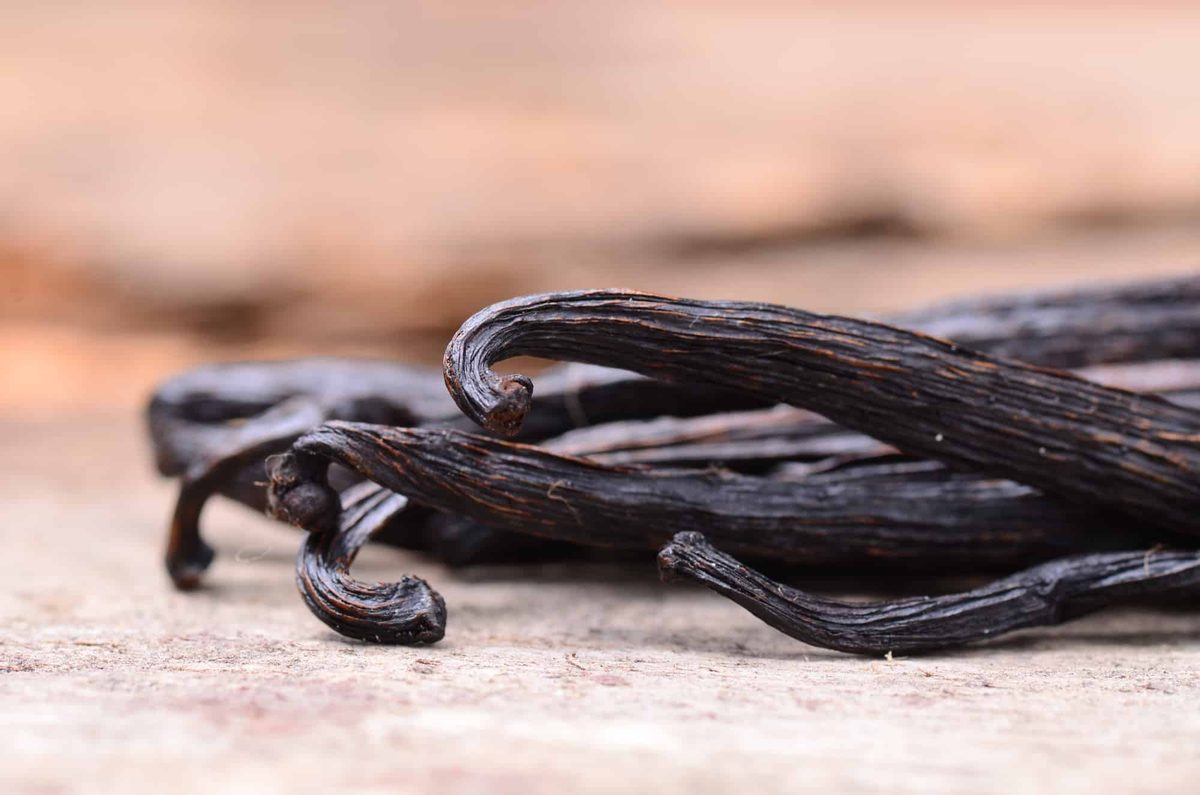
A little extra vanilla rarely ruins anything. A lot of extra shows up two ways: a heavy, perfumey flavor that crowds out butter, fruit or chocolate, or, with extract, a harsh, boozy edge. Here’s how to handle each, fastest fix first.
Quick answer
| What’s wrong | Fastest fix | If that’s not enough |
|---|---|---|
| Batter, dough, custard base or frosting tastes too strongly of vanilla | Make more of the base without vanilla and combine | Add chocolate, warm spices or a tart note |
| Already baked | Pair it: unflavored whipped cream, a tart fruit sauce, a chocolate glaze or frosting with no vanilla | Use it in a trifle or bread pudding with other flavors |
| Harsh, alcoholic taste in something unbaked (frosting, whipped cream, no-bake filling) | Dilute with more of the base | Balance with a little more sweetness |
What you’re tasting
Vanilla’s flavor is a blend of more than 200 compounds, but vanillin is the most abundant odor compound in cured beans, at about 1 to 3 percent of the bean.1 That is the sweet, familiar vanilla note that becomes cloying when overdone.
Vanilla extract adds alcohol on top. In the U.S., anything labeled vanilla extract must contain at least 35 percent ethyl alcohol by volume2 and at least one “unit” of vanilla per gallon, meaning the flavor extracted from 13.35 ounces of beans.23 So a heavy pour of extract adds more alcohol as well as more vanilla.
A common belief is that baking burns all of that alcohol off. It doesn’t. According to the USDA’s alcohol retention figures, as tabulated by Idaho State University, baked goods and meats cooked for 25 minutes without stirring keep about 45 percent of their alcohol.4 So some of the extract’s alcohol stays in a baked cake, and in frosting or anything unbaked, none of it cooks off.
Too much vanilla flavor
Dilute. Make more of the batter, dough or frosting without vanilla and combine. Doubling the rest halves the vanilla in each bite. If you don’t want a double batch, split what you have, bring half up to a full batch without vanilla, and save the other half the same way for later. This is the only fix that lowers the amount of vanilla rather than covering it.
Add a competing flavor. These are cooking judgment, not tested remedies:
- Chocolate. Cocoa or melted chocolate in the batter, or a chocolate glaze on top. Chocolate and vanilla pair naturally, and chocolate’s bitterness takes the spotlight.
- Warm spices. A little cinnamon, nutmeg, cardamom or cloves gives the palate something else to notice. Go easy: they can overpower too. See too much cinnamon if you overshoot.
- A tart note. Lemon or lime zest and a little juice, or a tart fruit sauce on the side, cut through a heavy, sweet vanilla flavor.
- A pinch of salt in frosting or caramel adds a savory counterpoint to the sweetness.
- Molasses or brown sugar for darker, slightly bitter depth in cookies and spice cakes.
Frost or fill with something vanilla-free. On an already-baked cake or cookies, a chocolate, citrus, coffee or cream cheese frosting with no vanilla in it gives each bite a second flavor.
Harsh or boozy taste from extract
This shows up most in things that are never baked: frosting, whipped cream, no-bake cheesecake, milkshakes.
Dilute first. More of the base is the reliable fix.
A little more sweetness. In controlled taste tests with pure solutions, sugar was the strongest suppressor of other tastes, including bitterness.5 We found no test on vanilla extract specifically, so treat this as balancing: add a spoonful of powdered sugar to frosting, taste, and stop when it’s right.
Leaving the batter to sit. It’s often said that letting batter or dough rest lets the extract’s alcohol evaporate. We found no source that measured this, so we can’t say how much it helps.
Preventing it next time
Measure away from the bowl. Pouring extract straight from the bottle into a measuring spoon held over the batter is how a teaspoon becomes a tablespoon. This is common kitchen practice.
Know your product. Extract, vanilla powder, paste and whole beans are not interchangeable by volume, and we found no measured equivalence between them. Follow the recipe’s form, or start with less when swapping and taste.
Start at the recipe’s amount and adjust next time. No source gives a standard amount of vanilla per cup of flour or per batch, so the recipe is your best guide.
Related
Footnotes
-
Cai Y et al., Metabolite Transformation and Enzyme Activities of Hainan Vanilla Beans During Curing to Improve Flavor Formation, Molecules, 2019. pmc.ncbi.nlm.nih.gov · Peer-reviewed ↩
-
21 CFR 169.175, Vanilla extract, U.S. Food and Drug Administration. ecfr.gov · Regulator ↩ ↩2
-
21 CFR 169.3, Definitions, U.S. Food and Drug Administration. ecfr.gov · Regulator ↩
-
Barbara Gordon, No Worries, the Alcohol Burns Off During Cooking—But, Does It Really?, Idaho State University, 2019 (tabulating the USDA Table of Nutrient Retention Factors, Release 6). isu.edu · Reference work ↩
-
Green BG et al., Taste Mixture Interactions: Suppression, Additivity, and the Predominance of Sweetness, Physiology & Behavior, 2010. pmc.ncbi.nlm.nih.gov · Peer-reviewed ↩