Blog · Storage
Can You Freeze Basil? Leaves, Oil Cubes, Pesto and How Long They Keep
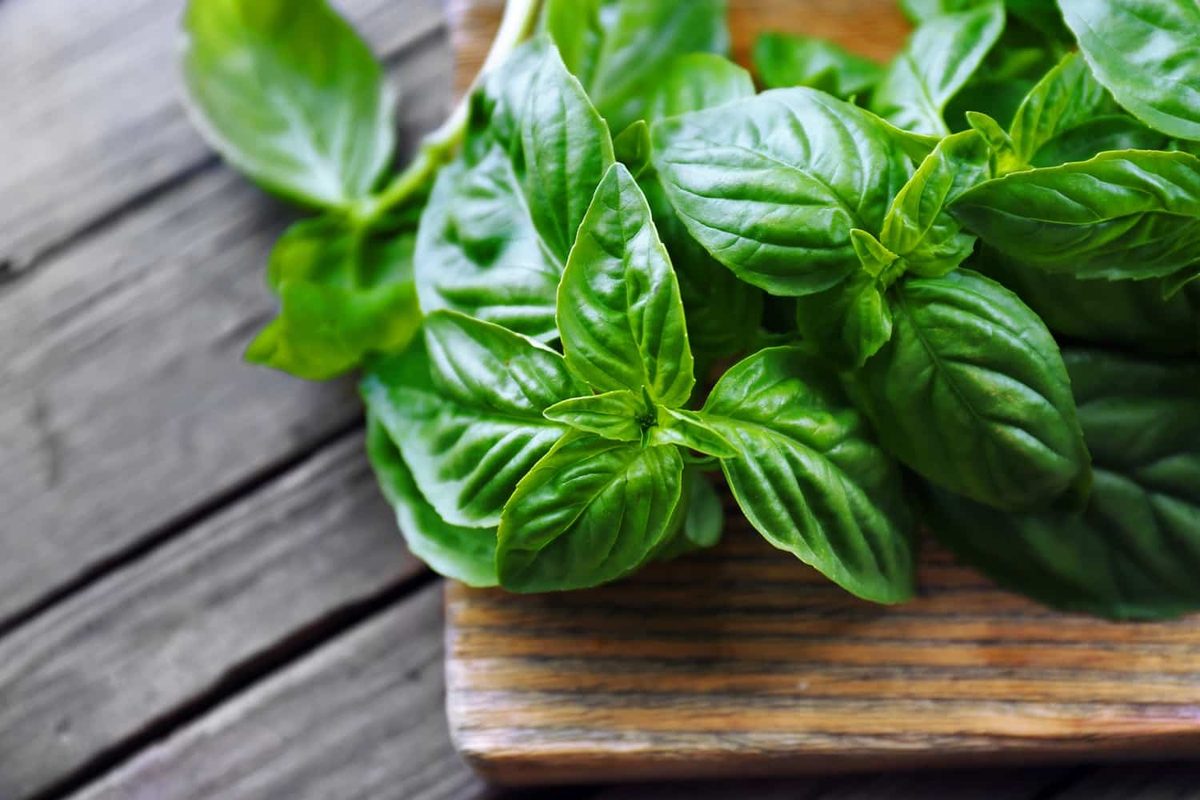
Yes. Basil is on the list of herbs that extension services say freeze well,12 and frozen herbs can be used in the same amounts as fresh.1 The trade-off is texture: frozen herbs are limp when thawed, so they belong in cooked dishes, sauces and pesto rather than on top of a salad.12 The choices that matter are whether to blanch first, whether to freeze in water or oil, and how to handle basil in oil safely.
At a glance
| Question | Short answer |
|---|---|
| Does basil freeze? | Yes; Penn State and SDSU Extension both list it.12 |
| Best methods | Single leaves on a tray, chopped leaves in water cubes, chopped or pureed basil in oil, or finished pesto.134 |
| Blanch first? | Optional. Published times run from 3 to 15 seconds (table below). |
| How long? | SDSU: frozen herbs are good for up to six months; NDSU: pesto up to six months.24 |
| Thaw before cooking? | No. Add it frozen.13 |
| Basil in oil | Freeze it. Refrigerated, use within 4 days; never keep it at room temperature.52 |
Why freeze instead of refrigerating
Basil is fussy about cold. Rutgers Cooperative Extension gives 55°F as its optimal storage temperature and warns that basil is susceptible to chilling injury, which shows up as blackened leaves, discolored stems and a loss of aroma.6 For keeping a few days’ worth, see how to store basil. For longer than that, the options are freezing or drying.
Four ways to freeze basil
Start the same way for all of them: rinse the leaves in clear water and pat them dry.13
1. Loose leaves on a tray. Strip the leaves off the stems, spread them in a single layer on a cookie sheet and freeze.1 SDSU puts the time at about one to two hours, until frozen solid.2 Then bag them. Because the leaves froze separately, you can take out just what you need.1
2. Chopped basil in water cubes. Oklahoma State puts about a tablespoon of chopped herbs in each section of an ice cube tray and tops it up with water; SDSU fills the tray half full of water and adds a tablespoon of herbs.32 Bag the cubes once frozen and label them.3
3. Basil in oil. Both Penn State and Oklahoma State say herbs frozen in oil keep their color better than herbs frozen on their own, and Oklahoma State says the method works well with basil.13 Their proportions differ slightly:
| Source | Oil to chopped herbs |
|---|---|
| Oklahoma State University Extension3 | 1/3 to 1/2 cup oil per 2 cups herbs |
| SDSU Extension2 | 1/3 cup oil per 2 cups herbs |
Oklahoma State suggests a neutral-flavored oil such as canola.3 NDSU Extension also suggests pureeing basil and freezing it in an ice cube tray.4 Oklahoma State also gives a flat-pack version that saves freezer space: put a thin layer of chopped herbs and oil in a zipper-lock bag and freeze it flat.3
4. Pesto. NDSU Extension says pesto keeps up to six months in freezer containers.4 Freezing it in portions means you never thaw more than one meal’s worth.
Should you blanch basil first?
Blanching is optional, and the sources do not agree on how long to do it:
| Source | Blanching time | Then |
|---|---|---|
| NDSU Extension (Garden-Robinson)4 | 3 seconds in boiling water | Freeze |
| Penn State Extension1 | 15 seconds | Freeze |
| Oklahoma State University Extension3 | 15 seconds | Plunge in ice water, then freeze |
| SDSU Extension2 | 15 seconds | Ice water, pat dry |
A widely repeated instruction is to blanch for 1 to 2 seconds; we found no published source for that figure. We have not averaged the times above.
As for why: NDSU notes that pesto may oxidize and turn brown, and that some people blanch the leaves for a few seconds to prevent it.4 For vegetables in general, USDA’s Food Safety and Inspection Service explains that freezing only slows the enzyme activity in food rather than stopping it, and recommends blanching or partially cooking vegetables before freezing.7 A common claim says blanching basil kills the bacteria that cause it to break down. None of these sources says that, and we found no study comparing blanched and unblanched frozen basil.
Safety: basil in oil
Herbs in oil are a known botulism risk. A 2011 review in Food Protection Trends explains that vegetables and herbs in oil provide the conditions needed for botulinum toxin production.5 Its guidance:
- The safest recommendation is to freeze herbs stored in oil.5 A frozen herb-in-oil mixture would not support pathogen growth, though many oils do not solidify in the freezer.5
- If refrigerated, use it within 4 days or discard it.5
- Never store herbs in oil at room temperature; SDSU says to freeze the mixture right away.32
For refrigerated pesto, the published limits differ:
| Source | Pesto in the refrigerator |
|---|---|
| Nummer et al., Food Protection Trends, 20115 | Up to 3 days |
| NDSU Extension, 20204 | Up to 5 days, airtight |
When sources differ on a food-safety limit, the shorter one is the cautious choice. Freezing is the answer for anything you will not eat within that window.
How long frozen basil keeps
| Source | Scope | Figure |
|---|---|---|
| SDSU Extension2 | Frozen herbs in general, airtight | Up to six months |
| NDSU Extension4 | Pesto in freezer containers | Up to six months |
| Penn State and Oklahoma State Extension13 | Frozen herbs | No time given; label and date the bag |
These are quality limits, not safety dates. FSIS says food kept constantly at 0°F will always be safe and that only quality suffers with long freezer storage.7 Freezer burn does not make food unsafe; it only dries it in spots.7 Basil from the back of the freezer will not hurt you, but it may not be worth using.
Using frozen basil
- Don’t thaw it first. Add it frozen to soups, sauces and stews.13 Dropping a cube into a simmering pan is the whole point of the method.
- Use the same amount as fresh.1
- Expect limp leaves. Frozen herbs go limp when thawed,12 so keep fresh basil for garnishes and salads.
- Wrap it well. Penn State suggests wrapping strong-smelling herbs in foil so their aroma does not move into other foods.1
- Refreezing. FSIS says food thawed in the refrigerator is safe to refreeze, though quality may drop from moisture lost in thawing.7 For basil, freezing in small portions avoids the question.
Not yet measured
- How long frozen basil keeps its aroma, measured on basil rather than herbs in general.
- Whether blanching changes the flavor or color of frozen basil, and which blanching time works best.
- Whether Genovese, Thai, lemon or holy basil freeze differently. No source we found compares them.
Related
- Basil
- How to store basil
- How to dry basil
- Dried basil vs fresh
- Cooking with basil
- Can you freeze mint?
- Can you freeze cilantro?
Footnotes
-
Freezing Herbs, Penn State Extension. extension.psu.edu · Reference work ↩ ↩2 ↩3 ↩4 ↩5 ↩6 ↩7 ↩8 ↩9 ↩10 ↩11 ↩12 ↩13 ↩14 ↩15 ↩16
-
Preserving Herbs, South Dakota State University Extension. extension.sdstate.edu · Reference work ↩ ↩2 ↩3 ↩4 ↩5 ↩6 ↩7 ↩8 ↩9 ↩10 ↩11 ↩12
-
Freezing Herbs, Oklahoma State University Extension. extension.okstate.edu · Reference work ↩ ↩2 ↩3 ↩4 ↩5 ↩6 ↩7 ↩8 ↩9 ↩10 ↩11 ↩12 ↩13
-
Julie Garden-Robinson, Prairie Fare: Inspire Your Menus With Fresh Basil, NDSU Extension. ag.ndsu.edu · Reference work ↩ ↩2 ↩3 ↩4 ↩5 ↩6 ↩7 ↩8
-
Nummer, Schaffner, Fraser and Andress, Current Food Safety Issues of Home-prepared Vegetables and Herbs Stored in Oil, Food Protection Trends, 2011. foodprotection.org · Peer-reviewed ↩ ↩2 ↩3 ↩4 ↩5 ↩6
-
Fact Sheet FS1283, Rutgers Cooperative Extension. njaes.rutgers.edu · Reference work ↩
-
Freezing and Food Safety, USDA Food Safety and Inspection Service. fsis.usda.gov · Regulator ↩ ↩2 ↩3 ↩4