Cooking · Cooking with
Cooking With Basil: When to Add It, How to Cut It and Which Basil to Use
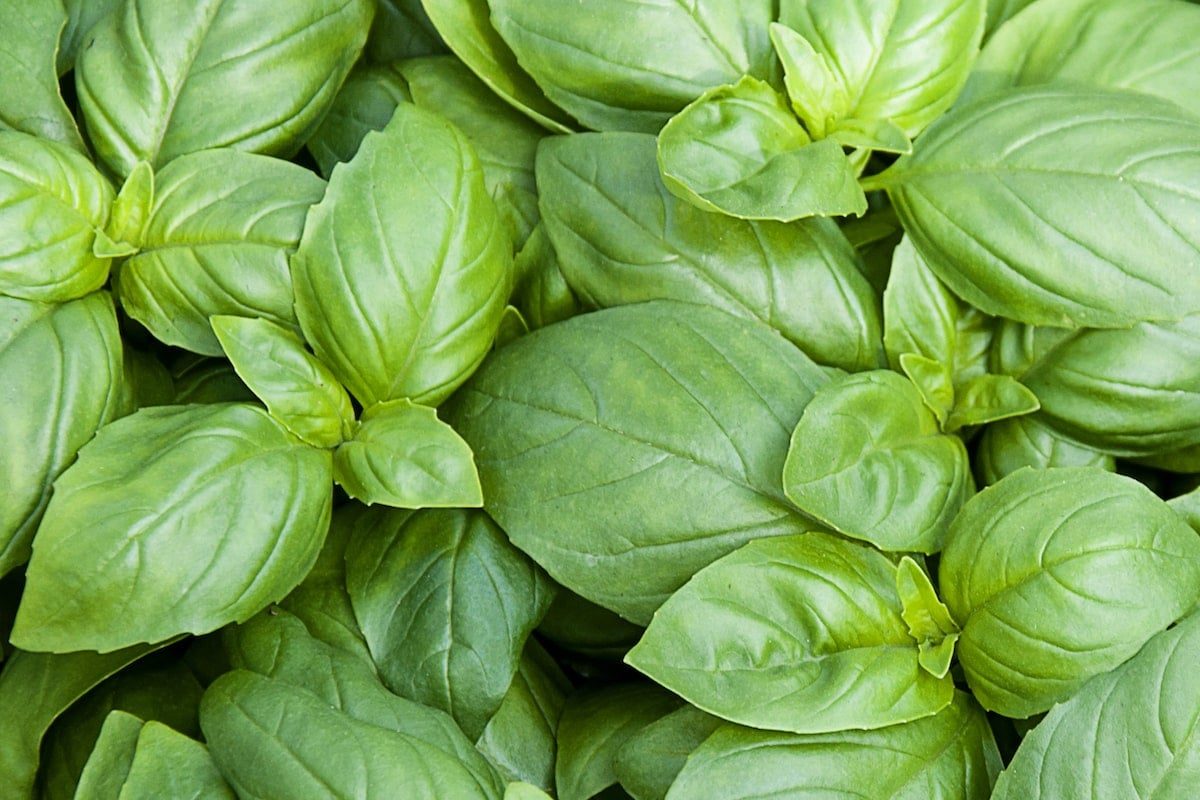
Basil is a delicate herb: its aroma sits in volatile compounds that heat drives off, so most of what goes wrong with it comes down to adding it too early, cutting it too soon, or using the wrong basil for the dish. This page covers timing, cutting, amounts, the main dishes it is used in, and when dried basil makes sense. For the plant itself and its chemistry, see the basil profile.
At a glance
| Question | Answer | Source |
|---|---|---|
| When to add fresh basil to a cooked dish | A minute or two before the end of cooking | LSU AgCenter1 |
| When to add it to a long simmer | Sources differ; see the timing table below | LSU; University of Delaware12 |
| Tear or chop? | Chop; tasters slightly preferred it | America’s Test Kitchen3 |
| When to cut it | Just before serving, because cut basil darkens | America’s Test Kitchen4 |
| Fresh to dried | 1 tablespoon finely cut fresh = 1 teaspoon crumbled dried | LSU AgCenter1 |
| Starting amount | 1 to 2 teaspoons for six servings (a general rule for medium-strength herbs) | University of Delaware2 |
| When dried basil works | Dishes that cook more than 20 minutes with plenty of liquid | America’s Test Kitchen5 |
Choose the right basil
The basil in most Western supermarkets is sweet basil, Ocimum basilicum. PROSEA lists its Italian uses as pizzas, pasta, chicken and cheese dishes, and pesto.6 Two Asian basils matter for cooking:
- Thai basil is a form of the same species, sold under the Thai name horapha;6 Britannica gives it as O. basilicum variety thyrsiflora.7 Sherri Pengjad of Thai Foodie describes it as sturdier than Italian basil and better able to hold up in hot dishes.8 See Thai basil.
- Holy basil (bai kaphrao in Thai, tulsi in Indian grocery stores) is the basil in phat kaphrao, the Thai stir-fry.9 Pad kra pao literally means “holy basil stir fry.”10 See holy basil.
Swapping them. Pailin Chongchitnant of Hot Thai Kitchen prefers Italian basil as the substitute when holy basil is unavailable, and says Thai basil also works.10 So the basils can stand in for one another, though Thai Foodie notes the dish will taste less traditional.8 PROSEA also calls sweet basil an important ingredient of Thai cuisine,6 so “Thai food means Thai basil” is a simplification. Follow the recipe’s basil when you can. See basil vs. Thai basil and Thai basil vs. holy basil.
A figure of about 100 kinds of basil circulates widely; we found no source for it.
Add it late
America’s Test Kitchen explains that delicate herbs, basil among them, tend to be more volatile than hearty ones,5 and LSU AgCenter notes that prolonged heat can cause flavor and aroma losses.1 Sturdier herbs such as oregano, rosemary and thyme go in earlier.1 That is the reason for adding basil late. How late depends on whom you ask:
| Source | Advice | Scope |
|---|---|---|
| LSU AgCenter | Add delicate herbs such as basil a minute or two before the end of cooking1 | Basil specifically |
| Pok Pok (Andy Ricker), stir-fried chicken with holy basil | Stir the basil in just until it wilts and smells fragrant, 15 seconds or so9 | One stir-fry recipe |
| University of Delaware | For dishes that simmer a long time, add herbs in the last 45 minutes2 | Herbs in general, not basil specifically |
The disagreement is partly one of scope: LSU’s advice is aimed at basil, Delaware’s at herbs as a group. For basil in a long-cooked sauce, a common compromise is to add some early for background and a handful at the end for aroma. That is kitchen practice, not a sourced rule.
Chop it, and chop it last
Tearing versus chopping. A widely repeated claim says torn basil tastes better than cut basil. America’s Test Kitchen tested this in a quick tomato sauce with basil and a black bean salad with cilantro: tasters slightly preferred the chopped herbs, which spread more evenly through the dish, while big torn pieces could taste overwhelming. Its conclusion is to chop herbs for flavor throughout a dish.3
Blackening. Freshly chopped basil darkens quickly through oxidation, and ATK notes that the color change does not reduce its flavor.4 ATK tried several ways to keep it green. Blanching in boiling water kept the leaves bright green but was too much work for a garnish; its advice is to chop basil and add it to dishes just before serving.4 So the knife is not the problem; time is. (Blackened leaves in the refrigerator are a different problem, chilling injury; see Storage below.)
Pesto
Pesto is the dish where basil does all the work. Samin Nosrat’s mortar-and-pestle version, adapted from Lidia Caveri, gives a useful sense of proportion:11
| Ingredient | Amount |
|---|---|
| Basil leaves, tightly packed, preferably Genovese | 2 cups (70 grams) |
| Pine nuts | 1/4 cup (30 grams) |
| Garlic | 1 medium clove |
| Parmigiano-Reggiano, finely grated | 2/3 cup (60 grams) |
| Pecorino, preferably pecorino sardo | 1/3 cup (30 grams) |
| Extra-virgin olive oil | 1/3 cup (80 ml), plus more as needed |
| Sea salt | A pinch with the basil |
She pounds the pine nuts to a paste first, then adds the basil with a pinch of salt, which she says helps break down the leaves.11 The recipe dresses 1 pound of trofie or spaghetti, and leftovers go under a layer of olive oil in the refrigerator for up to 2 days.11
Bitter pesto. Tasting Table points to two basil-related causes: blending the leaves too long can bruise them and release bitter compounds, and mature or damaged leaves tend to taste more bitter than young ones.12 If you use a blender or food processor, pulsing briefly is the obvious precaution (our suggestion, not a tested method). See Genovese basil for the cultivar most pesto recipes call for.
Thai stir-fries
In Andy Ricker’s kai kaphrao, the holy basil is stirred in only until it wilts and smells fragrant, about 15 seconds.9 Thai Foodie describes Thai basil as stirred in right before serving.8 The same late-addition rule applies, compressed into a much hotter, faster dish. Hot Thai Kitchen’s pad kra pao uses 1 1/4 cups of holy basil or regular basil leaves.10
Dried basil
Dried basil is a different ingredient, not a weaker copy of fresh:
- Britannica describes dried basil leaves as less fragrant and more pungent than fresh.7
- America’s Test Kitchen lists basil among the herbs that are better fresh, because delicate herbs are much weaker in flavor once dried.13
- In ATK’s testing, dried herbs held up best in recipes with fairly long cooking times (more than 20 minutes) and a good amount of liquid.5
So use dried basil in soups, braises and slow tomato sauces, and fresh basil where it is the point of the dish. For converting, LSU AgCenter’s rule is 1 tablespoon of finely cut fresh herbs to 1 teaspoon of crumbled dried;1 ATK’s tests found 1 part dried to 3 parts fresh came closest.5 Both work out to the same 1:3. See dried basil vs. fresh.
How much to use
The University of Delaware groups basil with the medium-strength herbs and suggests 1 to 2 teaspoons for six servings as a moderate amount.2 That is a general starting point for the herb group, not a basil-specific test, and it does not fit dishes where basil is the main ingredient, such as pesto (see the recipe amounts above). Taste and add more at the end.
Buying in season
Basil is extremely frost-sensitive,7 which is why it is a summer herb in temperate gardens. A common claim says off-season basil is pricier and poorer; we found no price data to confirm it. Limp, wilted leaves have lost the aroma you are buying basil for, so choose perky ones; that is kitchen judgment.
Storage, briefly
Rutgers Cooperative Extension puts the best storage temperature for fresh basil at 55°F, and notes that colder storage causes chilling injury, with blackened leaves and loss of aroma.14 Keeping the stems in water can reduce water loss.14 For freezing, Penn State Extension describes filling an ice cube tray half full of water and adding about a tablespoon of herbs to each section; frozen herbs go into cooked dishes without thawing and are generally not attractive as garnishes.15 Full guides: how to store basil, can you freeze basil? and how to dry basil.
Safety
Basil contains estragole. Germany’s Federal Institute for Risk Assessment (BfR) says estragole and related compounds are mutagenic and carcinogenic in animal studies, and names basil-containing pesto among foods that may contain high amounts.16 The evidence is from animal studies and exposure estimates, not from people eating basil. See the basil profile for the regulatory history. If a dish has too much basil, see too much basil.
Related
- Basil, the full profile, and basil uses
- Thai basil, holy basil, Genovese basil
- Basil vs. oregano, basil vs. Thai basil
- Thai basil substitutes
Footnotes
-
“Flavorful Herbs”, LSU AgCenter. lsuagcenter.com · Reference work ↩ ↩2 ↩3 ↩4 ↩5 ↩6 ↩7
-
“Using Herbs and Spices”, University of Delaware Cooperative Extension, 2025. udel.edu · Reference work ↩ ↩2 ↩3 ↩4
-
“Tearing vs. Chopping Herbs”, America’s Test Kitchen. americastestkitchen.com · Publication ↩ ↩2
-
“Chopping and Using Fresh Basil”, America’s Test Kitchen. americastestkitchen.com · Publication ↩ ↩2 ↩3
-
“Science: Substituting Dried Herbs for Fresh”, America’s Test Kitchen. americastestkitchen.com · Publication ↩ ↩2 ↩3 ↩4
-
Aguilar, Pham and Oyen, Ocimum basilicum, Plant Resources of South-East Asia (PROSEA). uses.plantnet-project.org · Reference work ↩ ↩2 ↩3
-
“Basil”, Encyclopaedia Britannica. britannica.com · Reference work ↩ ↩2 ↩3
-
Sherri Pengjad, “Thai Basil: What It Is and How to Use It”, Thai Foodie, 2026. thai-foodie.com · Publication ↩ ↩2 ↩3
-
Andy Ricker with J.J. Goode, “Stir-fried chicken with hot basil”, from Pok Pok, via The Splendid Table. splendidtable.org · Publication ↩ ↩2 ↩3
-
Pailin Chongchitnant, “Pad kra pao beef”, Hot Thai Kitchen. hot-thai-kitchen.com · Publication ↩ ↩2 ↩3
-
Samin Nosrat, “Basil Pesto”, Ciao Samin. ciaosamin.com · Publication ↩ ↩2 ↩3
-
Sara Klimek, “5 Possible Reasons Your Homemade Pesto Has A Bitter Taste”, Tasting Table, 2026. tastingtable.com · Publication ↩
-
Danielle Lapierre, “When You Should Actually Use Dried Herbs”, America’s Test Kitchen, 2022. americastestkitchen.com · Publication ↩
-
Fact Sheet FS1283, Rutgers Cooperative Extension, 2018. njaes.rutgers.edu · Reference work ↩ ↩2
-
Martha Zepp, “Freezing Herbs”, Penn State Extension, 2025. extension.psu.edu · Reference work ↩
-
“Alkenylbenzenes in food: how large is the health risk?”, BfR Communication No. 22/2022. bfr.bund.de · Regulator ↩