Spices · Profile
Habanero Powder: Very Hot, Fruity Capsicum chinense, Ground
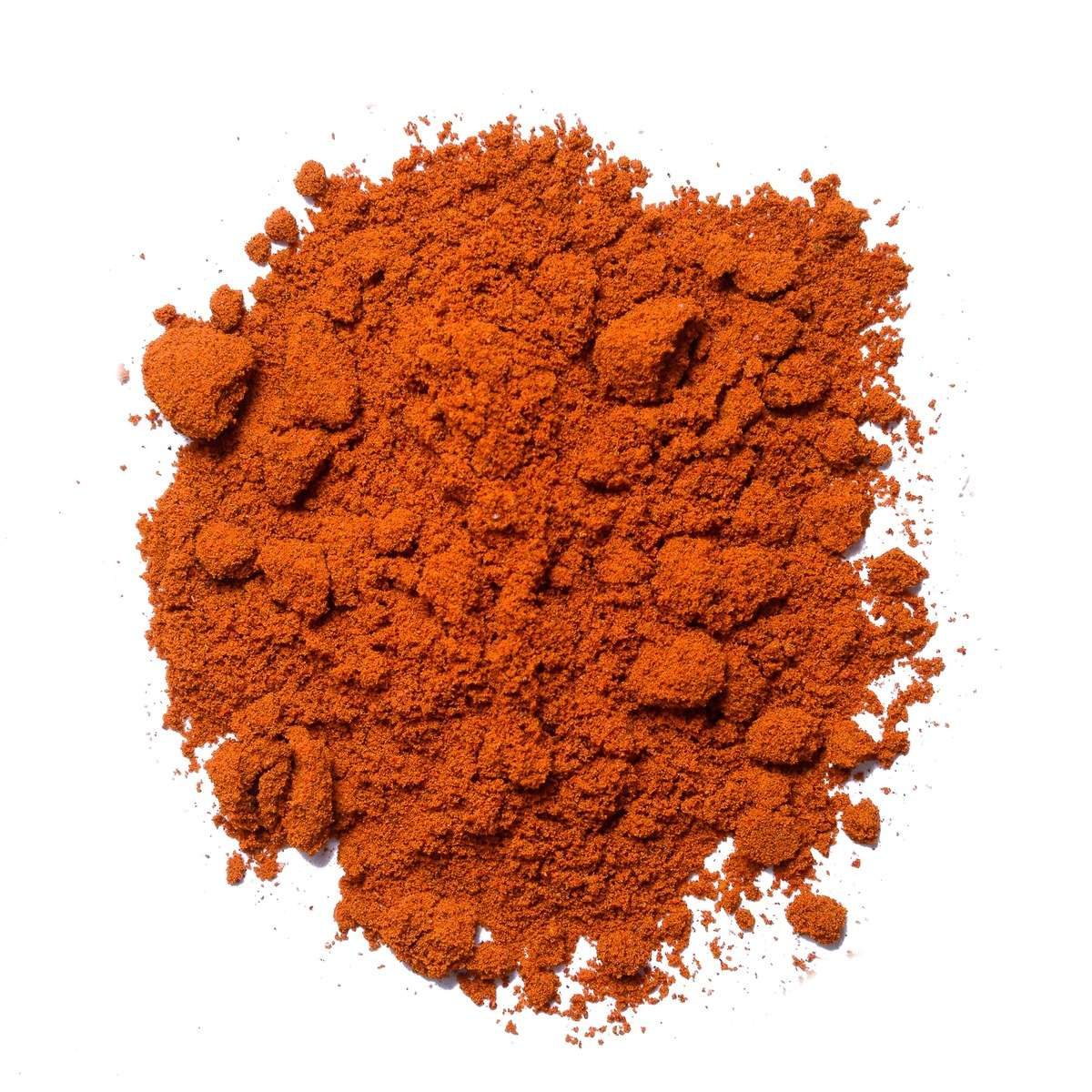
Habanero powder is ground, dried habanero chile. The habanero belongs to Capsicum chinense, the species that also gives Scotch bonnets and the ghost pepper, and which Gernot Katzer calls known for “the most pungent, yet also aromatic, chiles.”12 The Real Academia Española describes the chile habanero as very hot, pear-shaped and orange.3 This page covers where the habanero comes from (the sources disagree), how hot it is, what it tastes like, and how to use and buy the powder.
At a glance
| Botanical name | Capsicum chinense Jacq., first published 17774 |
| Plant family | Solanaceae (nightshade family)4 |
| Native range of the species | Southern Guyana to southwestern Suriname and northern Brazil (Kew)4 |
| Main Mexican growing area | Yucatán Peninsula, with a protected designation of origin since 20105 |
| Heat | Published ratings from 100,000 to 500,000 SHU; no single figure (see Heat)678 |
| Aroma | Fruity, floral (see Flavor)19 |
| Forms sold | Fresh, dried whole, ground powder, sauces |
Measured values
8 figures, sourced| Measure | Value | Scope | Source |
|---|---|---|---|
| Capsaicin, Capsicum chinense Conventional range | 2 % (typically about), stated as equal to 300,000 SHU | species, general, per Katzer's Spice PagesGeneral species figure, not a measurement of habanero powder | gernot-katzers-spice-pages.com |
| Heat, hottest C. chinense cultivars Conventional range | 200,000 to 300,000 SHU (around) | species, general, per Katzer's Spice Pages | gernot-katzers-spice-pages.com |
| Heat, habanero pod type Conventional range | 100,000–500,000 SHU | pod type, general rating (DeWitt heat scale, 2008 update)Sources differ; DeWitt calls his scale necessarily approximate | fieryfoodscentral.com |
| Heat, habanero pod type Conventional range | 100,000–300,000 SHU | pod type, general rating (INDY Week, 2015)Sources differ | indyweek.com |
| Pungency threshold defining "chilli", minimum Limit | 900 SHU | Codex CXS 353-2022; category threshold | fao.org |
| Ochratoxin A, maximum Limit | 20 µg/kg | EU Regulation 2023/915, dried Capsicum spices including chillies, chilli powder, cayenne and paprika | eur-lex.europa.eu |
| Aflatoxin B1, maximum Limit | 5.0 µg/kg | EU Regulation 2023/915, dried Capsicum spices including chillies, chilli powder, cayenne and paprika | eur-lex.europa.eu |
| Total aflatoxins, maximum Limit | 10.0 µg/kg | EU Regulation 2023/915, dried Capsicum spices including chillies, chilli powder, cayenne and paprika | eur-lex.europa.eu |
Each figure is quoted as its source states it, with the samples or standard it applies to. Where sources differ, both are shown; nothing is averaged. All measured values
What it is
Capsicum chinense is a separate species from C. annuum, the species of cayenne, jalapeño and most Mexican chiles. Katzer notes that habanero-type chiles in Yucatán are the exception among Mexican chiles, belonging to C. chinense rather than C. annuum.10 The University of Arizona’s extension service groups the habanero with the naga, datil and Scotch bonnet in C. chinense, a species it says includes what many consider the hottest peppers.2
The name
The species name chinense (“Chinese”) was published by Jacquin in 1777, according to Kew’s record.4 Katzer calls it “a complete misnomer,” since the species has nothing to do with China.1 A widely repeated story places the naming in the 1900s; Kew’s 1777 publication date shows that is wrong.
In Spanish, habanero means “from Havana.”11 Katzer lists the habanero as a familiar chile of both Cuba and Yucatán.1 No source we opened explains how the chile came to carry the name.
Where it comes from
The sources disagree, and the disagreement is worth showing rather than settling.
| Source | What it says |
|---|---|
| Kew, Plants of the World Online4 | The species is native to southern Guyana, southwestern Suriname and northern Brazil |
| Hernández-Ocampo and Escobedo-Martínez, Universidad de Guanajuato (2022)12 | C. chinense is a domesticated species, not native to Mexico, introduced 200 to 300 years ago |
| Katzer1 | Calls C. chinense a Central American species, mostly associated with the Caribbean, where most cultivars are grown today |
| Chile Pepper Institute, NMSU13 | The habanero originated in Mexico’s Yucatán |
Kew’s native range is for the species as a whole, and the Chile Pepper Institute’s statement is about the habanero type; they answer slightly different questions. What none of these sources supports is the often-repeated claim that the species dates to 6500 BCE in the Yucatán, or that the Maya dried and ground habaneros for mole. The 2022 review gives no primary evidence for its 200-to-300-year figure.
Katzer does say that C. chinense chiles play an important role in the Mayan cuisine of Yucatán today.1
Yucatán’s habanero
In 2010 the Yucatán Peninsula obtained a designation of origin for habanero chile (Capsicum chinense Jacq.).5 The Centro de Investigación Científica de Yucatán gives the date of its publication in Mexico’s official gazette as 10 June 2010.14 In 2011, 644.55 hectares of habanero were grown in Campeche, Quintana Roo and Yucatán, with Yucatán the largest producer.5 A study of 18 Yucatán samples by Canto-Flick and colleagues (2008), as summarized by the 2014 soil study, found that 83.3% exceeded the pungency of habaneros from other parts of the world.5
Claims that most of the world’s habaneros come from Mexico, or that Belize and the United States are the next largest producers, could not be traced to a statistical source.
Heat
Capsaicinoids, chiefly capsaicin and dihydrocapsaicin, cause the heat, and HPLC is the most accurate way to measure them; the Scoville taste test is subjective.15 Published habanero figures cover a wide range and different scopes:
| Source | Figure | Scope |
|---|---|---|
| Katzer1 | C. chinense typically about 2% capsaicin, “equals 300000 Scoville heat units”; the very hottest cultivars around 200,000 to 300,000 | Species, general |
| Katzer1 | Habanero record 300,000, later ceded to the ‘Red Savina’ cultivar at 650,000 | Former world-record figures for named chiles |
| Dave DeWitt, heat scale (2008 update)7 | 100,000–500,000 SHU, alongside Scotch bonnet and other chinense chiles | Pod type, general rating |
| Lisa Sorg, INDY Week (2015)6 | 100,000–300,000 SHU | Pod type, general rating |
| PepperScale, habanero powder uses8 | 100,000–350,000 SHU | Habanero powder, general rating; no method given |
| Sweat et al., Food Chemistry (2016)16 | Capsaicinoids in 100 fresh habaneros (10 from each of 10 suppliers) followed a normal distribution; SHU values not in the abstract | Commercial fresh peppers, US |
| Codex CXS 353-202217 | 900 SHU or more defines “chilli”; habanero is a listed varietal name | Category threshold |
These are not one measurement seen several ways; they are different questions. A powder’s heat also depends on the pods ground, so no figure on this page is a rating of any particular jar.
Katzer notes that ‘Red Savina’ habanero was long considered the hottest chile on earth, and that the title later passed to other chiles, held by the Trinidad Moruga Scorpion when Katzer wrote.1 As INDY Week puts it, “a little habanero goes a long way.”6
Flavor
Katzer describes C. chinense chiles as very hot with a “typical delicious, flower-like scent.”1 A 2011 laboratory study comparing Andean chiles with a C. chinense control found that the Andean species had more earthy, vegetable, bell pepper-like aromas than C. chinense.9 Yucatán’s research center says local varieties are distinguished by their aroma and flavor as well as their pungency.14 In the powder, expect fierce heat first, then a fruity, tropical note; that description is ours. PepperScale likewise calls the powder fruity and sweet as well as extra hot, and suggests it for fruit-based hot sauces.8
How it is used
- Sauces and salsas. The Chile Pepper Institute says the habanero is commonly used for sauces and salsas.13 INDY Week suggests salsas and chili, where the cook controls the dose.6
- Caribbean seasonings. Katzer notes that the extreme heat of chinense chiles matters in Caribbean cooking, and that jerk paste uses them.1 See jerk seasoning and Bajan seasoning.
- Powders and sauces as products. CICY reports that processed habanero products, including powders and sauces, are in demand abroad as seasonings.14
- Rubs and chili. By common practice, a pinch of habanero powder adds heat to dry rubs or a pot of chili that milder chiles like ancho or guajillo do not provide.
- Where you would use cayenne. PepperScale suggests using the powder in many of the same ways as cayenne, in chili, homemade hot sauce, salsa, buffalo wings and taco meat, for when cayenne is not hot enough.8 It is far hotter, so the amount has to drop.
Start with a very small amount, a pinch rather than a spoonful, and taste. No source gives a tested conversion from fresh habanero to powder; PepperScale’s guide to the powder gives none either.8
Buying and quality
- Read the label. Pure habanero powder should list only habanero chile.
- Color. RAE describes the fresh habanero as orange.3 We found no quality standard for the color of habanero powder.
- Heat varies. In the 2016 study, most of the variation among habaneros came from differences between suppliers rather than within one supplier’s peppers.16 That study looked at fresh peppers; no comparable study of powders was found.
Storage
We found no published shelf-life figure for habanero powder from a regulator or standards body. Store it airtight, cool and dark.
Safety
Mycotoxins. EU law sets maximum levels for dried Capsicum products “including chillies, chilli powder, cayenne or paprika”: 20 µg/kg ochratoxin A, and 5.0 µg/kg aflatoxin B1 and 10.0 µg/kg total aflatoxins.18
Handling. By common kitchen practice, open the jar away from your face, wash your hands after use, and keep the powder away from your eyes.
Health claims. The best human evidence for capsaicin concerns a prescription 8% skin patch: a 2017 Cochrane review found moderate-quality evidence of moderate pain relief for a minority of people with postherpetic neuralgia, with lower-quality evidence for diabetic and HIV-related nerve pain.19 That is a medicine applied to the skin, not dietary chile. This page makes no claim that habanero powder treats or prevents diabetes, cancer or any other condition. The vitamin A figure that circulates for habanero powder (7,143 IU in a quarter-gram) could not be traced to a nutrient analysis.
Substitutes and comparisons
- For less heat with the same clean red-chile character: cayenne pepper or chile de árbol powder.
- Another fruity, South American species, much milder: ají amarillo powder.
- Blends built on chinense heat: jerk seasoning, Bajan seasoning.
No tested swap ratio was found. When substituting habanero for a milder chile, start with a small fraction of the amount and build up; that is method, not a measured ratio.
Footnotes
-
Gernot Katzer, “Chiles (Capsicum)”, Gernot Katzer’s Spice Pages. gernot-katzers-spice-pages.com · Reference work ↩ ↩2 ↩3 ↩4 ↩5 ↩6 ↩7 ↩8 ↩9 ↩10 ↩11
-
Jeffrey C. Silvertooth, “Arizona Chiles”, University of Arizona, 2021. vegetableipmupdates.arizona.edu · Reference work ↩ ↩2
-
“chile”, Diccionario de la lengua española, Real Academia Española. dle.rae.es · Reference work ↩ ↩2
-
Capsicum chinense Jacq., Plants of the World Online, Royal Botanic Gardens, Kew. powo.science.kew.org · Reference work ↩ ↩2 ↩3 ↩4 ↩5
-
Borges-Gómez et al., “Soils used for habanero chili production in Yucatán”, Agrociencia, 2014. scielo.org.mx · Peer-reviewed ↩ ↩2 ↩3 ↩4
-
Lisa Sorg, “DISH: Tips on which peppers suit which dish”, INDY Week, 2015. indyweek.com · Publication ↩ ↩2 ↩3 ↩4
-
Dave DeWitt, “Heat Scale Updated”, Fiery Foods & Barbecue Central, 2008. fieryfoodscentral.com · Publication ↩ ↩2
-
Matt Bray, Five Fiery And Fun Habanero Powder Uses, PepperScale, 2023. pepperscale.com · Publication · PepperScale is also owned by Matt Bray, the editor of this site. ↩ ↩2 ↩3 ↩4 ↩5
-
Kollmannsberger et al., “Volatile and capsaicinoid composition of ají (Capsicum baccatum) and rocoto (Capsicum pubescens)”, 2011. portal.fis.tum.de · Peer-reviewed ↩ ↩2
-
Gernot Katzer, “Paprika and Mexican chiles”, Gernot Katzer’s Spice Pages. gernot-katzers-spice-pages.com · Reference work ↩
-
“habanero, ra”, Diccionario de la lengua española, Real Academia Española. dle.rae.es · Reference work ↩
-
Hernández-Ocampo and Escobedo-Martínez, “Los chiles: herencia cultural mexicana”, REDICINAySA, Universidad de Guanajuato, 2022. redicinaysa.ugto.mx · Peer-reviewed ↩
-
“Orange Habanero”, Chile Pepper Institute, New Mexico State University. cpi.nmsu.edu · Reference work ↩ ↩2
-
“Ficha Informativa: Unidad Productora de Semillas de Chile Habanero”, Centro de Investigación Científica de Yucatán, 2016. cicy.mx · Reference work ↩ ↩2 ↩3
-
Bosland and Walker, “Measuring Chile Pepper Heat”, Guide H-237, New Mexico State University, 2010. pubs.nmsu.edu · Reference work ↩
-
Sweat et al., “Variability in capsaicinoid content and Scoville heat ratings of commercially grown Jalapeño, Habanero and Bhut Jolokia peppers”, Food Chemistry, 2016 (abstract). asu.elsevierpure.com · Peer-reviewed ↩ ↩2
-
Standard for Dried or Dehydrated Chilli Pepper and Paprika, CXS 353-2022, Codex Alimentarius. fao.org · Standard ↩
-
Commission Regulation (EU) 2023/915 on maximum levels for certain contaminants in food. eur-lex.europa.eu · Regulator ↩
-
Derry et al., “Topical capsaicin (high concentration) for chronic neuropathic pain in adults”, Cochrane Database of Systematic Reviews, 2017. cochrane.org · Peer-reviewed ↩