Seasonings · Profile
Jerk Seasoning: Allspice, Scotch Bonnet and the Jamaican Way of Cooking Meat
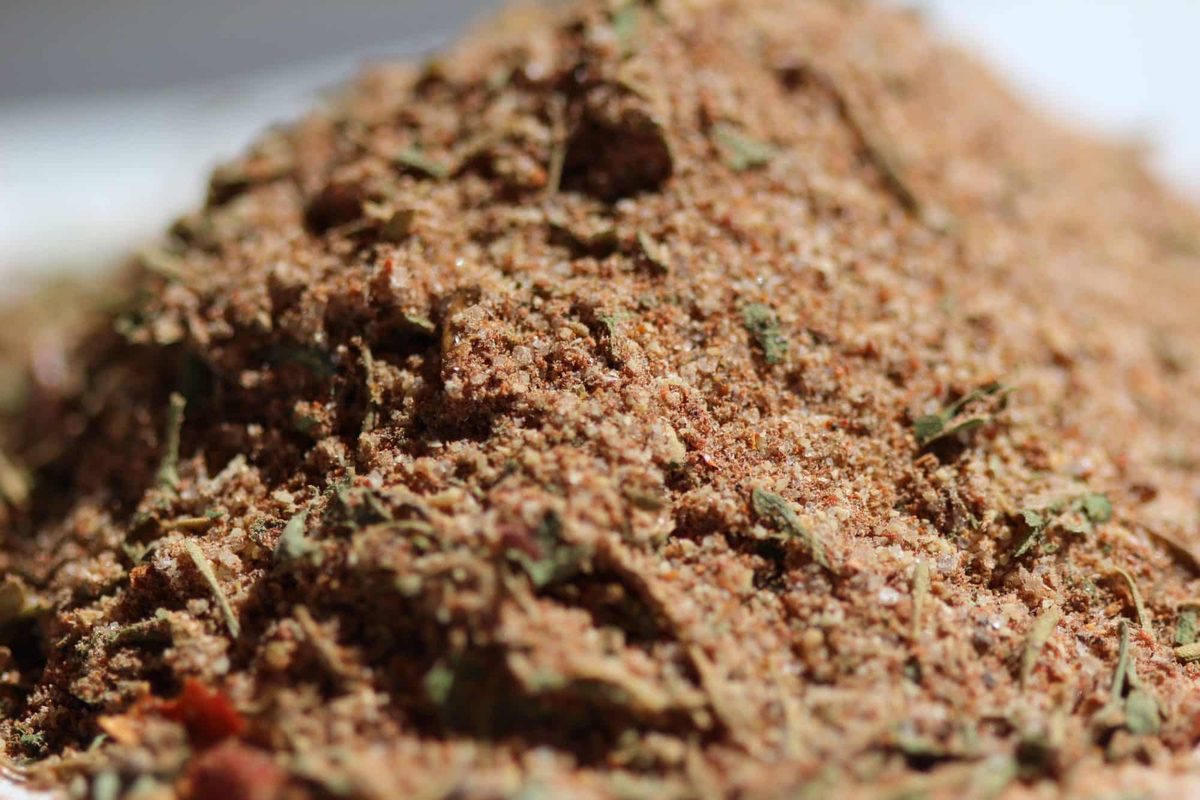
Jerk is a Jamaican way of seasoning, smoking and grilling meat, and jerk seasoning is the blend of pimento (allspice), thyme and hot Scotch bonnet chile at its heart.1 Katzer describes jerk paste;2 Walkerswood makes its seasoning with fresh Scotch bonnets and scallions,3 and McCormick sells a dry rub.4 There is no single recipe. This page covers where jerk came from, what named sources put in the seasoning, and how to use it.
At a glance
| What it is | The seasoning for Jamaican jerk: a paste or a dry rub143 |
| Essential ingredients | Pimento (allspice) and Scotch bonnet pepper, with thyme1 |
| Other common ingredients | Scallions, garlic, ginger, cinnamon, nutmeg, black pepper, salt, sugar13 |
| Key aroma compound | Eugenol, 50–80% of allspice berry oil (PROSEA)5 |
| Heat | Hot where Scotch bonnet is used; Walkerswood sells Hot & Spicy and Mild versions; PepperScale gives Scotch bonnet 100,000 to 350,000 SHU326 |
| Traditional method | Meat smoked over pimento wood1 |
| Common meats in Jamaica | Chicken, sausage and pork1 |
What jerk is
Smithsonian Magazine defines jerk as the way meat is seasoned, smoked and grilled, not just a spice mix.1 For jerk to count as authentic, the article reports, the meat has to be smoked over pimento wood.1 Pimento is another name for allspice,1 the dried berry of Pimenta dioica, a tree native to southern Mexico, Central America and the Caribbean.7 Walkerswood, which makes its seasonings with Jamaican Scotch bonnets, describes jerk as a traditional Jamaican style of barbecuing meats, seafood and vegetables.3
Roadside “jerk pan men” in Jamaica cook over converted metal oil drums used as smokers and grills, Smithsonian reports.1
Where jerk came from
Smithsonian’s history, drawing on scholar Carolyn Cooper, calls jerk one of the enduring legacies of the fusion of African and Taíno cultures.1 Africans who escaped slavery on the island’s plantations formed Maroon communities in the mountains and shared culinary traditions with surviving Indigenous people.1 They traditionally hunted wild boar, the original jerk meat.1 Today chicken, sausage and pork are the most common jerk meats on the island.1
Some histories say European settlers added thyme and garlic, or that Arawak labor was first used on coffee and sugar plantations. Neither point was documented in the sources checked for this page.
The word. The English verb jerk, to preserve meat by cutting it into long thin strips and drying it in the sun, dates from 1707 in American English, from American Spanish via charqui, according to the Online Etymology Dictionary; jerky comes from the same charqui, from Quechua ch’arki, “dried flesh.”8 The dictionary does not discuss the Jamaican cooking term, so whether jerk the dish takes its name from the same word is not settled by this source. PepperScale says the name is believed to come from the Quechua charqui, but does not say who holds that view,6 so the link remains likely rather than shown.
What goes into jerk seasoning
Here is what four named sources list, side by side:
| Ingredient | USDA spec, minimum list (A-A-20001C)9 | McCormick Gourmet Jamaican Jerk, dry4 | Walkerswood Hot & Spicy, fresh-chile seasoning3 | Smithsonian, modern recipes1 |
|---|---|---|---|---|
| Allspice (pimento) | Yes | Yes (named in description) | Yes | Yes |
| Thyme | Yes | Yes (named in description) | Yes | Yes |
| Chile | Red pepper | Red pepper (named in description) | Scotch bonnet pepper | Scotch bonnet |
| Onion family | Onion | Dehydrated onion | Escallion (scallion) | Scallions |
| Garlic | not listed | Dehydrated garlic | not listed | Yes |
| Other spices | Turmeric | “Spices and herbs” | Black pepper, nutmeg | Ginger, cinnamon |
| Salt | Yes | Sea salt | Yes | not stated |
| Sugar | Yes | Yes | Brown sugar | not stated |
| Other | none listed | Caramel, citric acid, sunflower oil, silicon dioxide | Citric acid | none stated |
How to read this:
- Allspice, thyme and chile are in all four. Smithsonian quotes Cooper calling pimento berries and Scotch bonnet pepper the essential ingredients of the seasoning.1
- The USDA list is a minimum. The federal specification says jerk seasoning should include, but is not limited to, these ingredients, and describes it as a brown powder with red and white specks and pieces of green leaf.9
- Wet and dry differ. Walkerswood’s seasoning is built on fresh Scotch bonnets and escallion;3 the dry blends use red pepper and dehydrated onion.94
Flavor
Allspice gives jerk its clove-like warmth. PROSEA puts eugenol at 50 to 80% of allspice berry oil.5 Thyme adds a herbal note and Scotch bonnet a fruity, intense heat. Gernot Katzer notes that the extreme heat of Capsicum chinense chiles, the group that includes Scotch bonnet, is important in Caribbean cooking, and that jerk paste makes use of these chiles.2 Beyond those points, the description here is editorial.
How hot a given jar is depends on the chile and how much is used: Walkerswood sells both a Hot & Spicy and a Mild jerk seasoning.3 PepperScale holds that jerk seasoning is supposed to be hot, names Scotch bonnets as the chile of choice, and gives them 100,000 to 350,000 Scoville heat units, a conventional range for the pepper rather than a measurement of any seasoning; it credits them with a tropical sweetness as well as heat.6 No Scoville figure for jerk seasoning itself was found.
How it is used
- Paste. Rub it into chicken pieces or pork, ideally ahead of time, then grill over moderate heat, with a lid on, adding soaked allspice berries or pimento wood chips to the fire for smoke. Kitchen practice, not a sourced finding.
- Dry rub. McCormick suggests rubbing the dry blend on chicken, ribs or seafood.4 PepperScale notes that jerk seasoning can be a wet paste of fresh ingredients or the dry spices alone, and that it is traditionally used on pork and chicken.6
- Beyond meat. Walkerswood names vegetables and seafood as well as meats.3 Cooks also use jerk seasoning on fish, shrimp, tofu, mushrooms and roasted sweet potatoes (kitchen practice).
Pimento-wood smoke is part of the traditional method,1 and it is hard to get outside the Caribbean; allspice berries on the coals are a common stand-in, as kitchen practice. See allspice and Jamaican spices.
Buying and quality
- Wet or dry. A wet seasoning that lists Scotch bonnet and scallion first3 is, in our judgment, hotter and fresher-tasting than most dry rubs.
- Read the label. Dry blends list salt and sugar near the top;4 a salt-free blend lets you season to taste.
- Aroma. Good jerk seasoning smells strongly of allspice. If the clove-like smell is faint, the blend has faded. Kitchen judgment.
Storage
Keep dry jerk seasoning airtight, dark and cool. Follow the label on wet seasonings and pastes. No shelf-life figure from a regulator or standards body was found.
Nutrition and health
The amounts used are small, so the blend supplies little of any vitamin or mineral; salt and sugar are on all three ingredient lists above.943 Claims that jerk seasoning prevents food poisoning or osteoporosis, or treats respiratory problems, were not supported by any source reviewed for this page. No claim is made here that jerk seasoning treats or prevents any disease.
Safety
- Heat. Scotch bonnet pastes are very hot.2 Wear gloves when handling fresh Scotch bonnets and keep paste away from eyes. Common-sense guidance.
- Mycotoxins (EU). EU law sets maximum levels of ochratoxin A and aflatoxins for dried Capsicum spices such as chilli powder and cayenne,10 the chile in dry jerk blends.
Substitutes and comparisons
- Jerk seasoning substitutes
- The key spice: allspice (and too much allspice)
- Jamaican and Caribbean cooking: Jamaican spices, Caribbean spices, Jamaican curry powder
- The other ingredients: thyme, cayenne pepper, habanero powder, ginger, garlic powder, onion powder, nutmeg
Footnotes
-
Vaughn Stafford Gray, A Brief History of Jamaican Jerk, Smithsonian Magazine, 2020. smithsonianmag.com · Publication ↩ ↩2 ↩3 ↩4 ↩5 ↩6 ↩7 ↩8 ↩9 ↩10 ↩11 ↩12 ↩13 ↩14 ↩15 ↩16 ↩17
-
Gernot Katzer, Chiles (Capsicum), Gernot Katzer’s Spice Pages. gernot-katzers-spice-pages.com · Reference work ↩ ↩2 ↩3 ↩4
-
Jerk Seasonings, Walkerswood Caribbean Foods. walkerswood.com · Merchant ↩ ↩2 ↩3 ↩4 ↩5 ↩6 ↩7 ↩8 ↩9 ↩10 ↩11
-
McCormick Gourmet Jamaican Jerk Seasoning, Club House (McCormick Canada). clubhouse.ca · Merchant ↩ ↩2 ↩3 ↩4 ↩5 ↩6 ↩7
-
Sulistiarini, Pimenta dioica (PROSEA), Plant Resources of South-East Asia. uses.plantnet-project.org · Reference work ↩ ↩2
-
Matt Bray, “What Is Jerk Seasoning? The Story Behind The Spice”, PepperScale, 2023. pepperscale.com · Publication · PepperScale is also owned by Matt Bray, the editor of this site. ↩ ↩2 ↩3 ↩4
-
Pimenta dioica (L.) Merr., Plants of the World Online, Royal Botanic Gardens, Kew. powo.science.kew.org · Reference work ↩
-
jerky and jerk (v.2), Online Etymology Dictionary. etymonline.com · Reference work ↩
-
Commercial Item Description A-A-20001C, Spices and Spice Blends, USDA Agricultural Marketing Service, 2023. ams.usda.gov · Regulator ↩ ↩2 ↩3 ↩4
-
Commission Regulation (EU) 2023/915, EUR-Lex. eur-lex.europa.eu · Regulator ↩