Spices · Profile
Ají Amarillo Powder: Peru’s Yellow Chile, Its Heat, Flavor and Uses
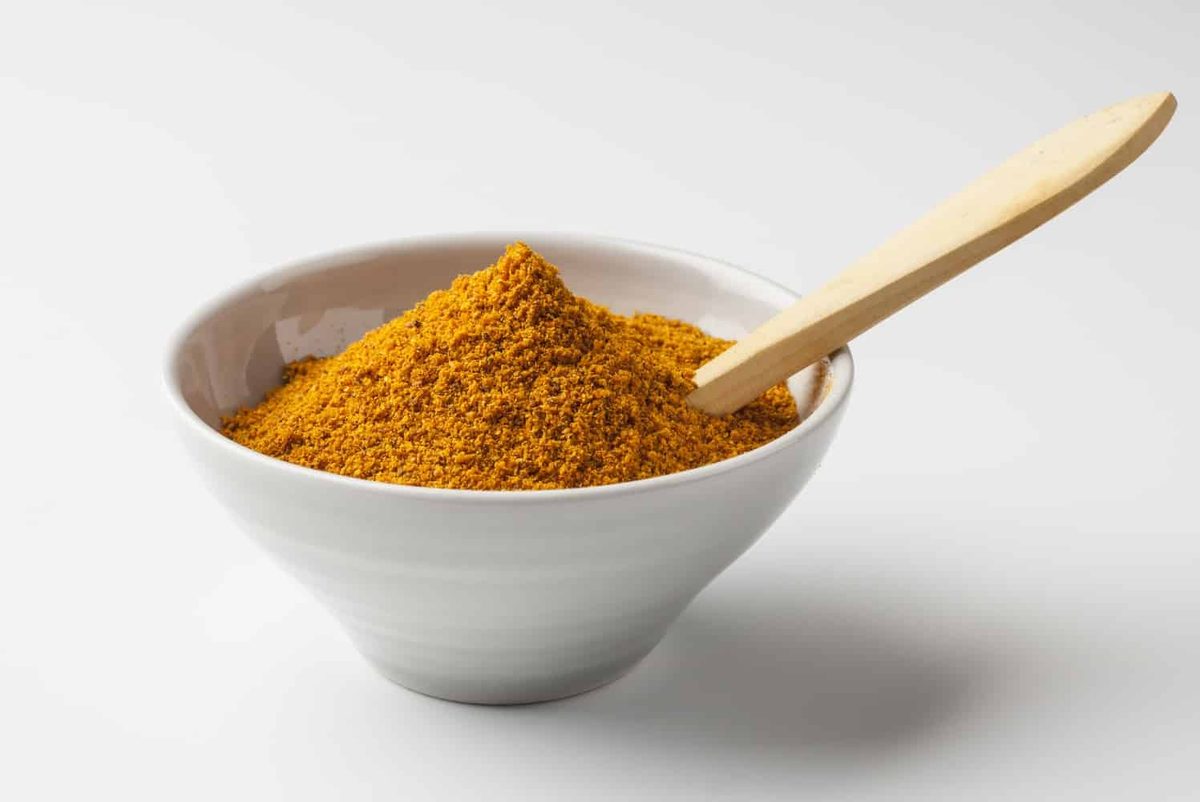
Ají amarillo powder is ground, dried ají amarillo, the orange-yellow chile that Peru’s state news agency calls the ají sold throughout the country.1 Dried whole, the same chile is ají mirasol.1 It belongs to Capsicum baccatum, a South American species distinct from the C. annuum behind cayenne and paprika.23 The powder brings moderate heat and a bright, fruity color to sauces, potatoes and stews. This page covers what it is, how hot it is (the figures disagree), what it tastes like and how Peruvian cooks use it.
At a glance
| Botanical name | Capsicum baccatum L.23 |
| Plant family | Solanaceae (nightshade family)2 |
| Native range of the species | Colombia to northern Argentina and central and southern Brazil (Kew)2 |
| Domesticated | Bolivia or Peru; sources differ (see History)45 |
| Other names | Ají escabeche, ají verde (fresh); ají mirasol, cuzqueño (dried)15 |
| Fresh pod | 10 to 15 cm long; orange when ripe1 |
| Heat | Moderate; published figures disagree (see table) |
| Forms sold | Fresh, frozen, paste, whole dried (mirasol), ground powder |
Measured values
4 figures, sourced| Measure | Value | Scope | Source |
|---|---|---|---|
| Total capsaicinoids | 13–352 mg/kg | ají (C. baccatum) and rocoto accessions pooled, fresh accessions, lab analysis (Kollmannsberger et al., 2011)Pools ají and rocoto; fresh fruit, not dried powder; mg/kg, not SHU | portal.fis.tum.de |
| Pungency (Scoville) Conventional range | 30,000–50,000 SHU | Proderna's own ají amarillo (whole and powder), merchant pageMerchant figure for its own product; no method stated | proderna.de |
| Pungency (Scoville), minimum Limit | 900 SHU or more | any dried product sold as chilli pepper, Codex CXS 353-2022 | fao.org |
| Ochratoxin A, maximum Limit | 20 µg/kg | EU, dried Capsicum fruits, whole or ground | eur-lex.europa.eu |
Each figure is quoted as its source states it, with the samples or standard it applies to. Where sources differ, both are shown; nothing is averaged. All measured values
What ají amarillo is
The species. Ají amarillo is a Capsicum baccatum chile.3 Kew describes the species as a subshrub or shrub of the seasonally dry tropics, native from Colombia to northern Argentina and central and southern Brazil.2 Dave DeWitt, writing on the baccatum ajís, lists Argentina, Colombia, Ecuador, Peru, Brazil and Bolivia as countries where they are grown.5 Claims that it is cultivated commercially in the United States, Australia and India could not be traced.
The name. Ají is a Spanish word of Taíno origin, used in South America and the Caribbean for the pepper plant and its fruit.6 The dictionary gives a Taíno origin, not an Otomanguean one, and no source checked for this page dates the word’s use to 4600 BCE. “Amarillo” means yellow. Peru’s state news agency notes that the chile is also called ají escabeche or ají verde, and that its telltale color is the orange of ripeness.1 DeWitt writes that it is called ají amarillo when yellow or orange and ají colorado when red.5
The dried form. Ají mirasol is ají amarillo dried in the open air, “looking at the sun”; drying keeps it for several months and concentrates its flavor and color.1 DeWitt says the dried pods are often called cuzqueño, after Cuzco, and that ajís are sun-dried and then crushed into powders.5 PepperScale notes that dried ají amarillo loses some of its sweetness and takes on a lightly smoky, sunburnt taste.7
Flavor and the compounds behind it
In the powder, expect a fruity, slightly raisiny pepper flavor with a gentle, building heat and a sunny orange color. That description is ours, and what sources say about the aroma does not fully agree:
| Source | Description |
|---|---|
| Proderna (merchant, for its own product) | “a tropical, fruity taste with a raisin aroma”8 |
| PepperScale | “a clean, sunny taste; hints of tropical fruit; and a slightly raisiny finish”7 |
| Dave DeWitt, Fiery Foods & Barbecue Central | The small yellow varieties are prized for their lemony aroma5 |
| Kollmannsberger et al., 2011 (lab analysis of ají and rocoto accessions) | More earthy, vegetable, bell pepper-like aromas than C. chinense; ají aroma based on 2-heptanethiol, 3-isobutyl-2-methoxypyrazine and phenols such as guaiacol, with terpenoids and some fruity esters3 |
The often-repeated comparison with habanero and Scotch bonnet flavor is worth treating with care. Those chiles are C. chinense, and the 2011 study found the Andean species smelled distinctly less of the fruity, exotic notes that mark C. chinense.3 Note that the study analyzed fresh accessions; no analysis of the dried powder was found.
How hot is ají amarillo?
| Scope | Heat | Source |
|---|---|---|
| Proderna’s own ají amarillo (whole and powder) | 30,000–50,000 SHU | Proderna, merchant page8 |
| Ají amarillo as a pepper type, PepperScale’s chile profile (no method stated) | 30,000–50,000 SHU | PepperScale7 |
| Ají amarillo in general, Peruvian state news agency | “Más bien moderado” (moderate, rather) | Agencia Andina, 20191 |
| Ají (C. baccatum) and rocoto accessions together, lab analysis | 13–352 mg/kg total capsaicinoids, versus 1,605 mg/kg in a C. chinense control; described as mildly pungent | Kollmannsberger et al., 20113 |
| Any dried product sold as chilli pepper, international standard | 900 SHU or more | Codex CXS 353-20229 |
How to read this:
- The 30,000 to 50,000 SHU range is a merchant’s figure for its own product, with no method stated; PepperScale gives the same range for the chile, also without a stated method.7 It sits far above what the 2011 lab analysis found. It matches the range widely repeated for cayenne; see cayenne pepper for why that range is untraceable as a cayenne figure.
- The 2011 figures are capsaicinoid content in mg/kg, not Scoville units, and they pool ají and rocoto; they are not converted here.
- The Codex figure is a category line, not a measurement.9 NMSU notes that HPLC, which measures the heat compounds directly, is the most accurate way to measure chile heat.10
In practice, heat varies by pod and by product. Start with ½ teaspoon of powder in a dish for four and taste; that is a cooking judgment, not a measured figure.
Origin and history
Where C. baccatum was first domesticated is not settled in the sources checked:
| Source | Position |
|---|---|
| Barbara Pickersgill, American Antiquity, 1969 (abstract) | C. baccatum was the first chile species cultivated in Peru, “probably domesticated in Bolivia,” reaching the Peruvian coast in the late Preceramic period4 |
| Dave DeWitt, 2008 | The species originated in Bolivia or Peru and was probably domesticated in Peru about 2,500 BC5 |
The 2,500 BC date is DeWitt’s; the Pickersgill abstract gives no calendar date. The claim that the Spanish called other chiles “peppers” because their heat resembled black pepper could not be traced for this page, nor could the claim that the fresh pod dominates in Peru while the dried form is more common in Bolivia.
How it is used
Peru. PromPerú’s recipe collection uses ají amarillo across the classics:11
- Papa a la huancaína: potatoes in a sauce built on five boiled, deveined yellow ajíes.
- Causa: mashed potato seasoned with yellow ají paste, oil and lime.
- Ají de gallina: shredded chicken in a creamy sauce with minced yellow ají.
- Tacu tacu: rice and beans with yellow ají paste.
None of these recipes calls for the powder; by kitchen practice it can stand in for the paste or whole chile. Peru’s state news agency notes that ají mirasol is usually toasted lightly to bring out its flavor.1
The widely repeated “holy trinity” of Peruvian cooking (ají amarillo, red onion and cilantro) could not be traced to a source checked for this page.
Using the powder. As kitchen practice rather than sourced findings:
- Bloom it briefly in oil with onion and garlic as the base of a sauce or stew.
- Stir it into mayonnaise, sour cream or a cheese sauce for a quick huancaína-style dip.
- Season roast potatoes, sweet potatoes, squash or chicken.
- Mix a little with water into a paste to stand in for jarred ají amarillo paste.
PepperScale pairs ají amarillo with cilantro, garlic, lime, cumin, onion, queso fresco, potatoes and tomato.7
See also Peruvian spices and huacatay, another Peruvian staple.
Buying and quality
- Check the label for “ají amarillo” or “ají mirasol” alone; some products add salt or other chiles.
- Color. A bright orange-yellow powder is a reasonable sign of freshness; a brown or dull one has faded. That is kitchen judgment.
- Heat claims on labels are the maker’s own; no standard defines ají amarillo heat.
Storage
Keep the powder airtight, dark and cool. Agencia Andina says drying keeps the chile for several months;1 no shelf-life figure from a regulator or standards body was found for the powder. Replace it when the color and fruity smell have faded.
Nutrition and health
No nutrient analysis of ají amarillo powder was found for this page, so no vitamin or mineral figures are given; in the amounts used, a chile powder supplies little of anything. Claims that it relieves inflammatory diseases such as Crohn’s, prevents heart disease, lowers blood pressure or cholesterol, or prevents cancer from returning were not supported by any source reviewed for this page.
Capsaicin. The strongest human evidence on capsaicin concerns a prescription skin patch, not chile in food. A 2017 Cochrane systematic review found moderate-quality evidence that a high-concentration (8%) capsaicin patch gave moderate pain relief to a minority of people with postherpetic neuralgia.12 No claim is made here that ají amarillo treats or prevents any disease.
Safety
- Mycotoxins (EU). EU law caps ochratoxin A at 20 µg/kg in dried Capsicum fruits, whole or ground, a category it says includes chillies and chilli powder.13
- Handling. Keep chile powder away from eyes and wash hands after handling. Common-sense guidance rather than a sourced finding.
Substitutes and comparisons
- Other chile powders: cayenne pepper, habanero powder, chile de árbol powder, paprika
- Cayenne pepper substitutes
- Peruvian pantry: Peruvian spices, huacatay
Footnotes
-
Día de los Ajíes Peruanos, Agencia Andina, 2019. andina.pe · Publication ↩ ↩2 ↩3 ↩4 ↩5 ↩6 ↩7 ↩8 ↩9
-
Capsicum baccatum L., Plants of the World Online, Royal Botanic Gardens, Kew. powo.science.kew.org · Reference work ↩ ↩2 ↩3 ↩4 ↩5
-
Kollmannsberger et al., Volatile and capsaicinoid composition of ají (Capsicum baccatum) and rocoto (Capsicum pubescens), Journal of the Science of Food and Agriculture, 2011. portal.fis.tum.de · Peer-reviewed ↩ ↩2 ↩3 ↩4 ↩5 ↩6
-
Barbara Pickersgill, The Archaeological Record of Chili Peppers (Capsicum spp.) and the Sequence of Plant Domestication in Peru, American Antiquity, 1969. cambridge.org · Peer-reviewed ↩ ↩2
-
Dave DeWitt, Baccatum Bacchanalia! Growing and Cooking with Ají Chiles, Fiery Foods & Barbecue Central, 2008. fieryfoodscentral.com · Publication ↩ ↩2 ↩3 ↩4 ↩5 ↩6 ↩7
-
ají, Diccionario de la lengua española, Real Academia Española. dle.rae.es · Reference work ↩
-
Matt Bray, Aji Amarillo Guide: Heat, Flavor, Pairings, And More, PepperScale. pepperscale.com · Publication · PepperScale is also owned by Matt Bray, the editor of this site. ↩ ↩2 ↩3 ↩4 ↩5
-
Aji Amarillo, Proderna (product page). proderna.de · Merchant ↩ ↩2
-
Standard for Dried or Dehydrated Chilli Pepper and Paprika, CXS 353-2022, Codex Alimentarius. fao.org · Standard ↩ ↩2
-
Bosland and Walker, Measuring Chile Pepper Heat, NMSU Guide H-237, 2010. pubs.nmsu.edu · Reference work ↩
-
5 Peruvian recipes you can make anytime, Perú Info (PromPerú), 2020. peru.info · Publication ↩
-
Derry et al., Topical capsaicin (high concentration) for chronic neuropathic pain in adults, Cochrane Database of Systematic Reviews, 2017. cochrane.org · Peer-reviewed ↩
-
Commission Regulation (EU) 2023/915, EUR-Lex. eur-lex.europa.eu · Regulator ↩