Spices · Profile
Monosodium Glutamate (MSG): What It Is, How It Tastes and What Regulators Say
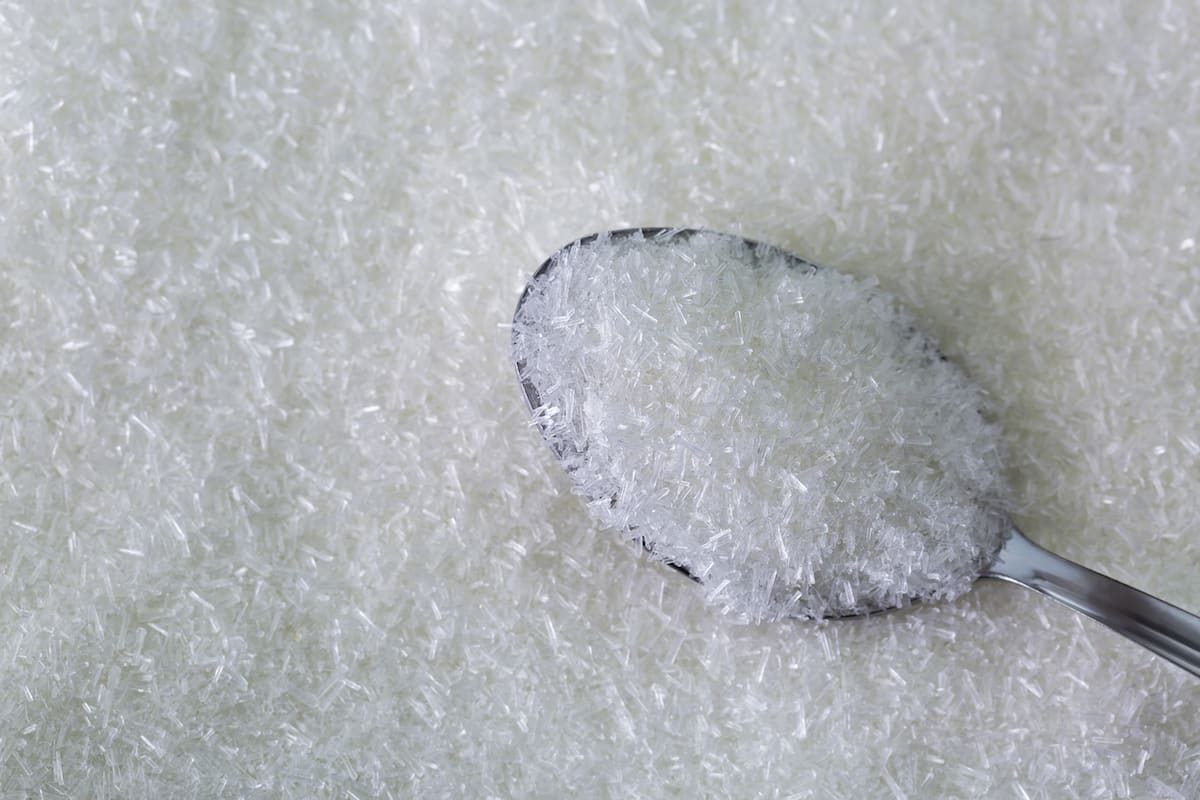
Monosodium glutamate, MSG, is the sodium salt of glutamic acid, one of the most common amino acids.1 It is used for the savory taste known as umami, and it is not a spice or herb but a manufactured seasoning, made today by fermenting starch, sugar beets, sugar cane or molasses.1 FDA classes it as generally recognized as safe, and the European Food Safety Authority has set an acceptable daily intake for it and the other glutamate additives.12
At a glance
| What it is | Sodium salt of glutamic acid1 |
| Appearance | White crystalline substance3 |
| Taste | Umami, a savory or meaty taste34 |
| First identified | 1908, by Ikeda Kikunae in Japan13 |
| How it is made | Bacterial fermentation of starch, sugar beets, sugar cane or molasses13 |
| US status | Generally recognized as safe (GRAS); must be listed by name on labels1 |
| EU status | Among the glutamate additives E 620 to E 625; group ADI 30 mg/kg body weight per day2 |
| Forms sold | Fine white crystals in shakers and bags; an ingredient in seasoning blends, bouillon and snack seasonings |
What it is
Glutamate is everywhere in food. FDA notes that glutamic acid occurs naturally in our bodies and in many foods, and that free glutamate in foods such as tomatoes and cheeses is chemically the same as the glutamate in MSG.1 MSG supplies that same glutamate as a sodium salt.
How it tastes
Britannica counts umami among the five fundamental taste sensations and describes it as a savory or meaty taste produced by three natural substances: glutamate, guanylate and inosinate.4 Foods with natural umami taste include mushrooms, tomatoes, seaweed and cheese.4
On its own, a few crystals of MSG taste faintly salty and brothy rather than strong. In a dish it reads as fullness and depth, the quality of a long-simmered stock, rather than as a flavor you can name. That description is ours.
History
- Discovery. In 1908 Ikeda Kikunae, a Japanese chemist, identified glutamate as the source of the savory taste of a traditional seaweed broth.13 Ajinomoto, which sells the seasoning he developed, says he named the taste umami.5
- First product. Ajinomoto says sales of its seasoning AJI-NO-MOTO began in 1909, and calls it the world’s first umami seasoning.5 Britannica says Ikeda’s discovery led to commercial production of MSG from seaweed; it is now made by bacterial fermentation.3
- “Chinese restaurant syndrome.” Reports of reactions to MSG first appeared in 1968, and Britannica notes that the informal name came from the belief that some restaurant cooks used it extravagantly. Later research found no conclusive link between the reported symptoms and normal levels of MSG.3
Several other stories about MSG’s spread circulate widely: that it was first marketed to Japanese housewives, that Campbell’s was its first American customer, and that it reached the United States through packaged foods before restaurants. We could not trace them to a source we could open, so they are left out.
How it is used
Britannica calls MSG an important ingredient in the cuisines of China and Japan.3 In practice it is added like salt: a pinch in soups and broths, stir-fry sauces, marinades, dressings, fried rice, vegetables and egg dishes, and it is a common ingredient in seasoning blends and snack seasonings. Those are common uses, not sourced facts. FDA notes that a typical serving of a food with added MSG contains less than 0.5 grams.1
Because MSG adds savoriness without much saltiness, some cooks use it to lower the salt in a dish; we found no regulator figure for how much sodium that saves, so see MSG vs. salt for the comparison. For technique, see cooking with MSG.
Labels
FDA requires foods with added MSG to list it in the ingredient panel by name; it cannot hide under “spices and flavoring.”1 Ingredients such as hydrolyzed vegetable protein naturally contain free glutamate, and FDA says products containing them cannot claim “No MSG” or “No added MSG” on the package.1 Some popular seasoning blends contain MSG as a main ingredient; see sazón seasoning for one example.
Safety
United States. FDA considers adding MSG to food to be generally recognized as safe.1 It says a 1990s report by the Federation of American Societies for Experimental Biology (FASEB) concluded that MSG is safe, while noting that some sensitive people who eat 3 grams or more of MSG without food may have short-term, generally mild symptoms such as headache, numbness, flushing, palpitations and drowsiness.1 FDA adds that eating more than 3 grams without food at one time is unlikely, and that it was never able to confirm that MSG caused the effects people reported to it.1
European Union. In 2017 EFSA set a group acceptable daily intake of 30 mg per kg of body weight per day for glutamic acid and its salts, E 620 to E 625.2 For a 70 kg (154 lb) adult, that is 2.1 grams a day by our arithmetic. EFSA found that exposure may exceed the ADI for people in every age group whose diet is high in foods containing these additives, and for some highly exposed young people may exceed doses associated with effects such as headache; it recommended reviewing the maximum levels allowed in foods.2
The two agencies are answering different questions: FDA’s GRAS status says MSG is safe as normally used, while EFSA’s ADI sets a daily ceiling for all added glutamates together.
Health benefits. We found no regulator or systematic review describing a health benefit of MSG, and this page claims none.
Substitutes and comparisons
For glutamate-rich alternatives, see MSG substitutes; naturally umami foods Britannica names include mushrooms, tomatoes, seaweed and cheese.4 Related: MSG vs. salt, cooking with MSG, soy sauce powder and mushroom spices.
Footnotes
-
“Questions and Answers on Monosodium glutamate (MSG)”, US Food and Drug Administration. fda.gov · Regulator ↩ ↩2 ↩3 ↩4 ↩5 ↩6 ↩7 ↩8 ↩9 ↩10 ↩11 ↩12 ↩13 ↩14 ↩15
-
“EFSA reviews safety of glutamates added to food”, European Food Safety Authority, 2017. efsa.europa.eu · Regulator ↩ ↩2 ↩3 ↩4
-
“Monosodium glutamate”, Encyclopaedia Britannica. britannica.com · Reference work ↩ ↩2 ↩3 ↩4 ↩5 ↩6 ↩7 ↩8
-
“Umami”, Encyclopaedia Britannica. britannica.com · Reference work ↩ ↩2 ↩3 ↩4
-
“History”, Ajinomoto Group (company history; the company’s own account). ajinomoto.com · Merchant ↩ ↩2