Spice Substitutes · Substitutes
MSG Substitutes: Glutamate-Rich Ingredients, Ranked by the Job MSG Is Doing
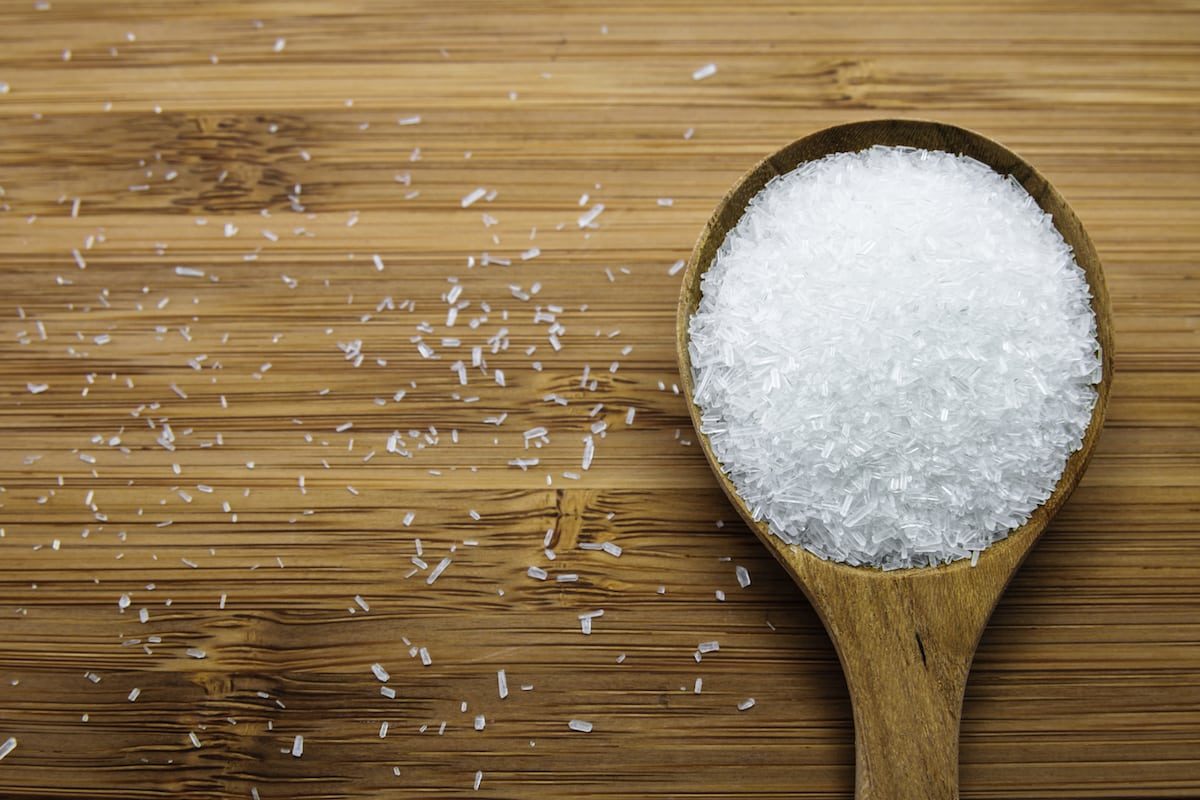
Monosodium glutamate supplies glutamate, the compound behind the savory taste called umami. FDA notes that the free glutamate found naturally in foods such as tomatoes and cheeses is chemically the same as the glutamate in MSG.1 That makes the search for a substitute fairly simple in principle: use an ingredient that already carries a lot of free glutamate. What changes from one substitute to the next is everything else it brings, such as salt, liquid, color and its own flavor, so the best choice depends on what MSG is doing in your recipe.
Quick answer
| What MSG is doing | Best substitute | Starting amount | Treatment |
|---|---|---|---|
| Savory depth in soups, stews and braises | Beef broth or stock in place of some of the water; or a piece of kombu | Replace part of the liquid; ATK steeps a 4-inch piece of kombu in a batch of lentil soup | Method; Attributed (kombu use) |
| Seasoning a stir-fry, fried rice or marinade | Soy sauce | A teaspoon at a time, cutting the recipe’s salt | Method |
| A dry savory sprinkle (eggs, popcorn, rubs) | Finely grated Parmesan, or soy sauce powder | A pinch at a time, then taste | Method |
| A meaty base in stews, sauces and burgers | Anchovies, tomato paste or Marmite | ATK: 2 minced anchovies for a 3 to 4 lb stew; Marmite 1/4 tsp per serving | Attributed (use amounts, not MSG equivalents) |
How the ratios on this page are labeled
Every ratio carries one of four labels.
- Computed: based on a measurable physical relationship, with the source named.
- Attributed: a named source publishes this ratio. We quote it as theirs.
- Disputed: named sources give different answers to the same swap. We show each one and do not average them.
- Method: we found no published ratio. We give a direction and a cautious starting point, and say so.
No source we found gives a ratio for replacing MSG with any other ingredient. The amounts credited to America’s Test Kitchen below are its suggested quantities for building savory flavor, not tested equivalents of a given amount of MSG. For scale, FDA says a typical serving of food with added MSG contains less than 0.5 grams.1
Why these substitutes work
Britannica describes umami as a savory or meaty taste, produced by three natural substances: glutamate, guanylate and inosinate.2 Food Standards Australia New Zealand notes that glutamate in its free form, rather than bound up in protein, is what has a flavor-enhancing effect.3 So the useful measure is free glutamate, and that varies enormously between foods. In the FSANZ figures tabulated by Germany’s Senate Commission on Food Safety, per 100 grams:4
| Food | Free glutamate, per 100 g |
|---|---|
| Parmesan cheese | 1.2 g |
| Soy sauce | 0.4 to 1.3 g |
| Tomatoes | 140 mg |
| Beef | 33 mg |
These are single tabulated values from a 2003 report, not a survey of today’s products, and the soy sauce range covers different styles. They show the order of magnitude: Parmesan and soy sauce carry far more free glutamate than meat itself.
The other two umami compounds matter too. America’s Test Kitchen says that when glutamate and the nucleotides inosinate and guanylate are present in equal amounts, umami can be as much as 20 to 30 times greater than with glutamate alone, and advises combining the two.5 Its examples: dashi pairs kombu (glutamate) with katsuobushi (nucleotides), and a Caesar salad pairs anchovies with Parmigiano-Reggiano.5 That is a test kitchen’s explanation, not a measurement we could check, but it is a practical reason to use two substitutes rather than one.
If MSG is adding savory depth to a soup, stew or braise
1. Broth or stock
America’s Test Kitchen calls beef broth rich in umami-enhancing compounds, and notes that chicken broth is lower in glutamates.6 We found no published measurement of free glutamate in homemade or boxed stock, so we cannot say how much stock matches a pinch of MSG.
Ratio (Method): Replace some or all of the recipe’s water with broth, then taste before adding salt, since broth may already be salted. Bouillon cubes work the same way; NDSU Extension’s standard is 1 cube dissolved in 1 cup of boiling water for a cup of broth.7 Read the label: FDA notes that ingredients such as hydrolyzed vegetable protein, autolyzed yeast, yeast extract and soy extracts naturally contain free glutamate,1 and FDA requires added MSG itself to be listed by name, not hidden under “spices and flavoring.”
2. Kombu
Glutamate was first identified in a seaweed broth, by the Japanese chemist Kikunae Ikeda in 1908.1 ATK names kombu among the foods naturally high in glutamate.5
Ratio (Attributed, a use amount): ATK suggests steeping a 4-inch piece of kombu in a batch of lentil soup.6 Remove it before serving.
3. Dried mushrooms
ATK says dried mushrooms deliver the most umami because they are concentrated, and uses dried porcini or shiitake in longer-cooking dishes.6 In one study of extracts from 17 mushroom species, button mushrooms (Agaricus bisporus) had the highest level of MSG-like components.8 That study measured extracts, so its figures don’t translate into a spoon-for-spoon swap.
Ratio (Method): No published ratio. Simmer a few dried mushroom pieces in the liquid, or grind them to a powder and add a little at a time.
If MSG is seasoning a stir-fry, fried rice or marinade
Soy sauce
Soy sauce tastes mainly salty and umami, with sour, bitter and sweet notes.9 Its free glutamate in the FSANZ table, 0.4 to 1.3 g per 100 g, depends on the style.4
Ratio (Method): Add soy sauce a teaspoon at a time and reduce the recipe’s salt as you go, because soy sauce carries a lot of salt. Fish sauce works the same way in Southeast Asian dishes; ATK calls it a highly concentrated liquid that adds salty complexity to dishes such as pad thai.6 In our judgment, start with less than you would use of soy sauce.
If MSG is a dry, savory sprinkle
For eggs, popcorn, roasted vegetables or a dry rub, you need something dry.
- Finely grated Parmesan. ATK says that, among cheeses, aged Parmesan is unparalleled for umami.6 It also brings salt, fat and its own nutty flavor, so it suits Italian and other European dishes better than a Chinese stir-fry. That last point is our judgment.
- Soy sauce powder. Kikkoman makes a spray-dried powder from brewed soy sauce, with maltodextrin and salt.10 See soy sauce powder.
- Ground dried mushrooms, as above.
Ratio (Method): No published ratio for any of these. Add a pinch at a time and taste; each brings salt or a flavor of its own long before it matches MSG’s savoriness.
If MSG is building a meaty base
- Anchovies. ATK says preserved anchovies are packed with glutamates and calls them a big hit of nucleotides.56 Ratio (Attributed, a use amount): sauté 2 minced anchovies with the onions for a stew made with 3 to 4 pounds of meat.6 Expect some saltiness; taste before adding more salt.
- Tomato paste. FDA lists tomatoes among foods with natural free glutamate,1 and ATK turns to ultraconcentrated tomato paste again and again to build umami, cooking it with the onions for 1 to 2 minutes until it darkens.6 Ratio (Method): start with a tablespoon in a pot of sauce or stew. It adds color and sweetness as well.
- Marmite. ATK says Marmite has nearly twice the umami-producing glutamates of anything else on its list of umami ingredients. Ratio (Attributed, a use amount): a light hand, 1/4 teaspoon per serving.6
- Worcestershire sauce. ATK describes it as glutamate-rich and salty, with anchovies among its ingredients.6 Ratio (Method): a few dashes, then taste.
What isn’t known
- No published test compares the savoriness of MSG with any substitute, so no ingredient can be swapped for MSG by a measured ratio.
- We found no measurement of free glutamate in homemade stock or bouillon, and no evidence that reducing a stock raises its glutamate by any particular amount. It is often said that beef bones are an especially good source of glutamate; no source we reviewed supports that.
- The glutamate figures above come from one 2003 regulatory table and are not specific to today’s brands.
Related
- Monosodium glutamate (MSG), MSG vs. salt and cooking with MSG
- Soy sauce powder and too much soy sauce? how to fix the dish
- Mushroom spices
Footnotes
-
Questions and Answers on Monosodium glutamate (MSG), U.S. Food and Drug Administration. fda.gov · Regulator ↩ ↩2 ↩3 ↩4 ↩5
-
Umami, Encyclopaedia Britannica. britannica.com · Reference work ↩
-
Monosodium Glutamate: A Safety Assessment, Food Standards Australia New Zealand, 2003. foodstandards.gov.au · Regulator ↩
-
The potential involvement of glutamate ingestion in chronic neurodegenerative diseases, DFG Senate Commission on Food Safety (SKLM), 2005; tabulating FSANZ 2003. dfg.de · Regulator ↩ ↩2
-
Souza and Vaughn, How to Use Science to Boost Umami, America’s Test Kitchen, 2022. americastestkitchen.com · Publication ↩ ↩2 ↩3 ↩4
-
Getting to Know: Umami Powerhouses, America’s Test Kitchen. americastestkitchen.com · Publication ↩ ↩2 ↩3 ↩4 ↩5 ↩6 ↩7 ↩8 ↩9 ↩10
-
Julie Garden-Robinson, Ingredient Substitutions (FN198), NDSU Extension, 2018. ksre.ksu.edu · Reference work ↩
-
Phat, Moon and Lee, Evaluation of umami taste in mushroom extracts, Food Chemistry, 2016. scholarworks.bwise.kr · Peer-reviewed ↩
-
Li et al., Multivariate Analysis of Key Taste Compounds in Soy Sauce, Foods, 2025. mdpi.com · Peer-reviewed ↩
-
Dehydrated Soy Sauce SN-1, Kikkoman Sales USA. kikkomanusa.com · Merchant ↩