Seasonings · Profile
Sazón Seasoning: What’s in the Packet, How It Differs from Homemade, and How to Use It
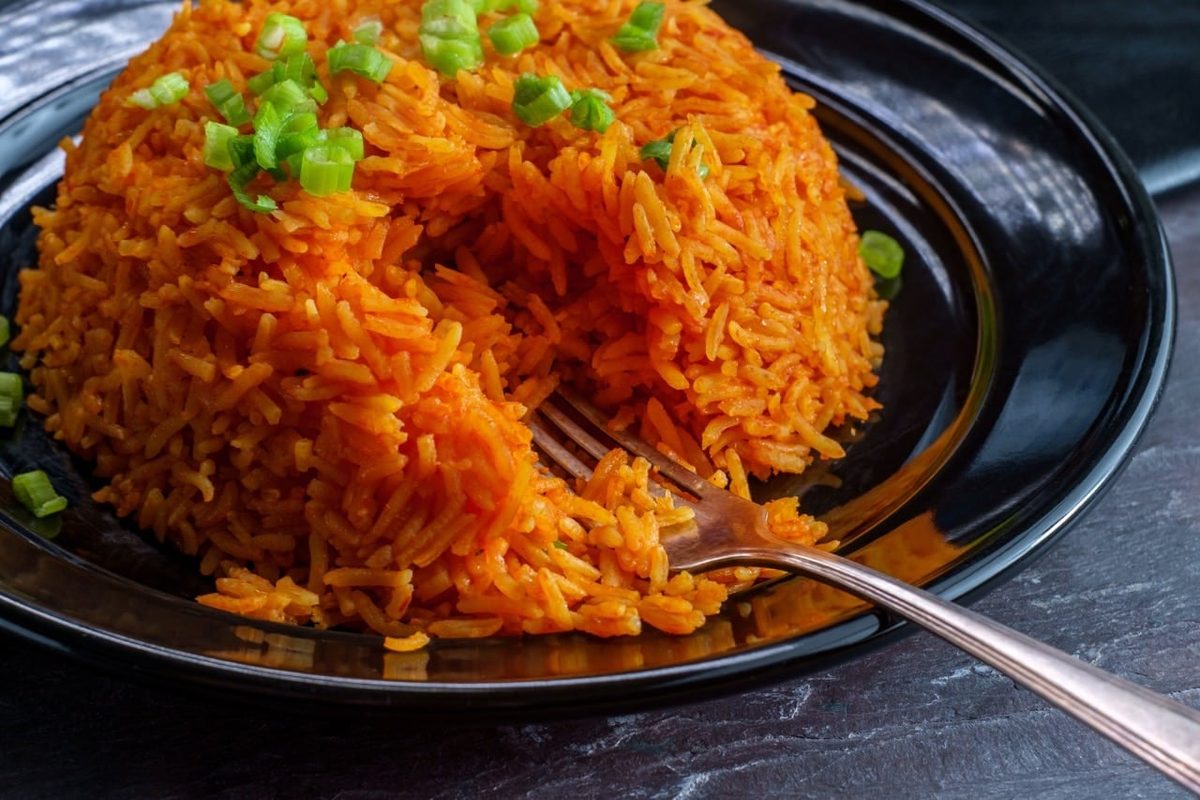
Sazón is a dry, salty seasoning used to add savory flavor and a red-orange color to rice, beans, stews and meat. In the United States it is best known in the small foil packets sold by Goya, and America’s Test Kitchen describes it as a seasoning used throughout Puerto Rican cooking.12 The word itself means “seasoning.”1 This page covers what is in the commercial packets and in a homemade version, where the color comes from, how to use it, and what to know about its salt, MSG and dyes.
At a glance
| What it is | A dry seasoning blend, sold in single-use packets or mixed at home31 |
| Core ingredients | Salt, garlic, cumin, coriander and annatto (achiote); MSG in Goya’s and in many homemade versions31 |
| Fixed recipe? | No. Goya alone sells several versions, and homemade blends vary31 |
| Main flavor drivers | Salt; MSG where used; garlic; cumin; coriander3 |
| Color | Annatto, plus FD&C Yellow 5 and Red 40 in Goya’s Coriander and Annatto version3 |
| Sodium | 170 mg per 1/4 teaspoon (1 g) serving of Goya’s Coriander and Annatto, 7% of the Daily Value2 |
| Forms sold | Foil packets in cartons; homemade31 |
Measured values
1 figure, sourced| Measure | Value | Scope | Source |
|---|---|---|---|
| Sodium Nutrient | 170 mg per 1/4 teaspoon (1 g) serving | Goya Sazón with Coriander and Annatto, 3.52 oz box, Nutrition Facts via online shop listing (7% Daily Value)Company's own figures. | shop.goya.com |
Each figure is quoted as its source states it, with the samples or standard it applies to. Where sources differ, both are shown; nothing is averaged. All measured values
What is in it
There is no single sazón recipe. The two lists below come from a manufacturer’s label and a bylined test-kitchen recipe; neither is “the” sazón.
| Blend | Ingredients, in the order given | Source |
|---|---|---|
| Goya Sazón with Coriander and Annatto | Monosodium glutamate, salt, dehydrated garlic, cumin, Yellow 5, tricalcium phosphate (anticaking agent), coriander, annatto (color), Red 40 | 3 |
| America’s Test Kitchen homemade sazón (David Pazmiño), makes about 1/4 cup | 1 tbsp ground achiote; 1 tsp each granulated garlic, granulated onion, MSG (optional) and table salt; 1/2 tsp each black pepper, ground coriander and dried cilantro; 1/4 tsp each ground cumin and dried oregano | 1 |
The difference that matters most is the order. On the Goya label, MSG comes first and salt second, with annatto near the end of the list and shared with two synthetic dyes.3 In the test-kitchen recipe, achiote is the largest single ingredient and MSG is optional.1
Goya’s own range shows how much “sazón” can vary. Besides Coriander and Annatto, its product page lists Sazón with Coriander and Tomato, with Garlic and Onion, with Saffron, without Annatto, and two low-sodium versions.3 Read the specific box.
Where the name and the packet come from
Sazón means “seasoning.”1 America’s Test Kitchen credits the blend Goya began producing in the 1960s with spreading sazón’s popularity, and notes that many cooks in Puerto Rico later took pride in making their own.1 Earlier history of the dry blend, including the often repeated idea that it began as a seasoning for stewed beans, was not documented in any source we could open.
Flavor and the compounds behind it
Sazón tastes salty and savory first, then garlicky, with cumin’s warm earthiness and the citrusy note of coriander. That description is ours; the components behind it are sourced:
| Ingredient | What it contributes | Source |
|---|---|---|
| MSG | Savory taste. MSG is the sodium salt of glutamic acid; in 1908 a Japanese professor, Kikunae Ikeda, extracted glutamate from a seaweed broth and identified it as the source of the broth’s savory taste. Today MSG is made by fermentation of starch, sugar beets, sugar cane or molasses. | 4 |
| Salt | Saltiness; second on Goya’s label | 3 |
| Garlic | Pungency and savor; garlic is native to Central Asia and northeastern Iran, according to Kew | 35 |
| Cumin | Warm, earthy aroma from an essential oil that makes up 2.5 to 4.5% of the seed | 6 |
| Annatto (achiote) | Color more than flavor. The seeds’ main pigment is bixin, up to 80% of total pigment; dried seeds have only a weak, perfumed odor | 78 |
Annatto is there for color. Goya labels it “annatto (color).”3 It comes from the seeds of Bixa orellana, a shrub native from Mexico to tropical South America.9 Its pigments are carotenoid derivatives, chiefly bixin.7 Gernot Katzer’s Spice Pages notes that dried seeds have a weak, perfumed odor, and in the Caribbean the seeds are usually fried in fat to color it.8 So the claim that annatto gives sazón a “peppery” flavor does not hold up; its job is the red-orange tint. In the Goya blend, Yellow 5 and Red 40 add to that color.3 For more, see annatto seeds and achiote powder.
How sazón is used
Goya’s directions are broad: meats, stews, soups, poultry, pasta, rice, beans and vegetables, at one packet for every four servings a recipe makes.2 America’s Test Kitchen suggests its homemade blend for meat, bean and rice dishes.1 Goya’s product page links recipes including Colombian beef and pork empanadas and a chile-rubbed turkey.3
In practice, cooks stir it into the cooking liquid for rice and beans, add it to stews and braises, and rub it on chicken or pork before roasting or grilling. That is common practice rather than a sourced finding.
Because the blend is salty, treat it as part of the salt in a recipe: add the sazón, then taste before adding more salt. If you use it alongside adobo seasoning, which is also mostly salt,3 the two add up quickly.
Buying and quality
Read the ingredient list for four things: where salt and MSG fall, whether the color comes from annatto alone or also from Yellow 5 and Red 40, whether the version contains annatto at all, and the sodium per serving. Goya’s packets list all of these on the box.32
A homemade blend lets you leave out the MSG and dyes and set the salt level yourself. The test-kitchen recipe above is one starting point.1
Storage
America’s Test Kitchen says only to keep its homemade blend in an airtight container until needed; it gives no shelf life.1 No regulator or standards body we found gives a shelf life for commercial sazón. Keep it closed, away from heat, light and stovetop steam; that is common practice, not a measured rule.
Safety
- Sodium. Goya’s Coriander and Annatto sazón carries 170 mg of sodium per 1/4 teaspoon (1 g), 7% of the Daily Value.2 FDA puts the Daily Value at less than 2,300 mg a day and says diets higher in sodium are associated with an increased risk of high blood pressure, a major cause of stroke and heart disease.10 Low-sodium versions exist.3
- MSG. FDA considers MSG generally recognized as safe, and when it is added it must be listed by name as “monosodium glutamate.”4 FDA says it has received reports of symptoms such as headache and nausea after foods containing MSG but could never confirm that MSG caused them.4 See monosodium glutamate and cooking with MSG.
- Synthetic colors. FDA requires the label to name any certified color additive, such as Yellow 5 or Red 40.11 It says most children have no adverse effects from foods containing color additives, but some evidence suggests certain children may be sensitive to them.11 Goya sells a version without annatto,3 and a homemade blend avoids synthetic dyes entirely.
- Lead in spices. A New York City health department review of 1,496 spice samples collected from 2008 to 2017 found detectable lead in more than half.12 The study did not report results for sazón specifically.
Health claims
Sazón is used in small amounts, and no study of the blend itself supports a health benefit. This page makes no health claim for it.
Substitutes and comparisons
- Sazón seasoning substitutes
- Adobo seasoning, often used alongside sazón, and adobo substitutes
- Seasoned salt and seasoned salt substitutes
- MSG vs. salt and MSG substitutes
The individual ingredients: annatto seeds, cooking with annatto seeds, garlic powder, cumin, coriander, culantro and cilantro, oregano, onion powder and black pepper. For more seasonings by name, flavor and origin, see the master list of herbs and spices.
Footnotes
-
David Pazmiño, “Homemade Sazón with Achiote, Coriander, and Cilantro”, America’s Test Kitchen. americastestkitchen.com · Publication ↩ ↩2 ↩3 ↩4 ↩5 ↩6 ↩7 ↩8 ↩9 ↩10 ↩11 ↩12 ↩13
-
Goya Foods, “Goya Sazón With Coriander and Annatto”, online shop listing. shop.goya.com · Merchant ↩ ↩2 ↩3 ↩4 ↩5
-
Goya Foods, “Sazón with Coriander and Annatto”, product page. goya.com · Merchant ↩ ↩2 ↩3 ↩4 ↩5 ↩6 ↩7 ↩8 ↩9 ↩10 ↩11 ↩12 ↩13 ↩14 ↩15 ↩16 ↩17 ↩18
-
“Questions and Answers on Monosodium glutamate (MSG)”, U.S. Food and Drug Administration. fda.gov · Regulator ↩ ↩2 ↩3
-
“Allium sativum L.”, Plants of the World Online, Royal Botanic Gardens, Kew. powo.science.kew.org · Reference work ↩
-
“Cumin”, Encyclopaedia Britannica. britannica.com · Reference work ↩
-
Rivera-Madrid et al., “Carotenoid Derivates in Achiote (Bixa orellana) Seeds”, Frontiers in Plant Science, 2016. frontiersin.org · Peer-reviewed ↩ ↩2
-
“Annatto (Bixa orellana L.)”, Gernot Katzer’s Spice Pages. gernot-katzers-spice-pages.com · Reference work ↩ ↩2
-
“Bixa orellana L.”, Plants of the World Online, Royal Botanic Gardens, Kew. powo.science.kew.org · Reference work ↩
-
“Sodium in Your Diet”, U.S. Food and Drug Administration. fda.gov · Regulator ↩
-
“Color Additives Questions and Answers for Consumers”, U.S. Food and Drug Administration. fda.gov · Regulator ↩ ↩2
-
Hore et al., “A Spoonful of Lead”, Journal of Public Health Management and Practice, 2019. scholars.mssm.edu · Peer-reviewed ↩