Cooking · Cooking with
Cooking With MSG: How Much to Use, When to Add It, and Cutting Salt
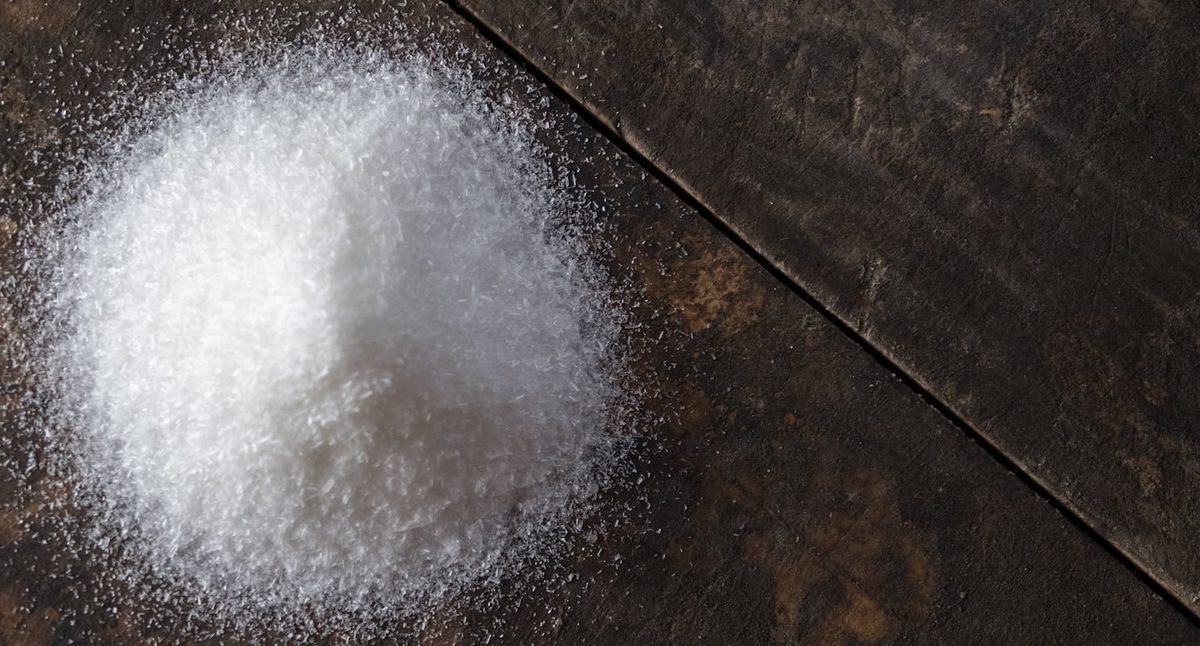
Monosodium glutamate (MSG) is the sodium salt of glutamic acid, and its job in a dish is the savory taste called umami.12 It is not a replacement for salt but a partner to it: used in small amounts alongside a little less salt, it adds depth while cutting sodium. This page covers how much to use, when to add it, what to pair it with, and what the research says about using it to lower salt.
Quick guide
| Question | Answer | Basis |
|---|---|---|
| How much? | Start small. Chef Daniel Holzman mixes 10 parts Diamond Crystal kosher salt to 1 part MSG and seasons with the mix | Attributed3 |
| How much is typical? | A serving of food with added MSG usually contains less than 0.5 g | FDA1 |
| When to add? | Holzman seasons with it throughout cooking, as with salt; in dressings; and as a finish on roasted meats | Attributed3 |
| What to pair it with? | Foods rich in inosinate or guanylate, such as anchovies, for a bigger umami effect | ATK4 |
| Replace all the salt? | No. Studies replaced part of the salt, never all of it | 567 |
What MSG does in a dish
Britannica counts umami among the five basic tastes and describes it as savory or meaty, produced by three substances: glutamate, guanylate and inosinate.2 MSG supplies glutamate. FDA notes that the free glutamate in foods such as tomatoes and cheeses is chemically the same as the glutamate in MSG.1 Glutamate was identified in 1908 by the Japanese chemist Kikunae Ikeda, working from a seaweed broth, and Britannica calls MSG an important ingredient in the cuisines of China and Japan.18
That explains where MSG helps most: soups and broths, stir-fry sauces, fried rice, marinades, dressings, eggs, vegetables, and snack seasonings. Those are common uses rather than sourced claims. In sweet dishes, a savory taste is rarely what you want; we found no source on MSG in desserts either way.
How much to use
No regulator publishes a kitchen dose, and amounts in recipes vary. Here is what can be traced:
| Source | Amount | Scope |
|---|---|---|
| Daniel Holzman, TASTE (2019) | A 10:1 mix of Diamond Crystal kosher salt to MSG, about 1 tablespoon of MSG for every ⅔ cup of salt, used wherever you would salt | A chef’s working ratio3 |
| FDA | A typical serving of food with added MSG contains less than 0.5 g | Context, not a recipe dose1 |
| Jinap et al., 2016 | 0.7% MSG in two spicy soups allowed a 32.5% sodium cut without losing acceptability | Lab sensory study6 |
A rule of thumb that circulates widely, ½ teaspoon of MSG per pound of meat or per four to six servings of vegetables, is often credited to manufacturers; we could not open a source for it, so this page doesn’t repeat it as a recommendation.
Starting point (Method). Holzman’s ratio means that where a recipe calls for 1 teaspoon of Diamond Crystal kosher salt, about ⅛ teaspoon of MSG goes alongside it (our arithmetic). Taste, then adjust. Holzman warns that going past his 10-to-1 ratio overwhelms the palate and leaves a lingering mouthfeel.3
When to add it
Holzman seasons with his salt-and-MSG mix throughout cooking, as he would with salt alone; for salads he puts pure MSG straight into the dressing; and for some dishes he adds it at the very end so it is the first thing the tongue meets, including as a finishing seasoning for roasted meats.3 He also singles out dry and fried foods such as fries, popcorn and onion rings, and says it works well in marinades and dry rubs for meat and fish.3
A common claim says MSG must go in early, during cooking, because it absorbs better. We found no test of that, and Holzman’s practice shows late additions work too.
Pair it for a bigger effect
America’s Test Kitchen explains that when glutamate meets the nucleotides inosinate and guanylate in equal amounts, umami can be as much as 20 to 30 times greater than with glutamate alone, and it advises combining the two.4 Kombu, tomatoes and mushrooms are naturally high in glutamate, according to ATK.4 In practice, a pinch of MSG goes further in a dish that already has some anchovy, dried mushroom, meat or fish; that is our application of ATK’s point, not a measurement.
Cutting salt with MSG
MSG is still a sodium salt, but a lighter one: about 12% sodium against 39% in table salt, in a peer-reviewed analysis by Wallace and colleagues.5 The AHA puts table salt at about 40% sodium.9 Three studies have tested the swap:
| Study (scope) | What was done | Result |
|---|---|---|
| Wallace, Cowan & Bailey, 2019: US dietary data, modeled | Glutamate salts in place of 25% to 45% of the sodium in select savory foods | Universal use in those foods would cut US sodium intake by 3% (162 mg a day)5 |
| Jinap et al., 2016: two spicy soups, trained panel | Salt and MSG varied from 0% to 1.2% | 0.7% MSG made a 32.5% sodium cut feasible without losing acceptability6 |
| Halim et al., 2020: four “better-for-you” dishes, 163 consumers | Salt reduced and some MSG added | MSG versions liked the same as the originals, or more for a savory yogurt dip7 |
The Wallace study is a model, not a feeding trial, and was funded by an unrestricted educational grant from Ajinomoto, which makes MSG.5 None of the three replaced all the salt. For the full comparison, see MSG vs. salt.
Starting point (Method). Cut the salt in a savory dish by about a quarter, the low end of the range Wallace modeled, add a small pinch of MSG, and taste.5 No published source gives a tested kitchen ratio for this swap.
Safety
FDA considers adding MSG to food generally recognized as safe.1 It notes that some sensitive people who eat 3 grams or more of MSG without food may have short-term, generally mild symptoms such as headache, numbness or flushing; that eating more than 3 grams without food at one time is unlikely; and that FDA was never able to confirm that MSG caused the reactions reported to it.1 Britannica traces the idea of “Chinese restaurant syndrome” to reports first made in 1968 and says later research found no conclusive link between the symptoms and normal levels of MSG.8 “Debunked” goes further than FDA does: its own account leaves room for mild, short-lived symptoms in some sensitive people at large doses without food.
In the EU, EFSA set a group acceptable daily intake of 30 mg per kg of body weight a day for glutamic acid and its salts in 2017, about 2.1 g a day for a 70 kg adult by our arithmetic, and found that people whose diets are high in foods with these additives may exceed it.10 FDA’s typical serving of food with added MSG, under 0.5 g, is less than a sixth of that 3-gram figure.1
Labels. FDA requires added MSG to be listed by name, not hidden under “spices and flavoring.”1
What isn’t known
- No regulator or tested source gives a kitchen dose per pound or per serving.
- No test shows that adding MSG early works better than adding it late.
- No published ratio for replacing salt with MSG in home recipes; the studies above cover specific foods.
Related
- Monosodium glutamate (MSG), the full profile
- MSG vs. salt and MSG substitutes
- Soy sauce powder and mushroom spices
- Kosher salt and too much salt?
Footnotes
-
Questions and Answers on Monosodium glutamate (MSG), U.S. Food and Drug Administration. fda.gov · Regulator ↩ ↩2 ↩3 ↩4 ↩5 ↩6 ↩7 ↩8 ↩9
-
Umami, Encyclopaedia Britannica. britannica.com · Reference work ↩ ↩2
-
Daniel Holzman, How to Cook With MSG, TASTE, 2019. tastecooking.com · Publication ↩ ↩2 ↩3 ↩4 ↩5 ↩6
-
Dan Souza and Alyssa Vaughn, How to Use Science to Boost Umami, America’s Test Kitchen, 2022. americastestkitchen.com · Publication ↩ ↩2 ↩3
-
Wallace TC, Cowan AE, Bailey RL, Current Sodium Intakes in the United States and the Modeled Effects of Glutamate Incorporation into Select Savory Products, Nutrients, 2019. mdpi.com · Peer-reviewed ↩ ↩2 ↩3 ↩4 ↩5
-
Jinap S et al., Reduction of sodium content in spicy soups using monosodium glutamate, Food & Nutrition Research, 2016. foodandnutritionresearch.net · Peer-reviewed ↩ ↩2 ↩3
-
Halim J et al., The Salt Flip: Sensory mitigation of salt (and sodium) reduction with MSG in Better-for-You foods, Journal of Food Science, 2020 (abstract). escholarship.org · Peer-reviewed ↩ ↩2
-
Monosodium glutamate, Encyclopaedia Britannica. britannica.com · Reference work ↩ ↩2
-
Sodium Sources: Where Does All That Sodium Come From?, American Heart Association, 2025. heart.org · Reference work ↩
-
EFSA reviews safety of glutamates added to food, European Food Safety Authority, 2017. efsa.europa.eu · Regulator ↩