Spice Substitutes · Substitutes
Sassafras Substitutes: For Filé, for Gumbo Texture and for Root Beer Flavor
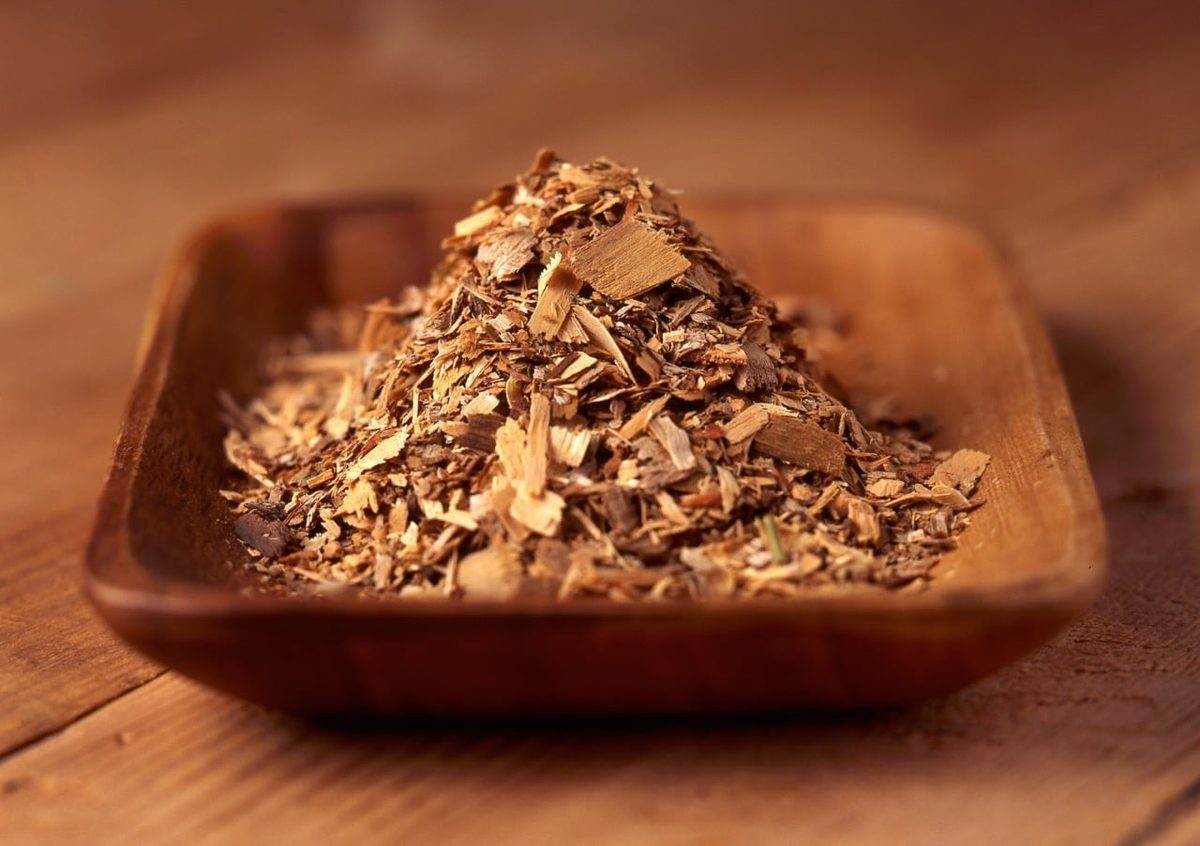
Sassafras (Sassafras albidum) is a tree of eastern North America in the laurel family.1 Cooks use two very different parts of it. The dried, ground leaves are filé, which seasons and thickens Louisiana gumbo.2 The root and root bark once flavored root beer and sassafras tea, but their oil is about 80 percent safrole, and US rules have barred safrole and oil of sassafras from food since an order of December 3, 1960.3 So the right substitute depends on which sassafras your recipe means, and on whether you need flavor, thickening or both.
Quick answer
| What sassafras is doing | Best substitute | Starting amount | Treatment |
|---|---|---|---|
| Filé thickening a gumbo | Okra, cooked in the pot | No fixed amount; add until the texture suits you | Method |
| Filé thickening, at the last minute | Cornstarch slurry | Equal parts cornstarch and cold water or broth; start with about 1 tsp | Attributed |
| Filé’s leafy, lemony flavor | Dried lemon balm | Less than the filé called for; start at half | Method |
| Filé’s thyme-like flavor | Dried thyme | A small pinch per pot | Method |
| Root beer flavor (root or bark) | Safrole-free sassafras extract, where sold | Follow the product’s directions | Method |
How the ratios on this page are labeled
Every ratio carries one of four labels.
- Computed: based on a measurable physical relationship, with the source named.
- Attributed: a named source publishes this ratio. We quote it as theirs.
- Disputed: named sources give different answers to the same swap. We show each one and do not average them.
- Method: we found no published ratio. We give a direction and a cautious starting point, and say so.
No source we found gives an amount of any substitute that equals a given amount of filé or of sassafras root. Gumbo thickness is a matter of taste, and every amount below is a place to start.
Leaf and root are not the same ingredient
Gernot Katzer gives the leaves about 0.4 percent essential oil, with safrole about 45 percent of it and camphor about 30 percent, plus α-pinene, citral and phellandrene. The root bark holds about 8 percent oil, around 80 percent safrole.4 He describes the leaves’ aroma as weak but fresh and lemon-like,4 and the root as rich in oil but very bitter.4
The law treats them differently too. US rules list sassafras leaves as a natural flavoring only if safrole-free,5 and permit a safrole-free extract of the root bark as a flavoring.6 Food with added safrole or oil of sassafras is deemed adulterated, and so is a food whose main purpose is to carry them, with sassafras tea as the regulation’s example.3 The National Toxicology Program lists safrole as reasonably anticipated to be a human carcinogen, based on liver tumors in rodents.7
If filé is thickening a gumbo
Filé is one of the three common gumbo thickeners, with okra and roux.2 It goes in at the end: Robert Caldwell, writing for 64 Parishes, says it is added after the heat is reduced, and most often sprinkled on as a finishing garnish.2 Cooked in too early, it turns the liquid viscous and stringy, like ropes when poured.2 Most of its substitutes run on a different schedule.
1. Okra
Okra is the other traditional thickener. Its mucilage makes it useful for thickening broths and soups,8 and historian Gwendolyn Midlo Hall, cited by 64 Parishes, traces the word gumbo to a West African word for okra.9 Caldwell says filé gumbos and okra gumbos were traditionally distinct dishes,2 and Morgan Randall writes that filé was the thing to reach for when okra was out of season.10 Tasting Table notes that okra brings its own distinct taste and can be slimy.11 It has none of filé’s herbal notes.
Ratio (Method): No published amount exists. In common practice, sliced okra goes in early with the other vegetables and cooks down; judge the thickness before serving.
2. Roux
The base of most gumbos is a roux, according to 64 Parishes;9 Tasting Table describes it as flour cooked with oil.11 If your gumbo already starts with one, it may need nothing else.
Ratio (Method): No published ratio. For a thin pot, make a little extra roux in a separate pan, whisk it in a spoonful at a time, and simmer a few minutes before judging. Roux adds a toasted flavor, nothing of filé’s.
3. Cornstarch slurry
Cornstarch is not traditional, but like filé it goes in near the very end.11
Ratio (Attributed): Tasting Table’s Wendy Leigh says to mix equal parts cornstarch and cold water or broth, and to start with about a teaspoon, stirring it into the hot gumbo and adding more until it is as thick as you like.11 She also advises using any thickening powder sparingly in a gumbo that already has a roux.11
If filé is there for flavor
Caldwell describes filé’s flavor as sweet, earthy, peppery and thyme-like, and says leaves dried in the dark taste of lemon and coriander.2 Commercial filé is sometimes blended with bay leaf, oregano, thyme or basil.2 The aroma is subtle, given the leaf’s low oil content.4
1. Lemon balm
Katzer notes that sassafras leaves are not available in Europe and says lemon balm makes a good substitute, though since it is the more aromatic of the two, the dose must be reduced.4 There is a shared compound behind the lemony note: Katzer lists citral among the components of sassafras leaf oil,4 and the European Medicines Agency describes lemon balm oil as mainly citral, neral and citronellal.12 In our judgment, expect a brighter, more purely lemony result than filé gives. Use lemon balm dried and crumbled fine, stirred in at the end.
Ratio (Method): Katzer gives a direction but no number. Start with about half as much dried lemon balm as the filé your recipe calls for, and taste. Lemon balm does not thicken.
2. A pinch of dried thyme
Ratio (Method): Because Caldwell calls filé thyme-like and some filé blends contain thyme,2 a small pinch of dried thyme stirred in near the end can stand in for the herbal note. It will not thicken. Taste before adding more.
3. Your own dried sassafras leaves
Filé is simply sassafras leaves that have been harvested, dried and pounded.2 If you can pick from a tree you have identified with certainty, drying and grinding the leaves makes filé rather than a substitute. Katzer considers leaves and filé generally harmless at culinary amounts,4 though US rules list the leaves as a flavoring only when safrole-free,5 and we found no regulator that sets a safrole limit for filé. See gumbo filé powder.
If sassafras is flavoring root beer, tea or candy
This is the sassafras of old recipes: the root and root bark. Sassafras root once flavored root beer alongside sarsaparilla, juniper and vanilla, until the FDA banned sassafras oil and safrole as food additives in 1960.133 Katzer notes that today’s root beer is made from sugar, aromatic plants and carbonated water,4 and that sassafras root oil used in it in the US has the safrole removed.4
1. Safrole-free sassafras extract
US rules permit a safrole-free water extract of sassafras root bark as a flavoring, made by extracting the bark, concentrating it and discarding the oily layer.6 A product made to this rule gives sassafras root flavor without the safrole.
Ratio (Method): We found no published conversion from root bark to extract. Follow the maker’s directions and taste.
2. Root beer or root beer concentrate
Ratio (Method): For a glaze, a braise or a dessert where a root beer note is wanted, reduce root beer to a syrup, or use a root beer flavoring sparingly. Root beer adds a lot of sugar, so cut the recipe’s sweetener to match. This is common practice, not a tested ratio. It does nothing for a gumbo.
Not a substitute: the root, bark or oil itself
Do not make tea or flavorings from sassafras root, root bark or sassafras oil. FDA treats food with added safrole or oil of sassafras as adulterated,3 and Katzer, who regards the leaves as generally harmless at culinary scale, strongly discourages culinary use of the root.4
What isn’t known
- No source gives an amount of okra, roux, starch or herb that equals a given amount of filé.
- No published conversion links sassafras root bark to safrole-free extract or to any root beer product.
- It is sometimes said that anise is used in place of sassafras in some gumbo recipes. We found no source for this.
- We found no measured safrole content for retail filé powder.
Related
- Sassafras and gumbo filé powder
- Gumbo filé substitutes and saffron vs. sassafras
- Lemon balm and thyme
- Okra spices, Cajun seasoning and Creole seasoning
Footnotes
-
Sassafras albidum (Nutt.) Nees, Plants of the World Online, Royal Botanic Gardens, Kew. powo.science.kew.org · Reference work ↩
-
Robert Caldwell, “Filé”, 64 Parishes, 2025. 64parishes.org · Reference work ↩ ↩2 ↩3 ↩4 ↩5 ↩6 ↩7 ↩8 ↩9
-
21 CFR 189.180, Safrole, eCFR. ecfr.gov · Regulator ↩ ↩2 ↩3 ↩4
-
Gernot Katzer, “Sassafras (Sassafras albidum)”, Gernot Katzer’s Spice Pages. gernot-katzers-spice-pages.com · Reference work ↩ ↩2 ↩3 ↩4 ↩5 ↩6 ↩7 ↩8 ↩9 ↩10
-
21 CFR 172.510, Natural flavoring substances, eCFR. ecfr.gov · Regulator ↩ ↩2
-
21 CFR 172.580, Safrole-free extract of sassafras, eCFR. ecfr.gov · Regulator ↩ ↩2
-
“Safrole”, Report on Carcinogens, Fifteenth Edition, National Toxicology Program. ntp.niehs.nih.gov · Regulator ↩
-
“Okra”, Encyclopaedia Britannica. britannica.com · Reference work ↩
-
Ryan Brasseaux, “Gumbo”, 64 Parishes, 2023. 64parishes.org · Reference work ↩ ↩2
-
Morgan Randall, “Suffering Sassafras”, 64 Parishes, 2019. 64parishes.org · Publication ↩
-
Wendy Leigh, “The 2 Best Substitutes To Use In Gumbo When You Don’t Have Filé On Hand”, Tasting Table, 2025. tastingtable.com · Publication ↩ ↩2 ↩3 ↩4 ↩5
-
Assessment report on Melissa officinalis L., folium, European Medicines Agency. ema.europa.eu · Regulator ↩
-
Kari Traylor, “Sassafras: From Scent to Science in American Medicine”, JSTOR Daily, 2026. daily.jstor.org · Publication ↩