Spices · Profile
Gumbo Filé Powder: What It Is, How to Use It and Why It Is Legal
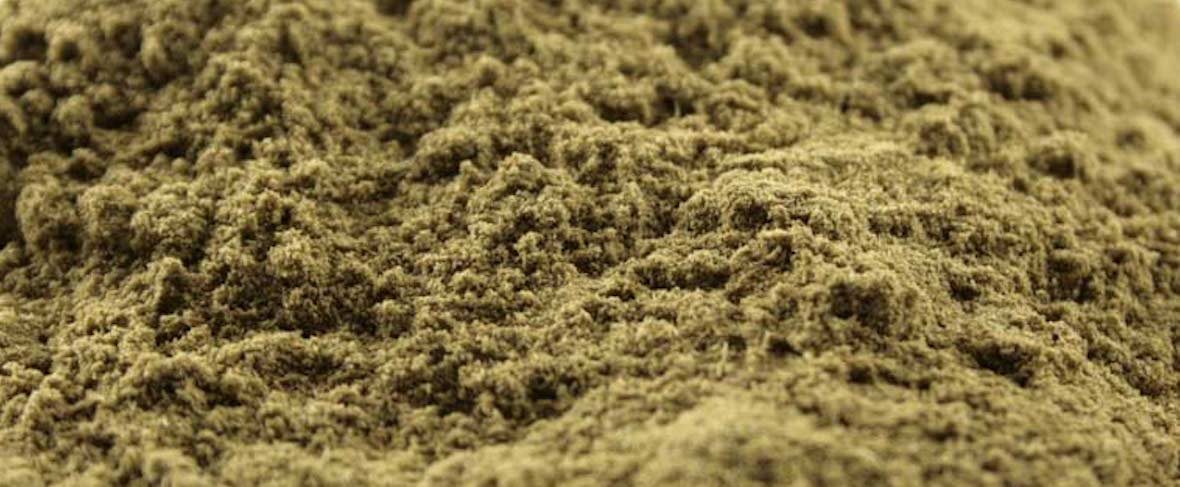
Gumbo filé is the dried, finely ground leaf of the sassafras tree. In Louisiana cooking it does two jobs: it seasons a gumbo with a green, earthy, thyme-like flavor, and, cooked in, it thickens the pot. This page covers what filé is, where it comes from, how and when to add it, how to buy it, and why a spice made from the same tree as banned sassafras oil is still legal to sell.
At a glance
| What it is | Dried, finely ground leaves of Sassafras albidum1 |
| Plant family | Lauraceae, the laurel family2 |
| Native range of the tree | Southeastern Canada to the central and eastern United States2 |
| Jobs in the pot | Seasoning and thickener; one of gumbo’s three common thickeners with okra and roux1 |
| When to add | After the heat is reduced, or at the table1 |
| Forms sold | Pure filé, or blended with herbs such as bay, oregano, thyme and basil1 |
| Leaf essential oil | About 0.4%, roughly 45% of it safrole (Katzer)3 |
| U.S. status | Sassafras leaves are a permitted natural flavoring only if safrole free4 |
Measured values
3 figures, sourced| Measure | Value | Scope | Source |
|---|---|---|---|
| Leaf essential oil | 0.4 % (about) | sassafras leaves, per Katzer's Spice PagesA circulating 2–3% leaf oil figure does not match this source | gernot-katzers-spice-pages.com |
| Leaf essential oil: safrole | 45 % of the leaf oil (roughly) | sassafras leaves, per Katzer's Spice Pages | gernot-katzers-spice-pages.com |
| Leaf essential oil: camphor | 30 % of the leaf oil | sassafras leaves, per Katzer's Spice Pages | gernot-katzers-spice-pages.com |
Each figure is quoted as its source states it, with the samples or standard it applies to. Where sources differ, both are shown; nothing is averaged. All measured values
What filé is
Filé is made by harvesting sassafras leaves, drying them, and pounding them to a fine powder.1 Morgan Randall, profiling the Louisiana filé maker John Oswald Colson and his protégé Dustin Fuqua, describes leaves picked by hand, dried over two to three weeks, and ground with a pile and pilon into a bright green powder.5
The tree, Sassafras albidum, is native from southeastern Canada through the central and eastern United States.2 For the tree itself, its root and the history of sassafras tea and root beer, see sassafras.
Flavor and the compounds behind it
Robert Caldwell, writing in the Louisiana encyclopedia 64 Parishes, says filé added as a seasoning gives a sweet, earthy, peppery and thyme-like flavor.1 He adds that green leaves dried in the dark have a lemony, coriander-like flavor with a grassy undertone, while commercial filé dried in sunlight is a duller green.1 Katzer describes the leaves’ aroma as weak but fresh and lemon-like.3
The leaf is not very oily. Katzer gives the leaves about 0.4% essential oil, of which roughly 45% is safrole and 30% camphor, with α-pinene, citral and phellandrene in smaller amounts.3 The figure of 2–3% oil that circulates for the leaves does not match this; Katzer’s higher figures are for the root (about 2%) and especially the root bark (about 8%).3 The root beer flavor people associate with sassafras came from the root oil, not the leaves.3
Origin and history
Filé has Choctaw roots. Caldwell writes that many Choctaw foods once used powdered sassafras and gives the tree’s Choctaw name as iti kʋfi.1 Randall gives the Choctaw word for the plant and its powder as kombo, and says the Choctaw gathered and dried the leaves and used the powder to thicken and flavor soups.5 Today, Caldwell notes, Creole and Cajun restaurants serving gumbo often set filé out among the table condiments.1 How and when the Acadian settlers of Louisiana took up filé is often told, but we found no source that documents it.
Sassafras had a separate career as medicine. Its bark became one of the main exports of the Jamestown colony, and the Spanish physician Nicolás Monardes called it a universal remedy for all manner of diseases.6 That is a history of belief, not evidence. The widely repeated claim that sassafras was the colonies’ second-largest export after tobacco could not be traced.
How to use filé
Timing is everything with filé:
- For flavor, add it late. Caldwell says filé can be added as a seasoning to a gumbo, soup or stew after reducing the heat, and that it is most often sprinkled on as a finishing garnish.1 Katzer likewise has it stirred in immediately before serving.3
- Cooked in, it thickens and turns stringy. Added early, filé gives a viscous, slimy, stringy consistency that Caldwell says resembles ropes when poured.1 Adding it after the heat is reduced, he says, keeps the dish from turning ropy.1
Filé is one of three common thickeners for gumbo, alongside okra and a flour roux.1 Caldwell writes that filé gumbos and okra gumbos were traditionally separate dishes, partly because okra was seasonal, and that a filé gumbo can be made without a roux.1 Randall describes filé as what cooks reach for when okra is out of season.5
Gumbo is filé’s main use in the sources we read. Its use in étouffée and other dishes is sometimes mentioned but was not documented by any source opened. For the rest of the Louisiana spice shelf, see Cajun seasoning, Creole seasoning, Cajun vs. Creole seasoning, okra spices, thyme and bay leaves.
Buying and quality
- Color. Randall contrasts homemade bright green filé with the sawdust-like color and texture of commercial filé, and Caldwell links the duller green of commercial filé to drying in sunlight.51
- Pure or blended. Some filé is blended with other herbs, such as bay leaves, oregano, thyme and basil; check the label if you want sassafras alone.1
- Red filé. Made from red fall leaves, it lacks the chlorophyll of green filé and tastes different.1
No grading standard for filé was found.
Storage
No published shelf-life figure for filé powder was found from a regulator or standards body. Keep it sealed, cool and dark, and judge it by color and smell; that is common practice, not a tested figure.
Safety and regulation
Sassafras is regulated because of safrole, a compound in its oil.
- United States. The FDA treats food containing added safrole or oil of sassafras as adulterated, citing an order of December 3, 1960.7 Sassafras leaves remain on the FDA’s list of natural flavoring substances, with the limitation “safrole free.”4 We found no FDA statement that addresses filé powder by name, and no published measurement of the safrole content of retail filé.
- Why safrole matters. The National Toxicology Program lists safrole as reasonably anticipated to be a human carcinogen, on evidence that it caused liver tumors in two rodent species; it reports no studies of people exposed specifically to safrole.8 Katzer considers the leaves and filé generally harmless at culinary amounts because their safrole content is low, while strongly discouraging use of the root; that judgment is his.3
- European Union. Safrole may not be added to food as such, and limits apply in compound foods (for example 25 mg/kg in soups and sauces), but those limits do not apply where the only flavoring ingredients added are herbs and spices.9
Health claims
Filé is sometimes promoted for kidney stones, high blood pressure, arthritis and gout, or for anti-inflammatory compounds in its oil. We found no credible source for any of those effects. Katzer traces the name sassafras to Latin for “stone breaker,” after an old use against kidney stones that he calls obsolete.3 This page makes no claim that filé treats or prevents any condition.
Substitutes
Okra or a dark roux can take over filé’s thickening job, but neither gives its flavor. No source gives a tested swap ratio. See gumbo filé substitutes, sassafras substitutes and saffron vs. sassafras.
Footnotes
-
Robert Caldwell, “Filé,” 64 Parishes, 2025. 64parishes.org · Reference work ↩ ↩2 ↩3 ↩4 ↩5 ↩6 ↩7 ↩8 ↩9 ↩10 ↩11 ↩12 ↩13 ↩14 ↩15 ↩16 ↩17
-
Sassafras albidum (Nutt.) Nees, Plants of the World Online, Royal Botanic Gardens, Kew. powo.science.kew.org · Reference work ↩ ↩2 ↩3
-
Gernot Katzer, “Sassafras (Sassafras albidum),” Gernot Katzer’s Spice Pages. gernot-katzers-spice-pages.com · Reference work ↩ ↩2 ↩3 ↩4 ↩5 ↩6 ↩7 ↩8
-
21 CFR 172.510, Natural flavoring substances and natural substances used in conjunction with flavors, U.S. Food and Drug Administration. ecfr.gov · Regulator ↩ ↩2
-
Morgan Randall, “Suffering Sassafras,” 64 Parishes, 2019. 64parishes.org · Publication ↩ ↩2 ↩3 ↩4
-
Kari Traylor, “Sassafras: From Scent to Science in American Medicine,” JSTOR Daily, 2026. daily.jstor.org · Publication ↩
-
21 CFR 189.180, Safrole, U.S. Food and Drug Administration. ecfr.gov · Regulator ↩
-
“Safrole,” Report on Carcinogens, Fifteenth Edition, National Toxicology Program. ntp.niehs.nih.gov · Regulator ↩
-
Regulation (EC) No 1334/2008, Annex III, European Union. eur-lex.europa.eu · Regulator ↩