Seasonings · Profile
Creole Seasoning: What’s in It, How It Compares to Cajun, and How to Use It
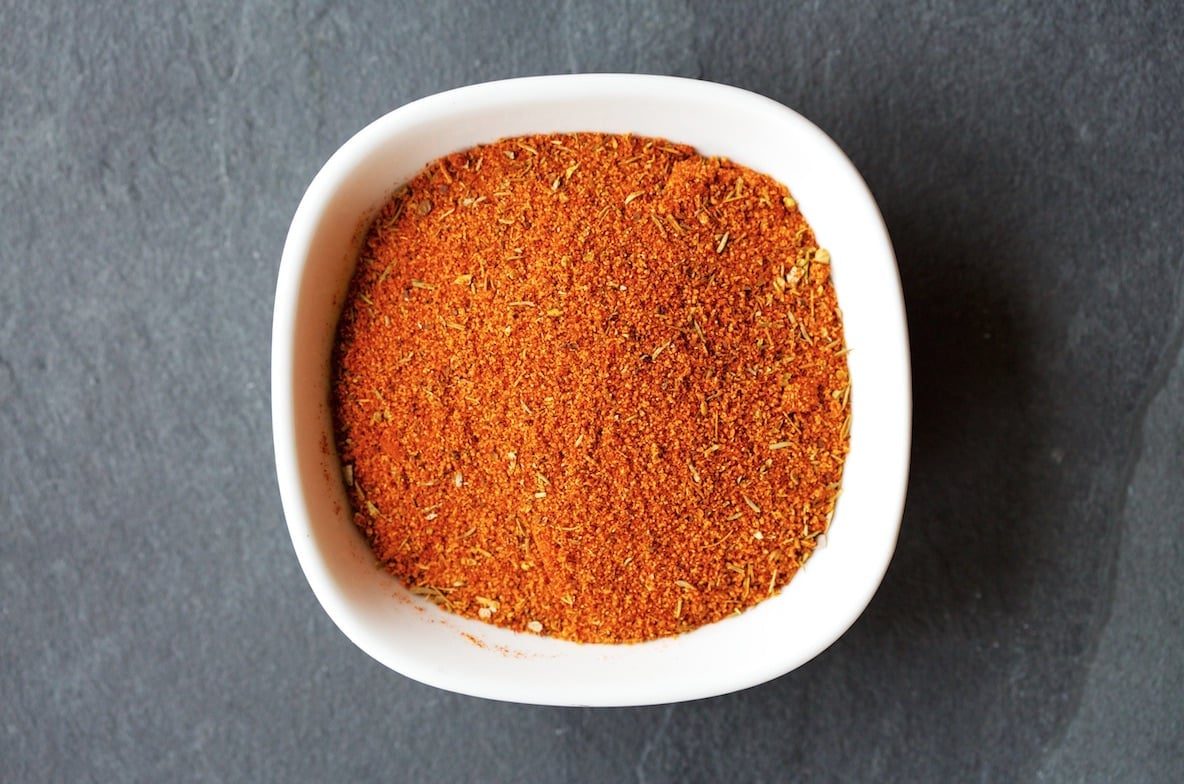
Creole seasoning is a ground, all-purpose seasoning blend from Louisiana, usually built on paprika, garlic, salt, black pepper and cayenne, sometimes with dried thyme or oregano. It has no fixed recipe, and the line between Creole and Cajun seasoning is blurrier on the spice shelf than it is in Louisiana’s kitchens. This page covers what goes into it, what separates Creole from Cajun cooking according to Louisiana sources, the compounds behind its flavor, and how to buy, store and use it.
At a glance
| What it is | A ground seasoning blend associated with Louisiana cooking1 |
| Typical components | Paprika, garlic, salt, pepper and some heat, usually cayenne or red pepper; some blends add thyme or oregano (Cook’s Country)1 |
| Fixed recipe? | No: ask Louisiana cooks and “you’d get 14 different” answers, as Cook’s Country puts it1 |
| Main flavor drivers | Salt; capsaicinoids from red pepper for heat; thymol and carvacrol where thyme or oregano is used2345 |
| Salt | Can be the largest ingredient: one commercial blend lists salt first, at 340 mg sodium per 1/4 teaspoon2 |
| Forms sold | Ground blend; also made at home |
| Official standard | None found |
Measured values
1 figure, sourced| Measure | Value | Scope | Source |
|---|---|---|---|
| Sodium Nutrient | 340 mg per 1/4 teaspoon (15% DV) | Tony Chachere's Original Creole Seasoning, retailer-listed label | giantfoodstores.com |
Each figure is quoted as its source states it, with the samples or standard it applies to. Where sources differ, both are shown; nothing is averaged. All measured values
What is in it
Cook’s Country, testing the category it calls Louisiana Cajun or Creole seasoning, found that most commercial blends combine paprika, garlic, salt and pepper with a bit of heat, usually from cayenne or red pepper, and that some add dried herbs such as thyme or oregano.1 Three published formulas show how much the balance can shift:
| Blend | Ingredients, in order given | Source |
|---|---|---|
| Cook’s Country homemade Louisiana seasoning (makes about 3/4 cup) | 5 tbsp paprika; 2 tbsp garlic powder; 1 tbsp each dried thyme, cayenne, celery salt, salt and black pepper | 1 |
| PepperScale homemade Creole seasoning | 2 tbsp paprika; 1 tbsp each garlic powder, onion powder, dried oregano, dried basil and dried thyme; 1 tsp each black pepper, white pepper (optional) and cayenne; no salt | 6 |
| Tony Chachere’s Original Creole Seasoning (label) | Salt, red pepper, black pepper, chili powder (chili pepper, spices, salt, garlic powder), dehydrated garlic, silicon dioxide | 2 |
The homemade versions are led by paprika; the commercial one is led by salt, with no paprika or herbs listed by name.162 PepperScale’s is the most herbal of the three, with oregano, basil and thyme, and the only one with onion powder.6 PepperScale describes typical blends as paprika, garlic, thyme, oregano and black or white pepper, with some adding bay leaf, basil, celery powder, salt or cayenne.7
Creole vs. Cajun
The two words name different people and, in Louisiana, different styles of cooking:
- Cajun comes from les Acadiens.8 Britannica describes Cajuns as descendants of Roman Catholic French Canadians whom the British drove from the captured colony of Acadia in the 18th century, and who settled in the bayou country of southern Louisiana.9
- Creole originally referred to people born in the colony to French and Spanish settler families.8 The Louisiana Office of Tourism’s guide describes Creole cuisine as the product of many cultures meeting in New Orleans over centuries: French, Spanish, African, Caribbean, Native American, German and Italian among them.8
For the cooking, the same guide draws these distinctions:8
| Creole | Cajun | |
|---|---|---|
| Setting | “City food,” centered on New Orleans | “Country food” |
| Tomatoes | Used, e.g. in Creole gumbo and jambalaya | Generally not, though some dishes such as sauce piquante use them |
| Roux | Butter and flour | Oil and flour |
| Shared | The “holy trinity” of onion, celery and bell pepper | Same |
The guide also says Cajun food is famous for being well seasoned, which is sometimes misread as spicy; cayenne is in the pantry, but as seasoning, not the main event.8 So the common shorthand that Cajun is hot and Creole is mild is not what this Louisiana source says. PepperScale does hold to it: it calls Creole seasoning the milder and more refined option, says most blends leave out cayenne and get any red color from mild paprika, and ties Creole’s herbs, such as oregano, to Creole cooking’s use of tomatoes.7 The Tony Chachere’s label above, with red pepper second, is one jar that does not fit that description.2
None of those distinctions is about a spice jar. The one source that separates the two blends by ingredient is the USDA’s purchasing specification for government buyers: its minimum Creole seasoning adds mustard, fresh lemon peel and black pepper to the salt, paprika, garlic and cayenne it shares with its Cajun seasoning.10 That is a purchasing spec, not a description of what’s on store shelves, and Cook’s Country tests retail Creole and Cajun seasonings as one category.1 In practice, the name on the label tells you less than the ingredient list does. For a closer look, see Cajun seasoning vs. Creole seasoning.
Flavor and the compounds behind it
Creole seasoning tastes salty, peppery and garlicky first, with a warm red-pepper finish and, in herb-heavy blends, a savory thyme note. That description is ours. The chemistry belongs to the individual ingredients:
| Ingredient | What it contributes | Source |
|---|---|---|
| Red pepper, cayenne, chili powder | Heat, from capsaicinoids | 3 |
| Paprika | Red color, mainly from capsanthin and capsorubin | 11 |
| Thyme | Thymol and carvacrol, the oil’s characteristic constituents | 4 |
| Oregano | Carvacrol and thymol, about 78–85% of the essential oil (review) | 5 |
| Salt | Saltiness; often the largest single ingredient in commercial blends | 2 |
How hot a given blend is depends on how much red pepper is in it. No published heat measurement for Creole seasoning blends was found.
How Creole seasoning is used
Cook’s Country suggests its Louisiana seasoning for chicken jambalaya, chicken sauce piquant and pork grillades.1 PepperScale suggests it in place of Old Bay for a seafood boil.7 Beyond those, cooks use it as a rub for chicken, pork and fish, in seafood dishes, on fries and roasted vegetables, and in rice dishes; that is common practice rather than a sourced finding. See jambalaya spices and which spices go well with shrimp.
Because many commercial blends are salt-led,2 season with the blend first and add any extra salt only after tasting.
Buying and quality
Read the ingredient list, which is printed in order of quantity. Where salt comes first, as on Tony Chachere’s Original, a quarter teaspoon carries 340 mg of sodium, which the label gives as 15% of the Daily Value.2 As a rule of thumb, a blend that lists paprika first will be redder and milder than one that lists red pepper near the top.
Storage
Cook’s Country says its homemade blend keeps for a few months.1 No regulator or standards body we found gives a shelf life for Creole seasoning. Keep it sealed, away from heat and light; if it smells faint when rubbed between the fingers, it has faded. That last advice is common practice, not a measured figure.
Safety
Sodium. For most commercial blends, salt is the nutrient that matters: see Buying above.2
Lead in spices. A New York City health department review of 1,496 spice samples from 41 countries, collected from 2008 to 2017, found detectable lead in more than half and above 2 parts per million in more than 30%, with higher average levels in spices bought abroad.12 The abstract does not break the results out by blend, so it says nothing about Creole seasoning in particular.
Health claims
Paprika is rich in vitamin A by weight: USDA data put a full teaspoon of paprika at about 6% of the FDA Daily Value.1314 A serving of Creole seasoning is a fraction of a teaspoon, and paprika is only part of it, so the blend is not a meaningful source. Claims that the bay leaves in some blends improve insulin sensitivity, or that paprika protects against food poisoning, could not be traced to any credible source, and this page makes no health claim for the blend.
Substitutes and comparisons
- Creole seasoning substitutes
- Cajun seasoning vs. Creole seasoning (see also Cajun seasoning)
- Old Bay vs. Creole seasoning (see also Old Bay seasoning)
The individual ingredients: paprika, cayenne pepper, garlic powder, onion powder, black pepper, thyme, oregano and celery salt. For the other Louisiana seasoning, see gumbo filé powder, made from sassafras.
Footnotes
-
Cook’s Country, “Louisiana Cajun or Creole Seasoning”, America’s Test Kitchen, 2019. americastestkitchen.com · Publication ↩ ↩2 ↩3 ↩4 ↩5 ↩6 ↩7 ↩8 ↩9
-
Tony Chachere’s Original Creole Seasoning, ingredients and nutrition label, via Giant Food Stores product listing. giantfoodstores.com · Merchant ↩ ↩2 ↩3 ↩4 ↩5 ↩6 ↩7 ↩8 ↩9
-
Bosland and Walker, “Measuring Chile Pepper Heat”, New Mexico State University, 2010. pubs.nmsu.edu · Reference work ↩ ↩2
-
S.H. Widodo, Thymus vulgaris, Plant Resources of South-East Asia (PROSEA). uses.plantnet-project.org · Reference work ↩ ↩2
-
Lombrea et al., “A Recent Insight Regarding the Phytochemistry and Bioactivity of Origanum vulgare L. Essential Oil”, International Journal of Molecular Sciences, 2020. mdpi.com · Peer-reviewed ↩ ↩2
-
Matt Bray, “What’s A Good Creole Seasoning Substitute?”, PepperScale, 2025. pepperscale.com · Publication · PepperScale is also owned by Matt Bray, the editor of this site. ↩ ↩2 ↩3
-
Matt Bray, “What Is Creole Seasoning? The Story Behind The Spice”, PepperScale, 2022. pepperscale.com · Publication · PepperScale is also owned by Matt Bray, the editor of this site. ↩ ↩2 ↩3
-
Jay D. Ducote, “Cajun vs. Creole Food: What is the Difference?”, Explore Louisiana (Louisiana Office of Tourism). explorelouisiana.com · Publication ↩ ↩2 ↩3 ↩4 ↩5
-
“Cajun”, Encyclopaedia Britannica. britannica.com · Reference work ↩
-
Commercial Item Description A-A-20001C, Spices and Spice Blends, USDA Agricultural Marketing Service, 2023. ams.usda.gov · Regulator ↩
-
“Paprika extract”, Chemical and Technical Assessment, FAO/WHO JECFA, 2008 (rev. 2013). fao.org · Regulator ↩
-
Hore et al., “A Spoonful of Lead”, Journal of Public Health Management and Practice, 2019. scholars.mssm.edu · Peer-reviewed ↩
-
“Spices, paprika”, USDA FoodData Central. fdc.nal.usda.gov · Regulator ↩
-
“Daily Value on the Nutrition and Supplement Facts Labels”, U.S. Food and Drug Administration. fda.gov · Regulator ↩