Spices · Profile
Achiote Powder: Ground Annatto, Its Color, Flavor and Uses
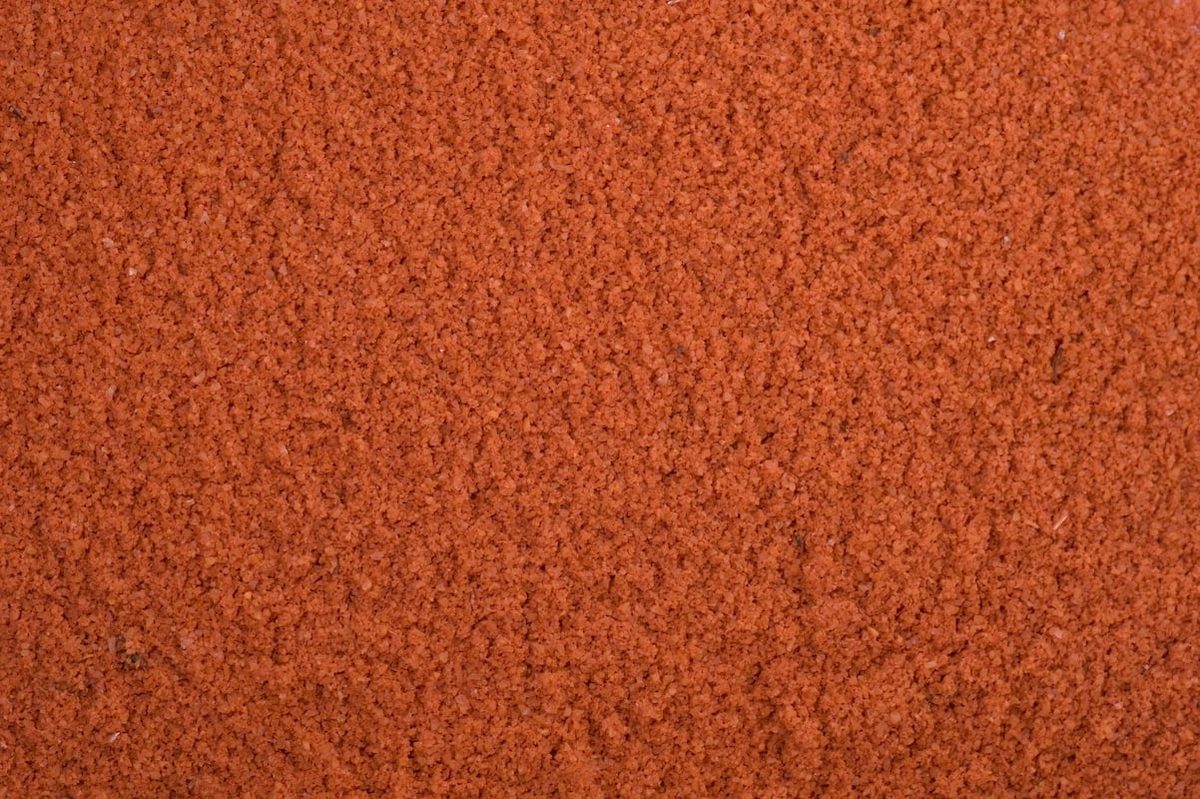
Achiote powder is ground annatto seed. The seeds come from Bixa orellana, a small tree native from Mexico to tropical South America,1 and the powder’s job in most dishes is color: a red-orange that turns rice, oil and marinades golden to brick red. Achiote is the Mexican name, from Nahuatl; annatto is the same thing.2 This page covers what the powder is, where its color comes from, what it tastes like, how it is used, and how annatto is regulated as a food color. For the whole seed, see annatto seeds.
At a glance
| What it is | Ground annatto seeds2 |
| Botanical name | Bixa orellana L.1 |
| Plant family | Bixaceae, of which it is the only species (per Britannica)13 |
| Native range | Mexico to southern tropical America (Kew)1 |
| Coloring compounds | Bixin (oil-soluble) and norbixin (water-soluble), carotenoid derivatives4 |
| Pigment content | Varies widely; commonly 2–5% of seed dry mass (Katzer)2 |
| Main producers | South America (especially Peru), Central America, the Caribbean, India and Sri Lanka, per PROSEA5 |
| Related forms | Whole seeds, achiote paste (recado), annatto oil, food-grade annatto extracts |
| US status of the extract | Color additive exempt from certification, 21 CFR 73.306 |
Measured values
2 figures, sourced| Measure | Value | Scope | Source |
|---|---|---|---|
| Pigment content | 2–5 % of seed dry mass | commonly reported values (Katzer)Different measurement from the PROSEA bixin figure; not comparable | gernot-katzers-spice-pages.com |
| Bixin | 1.6–5.3 % of seed, oven-dry basis | seed from Papua New Guinea (PROSEA)Different measurement from the Katzer pigment figure; not comparable | uses.plantnet-project.org |
Each figure is quoted as its source states it, with the samples or standard it applies to. Where sources differ, both are shown; nothing is averaged. All measured values
What achiote powder is
The seeds of Bixa orellana carry a red pigment on their surface.2 Katzer notes that when used ground, the seeds are often soaked in hot water first to soften them.2 In the Philippines, the seeds are often ground to a powder and added to soups and stews.2
The names are interchangeable. In Mexico the spice is called achiote, a Nahuatl word; “annatto” comes from a Carib word.2 Products are labeled either way. In Mexico, much achiote is sold not as a dry powder but as a paste: Katzer describes an achiote paste of annatto seeds with some preservatives such as acetic acid.2
Color, flavor and the compounds behind them
Color
The color comes from apocarotenoids, carotenoid derivatives, chiefly bixin.4 Bixin is oil-soluble; its counterpart norbixin is water-soluble.4 That is why annatto is sold in two families of preparations: PROSEA describes extracting the dye by soaking seeds in water and also preparing it as a solution in vegetable oil,5 and EFSA assesses bixin-based and norbixin-based extracts separately.7 In the kitchen, frying the seeds or powder in fat is the traditional way to draw out the color (see How it is used).
Shade depends partly on chemistry. A 2016 review notes that bixin’s cis form gives an orange color in polar solvents, while trans-bixin is red in solution and dissolves in vegetable oil.4 A widely repeated rule, that more norbixin makes achiote yellower and more bixin makes it more orange, was not found in the sources checked. The often-repeated claim that being soluble in both fat and water is rare among carotenoids also could not be traced.
How much pigment the seed holds varies a lot. Katzer gives 2–5% of seed dry mass as common values, and PROSEA reports 1.6–5.3% bixin on an oven-dry basis in seed from Papua New Guinea.25 These are different measurements and should not be compared directly.
Flavor
Sources disagree on whether achiote flavors food at all:
| Source | What it says |
|---|---|
| Gernot Katzer, Spice Pages | Dried seeds have a weak, perfumed odor, and that aroma “is not transmitted to the food”2 |
| Common kitchen description | Faintly earthy, peppery or nutty, noticeable mainly in large amounts |
In our judgment both can be true: at the small amounts used for color, achiote adds little you can taste; in a heavily seasoned paste or a generous rub, a mild earthy, slightly bitter note comes through alongside the other spices. The comparison to nutmeg that circulates for achiote is a flavor opinion, not something a source checked here supports.
Origin and history
Kew gives the native range of Bixa orellana as Mexico to southern tropical America.1 Annatto has been used since pre-colonial times as a culinary colorant and spice, and a 2016 review notes its use as a coloring agent in pre-Hispanic Maya religious ceremonies.4 Katzer reports ritual body paint with annatto as an ancient practice, documented among the pre-Columbian Aztecs.2
Ecuador today. Among the Tsáchila people of Santo Domingo de los Tsáchilas, Ecuador, achiote paste is still used to color the men’s hair and to paint thick lines on the face, according to a 2026 report in Quito’s El Comercio.8
Several popular history claims could not be traced for this page: that Europeans first met annatto through the Yagua people of the Amazon, that colonists found it unsatisfactory as a fabric dye because it faded, and that synthetic food colors collapsed the annatto market. A 2016 review lists textiles among annatto’s current industrial uses, alongside paints and cosmetics.4
How it is used
As a food color, industrially. Britannica lists butter, cheese and margarine among foods colored with annatto.3 PROSEA reports that about 70% of annatto imported into consuming countries goes into cheese-making.5
In cooking:
- Yucatán, Mexico. Meat is often marinated in a spice paste called recado; food prepared this way is generally called pibil.2 Katzer describes recado as annatto with dried oregano, ground spices, garlic and fiery Yucatecan chiles, with bitter orange juice as the key flavor.2 A 2016 review notes that annatto pigment is widely used in Yucatán’s internationally recognized cooking.4 By kitchen practice, the powder can replace whole seeds in a homemade recado.
- The Caribbean. Seeds are usually fried in animal or vegetable fat, and the colored fat is then used to fry vegetables or meat.2 Lard is a common choice, and the powder can be used the same way. That part is kitchen practice.
- Philippines. Ground seeds go into soups and stews, and meat is often marinated with annatto-colored seasonings.2
- Marinades and sauces generally. Katzer notes that annatto can be added to marinades and sauces to improve their color.2
Achiote is often said to be a standard ingredient in Mexican moles and tamales and in sofrito; no source checked for this page confirms it as standard in those dishes.
Technique. To make achiote oil from powder, stir 1 tablespoon of powder into ½ cup of warm (not smoking) oil, let it stand a few minutes, then strain through a coffee filter or fine cloth. Overheated, it turns brown and bitter. That is kitchen practice, not a measured method. For more, see cooking with annatto seeds.
Buying and quality
- Check the label. Pure achiote powder lists only annatto. Achiote paste and recado are blends, with spices or preservatives added to the annatto;2 check the label if you want pure ground seed. For a related blend, see sazón seasoning.
- Color. A deep brick-red powder suggests good pigment; a dull brown one has faded. Kitchen judgment.
Storage
Keep it airtight, dark and cool. No shelf-life figure for achiote powder from a regulator or standards body was found. When the color has dulled, it has lost what you bought it for.
Safety and regulation
United States. Annatto extract, prepared from annatto seed, is listed as a color additive at 21 CFR 73.30. It may color foods generally in amounts consistent with good manufacturing practice, except where a food’s standard of identity forbids added color, and batches are exempt from FDA certification.6
European Union. Annatto extracts are the food additive E 160b. In 2016 EFSA set an acceptable daily intake of 6 mg/kg body weight per day for bixin and 0.3 mg/kg body weight per day for norbixin. Estimated bixin exposure was below its ADI for all population groups; for norbixin, some high consumers could exceed it under a proposed extension of use.7 These figures concern the extracts used as additives, not the ground spice.
Allergy. Allergic reactions to annatto are documented. A 1991 case report described a patient who developed hives, swelling and severely low blood pressure within 20 minutes of eating a cereal containing annatto dye; skin testing to annatto was strongly positive.9 Achiote powder is the same seed, so anyone who reacts to annatto should avoid it.
PROSEA notes that a very poisonous substance has been found in the seed’s embryo; it does not say whether this matters at culinary amounts, and no regulator source found here raises it.5
Nutrition and health
No nutrient database entry for annatto seed or achiote powder was checked for this page, so the calcium, fiber, folate, vitamin C and vitamin E figures that circulate for achiote are not repeated here. The powder is used in small amounts for color.
Bixin and norbixin are carotenoid derivatives with antioxidant activity in laboratory and animal work, and a 2016 review mentions an experiment using a tocotrienol extract from achiote in osteoporosis research.4 None of that is evidence that achiote in food prevents cancer, osteoporosis or heart disease, and this page makes no such claim.
Substitutes and comparisons
- Annatto seeds and annatto seeds substitutes
- Cooking with annatto seeds
- Other colors from the spice rack: paprika, turmeric, saffron, safflower
- Blends that use it: sazón seasoning
Footnotes
-
Bixa orellana L., Plants of the World Online, Royal Botanic Gardens, Kew. powo.science.kew.org · Reference work ↩ ↩2 ↩3 ↩4 ↩5
-
Gernot Katzer, “Annatto (Bixa orellana L.)”, Gernot Katzer’s Spice Pages. gernot-katzers-spice-pages.com · Reference work ↩ ↩2 ↩3 ↩4 ↩5 ↩6 ↩7 ↩8 ↩9 ↩10 ↩11 ↩12 ↩13 ↩14 ↩15 ↩16 ↩17
-
“Annatto”, Encyclopaedia Britannica. britannica.com · Reference work ↩ ↩2
-
Rivera-Madrid et al., “Carotenoid Derivates in Achiote (Bixa orellana) Seeds: Synthesis and Health Promoting Properties”, Frontiers in Plant Science, 2016. frontiersin.org · Peer-reviewed ↩ ↩2 ↩3 ↩4 ↩5 ↩6 ↩7 ↩8
-
R. Rajendran, Bixa orellana, Plant Resources of South-East Asia (PROSEA). uses.plantnet-project.org · Reference work ↩ ↩2 ↩3 ↩4 ↩5
-
21 CFR 73.30, Annatto extract, US Food and Drug Administration. ecfr.gov · Regulator ↩ ↩2
-
EFSA Panel on Food Additives and Nutrient Sources, “Safety of annatto extracts (E 160b) as a food additive”, EFSA Journal, 2016. efsa.europa.eu · Regulator ↩ ↩2
-
Carla Sandoval, El achiote es parte de una propuesta turística cultural tsáchila, El Comercio. elcomercio.com · Publication ↩
-
“Anaphylaxis to annatto dye: a case report”, Annals of Allergy, 1991. pubmed.ncbi.nlm.nih.gov · Peer-reviewed ↩