Cooking · Cooking with
Cooking With Garam Masala: Early, Late, Toasted or Not
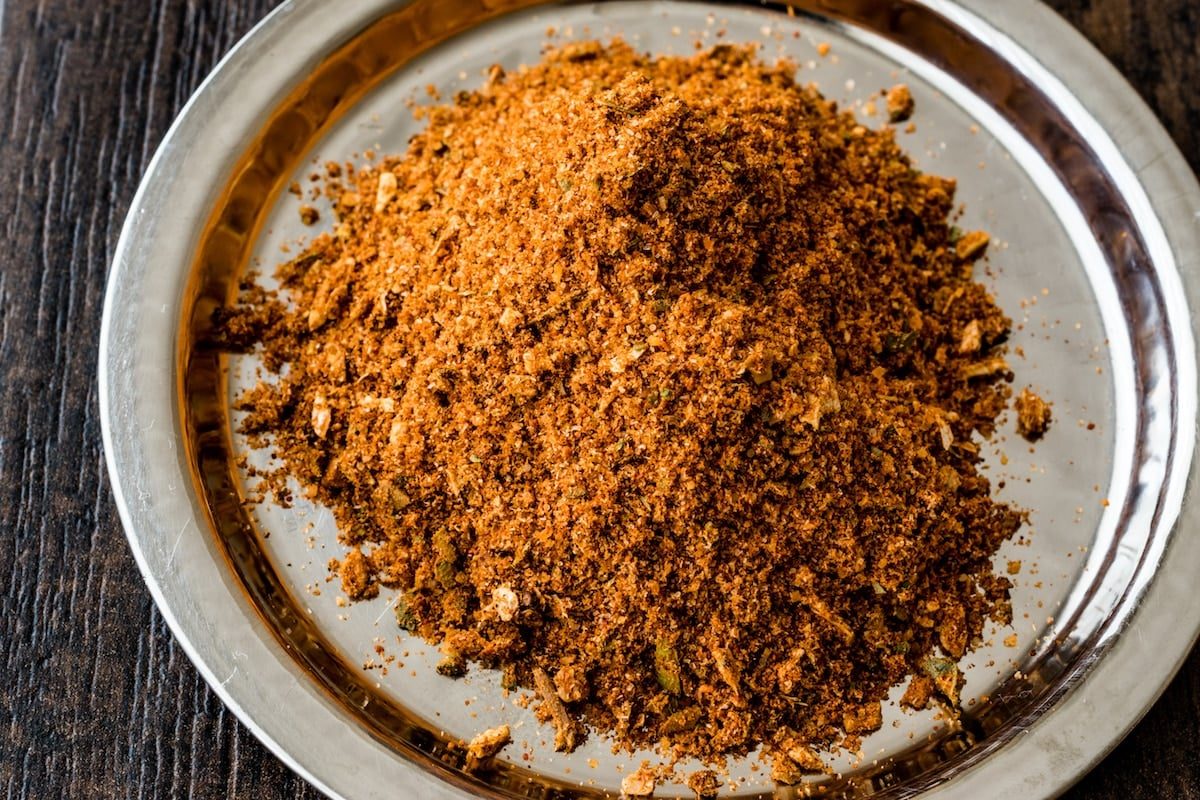
Garam masala is a blend of spices used across the Indian subcontinent, and the spices in it vary widely by region and by personal taste.1 One food writer puts it as changing shape with every state and every home.2 That variety is why there is no single right way to cook with it, but the published recipes agree on the main choices: whether to toast the whole spices, and whether the blend goes in early, late, or both.
At a glance
| Question | Short answer |
|---|---|
| Is it hot? | Not in the chile sense. The name means “hot spices,”3 which Saveur ties to spices considered body-warming in Ayurvedic medicine.4 |
| Toast first? | Often, but not always: Bong Eats dry-roasts; Madhur Jaffrey’s recipe in Saveur is untoasted.54 |
| Early or late? | Both. It goes into marinades, sauces and dish bases, and is also used to finish dishes.1 |
| How much as a finish? | Bong Eats uses a pinch, with a little ghee.5 |
| How long does homemade keep? | Saveur: up to 3 months airtight.4 Bong Eats: months.5 |
What “garam” means
Merriam-Webster gives the literal meaning of garam masala as “hot spices.”3 Saveur explains that the heat refers to spices thought to warm the body in Ayurvedic medicine,4 and The Spice House says garam masala is warming but not hot like chili peppers.6 A common claim says the warmth refers to toasting; we found no source for that, and at least one well-known recipe is not toasted at all.4
What goes in it
There is no fixed formula, so compare recipes rather than looking for a standard.
| Recipe | Spices | Toasted? |
|---|---|---|
| Bong Eats, Bengali garam masala5 | 7 g cardamom, 2 g cloves, 2 g cinnamon (makes 10 g) | Yes, about 5 minutes |
| Madhur Jaffrey, via Saveur4 | Led by ¼ cup cardamom seeds | No |
| The Spice House6 | Includes 3 tablespoons coriander seeds | Not recorded here |
Bong Eats says the Bengali blend in its most basic form is just cardamom, cinnamon and cloves.5 Great British Chefs lists the spices commonly used as including cloves, bay leaf, fennel, cinnamon and cardamom, along with others such as mace and black pepper.1 So black pepper does turn up in garam masala; chile is not on these common lists. For regional versions, see garam masala.
Toasting the whole spices
Great British Chefs says the spices are often toasted first to release their oils before grinding.1 Bong Eats gives the clearest method:
- Heat a pan over a medium-low flame and add the whole spices.5
- Dry-roast them evenly on all sides, stirring continuously, for about 5 minutes.5
- Stop when you can smell the fragrance of the garam masala.5
- Grind to a fine powder in a grinder or with a mortar and pestle.5
Low heat and constant stirring are the point of that method. A common tip says to roast until the spices release a light smoke; we found no recipe that uses smoke as the cue, and Bong Eats uses fragrance instead.
Toasting is a choice, not a rule. Saveur describes Jaffrey’s version as untoasted before grinding and highly aromatic.4
Early: bloom it in fat
When garam masala goes in at the start, treat it like any ground spice. America’s Test Kitchen says ground spices dumped straight into a pot give a bland, musty flavor, and recommends cooking them in fat first, for anywhere from 30 seconds to several minutes.7 ATK also warns that ground spices burn fairly quickly and leave a scorched flavor.7 Great British Chefs lists marinades, sauces and dish bases among garam masala’s early uses.1
Late: finish with a pinch
Great British Chefs says garam masala can also be used to finish dishes at the end of cooking.1 Bong Eats is specific about how Bengali cooks do it: a pinch, along with a sliver of ghee, garnishes most ghontos and dalnas, khichuri and panchmishali torkari.5 A pinch with ghee also revives a day-old torkari as it reheats.5
A common claim says garam masala is traditionally added only at the end. The sources here describe both uses, so it is better to read the recipe in front of you. Using it in both places, a measure early and a pinch to finish, is common practice rather than a sourced rule.
What to cook with it
| Dish | How garam masala is used | Source |
|---|---|---|
| Egg, chicken, mutton, lamb or beef curries | Flavors the curry | Bong Eats5 |
| Ghontos, dalnas, khichuri, panchmishali torkari | A pinch with ghee as a garnish | Bong Eats5 |
| Day-old torkari | A pinch with ghee while reheating | Bong Eats5 |
| Stews, curries, samosas | Lends potency | Saveur4 |
| Marinades, sauces, dish bases | Early in cooking | Great British Chefs1 |
A common suggestion says garam masala suits simple vegetables and breads best because complex dishes become overwhelming. We found no source for that rule. Bong Eats’s finishing pinch goes on vegetarian dishes,5 but the same blend also goes into meat curries.5
Homemade or store-bought
Britannica notes that in India spice mixtures are called masala and are prepared in the home.8 Grinding is where freshness goes: Oregon State University Extension says crushing or grinding herbs and seeds for storage increases the loss of aroma and flavor.9 That cuts both ways. A homemade blend is fresh when you grind it, but it is a ground spice from then on.
| Source | Storage | How long |
|---|---|---|
| Saveur (Jaffrey recipe)4 | Airtight container | Up to 3 months |
| Bong Eats5 | Airtight container | “Can keep for months” |
Neither figure was measured; both are recipe guidance. For store-bought blends we found no garam-masala-specific shelf life. Small batches and small jars are the practical answer either way.
How much to use
No standard exists. The only specific amount in the sources is Bong Eats’s pinch as a finish.5 For a dish that calls for garam masala without a figure, start with ½ teaspoon for a pot serving four and taste after it has cooked; that is our method starting point, not a tested amount. If you overshoot, see too much garam masala.
Not yet measured
- How long store-bought garam masala keeps its aroma.
- Whether toasted and untoasted blends differ in shelf life.
- A typical amount per serving across published recipes.
Related
- Garam masala
- Garam masala uses
- Garam masala substitutes
- Too much garam masala
- Garam masala vs. curry powder
- Chaat masala vs. garam masala
- Tandoori masala vs. garam masala
Footnotes
-
How to make garam masala, Great British Chefs, 2025. greatbritishchefs.com · Publication ↩ ↩2 ↩3 ↩4 ↩5 ↩6 ↩7
-
Karishma H. Nandkeolyar, “How Hyderabadi biryani taught me not all of India’s garam masalas are the same”, Gulf News. gulfnews.com · Publication ↩
-
“garam masala”, Merriam-Webster.com Dictionary. merriam-webster.com · Reference work ↩ ↩2
-
Garam Masala (Madhur Jaffrey recipe), Saveur, 2014. saveur.com · Publication ↩ ↩2 ↩3 ↩4 ↩5 ↩6 ↩7 ↩8 ↩9
-
Bengali Garam Masala, Bong Eats, 2016. bongeats.com · Publication ↩ ↩2 ↩3 ↩4 ↩5 ↩6 ↩7 ↩8 ↩9 ↩10 ↩11 ↩12 ↩13 ↩14 ↩15 ↩16 ↩17 ↩18
-
Garam Masala Substitute, The Spice House, 2018. thespicehouse.com · Merchant ↩ ↩2
-
How to Bloom Spices, America’s Test Kitchen, 2023. americastestkitchen.com · Publication ↩ ↩2
-
“Curry”, Encyclopaedia Britannica, 2026. britannica.com · Reference work ↩
-
Nellie Oehler, “Drying herbs”, Oregon State University Extension Service, 2025. extension.oregonstate.edu · Reference work ↩