Spice Fixes · Fix
Too Much Garam Masala? How to Fix a Harsh, Bitter or Overspiced Dish
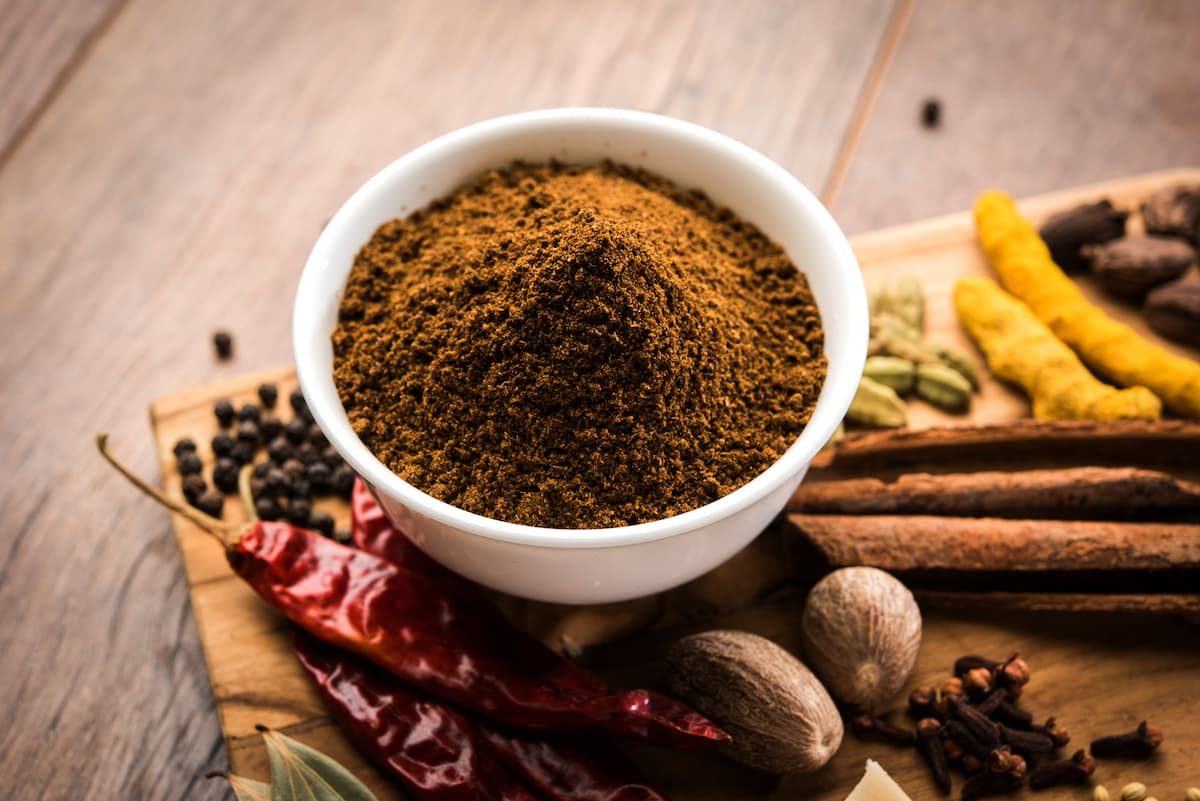
Garam masala is a blend, not a single spice, and no two jars are the same. Saveur’s recipe opens with the line that there are “as many versions of garam masala as there are home cooks in India,”1 and Great British Chefs notes that the spices used vary widely by region and by personal taste.2 That matters when you’ve added too much: a blend heavy in cardamom and cloves overpowers differently from one heavy in cumin or black pepper. The usual problems are a dish that tastes only of warm spice, a harsh or bitter edge, or a raw, dusty taste when a lot went in at the end. Find yours below; the fastest fix comes first in each section.
Quick answer
| What’s wrong | Fastest fix | If that’s not enough |
|---|---|---|
| Everything tastes of garam masala | Add more of everything else, or make a half or full batch without it and combine | Stir in yogurt or coconut milk where they suit the dish |
| Raw, dusty or harsh (added at the end) | Simmer a few more minutes | Dilute |
| Bitter edge | A pinch of sugar or a little more salt | A sour note (amchur, tamarind, lime) for brightness |
| Whole spices floating in the pot | Lift out cardamom pods, cloves and cinnamon pieces | Then taste and dilute if needed |
What’s in it, and when it goes in
Recipes differ, but Great British Chefs lists cloves, bay leaf, fennel, cinnamon and cardamom among the spices commonly used.2 Saveur’s version is built on a quarter cup of cardamom seeds with black cumin, black peppercorns, cloves, cinnamon and a whole nutmeg.1 The Spice House notes that garam masala blends often contain cumin.3 Read the label on your jar to see what you’re dealing with.
Timing matters too. Garam masala can be cooked into a dish, and Great British Chefs notes it can also be used to finish dishes at the end of cooking.2 Ground spices that go into a pot without being cooked in fat can taste, in America’s Test Kitchen’s words, “bland, musty” in flavor or texture.4 So a large spoonful stirred in at the last minute can taste rawer and harsher than the same amount cooked in earlier.
Too much, overall
Make more. The only fix that lowers the spice in each bite. Cook a full batch of the recipe without garam masala and combine it with the first, which halves the concentration. Tasting Table suggests the same second-batch approach for a dish with too much garlic.5 If the original was only somewhat over, a half batch may be enough. To avoid ending up with twice the food, take out half of the first batch (freeze it to mix with an unspiced batch another day) and add a half batch made without the blend.
Add yogurt. Yogurt already appears in many dishes that use garam masala; Saveur notes that it works as a souring agent in curries and appears in raitas and kadhi.6 Common practice is to stir it in off the heat, or to warm it first with a spoonful of the hot sauce, so it doesn’t curdle. In our judgment it makes a heavily spiced dish taste more balanced. We found no source showing dairy “neutralizes” spice flavors, so treat it as dilution plus a mild, tangy contrast.
Or coconut milk, in dishes where it belongs, for the same reason.
Raw, dusty or harsh
If you added the blend at the end and the dish tastes dusty or sharp, give it more time.
Simmer a few more minutes. Cooking ground spices develops their flavor; America’s Test Kitchen’s blooming technique takes anywhere from 30 seconds to several minutes in fat.4 Simmering in a sauce isn’t the same as blooming in oil, and we found no test of how quickly the raw edge fades in a finished dish, so taste every few minutes.
For a drier dish, warm a spoonful of oil or ghee, fry a little onion or ginger in it, and stir that in. This is technique, not a tested fix.
Bitter
Too much of the blend can taste bitter or medicinal (our description; no source we found measures garam masala’s bitterness).
Sweetness, in small amounts. In controlled taste tests, sweet tastes suppressed bitterness and sugar was the dominant suppressor of other tastes.7 Those were pure taste solutions, not food. Start with a pinch of sugar, jaggery or a little honey, not a teaspoon, and taste. The dish should still taste savory.
A little salt. The same study found sodium salts also suppressed bitterness.7
Acid for brightness, not as a cure. Indian cooking offers several sour ingredients. Saveur describes amchur as made from the sun-dried pulp of unripe mangoes, and tamarind as “the key souring agent in sambhar.”6 Lime juice works too. A sour note gives the palate something besides spice to notice, but in the lab study citric acid was the least effective suppressor of the tastes tested,7 so don’t count on acid to cancel bitterness. The idea that one strong flavor “neutralizes” another isn’t supported by any source we found.
Whole-spice garam masala
If your recipe used whole spices (cardamom pods, cloves, cinnamon pieces, bay leaves) rather than ground garam masala and they’re overpowering, lift them out with a spoon or tongs. They stop releasing flavor once they’re out. Then taste and dilute if needed.
Preventing it next time
Know your blend’s strength. A fresh, homemade blend can be much stronger than an old jar. Saveur says its blend keeps in an airtight container for up to 3 months,1 and Great British Chefs suggests using homemade garam masala within a few months.2 Those are storage recommendations, not measured shelf lives.
Decide when it goes in. If a recipe adds garam masala at the end, add part of it, simmer a minute or two, and taste before adding the rest.
Start below the recipe with a new jar. No source gives a standard amount per serving, and blends vary too much for one to be meaningful. Our method, not a published figure: begin with about three quarters of the stated amount and taste before adding more.
Related
- Cooking with garam masala
- Garam masala uses
- Garam masala vs. curry powder
- Garam masala substitutes
- Too much curry powder
- Too much cardamom
- Too much clove
Footnotes
-
Garam Masala (recipe), Saveur, 2014. saveur.com · Publication ↩ ↩2 ↩3
-
How to make garam masala, GBC Kitchen, Great British Chefs, 2025. greatbritishchefs.com · Publication ↩ ↩2 ↩3 ↩4
-
Cumin Substitute, The Spice House, 2017. thespicehouse.com · Merchant ↩
-
How to Bloom Spices, America’s Test Kitchen, 2023. americastestkitchen.com · Publication ↩ ↩2
-
Simple Ways To Tone Down The Pungency Of Garlic, Harmony Colangelo, Tasting Table, 2023. tastingtable.com · Publication ↩
-
Get to Know the Sour, Twangy Ingredients that Give Indian Cooking a Kick Beyond Spice, Michael Snyder, Saveur, 2016. saveur.com · Publication ↩ ↩2
-
Green BG et al., Taste Mixture Interactions: Suppression, Additivity, and the Predominance of Sweetness, Physiology & Behavior, 2010. pmc.ncbi.nlm.nih.gov · Peer-reviewed ↩ ↩2 ↩3