Spice Comparisons · Comparison
Chaat Masala vs. Garam Masala: Sour and Salty Against Warm and Sweet
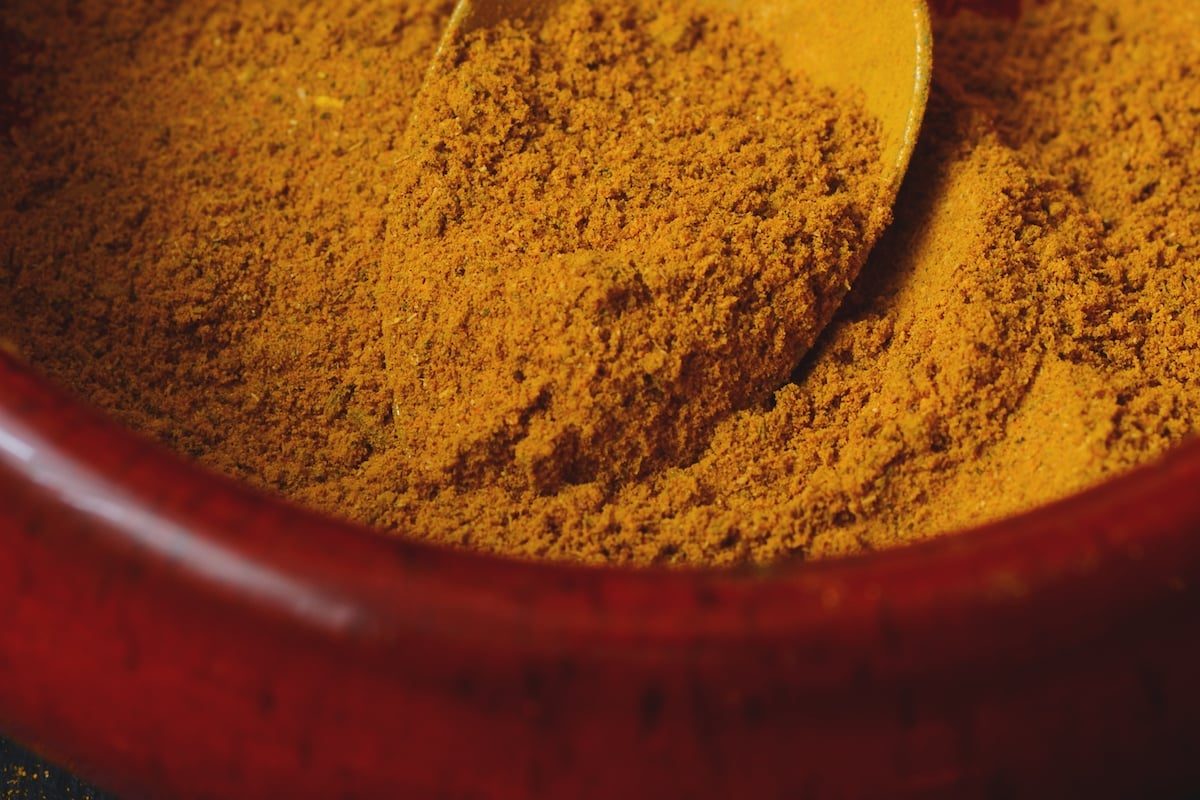
Chaat masala and garam masala share a word and a couple of spices, and not much else. Chaat masala is sour and salty: its tang comes from dried mango powder (amchur) and its eggy, sulfurous note from black salt, and it is sprinkled on at the end.12 Garam masala is a blend of warm, sweet-smelling spices, at its most basic just cardamom, cinnamon and cloves, used both in the cooking and as a finish.34 One adds acid and salt; the other adds aroma and warmth.
“Masala” comes from the Hindi and Urdu masālā, meaning materials, ingredients or spices, and in English names a varying blend of spices used in Indian cooking.5 Garam masala means, literally, “hot spices.”6
Side by side
| Chaat masala | Garam masala | |
|---|---|---|
| Name | Named for chaat, savory snacks sold by street vendors in India7 | Literally “hot spices”; Saveur says the heat refers to spices thought to warm the body in Ayurvedic medicine, not chile68 |
| Core ingredients | Amchur, black salt, roasted cumin and black pepper, in both of two recipes compared; Tarla Dalal adds asafoetida19 | Cardamom, cinnamon and cloves at its most basic (Bengali); Great British Chefs also lists bay leaf, fennel, cumin, coriander seed, mace and black and white pepper34 |
| Main flavor jobs | Sour (amchur), salty and sulfurous (black salt), toasty (cumin)12 | Sweet, warm aroma (editorial; see the compounds below) |
| Salt | Yes: Gulf News’s recipe uses a full tablespoon of black salt to a tablespoon of amchur9 | None in the Saveur, Bong Eats or Great British Chefs recipes834 |
| Key compounds | Hydrogen sulfide in black salt, about 200 mg/kg in one BfR sample; cuminaldehyde, 20–72% of cumin oil; piperine in pepper21011 | Eugenol, about 85–92% of clove oil; 1,8-cineole, up to about 31% of cardamom oil across samples; cinnamaldehyde, about 49.9–62.8% of Ceylon cinnamon bark oil121314 |
| Toasted? | The cumin is roasted19 | Varies: Bong Eats dry-roasts; Madhur Jaffrey’s recipe in Saveur is not toasted38 |
| When it goes in | At the end or at the table; neither recipe cooks it19 | Early, or at the end as a finish43 |
| Typical uses | Chaat such as sev puri and papri chaat; fruit, crisps, curries, yogurt19 | Curries, stews, fried snacks such as samosas; a pinch with ghee over finished Bengali dishes83 |
| Official standard | Neither is in the USDA’s spice-blend purchasing specification, which covers curry powder15 | Same15 |
| Price | No dated, sourced comparison found | No dated, sourced comparison found |
The compound figures describe each spice’s own oil, measured in separate studies; no analysis of either finished blend was found.
What they share
Cumin and black pepper appear in both. They are in both chaat masala recipes compared on our chaat masala page and on Great British Chefs’ list for garam masala.194 Coriander seed turns up in some versions of each: Rachna Parmar’s chaat masala uses 3 tablespoons of it,16 and it is on Great British Chefs’ garam masala list,4 but it is in neither the Tarla Dalal nor the Gulf News chaat masala.19 Neither blend has a fixed formula. Great British Chefs says the spices in garam masala vary widely by region and personal taste,4 and food writer Karishma Nandkeolyar describes it changing from state to state and home to home.17
The differences that change the dish
Sour and salt. This is the whole point of chaat masala. Tarla Dalal credits amchur with its tangy taste and black salt with its classic chatpata aroma.1 Germany’s Federal Institute for Risk Assessment (BfR) measured hydrogen sulfide, the rotten-egg gas, at about 200 mg/kg in one black salt sample, and notes that the sulfurous taste is the one cooks want.2 Garam masala has neither sourness nor salt.
Aroma. Garam masala’s character comes from its sweet spices: clove oil is mostly eugenol, cardamom oil carries 1,8-cineole, and cinnamon bark oil is led by cinnamaldehyde.121314 None of those three spices is in either chaat masala recipe compared above.19
Timing. Chaat masala goes on raw: neither recipe fries or simmers it, and Tarla Dalal and Gulf News suggest it for chaat, fruit, crisps, curries and yogurt.19 Garam masala works both ways. Great British Chefs says it can go into a dish’s base and can also finish a dish at the end of cooking,4 and Bong Eats sprinkles a pinch with ghee over finished vegetarian dishes.3 A widely repeated idea says garam masala is meant only for cooked dishes; these sources show otherwise.
The “hot” in garam. It is not chile heat. Saveur ties the name to spices considered warming in Ayurvedic medicine, and The Spice House says the blend is warming but not hot like chili peppers.818 Another common explanation, that “hot” means the spices were toasted, is not supported by the sources we read; Madhur Jaffrey’s version is not toasted at all.8
Can one stand in for the other?
Only partly, because each lacks what defines the other. These treatments come from our substitute pages.
- Garam masala in place of chaat masala. It has none of chaat masala’s sourness or salt. Method: use much less than the recipe’s chaat masala, and add amchur or lemon juice and black salt to supply the sour and salty notes, tasting as you go. No published ratio exists. A better route, if you have the parts, is a quick mix: Rachna Parmar’s substitute is “3 parts amchur powder and 1 part each pepper powder and salt” (Attributed).19 See chaat masala substitutes.
- Chaat masala in place of garam masala. The Spice House lists chaat masala as an option without saying how to use it.18 It adds sourness and salt that garam masala lacks. Method: use a pinch, taste, and reduce the salt elsewhere in the dish. See garam masala substitutes.
- Building one from the other. A widely repeated claim says most homemade chaat masala recipes start from garam masala. None of the three published chaat masala recipes we compared uses it.1916
When to reach for each
- Chaat masala to finish: over chaat, cut fruit, crisps or a bowl of yogurt.19 In our judgment it suits any dish that wants a sour, salty lift at the last minute.
- Garam masala for warmth and aroma: in curries and stews,8 added with the base of a dish or stirred in at the end.4 For more, see garam masala uses and cooking with garam masala.
What isn’t known
- No published analysis of either finished blend was found; the chemistry above describes individual spices, each from its own study.
- No sodium figure for chaat masala was found, though black salt is a major ingredient.
- No source gives a ratio for using either blend in place of the other.
- Claims that chaat masala was adapted for onion rings and fries in the US, or is traditionally used on nuts, could not be traced.
Related
- Chaat masala and chaat masala substitutes
- Garam masala, garam masala substitutes and too much garam masala
- Mango powder (amchur), black salt, asafoetida, cumin and anardana
- Other comparisons: garam masala vs. curry powder, tandoori masala vs. garam masala, tikka masala vs. garam masala, ras el hanout vs. garam masala, garam masala vs. allspice
Footnotes
-
Tarla Dalal, “Chaat Masala (Chaat Masala Recipe for Chaats),” TarlaDalal.com. cdn.tarladalal.com · Publication ↩ ↩2 ↩3 ↩4 ↩5 ↩6 ↩7 ↩8 ↩9 ↩10 ↩11 ↩12 ↩13
-
BfR, “Vorkommen von Schwefelwasserstoff in ‘Schwarzsalz’,” opinion of 25 August 2003. bfr.bund.de · Regulator ↩ ↩2 ↩3 ↩4
-
“Bengali Garam Masala,” Bong Eats, 2016. bongeats.com · Publication ↩ ↩2 ↩3 ↩4 ↩5 ↩6 ↩7
-
GBC Kitchen, “How to make garam masala,” Great British Chefs, 2025. greatbritishchefs.com · Publication ↩ ↩2 ↩3 ↩4 ↩5 ↩6 ↩7 ↩8 ↩9
-
“masala,” Merriam-Webster.com Dictionary. merriam-webster.com · Reference work ↩
-
“garam masala,” Merriam-Webster.com Dictionary. merriam-webster.com · Reference work ↩ ↩2
-
Laura Siciliano-Rosen, “Chaat,” Encyclopaedia Britannica. britannica.com · Reference work ↩
-
“Garam Masala” (Madhur Jaffrey recipe), Saveur, 2014. saveur.com · Publication ↩ ↩2 ↩3 ↩4 ↩5 ↩6 ↩7
-
Anupa Kurian, “Homemade Indian chaat masala,” Gulf News, 2022. gulfnews.com · Publication ↩ ↩2 ↩3 ↩4 ↩5 ↩6 ↩7 ↩8 ↩9 ↩10 ↩11
-
P.C.M. Jansen, Cuminum cyminum, Plant Resources of South-East Asia (PROSEA). uses.plantnet-project.org · Reference work ↩
-
McNamara, Randall and Gunthorpe, “Effects of piperine at the human vanilloid receptor (TRPV1),” British Journal of Pharmacology, 2005. pmc.ncbi.nlm.nih.gov · Peer-reviewed ↩
-
Batiha et al., “Syzygium aromaticum L. (Myrtaceae),” Biomolecules, 2020. mdpi.com · Peer-reviewed ↩ ↩2
-
Blažeković et al., “Content and Chemical Composition of Essential Oil from Cardamom,” Croatica Chemica Acta, 2025. hrcak.srce.hr · Peer-reviewed ↩ ↩2
-
Ranasinghe et al., “Medicinal properties of ‘true’ cinnamon: a systematic review,” BMC Complementary and Alternative Medicine, 2013. link.springer.com · Peer-reviewed ↩ ↩2
-
Commercial Item Description A-A-20001C, Spices and Spice Blends, USDA Agricultural Marketing Service, 2023. ams.usda.gov · Regulator ↩ ↩2
-
Rachna Parmar, “Chaat Masala Powder Recipe and Substitute” (recipe card), Rachna Cooks. rachnacooks.com · Publication ↩ ↩2
-
Karishma H. Nandkeolyar, “How Hyderabadi biryani taught me not all of India’s garam masalas are the same,” Gulf News, 2021. gulfnews.com · Publication ↩
-
“Garam Masala Substitute,” The Spice House. thespicehouse.com · Merchant ↩ ↩2
-
Rachna Parmar, “Chaat Masala Substitute,” Rachna Cooks, 2023. rachnacooks.com · Publication ↩