Blog · Fix
Too Much Salt? How to Fix an Oversalted Dish
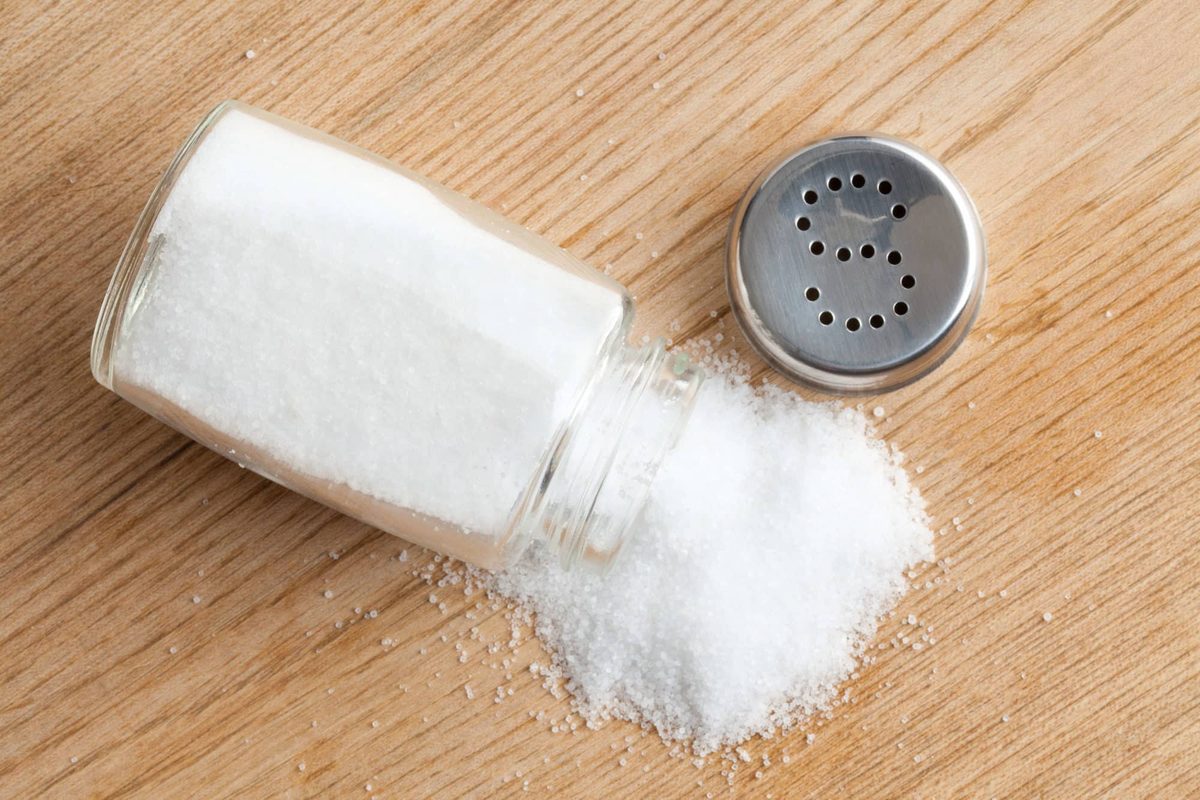
Salt is an unforgiving seasoning to overdo, because it dissolves into everything in the pot. There are only two ways to actually lower the salt in each bite: dilute the dish, or get the salt out before it dissolves. Everything else (sugar, acid, cream) changes how salty the dish tastes, not how much salt is in it. Start with the fastest fix for your situation below.
Quick answer
| What’s wrong | Fastest fix | If that’s not enough |
|---|---|---|
| Soup, stew, sauce or braise tastes too salty | Add unsalted liquid or more of the unsalted main ingredients, a little at a time | A small amount of sweetness the dish already uses; something creamy |
| Salt crystals still sitting on the surface of meat or vegetables | Brush or scrape them off | Don’t rinse raw meat or poultry under the tap |
| Salt went into dry ingredients and hasn’t been mixed | Scoop out what you can see, or scale up everything else | Start that component over |
| Finished dish you can’t add to | Serve it with unsalted sides | A little sweetness, if it suits the dish |
Dilute: the fix that actually lowers the salt
Add unsalted liquid in small amounts. Water works in a soup or sauce, but it dilutes every other flavor too. Sara Moulton, former host of Food Network’s Cooking Live, recommends adding unsalted liquid and points out that unsalted stock or tomatoes keep more flavor than plain water where they suit the dish.1 Add a little, stir, let it heat through and taste before adding more.
Add more of everything except the salt. In a stew, chili or casserole, add more of the main ingredients. If you can’t stretch the pot, cook a second batch with no salt and combine the two: two equal batches leave half the salt per serving. Then rebalance the other seasonings and the thickness, since you’ve thinned those out too.
Serve it with something unsalted. When a finished dish can’t be diluted in the pot, plain rice, unsalted potatoes, plain bread or unsalted vegetables on the plate do the diluting in each bite. That’s common kitchen practice, not a tested fix.
Get it out before it dissolves
Salt you can still see hasn’t spread through the dish yet. Brush excess crystals off a steak or roast, scrape them off vegetables, and spoon a visible mound out of flour or other dry ingredients before you mix.
Don’t rinse raw meat. Running a salted roast or chicken under the tap is sometimes suggested. The USDA does not recommend washing raw poultry, beef, pork, lamb or veal before cooking, and its research found that rinsing meat or poultry increases the risk of cross-contamination.2 Brush or wipe instead.
Balance: make it taste less salty
These fixes don’t remove any sodium, but they can make a slightly oversalted dish taste right again.
Sweetness. This has the strongest lab support. In a 2010 taste study, sucrose was an especially effective suppressor of saltiness: mixed with a salt solution, it cut perceived saltiness by 82.6%.3 That was a test of pure solutions sipped and spat out, and the authors say it is unclear whether their results hold for real foods.3 In the kitchen, use a pinch of sugar, or a sweet ingredient the dish already contains (tomato, carrot, onion cooked until sweet, a little honey in a glaze), and taste after each addition. Too much sugar creates a new problem, so this suits a dish that’s only a little too salty.
Acid: it can help or hurt. Whether sourness reduces saltiness depends on the amount. In a 1967 study of salt and citric acid, lower acid levels in water generally enhanced saltiness and higher levels depressed it; in a green bean purée, half the tasters found the mix saltier as acidity rose and half found the reverse.4 Moulton says lemon juice will mask salt more than anything else.1 If you try a squeeze of lemon or a splash of vinegar, add a little and taste, because it may make the dish taste saltier.
Something creamy. Cream, sour cream, yogurt, coconut milk or avocado adds volume and a mild, rich flavor that can soften the overall impression. Some of what this does is plain dilution. We found no source showing that dairy or fat reduces how salty a food tastes, so treat it as kitchen judgment, and choose something that belongs in the dish.
Fixes that don’t hold up
A potato in the pot. The classic advice is to simmer a raw potato in an oversalted soup and fish it out. Robert L. Wolke tested it by simmering potato in plain water and in salted water; as Moulton reports his result, the potato from the salted water tasted salty, because it soaked up salt water rather than selectively pulling salt out of it.1 Moulton had recommended potatoes, pasta and rice for years and writes that she “realized I was completely wrong.”1 A Tasting Table writer who still uses the trick calls the potato “more of an aid than a final answer.”5 If you remove the potato, you remove the salty liquid it absorbed and nothing more. If you leave it in and eat it, it is just more unsalted food in the pot, which is dilution.
Rinsing salted raw meat. See above: brush it off instead.2
When too much salt is a health matter
A dish that tastes too salty is a flavor problem, but sodium is also a health concern for many readers, including anyone on a sodium-restricted diet. The FDA’s Daily Value for sodium is less than 2,300 mg a day, which it says is about one teaspoon of table salt, while Americans average about 3,400 mg.6 The American Heart Association puts a teaspoon of table salt at 2,400 mg of sodium.7 The WHO recommends adults keep sodium under 2,000 mg a day (under 5 g of salt) and names raised blood pressure as the main health effect of high-sodium diets.8
Only dilution and removal lower the sodium in a serving. Sugar, acid and cream change the taste, not the sodium count. If you’re cooking for someone limiting sodium, dilute.
Preventing it next time
Know your salt. Salts measure very differently by volume. America’s Test Kitchen gives 1 teaspoon of table salt as equal to 1½ teaspoons of Morton kosher salt or 2 teaspoons of Diamond Crystal kosher salt, because the coarser crystals pack less into a spoon.9 Pour table salt into a recipe written for Diamond Crystal and you’ve roughly doubled the salt. The AHA notes that kosher salt and some sea salts may carry less sodium per teaspoon for the same reason.7 More in kosher salt vs. table salt and the best salt for cooking.
Salt reductions at the end. A sauce that will boil down concentrates as it reduces. One restaurant chef quoted by Tasting Table salts reduction sauces at the end because over-reducing makes them “really salty.”10
Count the salty ingredients. Stock, soy sauce, cheese, cured meats and seasoned salts all bring salt before you reach for the shaker. Add salt in stages and taste as you go. That’s common practice, and it’s far easier than any of the fixes above.
Related
- Too much sea salt
- How to fix salty gravy
- Too much soy sauce
- Too much sugar
- Table salt and sea salt
- MSG vs. salt
Footnotes
-
Sara’s Kitchen Revelations: Oversalted it? There is one solution, Sara Moulton, saramoulton.com, 2012 (updated 2016), reporting Robert L. Wolke’s experiment. saramoulton.com · Publication ↩ ↩2 ↩3 ↩4
-
Washing Food: Does it Promote Food Safety?, USDA Food Safety and Inspection Service. fsis.usda.gov · Regulator ↩ ↩2
-
Green BG et al., Taste Mixture Interactions: Suppression, Additivity, and the Predominance of Sweetness, Physiology & Behavior, 2010. pmc.ncbi.nlm.nih.gov · Peer-reviewed ↩ ↩2
-
Pangborn RM, Trabue IM, Detection and apparent taste intensity of salt–acid mixtures in two media, Perception & Psychophysics, 1967 (abstract). doi.org · Peer-reviewed ↩
-
How To Fix An Oversalted Soup, Alison Spiegel, Tasting Table, 2016. tastingtable.com · Publication ↩
-
Sodium in Your Diet, U.S. Food and Drug Administration. fda.gov · Regulator ↩
-
Sodium Sources: Where Does All That Sodium Come From?, American Heart Association, 2025. heart.org · Reference work ↩ ↩2
-
Sodium reduction, World Health Organization fact sheet, 2026. who.int · Regulator ↩
-
Salt Types and Measurements, America’s Test Kitchen. americastestkitchen.com · Publication ↩
-
Seasoning 101: When To Salt And Season Sauces For Maximum Flavor, Martha Brennan, Tasting Table, 2025. tastingtable.com · Publication ↩