Spice Substitutes · Substitutes
Curing Salt Substitutes: What Can Replace Cure #1 and Cure #2, and What Can’t
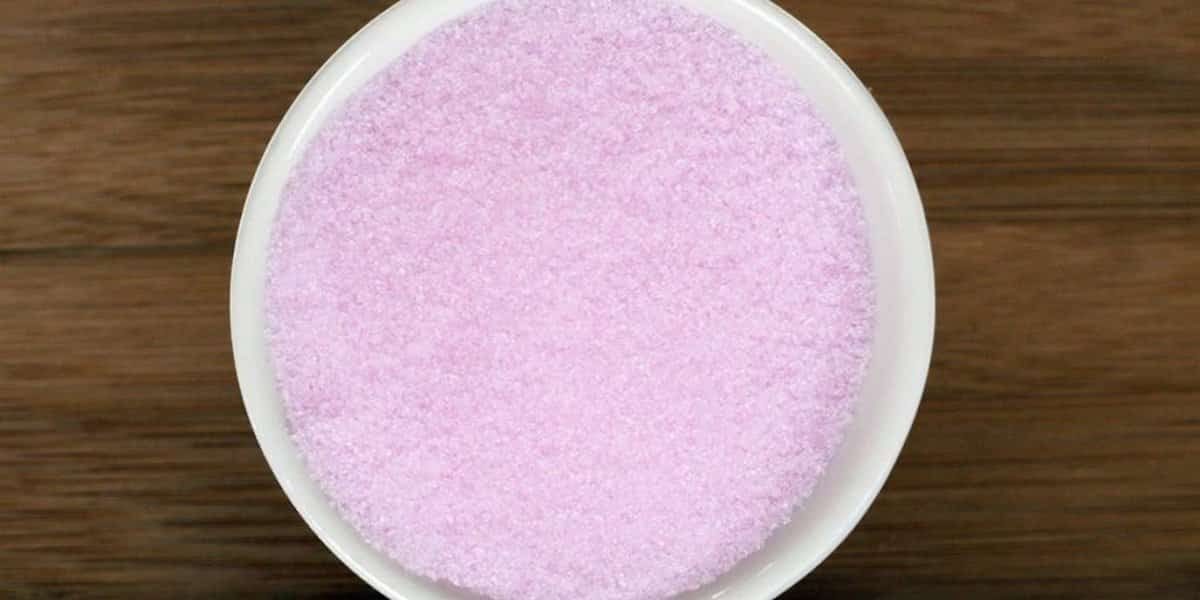
Curing salt is ordinary salt carrying a small, measured dose of sodium nitrite, and in Cure #2 sodium nitrate as well.12 The nitrite is the point. The American Meat Science Association’s review of curing names control of Clostridium botulinum, the bacterium behind botulism, as the main reason nitrite goes into cured meat, and calls that effect “indisputable and well documented.”3 So a substitute for curing salt has to deliver a known amount of nitrite. Plain salt, however good, does not, and neither does anything from the spice aisle. This page sorts the real substitutes from the ones that only look like substitutes.
Quick answer
| What the curing salt is doing | Best substitute | Starting amount | Treatment |
|---|---|---|---|
| Curing meat that will be cooked (bacon, ham, smoked sausage) | Another brand of Cure #1 | 1 oz per 25 lb of meat at 6% to 6.25% nitrite; check your label | Computed |
| The same, with no Cure #1 available | Morton Tender Quick, in a recipe written for it | Morton’s rate: 1/2 oz (1 tablespoon) per pound of meat | Attributed |
| Long dry cures eaten uncooked (salami, prosciutto) | Cure #2 from another maker | The amount in a tested Cure #2 recipe | Method |
| A “natural” cure for cooked products | A curing celery powder made for meat | The maker’s rate, in a recipe written for it | Attributed |
| Any cure, using saltpeter, sea salt, kosher salt or kitchen celery | Not a substitute | None | No safe ratio |
If none of the real substitutes is on hand, the honest option is to make the recipe as fresh meat instead of cured meat. See the last section.
How the ratios on this page are labeled
- Computed: based on a measurable physical relationship, with the source named.
- Attributed: a named source publishes this ratio. We quote it as theirs.
- Disputed: named sources give different answers to the same swap. We show each one and do not average them.
- Method: we found no published ratio. We give a direction and a cautious starting point, and say so.
Curing amounts are a different kind of number from flavor ratios. They come from US meat regulations and the nitrite percentage printed on a cure’s label, and they are set by the weight of the meat. Weigh both the meat and the cure.
If the cure is for meat that will be cooked
This is the job of Cure #1, also sold as Prague Powder #1, pink curing salt or Insta Cure #1.1 Spice Jungle describes it as for meat that requires further cooking, smoking or canning.1
1. Another brand of Cure #1
Ratio (Computed): US rules cap ingoing sodium nitrite in ground (comminuted) products at 1/4 oz per 100 lb of meat.4 USDA’s training calculations use a cure that is 6.25% sodium nitrite.5 At that strength, 1 oz of cure per 25 lb of meat supplies 0.0625 oz of nitrite to 400 oz of meat, or 156 ppm, the regulatory cap. The Sausage Maker gives 1 oz per 25 lb for its 6.25% cure and calls 156 ppm the maximum ingoing nitrite for ground meat.2 Spice Jungle labels its pink curing salt 6% sodium nitrite and gives the same 1 oz per 25 lb,1 which works out to 150 ppm. Either brand at 1 oz per 25 lb stays within the cap, but read the percentage on the package you actually have before you swap.
In metric terms, 1 oz per 25 lb is about 2.5 g of cure per kilogram of meat, or about 1.1 g per pound. Those are small amounts, and a scale is the reliable way to hit them.
2. Morton Tender Quick
Tender Quick is a different product, not a stronger or weaker Cure #1. Its label lists salt, sugar, 0.5% sodium nitrate, 0.5% sodium nitrite and propylene glycol.6
Ratio (Attributed): Morton says to use 1 tablespoon (1/2 oz) of Tender Quick for each pound of meat, rubbed in thoroughly, and to cure it refrigerated at 36 to 40 °F for 4 to 8 hours, or longer for thicker cuts, up to 24 hours.6 For a brine, it says to dissolve 1 cup in 4 cups of cool water and cure for 24 hours.6 Morton cautions that the cure should not be used at higher levels than specified.6
Why it works (Computed check): At Morton’s dry-cure rate, 1/2 oz of a 0.5% nitrite mix supplies 0.0025 oz of nitrite to 16 oz of meat, which is 156 ppm, the same as Cure #1 at its standard rate. The catch is volume. Tender Quick is used at about 12.5 times the weight of Cure #1 (14.2 g per pound against 1.1 g), and the difference is salt and sugar. A recipe written for Cure #1 that also calls for its own salt will come out far saltier if you simply drop Tender Quick in. The label does not give the split between salt and sugar, so there is no way to compute how much of the recipe’s own salt to remove. Use a recipe written for Tender Quick instead.
Tender Quick also contains nitrate. US meat-plant rules do not permit nitrate in bacon,4 and the AMSA review explains that the ban lets nitrite levels be controlled more precisely.3 For bacon, Cure #1 is the closer match to those rules. That is our reading of the rule, which is written for inspected plants, not home kitchens.
If the cure is for a long dry cure eaten uncooked
Cure #2 contains nitrate as well as nitrite: The Sausage Maker’s version lists 6.25% sodium nitrite and 1% sodium nitrate, and its maker names pepperoni, hard salami, Genoa salami, prosciutto and capicola as its uses.2 The AMSA review explains why the nitrate is there. Nitrate cures only after it is reduced to nitrite, and it remains in dry sausages and dry-cured hams because their long maturing needs “a long term reservoir of nitrite.”3
Cure #2 from another maker
Ratio (Method): Products like these are not cooked, and their safety depends on the whole process, not just the cure. We found no published way to convert a dry-cure recipe from one cure to another. Use a tested recipe written for the Cure #2 you have and follow its amounts and process exactly. Cure #1 is not a substitute here, and The Sausage Maker says its Cure #2 is not for brine or wet curing.2
If you want a “natural” cure
Meat sold as “uncured” in the US is usually cured with celery. Celery powder is used extensively as a vegetable source of nitrite in natural and organic meat, and it works only because bacteria convert its nitrate to nitrite, either in the meat with a starter culture or before sale in “pre-converted” powders.7 The products are labeled “Uncured” and “No Nitrate or Nitrite Added” under USDA rules,8 and in 2020 USDA’s Food Safety and Inspection Service said it intended to propose barring those claims on products processed with any source of nitrate or nitrite, celery powder included.9
A curing celery powder made for meat
Ratio (Attributed): Use the maker’s rate in a recipe written for it. Walton’s says to use its celery juice powder at 2 to 2.5 oz per 25 lb of product, aiming for 100 to 200 ppm ingoing nitrite.10 The Bearded Butchers sell a cultured celery powder in 2.5 oz packs, each for 25 lb of meat.11 Neither product page states a measured nitrite content, so these are makers’ directions, not a dose we could check.
Two cautions. A 2014 University of Wisconsin dissertation reviewing the research found that residual nitrite in alternatively cured products “can vary dramatically,” that they tend to carry less of it than conventionally cured products, and that in the studies it reviewed they allowed more growth of Listeria monocytogenes and Clostridium perfringens.12 And celery juice or celery powder from the grocery store is a different product. It has no stated nitrate content and no maker’s curing rate, so it is not a cure at all.
What doesn’t work as a cure
Saltpeter (potassium nitrate). Saltpeter is the oldest curing agent in the record. The AMSA review traces curing to the discovery that salt contaminated with saltpeter produced the cured effect, and notes that the Romans added it to meat on purpose for color and flavor.3 It is not a drop-in for Cure #1, for three reasons the sources make plain.
- It is nitrate, and nitrate works only after bacteria reduce it to nitrite.3
- US rules list sodium or potassium nitrate as a “source of nitrite,” permitted in cured meat products other than bacon, at no more than 3 1/2 oz per 100 lb of meat in a dry cure or 2 3/4 oz per 100 lb of chopped meat.4 Those are caps for inspected plants, not recipe amounts.
- The AMSA review records that “unsatisfactory and irregular curing was commonplace” in the past, links it to the use of nitrite and nitrate together, and notes a marked decline in nitrate use by the meat industry between 1970 and 1974.3
Ratio: None. We found no tested home conversion from Cure #1 or Cure #2 to saltpeter, so we don’t offer one. If a recipe is written for saltpeter and has been tested, follow it; otherwise, use one of the cures above.
Sea salt, kosher salt or any other plain salt. Salt alone does not produce cured color, according to the AMSA review,3 and it does not supply the nitrite that controls C. botulinum.3 We found no regulator or tested source that offers a salt-only method for products normally made with curing salt, so this page doesn’t offer one either. Choosing a non-iodized salt changes nothing here. A widely repeated claim says iodized salt gives cured meat an off taste, but America’s Test Kitchen’s tasters found no detectable difference between iodized and non-iodized salt,13 and the NIH notes that specialty salts such as sea salt and kosher salt are not usually iodized anyway.14
Himalayan pink salt. Curing salt is pink only because it is dyed, so that it is not mistaken for table salt.1 Pink Himalayan salt contains no added nitrite.
If you have no cure: make it as fresh meat
Leaving the cure out does not give you a cured product made a different way. It gives you fresh meat, without the pink color and cured flavor that nitrite contributes.3 Handle it that way. USDA says fresh sausages “must be kept refrigerated and thoroughly cooked before eating,” and gives 160 °F as the cooking temperature for uncooked sausages made with beef, pork, lamb or veal, and 165 °F for those made with turkey or chicken.15 USDA’s storage chart gives fresh, uncooked sausage 1 to 2 days in the refrigerator.15 Skip any long air-drying or room-temperature step the cured recipe included.
Handling any cure safely
- FDA rules require curing preparations sold for home use to carry directions that keep the finished meat at no more than 200 ppm sodium nitrite, and to carry the warning “Keep out of the reach of children.”16
- Keep the cure in its labeled package, apart from ordinary salt. In 2002, five adults in Yonkers, New York, developed methemoglobinemia after eating food seasoned from a bag labeled as table salt that held 100% sodium nitrite; all recovered.17
What isn’t known
- We found no tested home conversion between Cure #1, Cure #2, Tender Quick and saltpeter beyond what the makers and regulations state.
- Morton’s Tender Quick label does not give the proportion of salt to sugar, so the salt correction for using it in a Cure #1 recipe can’t be calculated.
- No measured nitrite content was found for the curing celery powders named here, or for any spice-aisle celery product.
- Whether USDA has finalized its 2020 proposal on “uncured” labeling was not checked for this page.
Related
- Curing salt, celery powder and celery powder substitutes
- Pickling salt, kosher salt, sea salt and table salt
- Himalayan salt and iodized vs. non-iodized salt
Footnotes
-
Curing Salt, Pink, product page, Spice Jungle. spicejungle.com · Merchant ↩ ↩2 ↩3 ↩4 ↩5
-
Insta Cure #2, product page, The Sausage Maker. sausagemaker.com · Merchant ↩ ↩2 ↩3 ↩4
-
Sindelar and Milkowski, Sodium Nitrite in Processed Meat and Poultry Meats, American Meat Science Association White Paper No. 3, 2011. bluedynamo.msu.edu · Reference work ↩ ↩2 ↩3 ↩4 ↩5 ↩6 ↩7 ↩8 ↩9
-
9 CFR 424.21, Use of food ingredients and sources of radiation, eCFR. ecfr.gov · Regulator ↩ ↩2 ↩3
-
Extra Practice Processing Calculations (FPLIC-8), USDA Food Safety and Inspection Service. fsis.usda.gov · Regulator ↩
-
Morton Tender Quick Home Meat Cure, label ingredients, directions and caution as listed by Instacart. instacart.com · Merchant ↩ ↩2 ↩3 ↩4
-
Bhusal and Muriana, Isolation and Characterization of Nitrate Reducing Bacteria, Applied Microbiology, 2021. mdpi.com · Peer-reviewed ↩
-
9 CFR 317.17, special labeling requirements concerning nitrate and nitrite, eCFR. ecfr.gov · Regulator ↩
-
FSIS final response to petition 19-03, USDA Food Safety and Inspection Service, 2020. fsis.usda.gov · Regulator ↩
-
Celery Juice Powder, product page, Walton’s. waltons.com · Merchant ↩
-
Cultured Celery Powder (Veg Stable 506), product page, The Bearded Butchers. beardedbutchers.com · Merchant ↩
-
King, Investigating the Antimicrobial Effect of Nitrite and Adjunct Ingredients, PhD dissertation, University of Wisconsin-Madison, 2014. asset.library.wisc.edu · Reference work ↩
-
Salt Types and Measurements, America’s Test Kitchen. americastestkitchen.com · Publication ↩
-
Iodine: Fact Sheet for Health Professionals, NIH Office of Dietary Supplements. ods.od.nih.gov · Regulator ↩
-
Sausages and Food Safety, USDA Food Safety and Inspection Service. fsis.usda.gov · Regulator ↩ ↩2
-
21 CFR 172.175, Sodium nitrite, eCFR. ecfr.gov · Regulator ↩
-
Methemoglobinemia Following Unintentional Ingestion of Sodium Nitrite: New York, 2002, MMWR, CDC. cdc.gov · Regulator ↩