Cooking · Uses
Curry Leaves Uses: Dal, Sambar, Rasam, Chutney, Eggs, Curries and More
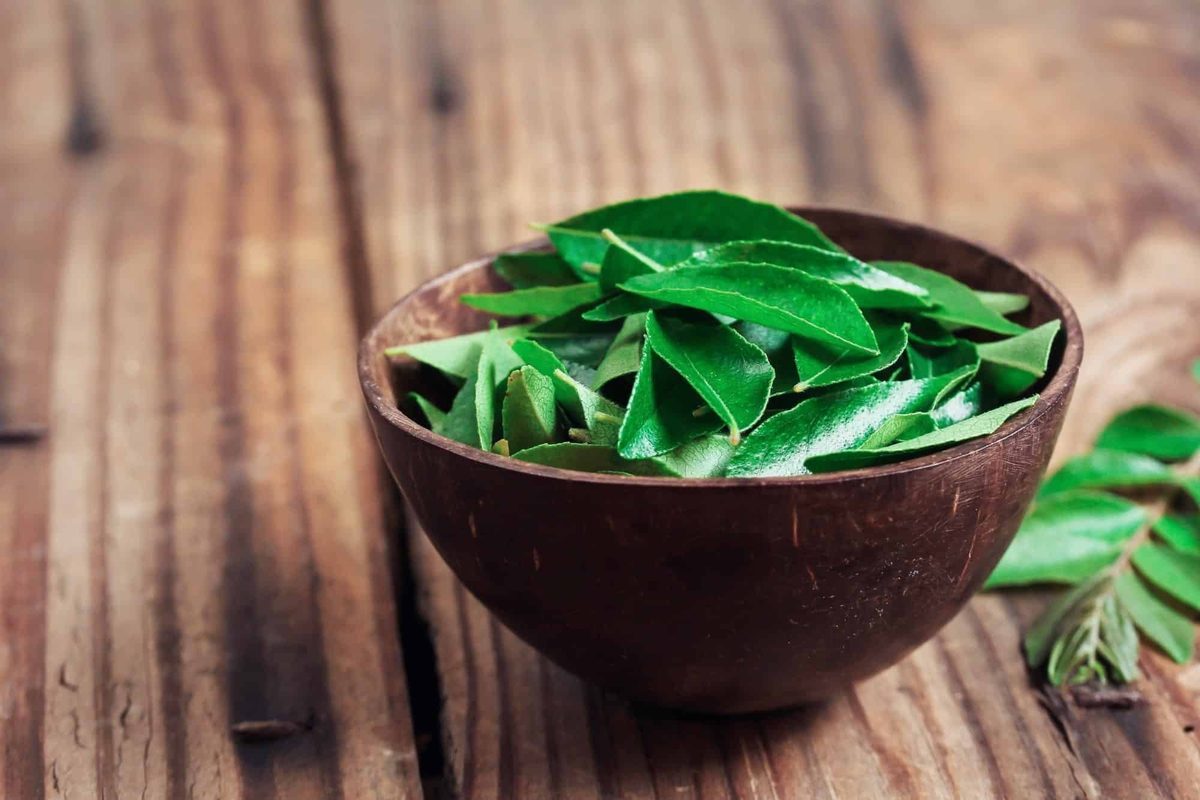
Curry leaves come from the curry tree, a shrub in the citrus family whose aromatic leaves are used extensively in Indian cooking.1 In Hindi they are karipatta, one of many regional names.2 They are at their best in South Indian and Sri Lankan food, and they almost always meet hot fat first: America’s Test Kitchen notes that their flavor compounds are mostly oil-soluble, so the leaves are usually fried lightly in oil or butter.3 This page lists the dishes they belong in. For tempering technique, how many to use and storage, see cooking with curry leaves.
Curry leaves uses at a glance
| Dish | Where | How the leaves go in | Source |
|---|---|---|---|
| Dal and thin lentil curries | South India; general | Fried in fat at the start, or in a final tempering | Katzer, Sharma, ATK243 |
| Sambar | South India (Kerala recipe) | Tempering added after cooking | Onmanorama5 |
| Rasam | South India | 15 leaves in the tempering | Saveur6 |
| Coconut chutney | South India | 9 to 10 leaves fried crisp and poured over | Dassana Amit7 |
| Egg roast | Kerala | Sautéed with onions, more added later | Gulf News8 |
| Dry vegetable curries | South India | Part of the opening spice mix | Katzer2 |
| Rice dishes such as bisi bele bath | South India | Tempering | Katzer2 |
| Samosa fillings | North India | In the filling | Katzer, ATK23 |
| Chicken and beef curries, kottu roti, buriyani | Sri Lanka | In the curry; crisp fried leaves on top | Katzer2 |
| Seafood, meat and grains | General | Fried in the cooking fat | Sharma4 |
Dal and lentil dishes
Lentils are curry leaves’ most common home. Gernot Katzer’s Spice Pages says that in South India their main uses are thin lentil or vegetable curries,2 and Nik Sharma lists dal first among the dishes he uses them in.4 ATK tested them in a red lentil masoor dal and found that 8 to 10 leaves were needed where some recipes call for 3 or 4.3
Sambar (Attributed). In Bincy Lenin’s simple sambar for Onmanorama, mustard and fenugreek seeds are spluttered in coconut oil, then dried chiles, curry leaves and a little sambar powder go in, and the whole tempering is added after the sambar comes off the stove.5 The recipe serves sambar with rice, idli or dosa.5
Rasam
Rasam is a peppery South Indian soup, sour with tamarind.6 Smita Chandra’s rasam for Saveur uses 15 fresh or frozen curry leaves, cooked in oil with mustard, cumin and fenugreek seeds and chiles de árbol until the seeds pop, then stirred into the soup.6
A common claim says dried curry leaves suit rasam best because they need longer cooking in water. We found no source that tests it. Katzer and Sharma both say dried leaves are weaker than fresh,24 so fresh or frozen leaves, as in the Saveur recipe, are the better choice.
Chutneys
Coconut chutney (Attributed). Dassana Amit’s coconut chutney finishes with a tempering of mustard seeds, urad dal, optional cumin, 9 to 10 curry leaves or one sprig, asafoetida and a dried red chile in about half a tablespoon of oil.7 The leaves fry only a couple of seconds, until crisp, and the hot tempering is poured straight onto the chutney.7 She serves it with idli, dosa, vada, pongal or pakoda.7
In this recipe the leaves go in through the final tempering rather than being ground into the chutney itself.
Eggs
Kerala egg roast (Attributed). M A Josekutty’s street-style mutta roast for Gulf News uses 2 sprigs of curry leaves for 6 hard-boiled eggs: some go in with the onions to sauté until translucent, and more go in near the end.8 Adding curry leaves to the fat for scrambled eggs or an omelet works on the same principle; that is common practice rather than a named recipe.
Vegetables, rice and samosas
Katzer describes dry curries of vegetables sautéed with spices, and rice dishes such as bisi bele bath, as standard South Indian uses.2 In North India, he notes, curry leaves turn up mostly in samosa fillings,2 and ATK tested them in a potato samosa filling.3 A tempering of curry leaves and mustard seeds stirred through plain cooked rice, cabbage or green beans is an easy everyday use; that combination is common practice, built from the partners the recipes above share.
Meat and seafood
Because South Indian cooking is mainly vegetarian, Katzer says, curry leaves there seldom appear in meat dishes.2 Sri Lanka is different: its chicken and beef curries are flavored with curry leaves, and they appear in kottu roti and in buriyani mixed with crisp fried leaves.2 Sharma lists seafood and meat alongside dal and grains.4 Curry leaves also reached Malaysia with South Indian immigrants,2 though we did not research specific Malaysian dishes.
As a crisp garnish
Fried in hot oil, curry leaves turn crisp and translucent,4 and Katzer notes that they keep their dark green color and fragrance and pick up a pleasant crispness.2 A handful fried this way and scattered over a finished dal, rice dish or curry adds crunch as well as aroma; the Sri Lankan buriyani above uses them this way.2 The leaves are tender enough to eat, so there is no need to pick them out.3
Ground into powder
A 2020 review notes that fresh curry leaf powder and the essential oil are used to season food.9
What curry leaves are not
They are not an ingredient of most curry powder and cannot stand in for it; ATK notes that curry leaves are unrelated to and rarely found in curry powder.3 For how they differ from bay leaves, see curry leaves vs. bay leaves.
Not yet sourced
- A named recipe for Andhra-style curry leaf chicken or a curry leaf podi.
- Use of curry leaves in Cambodian cooking.
- Any test of how dried curry leaves behave in a long-simmered dish.
Related
- Curry leaves profile and cooking with curry leaves
- Curry leaf substitutes
- Curry leaves vs. bay leaves
- Asafoetida and black mustard seeds
Footnotes
-
Frannie Comstock, “Curry tree”, Encyclopaedia Britannica. britannica.com · Reference work ↩
-
Curry Leaves, Gernot Katzer’s Spice Pages. gernot-katzers-spice-pages.com · Reference work ↩ ↩2 ↩3 ↩4 ↩5 ↩6 ↩7 ↩8 ↩9 ↩10 ↩11 ↩12 ↩13 ↩14 ↩15
-
Fresh Curry Leaves, America’s Test Kitchen. americastestkitchen.com · Publication ↩ ↩2 ↩3 ↩4 ↩5 ↩6 ↩7
-
Nik Sharma, “A Guide to Curry Leaves”, Nik Sharma Cooks, 2022. niksharmacooks.com · Publication ↩ ↩2 ↩3 ↩4 ↩5 ↩6
-
Bincy Lenin, “Simple sambar”, Onmanorama, 2021. onmanorama.com · Publication ↩ ↩2 ↩3
-
“Smita Chandra’s Rasam (Spicy Tamarind Soup)”, Saveur, 2015. saveur.com · Publication ↩ ↩2 ↩3
-
Dassana Amit, “Coconut Chutney Recipe”, Dassana’s Veg Recipes, 2024. vegrecipesofindia.com · Publication ↩ ↩2 ↩3 ↩4
-
M A Josekutty, “How to make thattukada or street-style Kerala mutta (egg) roast”, Gulf News, 2022. gulfnews.com · Publication ↩ ↩2
-
Balakrishnan et al., “Medicinal Profile, Phytochemistry, and Pharmacological Activities of Murraya koenigii”, Antioxidants, 2020. mdpi.com · Peer-reviewed ↩