Spices · Profile
Asafoetida (Hing): Flavor, Chemistry, Uses and What’s in the Jar
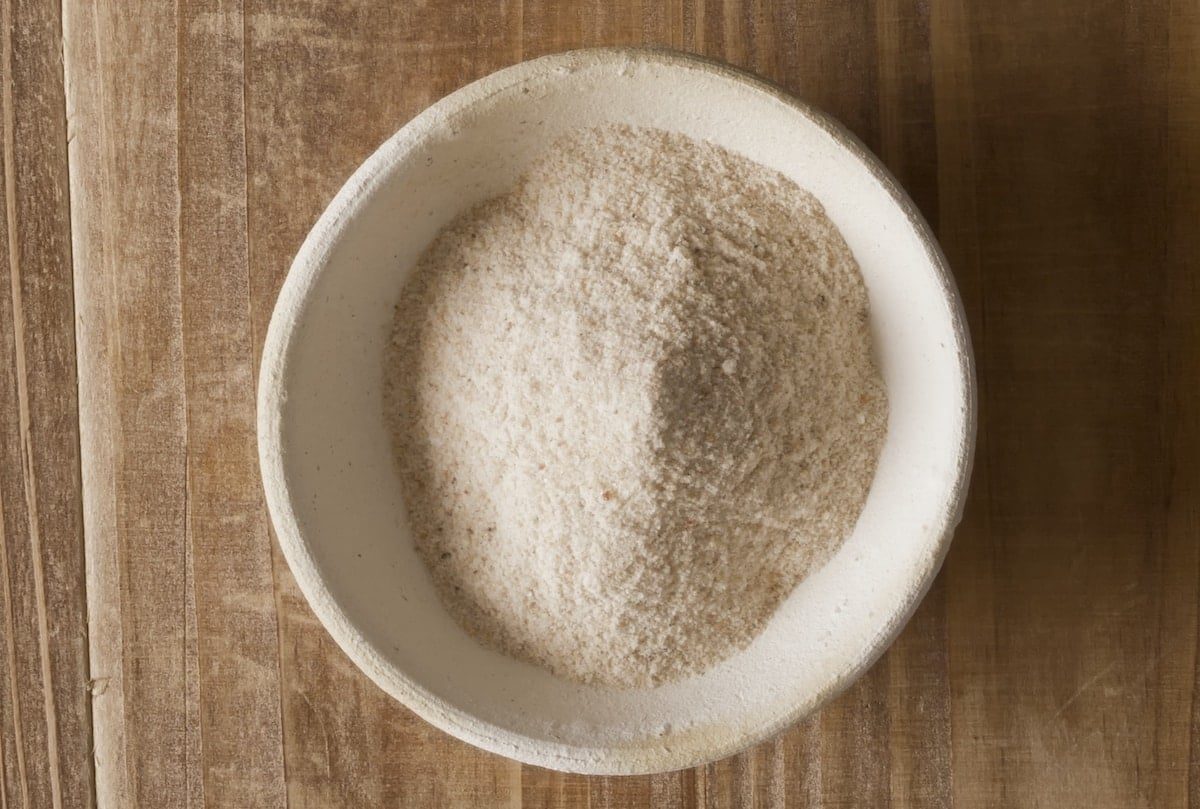
Asafoetida, called hing in Hindi, is the dried resin of a Ferula plant. Raw, it smells strongly sulfurous; fried briefly in hot oil, it gives Indian dals and vegetable dishes a savory, onion-and-garlic depth. Most of what is sold is a compounded powder in which the resin is cut with flour and gum. This page covers the plant, the chemistry behind the smell, its history, how it is used, what the jar actually contains, and the 2026 quality actions in India.
At a glance
| Botanical source | Ferula assa-foetida L., and related Ferula species12 |
| Plant family | Apiaceae (carrot/parsley family)13 |
| Part used | The milky juice from the root, dried to a brown resin-like mass3 |
| Native range | Southern Iran (Kew); Iran to Afghanistan (Katzer)13 |
| Main suppliers to India | Iran, Afghanistan and Uzbekistan (2020 report)4 |
| Key aroma compounds | Sulfur compounds, mainly (R)-2-butyl-1-propenyl disulfide, about 50% of the oil3 |
| Forms sold | Lumps or pieces of resin; compounded powder with gum arabic and starch or flour35 |
| Indian standard | FSSAI regulation 2.9.295 |
| US status | Listed among generally recognized as safe natural extractives (21 CFR 182.20)2 |
Measured values
9 figures, sourced| Measure | Value | Scope | Source |
|---|---|---|---|
| Resin | 25 to 60 % of dried asafoetida | single reference work (Katzer); composition varies with species and source | gernot-katzers-spice-pages.com |
| Gum | 25 to 30 % of dried asafoetida | single reference work (Katzer) | gernot-katzers-spice-pages.com |
| Essential oil | about 10 % of dried asafoetida | single reference work (Katzer) | gernot-katzers-spice-pages.com |
| (R)-2-butyl-1-propenyl disulfide | about 50 % of oil | single reference work (Katzer) | gernot-katzers-spice-pages.com |
| Rice flour and gum arabic | more than 50 % of compounded powder | common compounded powder (Katzer) | gernot-katzers-spice-pages.com |
| Starch in hing, maximum Limit | not more than 1 % by weight | Indian standard as reported by The Week (2026); FSSAI order not opened | theweek.in |
| Alcohol-soluble extract, minimum Limit | 5 % | compounded asafoetida, required minimum as reported by The Week (2026) | theweek.in |
| Alcohol-soluble extract | 0.00 % | one Everest compounded asafoetida sample, as reported by The Week (2026)Specific sample found sub-standard | theweek.in |
| Alcohol-soluble extract | 3.29 and 4.4 % | Everest yellow and black hing powders, as reported by The Week (2026)Specific samples found sub-standard; the report gives no measure name beyond the test context | theweek.in |
Each figure is quoted as its source states it, with the samples or standard it applies to. Where sources differ, both are shown; nothing is averaged. All measured values
What asafoetida is
Kew’s Plants of the World Online lists Ferula assa-foetida as a perennial in the Apiaceae, native to southern Iran.1 Gernot Katzer’s Spice Pages, a long-standing reference on spices, says several Ferula species grow wild from the eastern Mediterranean to Central Asia, and that the species used for the spice are native to the region from Iran to Afghanistan.3 The US federal list of generally recognized as safe extractives names the source as Ferula assa-foetida “and related spp. of Ferula”.2
The spice is the milky juice taken from the root, which dries to a brown, resin-like mass.3 Katzer describes other species, including F. foetida and F. narthex, as inferior substitutes or adulterants.3
The name joins a Latinized form of the Farsi aza, “resin, mastic”, to Latin foetidus, “smelling, fetid”.3 Katzer notes that the raw smell justifies the old nickname “devil’s dung”.3
Flavor and aroma
Katzer describes the raw smell as very strong and rather repugnant, remotely like garlic that is not altogether fresh.3 The change on cooking is the reason cooks put up with it: he says the resin must be fried quickly in hot oil, while the powder can be added without frying, though its aroma then develops less fully.3 Once fried, the effect is mellow and savory, somewhere between onion, garlic and leek. That description is ours.
The compounds
Dried asafoetida is mostly resin (25 to 60% of the mass) and a complex carbohydrate fraction, the gum (25 to 30%), with an essential oil making up about 10%.3 That oil carries the smell. Katzer says it is rich in sulfur compounds, mainly (R)-2-butyl-1-propenyl disulfide at about 50%.3 These figures come from a single reference work, and composition varies with species and source; we did not open a primary analysis for this page.
Origin and history
According to Katzer:3
- Legend says the soldiers of Alexander the Great encountered the plant on their campaigns.
- In the ancient Mediterranean, asafoetida was often used as a substitute for silphion, an expensive North African seasoning.
- In ancient Rome it was stored in jars with pine nuts.
- It stayed in use through the early Middle Ages, and after the 16th century it no longer appears in European cookbooks.
Widely repeated claims that medicinal use dates to 700 BCE, and that the philosopher Maimonides recommended it, could not be traced to a source we could open.
Production and trade
No FAO or other statistical total for asafoetida was found. A 2020 report in The Week, on the first Indian attempt to grow the crop, said India imports about 1,200 tonnes of raw asafoetida a year, worth around USD 100 million, from Iran, Afghanistan and Uzbekistan.4 The same report described CSIR’s Institute of Himalayan Bioresource Technology launching cultivation at Kwaring village in the Lahaul valley of Himachal Pradesh, a cold, high-altitude desert, and said India “might be” the largest consumer.4 These are reported figures without a stated statistical source or year of measurement.
How asafoetida is used
In India, Katzer says, asafoetida is commonly used with garlic and cumin in the lentil and legume dishes collectively known as dal, and it is even more popular in the Dravidian south.3 He notes that Brahmins who refuse onions and garlic often use asafoetida in their place.3 It is also used, less often, in Persian and Afghan cooking.3
Katzer stresses a quick fry in hot oil.3 By common practice, that happens either at the start of a dish or in a tempering of hot fat and spices poured over it at the end, and a pinch is the usual amount. Quantities are kitchen judgment rather than sourced figures.
It also turns up in spice blends: Tarla Dalal’s chaat masala recipe, for example, includes asafoetida.6 See chaat masala. Common partners in a tempering include cumin, black mustard seeds and curry leaves; that pairing list is common practice, not a sourced finding.
Buying and quality
What is in the jar
India’s food regulator sets two standards under FSSAI regulation 2.9.29:5
- Asafoetida (hing) must contain no colophony, galbanum or ammoniacum resin, or any other foreign resin.
- Compounded asafoetida (bandhani hing) is one or more varieties of asafoetida (Irani or Pathani hing) combined with gum arabic, edible starches or edible cereal flour.
Katzer describes the common compounded powder as more than 50% rice flour and gum arabic, added to prevent lumping.3 The FSSAI standard permits “edible cereal flour” without naming the cereal, so anyone avoiding wheat or gluten should read the ingredient list rather than assume.5
The 2026 FSSAI actions
In August 2026, The Week reported that FSSAI had prohibited the sale of compounded asafoetida from two Indian companies:7
| Company (as named in the report) | Finding reported | Action reported |
|---|---|---|
| Everest Food Products | Compounded asafoetida samples found “misbranded and sub-standard”; one sample’s alcohol-soluble extract was 0.00% against a required minimum of 5%, and yellow and black hing powders tested at 3.29% and 4.4% | Sale of compounded asafoetida “with all its variants” prohibited until further orders |
| Laljee Godhoo and Company | Compounded hing in powder and lump form found sub-standard and misbranded; the raw hing used was sub-standard because of excess starch | Sale of hing powder prohibited; action plan required |
The report gives the standard’s limit for starch in hing as not more than 1% by weight.7 These findings concern specific samples tested in India, and they are quality and labeling failures under the Indian standard, not reports of illness. We did not open the FSSAI orders themselves.
Storage
We found no published shelf-life figure for asafoetida. Because the smell is strong and carried by volatile sulfur compounds,3 a tightly sealed container, kept away from other spices, is the practical choice; that is kitchen judgment. A powder that has lost most of its pungency when sniffed has faded.
Health and safety
In the United States, asafoetida from Ferula assa-foetida and related species is on the FDA’s list of natural extractives generally recognized as safe for their intended use.2 NCCIH’s Herbs at a Glance series has no fact sheet on asafoetida.8 Many health benefits are claimed for asafoetida, but we found no regulator summary or systematic review to support the digestive, respiratory or menstrual benefits often claimed for it, and this page makes no claim that it treats or prevents any condition.
Substitutes and related pages
No substitute reproduces asafoetida exactly. Garlic and onion, or their powders, are the usual stand-ins where they are acceptable, which is cooking judgment; no source we found gives a tested ratio. See asafoetida substitutes.
- Garlic
- Garlic powder
- Onion powder
- Black salt, another sulfurous seasoning of Indian cooking
Footnotes
-
Ferula assa-foetida L., Plants of the World Online, Royal Botanic Gardens, Kew. powo.science.kew.org · Reference work ↩ ↩2 ↩3 ↩4
-
21 CFR 182.20, US Food and Drug Administration. ecfr.gov · Regulator ↩ ↩2 ↩3 ↩4
-
Gernot Katzer, “Asafetida (Ferula assa-foetida)”, Gernot Katzer’s Spice Pages. gernot-katzers-spice-pages.com · Reference work ↩ ↩2 ↩3 ↩4 ↩5 ↩6 ↩7 ↩8 ↩9 ↩10 ↩11 ↩12 ↩13 ↩14 ↩15 ↩16 ↩17 ↩18 ↩19 ↩20 ↩21
-
Rekha Dixit, “In a first, India starts cultivation of asafoetida in cold deserts of Himachal Pradesh”, The Week, 2020. theweek.in · Publication ↩ ↩2 ↩3
-
FAQ on asafoetida and compounded asafoetida standards, Food Safety and Standards Authority of India. fssai.gov.in · Regulator ↩ ↩2 ↩3 ↩4
-
Tarla Dalal, “Chaat Masala”, TarlaDalal.com. cdn.tarladalal.com · Publication ↩
-
“FSSAI cracks down on Everest, Laljee Godhoo; prohibits sale of hing powder”, The Week, 2026. theweek.in · Publication ↩ ↩2
-
“Herbs at a Glance”, National Center for Complementary and Integrative Health. nccih.nih.gov · Regulator ↩