Blog · Storage
How to Store Parsley: Fridge, Freezer and Drying, Checked Against the Sources
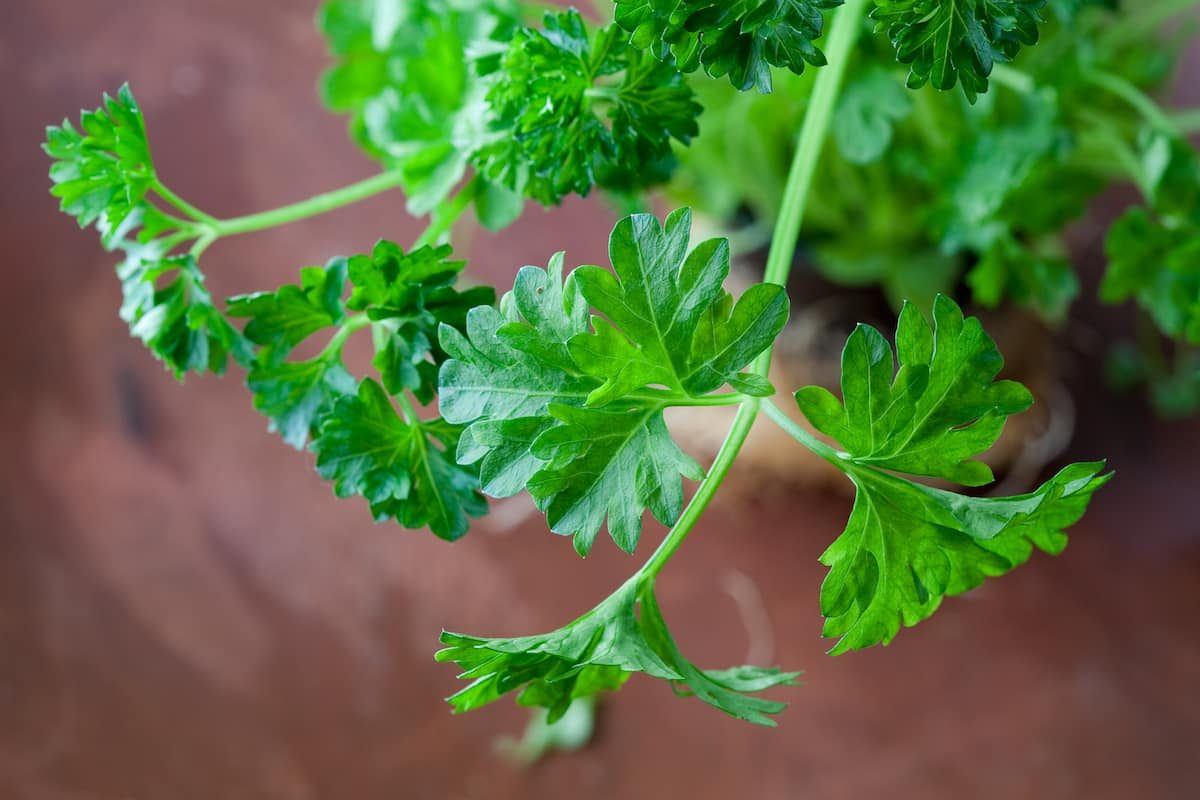
Parsley sits in an odd spot. For storage and cooking, it is grouped with the delicate herbs,1 and America’s Test Kitchen counts it among the herbs that are better fresh than dried.2 For drying, though, the National Center for Home Food Preservation (NCHFP) puts it with the sturdy herbs that are easiest to dry.3 Below is what named sources say about keeping it fresh, freezing it and drying it. The “fresh for up to three weeks” figure that circulates for home storage could not be traced to any source.
At a glance
| Question | Short answer |
|---|---|
| Refrigerator method | Wrap in slightly damp paper towels, put in an open zipper-lock bag, refrigerate.4 |
| Wash first? | The Government of Canada says store fresh herbs unwashed and rinse them when you use them.5 |
| How long in the fridge | Up to five days for fresh herbs in general, per the Government of Canada.5 Commercial storage at 0°C (32°F) can reach 3 weeks.6 |
| Keep away from | Ethylene. UC Davis lists parsley as very sensitive to it.6 |
| Freezer | Freezes well, per Penn State.7 Use frozen parsley in cooking, not as garnish.7 |
| Drying | Air-dries easily;3 Penn State names it as one of the herbs that dry well in some microwaves.8 Expect a weaker flavor.2 |
| Dried parsley, how long | About 1 year to 1 to 3 years for dried herbs in general, depending on the source. None measured parsley. |
| Parsley in oil | Refrigerate and use within 4 days, or freeze.9 |
Keeping fresh parsley in the refrigerator
America’s Test Kitchen sorts herbs into hearty and delicate. Delicate herbs take in and release a lot of water, so they must be kept moist or they wilt, but ATK warns that they should not touch liquid, which encourages rot.4 Its method for delicate herbs is to wrap them in slightly damp paper towels, put them in an open zipper-lock bag and refrigerate.4 In the same guide, a slim herb keeper with a vented lid kept herbs fresh longer than the other containers ATK tested.4
Washing. The Government of Canada’s advice is to store fresh herbs unwashed: trim the stalk ends, put them in a resealable plastic bag and keep them in the crisper drawer, then rinse them under cool running water when you use them.5 If you do wash parsley before storing it, ATK’s way to dry delicate herbs after rinsing is a salad spinner lined with paper towels.4
Standing parsley in a jar of water. Keeping parsley upright like cut flowers, stems in an inch of water with a bag over the top, is a common tip. We found no named source that tested it or gives a time for it. ATK’s warning that delicate herbs should not touch liquid is the nearest sourced guidance.4 It concerns the leaves rather than stems standing in water, so it does not settle the question either way.
Ethylene. UC Davis’s postharvest fact sheet on fresh culinary herbs lists parsley among the herbs that are very sensitive to ethylene exposure,6 with yellowing, stem curvature and leaf drop as the main symptoms.6 The fact sheet is written for the produce trade. It does not give home advice or name foods to keep parsley away from, so we have not invented a list.
How long it lasts.
| Source | Scope | Figure |
|---|---|---|
| Government of Canada5 | Fresh herbs in general, home crisper drawer | up to 5 days |
| UC Davis Postharvest Center6 | Most fresh herbs in commercial storage, above 95% humidity | 3 weeks at 0°C (32°F); 2 weeks at 5°C (41°F) |
These measure different things: commercial storage held just above freezing at very high humidity,6 against a home food-safety rule of thumb.5 Neither is a parsley-specific home test. UC Davis also notes that herbs generally lose essential oil and aroma during storage,6 so parsley that still looks good is not quite as fragrant as it was.
Freezing parsley
Penn State Extension lists parsley among the herbs that freeze well.7 Rinse it and pat or spin it dry first.7 The Government of Canada also says fresh herbs can be frozen once washed and patted dry with paper towels.5
- Loose leaves. Strip the leaves from the stems, spread them in a single layer on a cookie sheet and freeze, then bag them so you can take out what you need.7
- Ice cubes. Half-fill an ice cube tray with water, put about a tablespoon of chopped herbs in each section, freeze, and top up with water the next day.7
- In oil. Mix 1/3 to 1/2 cup of oil with 2 cups of chopped herbs and freeze in trays or small jars.7 Penn State says oil should only be added if the herbs will be frozen, and never to keep herbs in oil at room temperature.7 Herbs frozen in oil keep their color better than herbs frozen alone.7
Frozen herbs go into recipes in the same amounts as fresh, straight from the freezer into cooked dishes.7 They turn limp when thawed, because the water in the leaves expands as it freezes, and they generally do not make attractive garnishes.7 We found no published figure for how long frozen parsley keeps its flavor. More detail is in can you freeze parsley?
Drying parsley
Air-drying. NCHFP names parsley, with rosemary, sage, thyme and summer savory, as one of the sturdy herbs that are easiest to dry without a dehydrator, by tying them into small bundles and hanging them.3 Penn State wants a dry place with good air circulation, away from the sink, stove or dishwasher.8 NCHFP says drying indoors usually keeps color and flavor better than drying outdoors.3
Sun-drying. A widely shared method dries parsley on trays in direct sun on hot, low-humidity days. We could not trace its temperature and humidity thresholds to a source. Penn State does not recommend sun-drying herbs,10 explaining that in Pennsylvania high humidity keeps moisture from leaving quickly enough.8
Dehydrator.
| Source | Setting | Time |
|---|---|---|
| NCHFP3 | 95°F to 115°F; as high as 125°F in humid areas | 1 to 4 hours |
| Penn State8 | 95°F to 110°F | not given |
Microwave. Penn State names parsley as one of the herbs that dry well in some microwave ovens.8 Its method: washed and dried herbs in one layer between microwave-safe paper towels, about 2 to 3 minutes on high per cup, starting with 1 minute and mixing every 30 seconds while you check for dryness.8 Two cautions from the same source: the paper towels can catch fire if there is too little in the oven, and a microwave rated at 1,000 watts or more may heat too fast for this method.8 Paper plates are not part of the extension method.
Oven. Penn State does not recommend oven drying, saying even the lowest temperature destroys much of the flavor. If you use the oven anyway, it says no higher than 180°F (82°C), for 3 to 4 hours, with the door open.8 The 45-minute oven time often given for parsley has no source we could find.
Done when. Leaves are crisp and crumble easily between your fingers.8
What drying does to flavor. A 2005 study dried parsley leaves from 87% to 90% water down to 4% to 6%, in a heat-pump dryer at 45°C and 55°C and a cabinet dryer at 55°C and 65°C. Both methods reduced the volatile flavor compounds more as the temperature went up.11 That fits ATK’s view that delicate herbs like parsley are much weaker in flavor once dried.2 If you need dried in place of fresh, ATK found 1 part dried to 3 parts fresh came closest in flavor.12 See fresh parsley vs dried for more.
Storing dried parsley
Store it in airtight containers in a cool, dry, dark place.3 Keep the leaves whole and crumble them when you cook, because whole herbs hold their oils and flavor longer.8 Air, light, moisture and heat speed flavor and color loss.13 If you keep dried herbs in the fridge or freezer, let the container warm before opening: Penn State notes condensation can form when a cold container comes into a warm kitchen.8
| Source | What it covers | Figure |
|---|---|---|
| UC Cooperative Extension, 200213 | Ground spices and dried herbs, home storage | 1 year |
| America’s Test Kitchen14 | Ground spices and dried herbs | 1 year |
| Penn State Extension10 | Most dried herbs | about 1 year |
| America’s Test Kitchen, 20222 | Herbs dried at home in the microwave, airtight | up to 3 months |
| McCormick15 | Leafy herbs and most seasoning blends; a spice company’s own guidance | 1 to 3 years |
None was measured on parsley, and they disagree; we have not averaged them. To check, crumble a little and smell it.14
Parsley in oil
Herbs held in oil can cause botulism. Oregon State University Extension explains that herbs are low-acid foods that can carry Clostridium botulinum, and oil creates an oxygen-free environment.9 For fresh herbs in oil made at home, it says refrigerate and use within 4 days, or freeze.9 Penn State gives 2 to 4 days in the refrigerator for oils made with fresh herbs.16 For dried herbs in oil the two disagree: Oregon State says within 4 days or frozen,9 Penn State up to three months refrigerated.16 We have not picked between them; the Oregon State rule is the more cautious.
Not yet measured
- How long fresh parsley keeps in a home refrigerator, measured on parsley.
- Whether the jar-of-water method beats damp towels.
- How long frozen parsley keeps its flavor.
- A shelf life for dried parsley specifically.
Related
- Parsley
- Can you freeze parsley?
- How to dry parsley
- Fresh parsley vs dried
- Parsley substitutes
- Too much parsley
- Italian parsley vs curly parsley
- How to store mint
Footnotes
-
“Flavorful Herbs”, LSU AgCenter. lsuagcenter.com · Reference work ↩
-
Danielle Lapierre, “When You Should Actually Use Dried Herbs (and Which Ones to Avoid)”, America’s Test Kitchen, 2022. americastestkitchen.com · Publication ↩ ↩2 ↩3 ↩4
-
“Herbs” (drying), National Center for Home Food Preservation, University of Georgia. nchfp.uga.edu · Reference work ↩ ↩2 ↩3 ↩4 ↩5 ↩6
-
Liz Bomze, “Our Guide to Fresh Herbs”, America’s Test Kitchen, 2019. americastestkitchen.com · Publication ↩ ↩2 ↩3 ↩4 ↩5 ↩6
-
“Food safety tips for fresh herbs”, Government of Canada (copy hosted by UC ANR). oc4h.ucanr.edu · Regulator ↩ ↩2 ↩3 ↩4 ↩5 ↩6
-
Cantwell and Reid, “Herbs (Fresh Culinary)”, UC Davis Postharvest Research and Extension Center. postharvest.ucdavis.edu · Reference work ↩ ↩2 ↩3 ↩4 ↩5 ↩6 ↩7
-
Martha Zepp, “Freezing Herbs”, Penn State Extension, 2025. extension.psu.edu · Reference work ↩ ↩2 ↩3 ↩4 ↩5 ↩6 ↩7 ↩8 ↩9 ↩10 ↩11
-
Hirneisen, Zepp and LaBorde, “Let’s Preserve: Drying Herbs”, Penn State Extension, 2023. extension.psu.edu · Reference work ↩ ↩2 ↩3 ↩4 ↩5 ↩6 ↩7 ↩8 ↩9 ↩10 ↩11
-
Raab and Woodburn, “Herbs and vegetables in oil” (SP 50-701), Oregon State University Extension Service, 2025. extension.oregonstate.edu · Reference work ↩ ↩2 ↩3 ↩4
-
Stacy Reed, “Preserving Herbs by Drying”, Penn State Extension, 2024. extension.psu.edu · Reference work ↩ ↩2
-
“Preservation of flavour components in parsley (Petroselinum crispum) by heat pump and cabinet drying”, Pol. J. Food Nutr. Sci., 2005 (abstract). journal.pan.olsztyn.pl · Peer-reviewed ↩
-
“Science: Substituting Dried Herbs for Fresh”, America’s Test Kitchen. americastestkitchen.com · Publication ↩
-
Add a Little Spice to Your Life! Part II, University of California Cooperative Extension. ucanr.edu · Reference work ↩ ↩2
-
Keeping Spices and Dried Herbs Fresher Longer, America’s Test Kitchen. americastestkitchen.com · Publication ↩ ↩2
-
How Long Do Spices Last?, McCormick. mccormick.com · Merchant ↩
-
Martha Zepp, “How to Safely Make Infused Oils”, Penn State Extension (copy hosted by UC ANR). ccfruitandnuts.ucanr.edu · Reference work ↩ ↩2