Blog · Storage
Can You Freeze Parsley? Methods, Storage Time and Best Uses
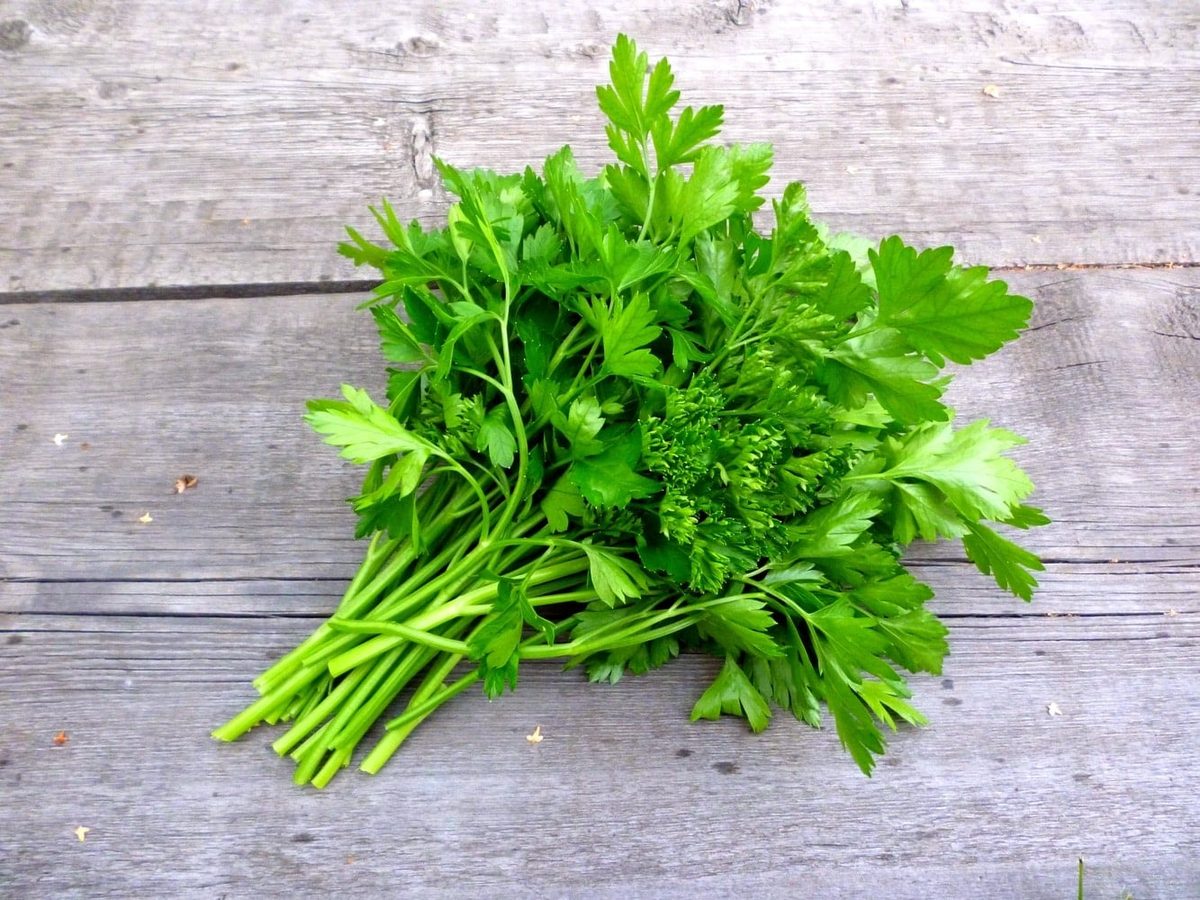
Yes, parsley freezes well. It is one of six herbs on Ohio State University Extension’s list of the best herbs for freezing,1 and Penn State Extension names it first among herbs that can be frozen.2 Frozen parsley goes limp when it thaws, so use it in cooked food rather than as a garnish,23 and for the best quality, use it within 3 to 6 months.1
Freezing matters more for parsley than for hardier herbs. America’s Test Kitchen counts parsley among the herbs that are much weaker in flavor once dried,4 so the freezer is the better way to keep a surplus.
At a glance
| Question | Short answer |
|---|---|
| Can it be frozen? | Yes. Illinois Extension says parsley can be frozen for later use.5 |
| Best methods | Tray-freeze leaves then bag them; bag washed sprigs; or freeze chopped parsley in ice cube trays under water, broth or oil.136 |
| Freezer temperature | 0°F or below.13 |
| How long | For best quality, 3 to 6 months (Ohio State). Other figures below. |
| Thaw first? | No. Add it frozen to cooked dishes.2 |
| Texture after thawing | Limp; generally not attractive as a garnish.2 |
| Oil cubes | Keep them frozen. Herbs in oil must never sit at room temperature.2 |
How to freeze parsley
Prepare it. Rinse the parsley, then pat or spin it dry.2 Ohio State says herbs should be frozen at peak freshness.1 Colorado State adds: choose young, tender herbs and discard any with decay or mold.3
Method 1: bag the sprigs. The simplest method is to put washed herbs in airtight freezer bags and freeze them.6 Pressing out as much air as possible before sealing3 guards against freezer burn, which is caused by air reaching the surface of the food.7 Dividing a large bunch into several small bags means you only open what you need (editorial). Frozen parsley crumbles easily, so it can be chopped or crushed while still frozen; that is common practice rather than a sourced method.
Method 2: tray-freeze. Spread well-drained parsley in a single layer on shallow trays, freeze until firm, then move it to labeled bags or containers.3 The leaves stay separate, so you can take out a handful at a time.
Method 3: ice cubes. Chop the parsley, put it in ice cube trays, cover it with water, broth or oil, and freeze.1 Use one liquid or the other: water and oil do not combine into a cube (editorial). NDSU suggests popping the cubes into bags labeled with contents and date, and dropping a whole cube into soup or stew.6
Method 4: in oil. Penn State’s ratio is about ⅓ to ½ cup of oil to 2 cups of chopped herbs, frozen in cube trays, small jars, or flat in a zip-top bag.2 Herbs frozen in oil keep their color better than herbs frozen on their own,2 which helps a green herb like parsley. Herbs frozen in cubes do cook unevenly as the cube melts.2
Label and date everything.21 Penn State suggests double-wrapping strong-smelling herbs in foil, or using glass jars with airtight lids, because herbs give off odors in the freezer.2 That is about odors; it is the air pressed out of the bag that prevents freezer burn.7
Curly or flat-leaf? Both are cultivated forms of Petroselinum crispum,8 a plant native to Mediterranean lands.9 PROSEA describes flat-leaf parsley as stronger flavored than the curly type,8 so if flavor is the point, flat-leaf is the one to freeze (editorial). We found no comparison of how the two types survive freezing. See Italian parsley vs. curly parsley.
How long frozen parsley keeps
No source we found gives a storage figure measured on frozen parsley. The named figures are general, and they answer different questions.
| Source | What it covers | Figure |
|---|---|---|
| Ohio State University Extension1 | Frozen herbs, best quality | Use within 3 to 6 months; may be safe after a year or longer |
| Colorado State University Extension3 | Frozen vegetables in general, at 0°F or below | High quality for 12 to 18 months; no figure given for herbs |
| USDA freezing fact sheet7 | Frozen food in general | Safe almost indefinitely; storage times are for quality only |
| Penn State Extension2 | Frozen herbs | No time given; label and date |
A “lasts at least six months” claim is common for frozen parsley; it matches the top of Ohio State’s range for herbs in general but does not come from a parsley measurement. Claims that one freezing method keeps parsley longer than another also have no source we could find.
What freezing does to parsley
Freezing makes the water in the leaves expand, which is why frozen herbs are limp when thawed.2 Expect thawed parsley to be soft. Penn State’s note that herbs frozen in oil keep their color better than herbs frozen alone2 suggests some color is lost when parsley is frozen without oil. Ohio State describes freezing as the method that preserves the most nutrients and flavors,1 but we found no tasting or lab study of frozen parsley’s flavor, so how close it comes to fresh is not yet measured.
Why it spoils after thawing. Freezing does not sterilize. Frozen to 0°F, bacteria, yeasts and molds are inactivated, but once food thaws they can become active again.7 Freezing also only slows the activity of the food’s own enzymes.7 Ohio State’s advice follows: after thawing, microorganisms keep growing, so handle thawed herbs like fresh food.1 We found no source for how long thawed parsley lasts in the refrigerator; use it promptly.
Food safety: parsley in oil
Low-acid foods such as herbs, stored in oil, sit in an oxygen-free environment. Oregon State explains that such mixtures must be stored correctly to prevent botulism, caused by Clostridium botulinum, a bacterium found in soil, water and air.10 Its rule for homemade herbs in oil is to refrigerate and use within 4 days, or freeze for long-term storage.1011 A 2011 review of home-prepared herbs and vegetables in oil concluded that freezing is the safest recommendation.11 Do not store herbs in oil at room temperature.2 Keep parsley oil cubes frozen until you cook with them, and treat any you thaw as a refrigerated herb-in-oil mixture with a 4-day limit.10
Using frozen parsley
- Add it frozen. Penn State says not to thaw herbs before adding them to cooked dishes.2
- Measure it like fresh. Frozen herbs can be used in the same proportion as fresh.2
- Cooked dishes first. Ohio State lists soups, stews, sauces and other cooked dishes as the best uses for frozen herbs.1 LSU AgCenter counts parsley among the delicate herbs best added in the last minute or two of cooking,12 which applies to frozen parsley too (editorial).
- Raw sauces are a compromise. Ohio State says frozen herbs may suit cooked dishes better than uncooked ones.1 Thawed parsley can still go into a blended sauce such as chimichurri or a vinaigrette, where texture matters less, but expect a softer result than with fresh (editorial).
- Not for garnish. Thawed herbs are limp and generally unattractive on a plate.2
Freezing, drying or refrigerating?
- Refrigerator, for days. Illinois Extension says fresh parsley is best stored after washing the leaves, then drip-dried, bagged and refrigerated.5 See how to store parsley.
- Freezer, for months. The best route for a surplus.15
- Drying. Possible, but parsley is much weaker dried.4 See how to dry parsley and fresh vs. dried parsley.
Not yet measured
- How long frozen parsley keeps its flavor and color, measured on parsley.
- Whether ice cubes, oil or dry-pack freezing keeps parsley best.
- How long thawed parsley keeps in the refrigerator.
- Whether curly or flat-leaf parsley freezes better.
Related
- Parsley
- How to store parsley
- How to dry parsley
- Fresh parsley vs. dried
- Parsley substitutes
- Too much parsley?
- Can you freeze cilantro?
- Can you freeze basil?
Footnotes
-
Preserving Herbs: Freezing and Drying (HYG-5360), Ohio State University Extension. ohioline.osu.edu · Reference work ↩ ↩2 ↩3 ↩4 ↩5 ↩6 ↩7 ↩8 ↩9 ↩10 ↩11 ↩12 ↩13
-
Freezing Herbs, Penn State Extension. extension.psu.edu · Reference work ↩ ↩2 ↩3 ↩4 ↩5 ↩6 ↩7 ↩8 ↩9 ↩10 ↩11 ↩12 ↩13 ↩14 ↩15 ↩16 ↩17 ↩18
-
Preserve Smart: Freezing Herbs, Colorado State University Extension. apps.chhs.colostate.edu · Reference work ↩ ↩2 ↩3 ↩4 ↩5 ↩6 ↩7
-
When You Should Actually Use Dried Herbs, America’s Test Kitchen. americastestkitchen.com · Publication ↩ ↩2
-
Parsley, University of Illinois Extension. extension.illinois.edu · Reference work ↩ ↩2 ↩3
-
Preserving Herbs and Vegetables, NDSU Extension. ag.ndsu.edu · Reference work ↩ ↩2 ↩3
-
Focus on Freezing, USDA fact sheet (copy hosted by the North Carolina Department of Agriculture). ncagr.gov · Regulator ↩ ↩2 ↩3 ↩4 ↩5
-
Petroselinum crispum, PROSEA. uses.plantnet-project.org · Reference work ↩ ↩2
-
Parsley, Encyclopaedia Britannica. britannica.com · Reference work ↩
-
Herbs and Vegetables in Oil (SP 50-701), Oregon State University Extension Service. extension.oregonstate.edu · Reference work ↩ ↩2 ↩3
-
Nummer et al., Food Protection Trends, 2011. foodprotection.org · Peer-reviewed ↩ ↩2
-
Flavorful Herbs, LSU AgCenter. lsuagcenter.com · Reference work ↩