Herbs · Profile
Salad Burnet: The Cucumber-Scented Herb of Salads and Frankfurt Green Sauce
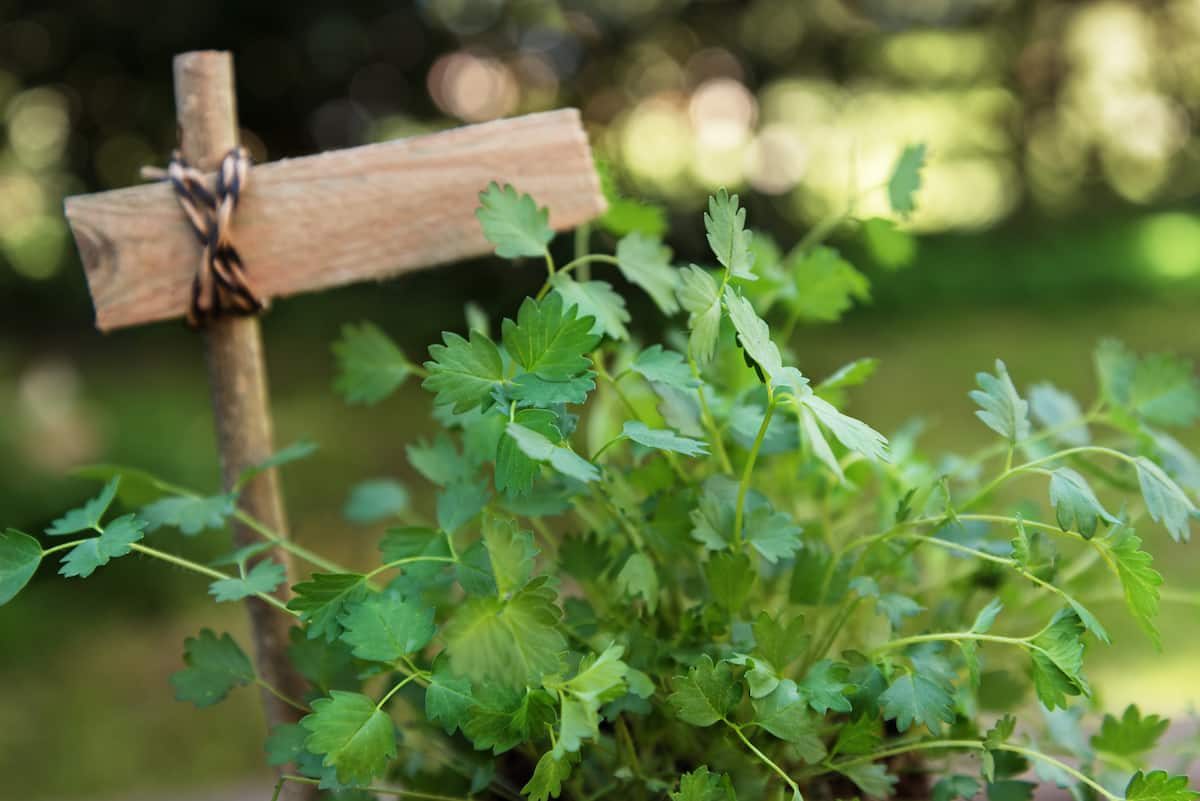
Salad burnet is the leaf of Sanguisorba minor, a low, hardy perennial in the rose family whose small, toothed leaflets smell of cucumber when crushed. It is a salad and cold-drink herb, and one of the seven herbs in Frankfurt’s green sauce. This page covers what it is, where it grows wild, what it tastes like, how it is used, and which of the many claims made for it hold up.
At a glance
| Botanical name | Sanguisorba minor Scop.; older name Poterium sanguisorba L.12 |
| Plant family | Rosaceae (rose family)1 |
| Part used | Leaves, used fresh34 |
| Native range | Europe to the Mediterranean and western Himalaya1 |
| Other names | Garden burnet, pimpernelle, toper’s plant3 |
| Flavor | Cucumber-like34 |
| Production figures | None found; a garden herb, not a traded crop |
| Forms sold | Live plants and seed; occasionally fresh leaves |
What salad burnet is
Kew accepts Sanguisorba minor as the species name and treats the Linnaean name Poterium sanguisorba as a synonym; some gardening references still use the older name.123 Kew describes it as a perennial of the temperate biome.1
Where it comes from
Kew gives the native range as Europe to the Mediterranean and the western Himalaya, listing Great Britain and Ireland among the native areas alongside much of continental Europe, North Africa, Turkey, Iran and Central Asia.1 It is not native to China on Kew’s list; it is recorded as introduced in Korea.1
Salad burnet has been introduced widely in North America, South America, Australia and New Zealand; Kew lists it as introduced in dozens of US states and Canadian provinces.1 Mount Vernon’s plant notes record that Thomas Jefferson planted salad burnet in his gardens many times, beginning in 1778.4
Flavor and aroma
The RHS notes that the foliage gives off a cucumber scent when crushed, and Mount Vernon describes the flavor as reminiscent of cucumbers.34 To us it is fresh and green with a faint nutty, slightly astringent finish, and the youngest leaves are the mildest; that is a cook’s description, not a sourced finding. We found no analysis of the compounds behind the cucumber note among the sources we opened.
How salad burnet is used
- Salads and cold dishes. Mount Vernon says the leaves are used in salads, soups and cold drinks, and that burnet can stand in for mint in many recipes.4
- Frankfurt green sauce. Katzer gives the seven traditional herbs of Frankfurt’s Grüne Soße as parsley, chervil, chives, cress, sorrel, burnet and borage.5 See borage, sorrel and German spices.
- Fines herbes. Britannica names burnet among the herbs used in the French mixture fines herbes, whose core is parsley, chives, tarragon and chervil.6 See fines herbes.
Cooks usually use the leaves raw or stir them in at the end of cooking; that is kitchen practice, not a tested finding. Pairing burnet with basil or cilantro in a dressing or dip is a common home use rather than a sourced tradition.
Growing and buying
Salad burnet is a perennial.1 Picking the young leaves often keeps new growth coming, which is gardening practice rather than a sourced finding. We found no published storage figures for the cut leaves.
Safety and health claims
Kew’s economic botany records list medicinal, environmental and food uses for the plant without detail.1 We found no regulator assessment, recall or safety warning for salad burnet, and no NCCIH summary.
Many widely repeated claims about salad burnet could not be traced to any source we could open: that it is a great source of vitamin C; that it contains useful amounts of tannic and gallic acid, quercetin and kaempferol; that it works as a diuretic for urinary problems or as an anti-inflammatory for arthritis; that it was used by the ancient Greeks and in traditional Chinese medicine; that wine steeped with burnet was taken against the plague; and that soldiers in the American Revolution drank burnet tea to keep from bleeding to death. This page makes no claim that salad burnet treats or prevents any condition.
Substitutes and comparisons
Borage is the nearest match for the cucumber note, and peeled cucumber itself works where texture does not matter; both are kitchen judgment, and no source gives a tested ratio. Related pages:
- Borage
- Fines herbes and fines herbes substitutes
- Chervil, chives and parsley
- Mint, which Mount Vernon suggests burnet can replace4
- List of herbs and spices
Footnotes
-
Sanguisorba minor Scop., Plants of the World Online, Royal Botanic Gardens, Kew. powo.science.kew.org · Reference work ↩ ↩2 ↩3 ↩4 ↩5 ↩6 ↩7 ↩8 ↩9 ↩10
-
Poterium sanguisorba L., Plants of the World Online, Royal Botanic Gardens, Kew. powo.science.kew.org · Reference work ↩ ↩2
-
“Sanguisorba minor”, Royal Horticultural Society. rhs.org.uk · Reference work ↩ ↩2 ↩3 ↩4 ↩5
-
“Salad burnet”, Plant Finder, George Washington’s Mount Vernon. mountvernon.org · Reference work ↩ ↩2 ↩3 ↩4 ↩5 ↩6
-
“Borage (Borago officinalis)”, Gernot Katzer’s Spice Pages. gernot-katzers-spice-pages.com · Reference work ↩
-
“Fines herbes”, Encyclopaedia Britannica. britannica.com · Reference work ↩