Seasonings · Profile
Fines Herbes: The Four Delicate Herbs of French Cooking
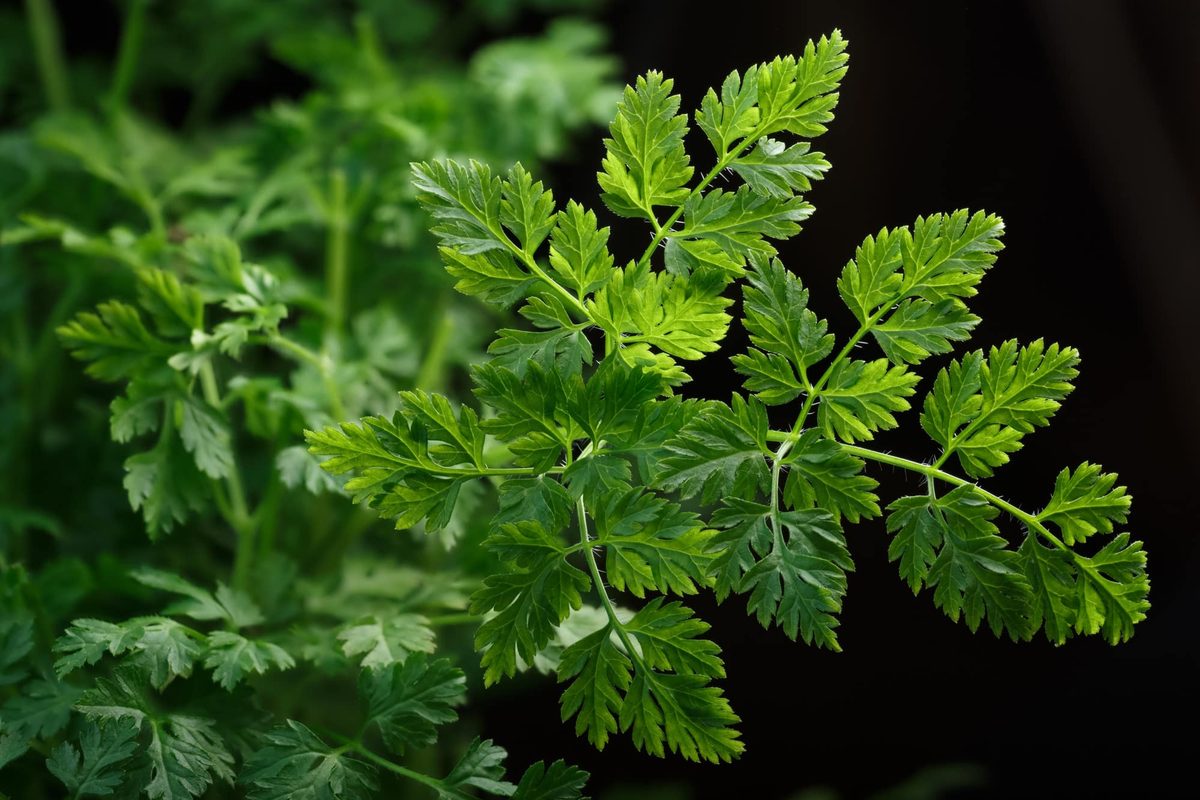
Fines herbes (“fine herbs”) is a French mix of tender herbs, most often parsley, chives, tarragon and chervil, used to season or finish eggs, fish, chicken and sauces. Its flavor is light, green and gently aniseed. This page covers what goes in it, what each herb contributes, how to use it, and how it differs from herbes de Provence and the bouquet garni.
At a glance
| What it is | A French mixture of herbs used as a seasoning or garnish1 |
| Usual herbs | Parsley, chives, tarragon, chervil; the mix varies1 |
| Occasional addition | Burnet1 |
| Typical dishes | Omelets and other eggs, fish, chicken, stews, sauces12 |
| Form | Fresh, chopped; tarragon and chives lose much of their flavor when dried34 |
| Main aroma compound behind the anise note | Estragole (methyl chavicol), 60–75% of tarragon oil5 |
What goes in it
Britannica describes fines herbes as a mixture of herbs used as a seasoning or garnish, and says that while the herbs vary, they commonly include parsley, chives, tarragon and chervil.1 It also names burnet as an ingredient used in fines herbes.1 Marjoram is sometimes listed online as an optional fifth herb, but we found no source for it among those we opened.
There is no fixed proportion. Equal parts is often suggested, but Jacques Pépin’s fine-herbes omelet, for one, uses a tablespoon of chopped parsley and a tablespoon of a mixture of chervil, tarragon and chives, so parsley makes up half the blend.6 For a larger batch, Pépin’s ratio is a reasonable starting point; adjust tarragon to taste, since it is the strongest of the four. That advice is ours.
Flavor, herb by herb
The overall effect is fresh and green, with a soft anise note over a mild onion background. That description is ours; the chemistry behind it is sourced below.
| Herb | What it brings | Source |
|---|---|---|
| Tarragon | Anise-like; estragole makes up 60–75% of tarragon’s essential oil | 5 |
| Chervil | Light, parsley-like with a hint of myrrh; its oil is characterized by undecane, methyl chavicol (estragole) and methyl eugenol | 2 |
| Chives | Mild onion flavor | 3 |
| Parsley | Fresh, grassy base (our description) |
Tarragon and chervil share estragole, which is why the blend reads as gently aniseed.25
How fines herbes are used
Britannica lists fish, chicken, stews, sauces and omelets as typical uses.1 PROSEA notes that chervil, one of the traditional fines herbes, flavors soups, salads, sauces and eggs, particularly omelets.2
When to add it. These are delicate herbs. LSU AgCenter groups parsley and chives among the herbs best added in the last minute or two of cooking, and Wisconsin Extension says chives are usually sprinkled on food just before serving.73 Omelets are the main exception: Pépin beats the herbs into the raw eggs before cooking.6 For sauces, butters and vinaigrettes, stirring the herbs in at the end is common practice.
Fresh or dried. Jars labeled fines herbes are sold, but the fresh herbs are the point of the mix. Illinois Extension says tarragon’s flavor is quickly lost when the leaves are dried, and Wisconsin Extension says chives lose much of their flavor in drying.43 Pépin describes his omelet as a mixture of fresh herbs folded into eggs.6
Not from Provence
Fines herbes is a French term, but we found no source tying the mix to Provence specifically.1 It is a different thing from herbes de Provence. The French Label Rouge specification for herbes de Provence is built on thyme, rosemary and savory, with oregano, all dried.8 None of Britannica’s four usual fines herbes is on that list.18 Nor is fines herbes the same as a bouquet garni, the bundle of parsley, thyme and bay that is cooked in a dish and removed.
A quotation attributed to Escoffier, criticizing omelets “aux fines herbes” made with parsley alone, circulates widely. We could not open the passage in his Guide Culinaire, so it is not quoted here.
Safety
Tarragon and chervil both contain estragole.25 In 2001 the EU’s Scientific Committee on Food concluded that estragole has been shown to be genotoxic and carcinogenic, mainly in studies of mice, and recommended reducing exposure.5 The committee estimated average intake from all sources at about 4.3 mg a day for consumers.5 For more, see the tarragon profile.
This page makes no claim that fines herbes treat or prevent any condition. The amounts used in cooking are small, and nutrition figures for each herb are on its own profile page.
Substitutes and related pages
If one herb is missing, use more of the others; if tarragon is missing, a little chervil or a pinch of fennel frond keeps the anise note. This is cooking judgment, and no source we found gives a tested ratio. See fines herbes substitutes.
- Chervil vs. parsley
- Tarragon uses
- Cooking with chervil
- Dried tarragon vs. fresh tarragon
- Fresh parsley vs. dried
Footnotes
-
“Fines herbes”, Encyclopaedia Britannica. britannica.com · Reference work ↩ ↩2 ↩3 ↩4 ↩5 ↩6 ↩7 ↩8 ↩9
-
M.A. Nichols, Anthriscus cerefolium, Plant Resources of South-East Asia (PROSEA). uses.plantnet-project.org · Reference work ↩ ↩2 ↩3 ↩4 ↩5
-
Susan Mahr, “Chives, Allium schoenoprasum”, University of Wisconsin-Madison Division of Extension. hort.extension.wisc.edu · Reference work ↩ ↩2 ↩3 ↩4
-
“Tarragon: French”, University of Illinois Extension. extension.illinois.edu · Reference work ↩ ↩2
-
Opinion of the Scientific Committee on Food on Estragole, European Commission, 2001. food.ec.europa.eu · Regulator ↩ ↩2 ↩3 ↩4 ↩5 ↩6
-
Jacques Pépin, “Fine-Herbes Omelet: Conventional and Classic”, KQED (Alfred A. Knopf, 2001). kqed.org · Publication ↩ ↩2 ↩3
-
“Flavorful Herbs”, LSU AgCenter. lsuagcenter.com · Reference work ↩
-
Cahier des charges du Label Rouge LA 02/03 “Herbes de Provence”, INAO. extranet.inao.gouv.fr · Regulator ↩ ↩2