Spice Substitutes · Substitutes
Fines Herbes Substitutes: Fill the Gap Herb by Herb
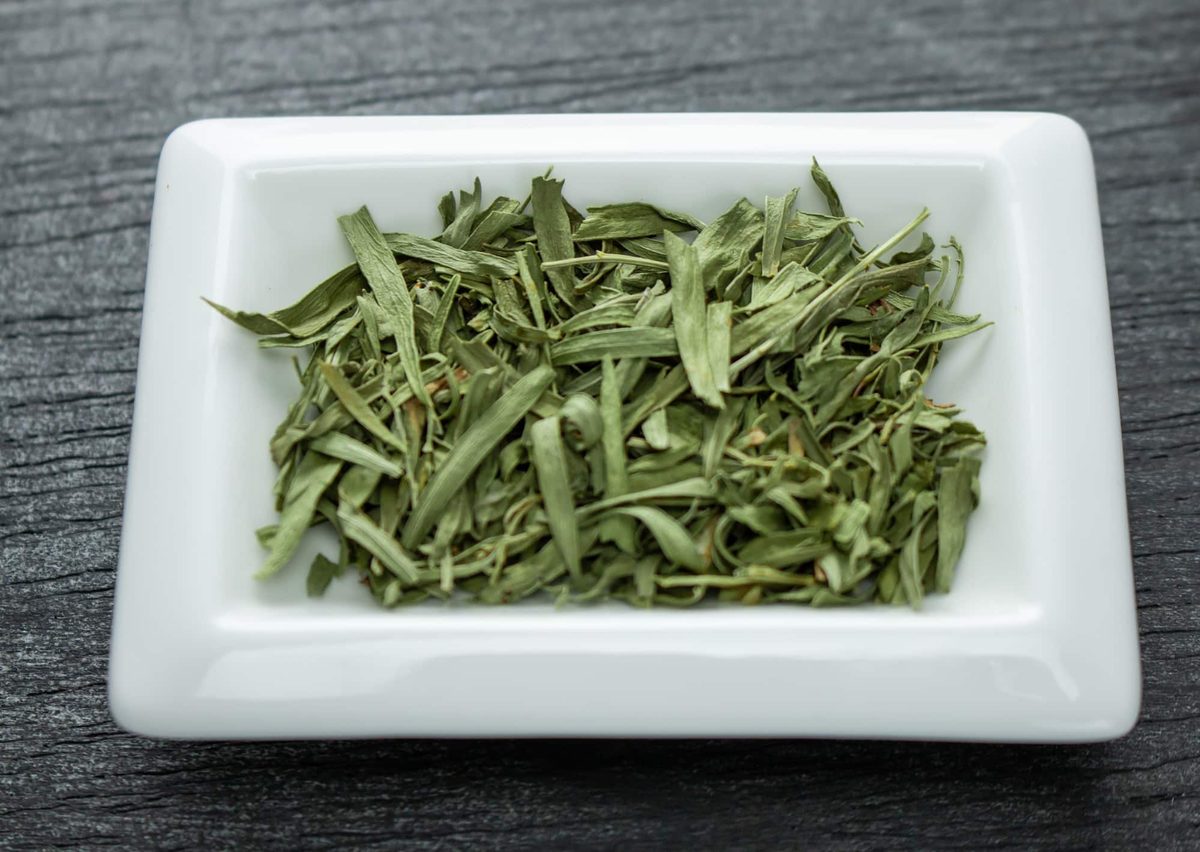
Fines herbes is a French mixture of tender herbs used as a seasoning or garnish. Britannica says the herbs vary but most often include parsley, chives, tarragon and chervil, and lists fish, chicken, stews, sauces and omelets as typical uses.1 Because it is a mix of four fresh herbs rather than a fixed jarred blend, the best substitute is usually the fines herbes you can get, with a stand-in for whichever herb is missing.
Quick answer
| What’s missing | Best substitute | Starting amount | Treatment |
|---|---|---|---|
| Nothing; you just need a ratio | Jacques Pépin’s proportions | Half parsley, half chervil, tarragon and chives | Attributed |
| Chervil | Parsley and tarragon, equal parts | Half the chervil amount, then taste | Attributed (blend), Method (amount) |
| Tarragon | More chervil, or a little fennel frond | A small pinch of frond at a time | Method |
| Chives | Green onion tops | 1:1 | Attributed |
| Parsley | More chervil | 1:1 | Method |
| All fresh herbs | Dried fines herbes, or dried parsley and tarragon | 1 part dried for 3 parts fresh | Computed |
| All of them, cooked dish only | Herbes de Provence | A pinch, early in cooking | Method |
How the ratios on this page are labeled
Every ratio carries one of four labels.
- Computed: based on a measurable physical relationship, with the source named.
- Attributed: a named source publishes this ratio. We quote it as theirs.
- Disputed: named sources give different answers to the same swap. We show each one and do not average them.
- Method: we found no published ratio. We give a direction and a cautious starting point, and say so.
Fines herbes has no fixed proportions,1 so a substitute can only be matched to a recipe, not to a standard.
What each herb brings
| Herb | What it contributes | Source |
|---|---|---|
| Tarragon | Licorice or anise flavor; estragole is 60 to 75% of its essential oil | 23 |
| Chervil | Light, parsley-like flavor with a hint of myrrh; its oil is characterized by undecane, methyl chavicol (estragole) and methyl eugenol | 4 |
| Chives | Mild onion flavor | 5 |
| Parsley | A fresh, green base (our description) |
Tarragon and chervil share estragole, which gives the blend its soft anise note.43 That is the part hardest to replace. Chives and parsley are easier to cover.
If you have some of the herbs fresh
Fines herbes is mostly used fresh and late. LSU AgCenter puts parsley and chives among the delicate herbs best added in the last minute or two of cooking,6 and America’s Test Kitchen groups tarragon with them as herbs whose flavor compounds are more volatile.7 Omelets are the main exception: Pépin beats the herbs into the raw eggs.8
Start from a known ratio
Formula (Attributed): Jacques Pépin’s fine-herbes omelet uses 1 tablespoon finely chopped parsley and 1 tablespoon of a finely chopped mixture of chervil, tarragon and chives.8 So parsley makes up half the blend. Use the herbs you have in roughly those shares, and fill a missing herb’s share with the substitutes below.
Missing chervil: parsley with tarragon
Chervil sits between the other two herbs. PROSEA describes it as light and parsley-like with a hint of myrrh,4 and its oil carries the same estragole as tarragon.43 Tasting Table calls chervil the more delicate of chervil and parsley.9
Blend (Attributed): Tasting Table’s Sylvia Tomczak says equal parts parsley and tarragon is the usual recommendation to stand in for chervil.9
Amount (Method): No published amount. Start with half the chervil amount of the parsley-tarragon mix, then add more parsley rather than more tarragon. In our judgment, tarragon’s anise note takes over quickly, so it is easier to add than to take back.
Missing tarragon: more chervil, or fennel frond
Ratio (Method): No published ratio. Chervil already carries some of tarragon’s anise note, so increase it if you have it. Otherwise, Illinois Extension says fennel has an anise or licorice flavor and uses the herb in fish dishes, soups and stews,10 so a small pinch of finely chopped frond can supply the note. Fronds are coarser and more vegetal than tarragon, so add a little at a time. Make sure the tarragon you buy, when you can, is French tarragon: Illinois Extension says the Russian tarragon sold as seed lacks French tarragon’s odor and flavor.2
Missing chives: green onion tops
Ratio (Attributed): NDSU Extension lists 2 teaspoons of finely chopped green onion tops for 2 teaspoons of chives.11 Use the green parts only; Wisconsin Extension describes chives as having a mild onion flavor.5
Missing parsley: more chervil
Ratio (Method): No published ratio. Chervil is parsley-like,4 so use it 1:1 for the parsley share. If you have no chervil either, use the other herbs and accept a smaller amount of blend.
If you only have tarragon
Tarragon on its own keeps the anise character, which is the most distinctive part of the mix. It is also the herb Britannica calls essential to béarnaise,12 and PROSEA says it particularly suits chicken, egg and lobster dishes,13 which overlap with fines herbes’ uses.
Ratio (Method): No published ratio. In Pépin’s proportions, tarragon is only part of one tablespoon out of two.8 Start with about a quarter of the fines herbes amount as chopped tarragon, taste, and add parsley if you have it to make up volume. In our judgment, too much tarragon tastes sharply of licorice.
If you only have dried herbs
Jars labeled fines herbes are sold, but drying costs these herbs much of their flavor. Illinois Extension says tarragon’s flavor is quickly lost when the leaves are dried,2 Wisconsin Extension says chives lose a lot of their flavor in drying,5 and America’s Test Kitchen lists parsley and chives among herbs that are better fresh.14
Ratio (Computed): America’s Test Kitchen found that 1 part dried herb to 3 parts fresh came closest to equal flavor,7 and LSU AgCenter gives the same rule as 1 teaspoon crumbled dried herbs for 1 tablespoon fresh.6 In ATK’s test, tasters preferred fresh herbs in all but one application,7 so expect a weaker, flatter result.
Dried herbs do better cooked than sprinkled. Stir dried fines herbes into a sauce, braise or egg mixture rather than using them as a garnish.
If you have a different dried blend: herbes de Provence
Herbes de Provence is not a close match. The French Label Rouge specification for herbes de Provence sets fixed shares of thyme (19 percent), rosemary and savory, with oregano,15 and none of Britannica’s four usual fines herbes is among them.115 These are hardier herbs. America’s Test Kitchen found that dried rosemary and thyme, along with oregano, held up reasonably well in long cooking,7 which is the opposite of how fines herbes is used.
Ratio (Method): No published ratio. Use it only in a cooked dish such as a stew or braise, add a small pinch early, and taste. It will not work as a fresh garnish on eggs or fish.
What isn’t known
- No source publishes a ratio for replacing fines herbes as a whole with any single herb or blend.
- No published measurement compares the strength of chervil, tarragon and fennel frond, so the starting points above are cautious guesses in the direction the chemistry suggests.
- Marjoram is sometimes listed as an optional fines herbe. We found no source for it; Britannica names burnet instead.1
- The 1:3 dried-to-fresh rule is a general one. ATK’s test did not include chervil.7
Related
- Fines herbes, herbes de Provence and herbes de Provence substitutes
- Tarragon, tarragon substitutes and dried vs. fresh tarragon
- Chervil, chervil substitutes and chervil vs. parsley
- Chives, chives substitutes and chives vs. green onions
- Parsley, parsley substitutes and fresh vs. dried parsley
- Bronze fennel
Footnotes
-
“Fines herbes”, Encyclopaedia Britannica. britannica.com · Reference work ↩ ↩2 ↩3 ↩4
-
“Tarragon: French”, University of Illinois Extension. extension.illinois.edu · Reference work ↩ ↩2 ↩3
-
Scientific Committee on Food, Opinion on Estragole, European Commission, 2001. food.ec.europa.eu · Regulator ↩ ↩2 ↩3
-
M.A. Nichols, Anthriscus cerefolium, Plant Resources of South-East Asia (PROSEA). uses.plantnet-project.org · Reference work ↩ ↩2 ↩3 ↩4 ↩5
-
Susan Mahr, “Chives, Allium schoenoprasum”, University of Wisconsin-Madison Extension, 2026. hort.extension.wisc.edu · Reference work ↩ ↩2 ↩3
-
“Flavorful Herbs”, LSU AgCenter. lsuagcenter.com · Reference work ↩ ↩2
-
“Science: Substituting Dried Herbs for Fresh”, America’s Test Kitchen. americastestkitchen.com · Publication ↩ ↩2 ↩3 ↩4 ↩5
-
Jacques Pépin, “Fine-Herbes Omelet: Conventional and Classic”, KQED (Alfred A. Knopf, 2001). kqed.org · Publication ↩ ↩2 ↩3
-
Sylvia Tomczak, “Chervil Is The Parsley Substitute You Should Try”, Tasting Table, 2023. tastingtable.com · Publication ↩ ↩2
-
“Fennel”, University of Illinois Extension. extension.illinois.edu · Reference work ↩
-
Julie Garden-Robinson, “Ingredient Substitutions” (FN198), NDSU Extension, 2018. ksre.ksu.edu · Reference work ↩
-
“Tarragon”, Encyclopaedia Britannica. britannica.com · Reference work ↩
-
C.C. de Guzman and R.A. Reglos, Artemisia dracunculus, Plant Resources of South-East Asia (PROSEA). uses.plantnet-project.org · Reference work ↩
-
Danielle Lapierre, “When You Should Actually Use Dried Herbs”, America’s Test Kitchen, 2022. americastestkitchen.com · Publication ↩
-
Label Rouge LA 02/03 “Herbes de Provence”, specification, INAO. extranet.inao.gouv.fr · Standard ↩ ↩2