Spice Fixes · Fix
Too Much Bay Leaf? What to Do, and Whether Bay Leaves Are Safe
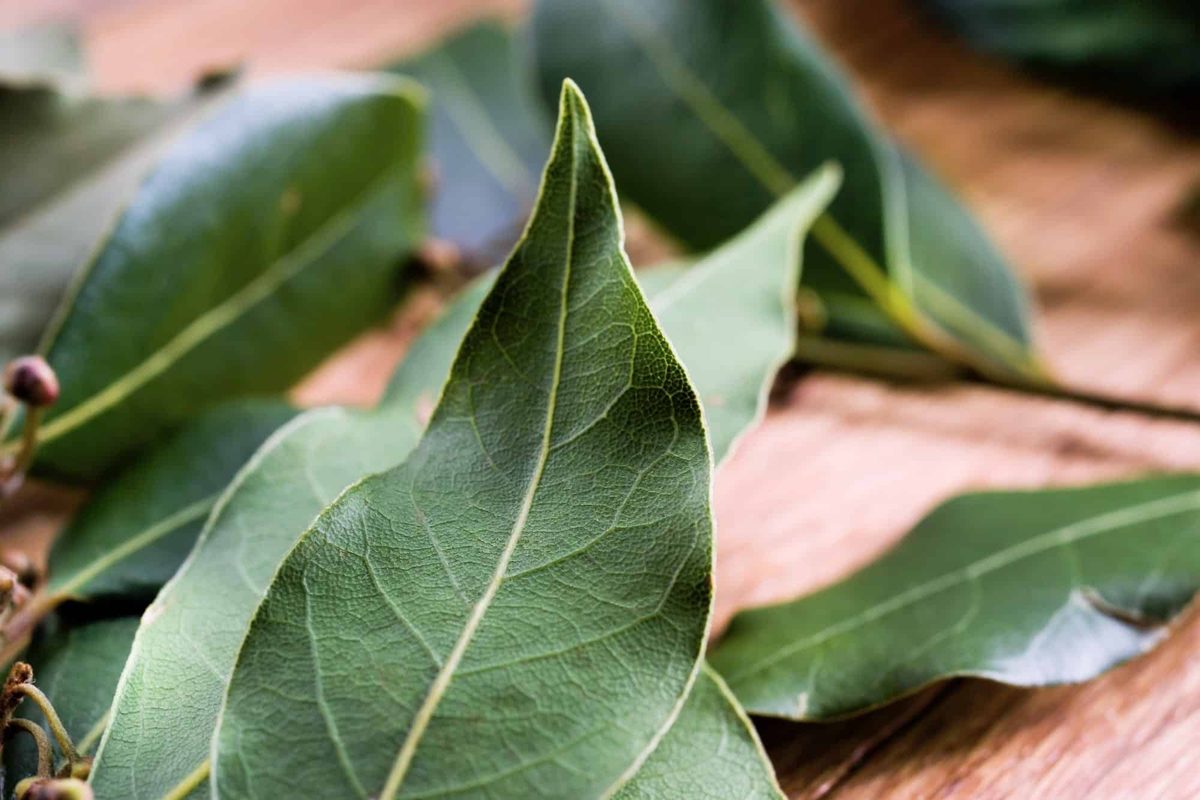
Bay leaves are a background seasoning, so you usually notice them only when they are missing or when there are too many. Too much bay makes a soup or braise taste medicinal, menthol-like and bitter. Because whole leaves come straight out, this is one of the easier herb mistakes to stop. Fastest fixes come first, and the question of whether bay leaves are poisonous is answered below.
Quick answer
| What’s wrong | Fastest fix | If that’s not enough |
|---|---|---|
| Too many whole leaves, or left in too long | Take every leaf out now | Dilute with more of the dish’s other ingredients |
| California bay used in place of Mediterranean bay | Take the leaves out now | Dilute; next time use a quarter to half as many |
| Bitter edge | A pinch of sugar or a little more salt | A sweeter ingredient that suits the dish, such as tomato or carrot |
| Too much ground bay on a roast | Scrape or wipe off the excess | Don’t rinse raw meat or poultry under the tap |
Why bay takes over
The essential oil of bay laurel leaves is dominated by 1,8-cineole. In one 2017 analysis of Laurus nobilis leaf oil, 1,8-cineole made up 31.9%, followed by sabinene (12.2%) and linalool (10.2%); the authors note that other studies have measured much more cineole, 44.97% in Turkish samples and 56.0% in Tunisian ones.1 Those are figures for distilled oil, and they vary with where the leaves were grown. The University of Delaware’s extension guide lists bay leaf in its group of strong or dominant flavors.2
Check which bay you used. California bay is a different plant. Atlas Obscura describes it as having a similar but much stronger scent and flavor, and reports it contains umbellulone, a compound it says can induce headaches.3 J. Kenji López-Alt describes California bay as having “a much stronger menthol flavor” than Turkish bay, and suggests that if California bay is all you have, you start with a quarter to half the amount a recipe calls for.4 In our judgment, a recipe written for Mediterranean bay and made with California leaves is a likely route to too much bay. The ratio is López-Alt’s suggestion, not a measured equivalence.
Sheer volume: too much bay for the dish
Take the leaves out now. Every minute they stay in, they keep infusing. Count them out against the number you put in, and fish broken pieces out with a slotted spoon. This is the one fix that needs no other ingredient, and in a lightly overdone dish it may be all you need.
Dilute. Add more of the dish’s other ingredients, without bay: more stock and vegetables in a soup, more beans in a pot of beans, more tomatoes in a sauce. If the pot is full, split the dish and dilute half, freezing the rest to dilute later, or use the second-batch method Tasting Table describes for too much garlic: cook a batch without bay and combine the two.5
Balance with acid or richness. A splash of vinegar, a squeeze of lemon or a spoonful of tomato paste can brighten a heavy braise; a knob of butter or a drizzle of olive oil can round it out. These are kitchen techniques. We found no source showing that acid or fat neutralizes bay’s flavor or bitterness, so add a little at a time and taste.
Bitter edge
Bay that has simmered too long or in too great a number can leave a bitter note. Sweetness and salt are the tastes most likely to help: in controlled taste tests with pure solutions, sugar and sodium salts both suppressed bitterness, with sugar the strongest suppressor of other tastes, while citric acid was the weakest.6 That was a laboratory study, not a test on food. Add a pinch of sugar, some carrot or a little honey, tasting as you go, so the dish ends up less bitter rather than sweet.
Ground bay on the surface
Ground bay is sometimes used in rubs. If you’ve overdone it on a roast or a cut for smoking, scrape or wipe off the excess and re-season lightly. Don’t rinse raw meat or poultry under the tap: the USDA does not recommend washing raw poultry, beef, pork, lamb or veal before cooking, because rinsing raises the risk of cross-contamination.7
Are bay leaves poisonous?
No. Bay (Laurus nobilis) is on the FDA’s list of spices and natural seasonings generally recognized as safe for their intended use.8 Atlas Obscura calls the idea that the leaves are poisonous a misconception and says they are safe to eat.3 The poisonous plant in that article is a different one also called bay: West Indian bay, every part of which is poisonous except the leaves, and whose product, bay rum, is toxic if consumed.3
The real reason to take them out is physical. López-Alt’s reason for removing them is that dried bay leaves are so tough; he compares eating one to eating a fish bone.4 Surgeons have reported what that can mean. A 1993 report described two cases of bay leaf lodged in the esophagus, causing obstruction.9 A 1997 case report in the Canadian Journal of Surgery described a 2 cm piece of bay leaf that had pierced the wall of a patient’s small bowel; its authors note that bay leaves are rigid, can have sharp points and edges, and pass through the gut more or less intact.10 These are rare case reports, not a measure of risk, but they are why whole leaves should come out before serving. Count them in, count them out.
Fixes that don’t hold up
A potato to absorb it. The raw-potato trick comes from oversalted soup, and even there a Tasting Table writer who uses it calls it “more of an aid than a final answer.”11 We found no test of a potato absorbing bay flavor. Treat added potato as dilution, nothing more.
Adding more strong herbs to cover it. The University of Delaware guide puts rosemary and sage in the same strong-flavor group as bay.2 In our judgment they add to the problem rather than masking it. Fresh parsley stirred in at the end is a milder way to add a green note.
Preventing it next time
Use one or two leaves to start. We found no credible source that sets an amount of bay per quart or per serving. One or two leaves for a pot of soup or stew is our starting point, not a measured figure; add another if the dish needs it.
Know your leaf. If your bay is California bay, follow López-Alt’s suggestion of a quarter to half the usual amount.4
Taste as it simmers. In a long braise, taste every half hour or so and pull the leaves once the flavor is where you want it. Common practice.
Go easy with ground or crushed bay. It can’t be fished out, so start very small. More in crushed bay leaves vs. whole.
Related
Footnotes
-
Caputo L et al., Laurus nobilis: Composition of Essential Oil and Its Biological Activities, Molecules, 2017. mdpi.com · Peer-reviewed ↩
-
Using Herbs and Spices, University of Delaware Cooperative Extension, 2025. udel.edu · Reference work ↩ ↩2
-
What Is a Bay Leaf, Exactly?, Andrew Coletti, Atlas Obscura, 2023. atlasobscura.com · Publication ↩ ↩2 ↩3
-
Bay leaves are an optional ingredient, David Leite with J. Kenji López-Alt, The Splendid Table, 2014. splendidtable.org · Publication ↩ ↩2 ↩3
-
Simple Ways To Tone Down The Pungency Of Garlic, Harmony Colangelo, Tasting Table, 2023. tastingtable.com · Publication ↩
-
Green BG et al., Taste Mixture Interactions: Suppression, Additivity, and the Predominance of Sweetness, Physiology & Behavior, 2010. pmc.ncbi.nlm.nih.gov · Peer-reviewed ↩
-
Washing Food: Does it Promote Food Safety?, USDA Food Safety and Inspection Service. fsis.usda.gov · Regulator ↩
-
21 CFR 182.10, Spices and other natural seasonings and flavorings, U.S. Food and Drug Administration. ecfr.gov · Regulator ↩
-
Ahmed K, McCormick MS, Bay-leaf: an unusual oesophageal foreign body, Journal of Laryngology & Otology, 1993. cambridge.org · Peer-reviewed ↩
-
Bell CD, Mustard RA, Bay leaf perforation of Meckel’s diverticulum, Canadian Journal of Surgery, 1997. canjsurg.ca · Peer-reviewed ↩
-
How To Fix An Oversalted Soup, Alison Spiegel, Tasting Table, 2016. tastingtable.com · Publication ↩