Spice Substitutes · Substitutes
Bay Leaf Substitutes, Ranked by the Job Bay Is Doing
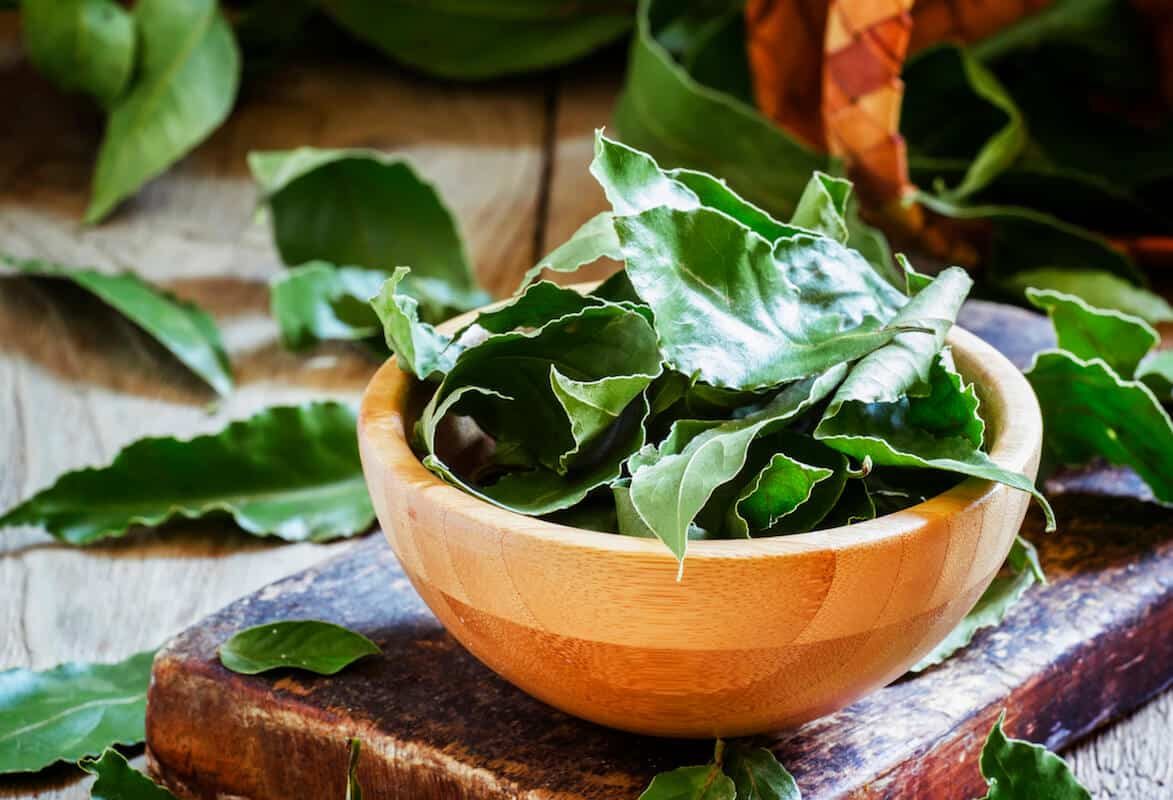
Bay leaves are the dried leaves of bay laurel, Laurus nobilis, a tree of the laurel family (Lauraceae) native to the Mediterranean.1 Their aroma comes from a leaf oil led by 1,8-cineole: in one 2017 analysis of Italian leaves it made up 31.9% of the oil, with sabinene at 12.2% and linalool at 10.2%.2 J. Kenji López-Alt describes the flavor as very subtle and says bay brings out the meaty flavors of beef and chicken.3 No other kitchen herb has the same mix of compounds, so every substitute below shifts the dish a little. The right one depends on what the bay is doing.
Quick answer
| What bay is doing | Best substitute | Starting amount, per 1 whole bay leaf | Treatment |
|---|---|---|---|
| Quiet background in a long-simmered pot (stock, soup, stew, beans) | Dried thyme | 1/4 teaspoon | Attributed |
| Same job, no thyme on hand | Dried oregano | 1/4 teaspoon | Attributed |
| A recipe written for Turkish bay, made with California bay | California bay leaf | 1/4 to 1/2 of the amount | Attributed |
| A rub, sauce or blend where a whole leaf can’t be fished out | Crushed or ground bay | 1/4 teaspoon crushed; 1/8 to 1/4 teaspoon ground | Computed |
| Pork, game or sauerkraut braises | Juniper berries | 1 or 2 lightly crushed berries | Method |
You can also leave bay out. López-Alt calls it optional in most dishes, though better with it.3
How the ratios on this page are labeled
Every ratio carries one of four labels.
- Computed: based on a measurable physical relationship, such as converting a whole leaf to a crushed one, with the source named.
- Attributed: a named source publishes this ratio. We quote it as theirs.
- Disputed: named sources give different answers to the same swap. We show each one and do not average them.
- Method: we found no published ratio. We give a direction and a cautious starting point, and say so.
None of the published bay-substitute ratios we found explain how they were arrived at. They are rules of thumb, not measurements of flavor strength.
If bay is a quiet background in a long-simmered pot
This is the usual job: one or two leaves in a stock, soup, stew, braise or pot of beans. You are replacing a faint herbal depth, not a flavor anyone would name.
1. Dried thyme
The Spice House lists dried thyme, dried oregano and ground bay leaf as substitutes.4 Tasting Table’s Cassie Womack prefers thyme, saying oregano works in a pinch but thyme does a better job of matching bay’s subtle flavor, and that both are slightly minty and slightly peppery.5
Thyme does not copy bay’s chemistry. Its oil is characterized by thymol and carvacrol,6 where bay’s is led by 1,8-cineole.2 PROSEA does record one chemotype of common thyme in which thymol and carvacrol are each below 5% and most of the oil is 1,8-cineole, camphor and monoterpene alcohols,6 but there is no way to tell from a jar which kind you have. Thyme earns its place by doing the same savory background job, not by smelling the same.
Dried thyme suits this job better than most dried herbs. In America’s Test Kitchen’s tests, dried thyme, rosemary and sage fared reasonably well in recipes with fairly long cooking times (more than 20 minutes) and a good amount of liquid.7 That describes most dishes that call for bay.
Ratio (Attributed): The Spice House says to use 1/4 teaspoon of dried thyme or oregano for one bay leaf, and elsewhere on the same page gives 1/8 to 1/4 teaspoon.4 Tasting Table gives 1/4 teaspoon of dried thyme per bay leaf.5 The two agree on 1/4 teaspoon as the upper figure. Tasting Table adds that thyme still has a stronger flavor than bay, especially fresh,5 so start at the low end in a delicate broth.
Fresh thyme (Attributed): Tasting Table applies the usual 3:1 fresh-to-dried rule to get 3/4 teaspoon of fresh thyme per bay leaf.5 See the fresh and dried section below for where that rule comes from.
2. Dried oregano
The Spice House specifies dried Greek oregano as an alternative to thyme.4 Oregano’s oil is built on the same two phenols as thyme’s: one review puts carvacrol and thymol together at almost 78 to 85% of it.8 Expect a sharper, more resinous result than with thyme, which is why Tasting Table ranks it second.5
Ratio (Attributed): 1/4 teaspoon per bay leaf, the same as thyme.4
Mexican oregano is a different plant, Lippia graveolens, whose oil PROSEA gives as 40 to 60% thymol and 3 to 25% carvacrol, and whose flavor it calls stronger, sharper and more pungent than that of Origanum oregano.9
Mexican oregano ratio (Method): No published ratio was found. Because it is stronger, start below the oregano figure, at about 1/8 teaspoon per leaf, and taste near the end of cooking.
3. Leave it out
Ratio (Method): López-Alt’s view is that bay is optional in most dishes.3 If the recipe already has thyme or parsley in it, as a classic bouquet garni of parsley, thyme and a bay leaf does,10 the simplest fix is to leave the bay out, finish the dish and taste. Add a pinch more thyme only if it seems flat.
If you have a different “bay” leaf
Several unrelated leaves are sold as bay, and they are not interchangeable.11
| Leaf | What Atlas Obscura and López-Alt say | Use it in place of bay laurel? |
|---|---|---|
| Turkish bay leaf | The same species as bay laurel, especially mild and sweet11 | Yes; it is bay laurel |
| California bay | A similar but much stronger scent and flavor,11 with more menthol;3 contains umbellulone, which Atlas Obscura says can induce headaches11 | Yes, in a smaller amount |
| Mexican bay leaf | Resembles bay laurel in flavor but milder and more subtle11 | Yes, in the same or a larger amount |
| Indian bay leaf (tejpatta) | Closely related to the cinnamon tree11 | Not as a substitute; it is a different flavor |
| West Indian bay | Every part of the plant is poisonous except the leaves; bay rum made from it is toxic if consumed11 | No |
California bay ratio (Attributed): For a recipe written for Turkish bay, López-Alt says he would start with a quarter to half the amount.3
Mexican bay ratio (Method): No published ratio was found. Because Atlas Obscura describes it as milder,11 start with the same number of leaves and add one more if the pot tastes flat.
If bay needs to disappear into a rub, sauce or blend
A whole leaf is meant to come out before serving. Whole leaves are rigid and can have sharp points and edges, and one surgical case report describes a 2 cm piece of bay leaf penetrating the bowel wall.12 Crushed or ground bay avoids the problem: the Spice House notes that ground bay can be stirred into sauces, stews and rubs and does not need to be removed.4
Ratio (Computed): These are form conversions, whole leaf to broken leaf, not substitutions of a different herb.
| Source | One whole bay leaf equals |
|---|---|
| NMSU Extension | 1/4 teaspoon crushed13 |
| NDSU Extension | 1/4 teaspoon cracked bay leaves14 |
| The Spice House | About 1/8 to 1/4 teaspoon ground4 |
The two extension services agree on 1/4 teaspoon for crushed or cracked leaf. The Spice House’s lower figure is for finely ground bay, so the numbers describe different products rather than a disagreement. All three are volume equivalents and say nothing about potency. The Spice House adds that ground bay and other ground spices lose potency faster, within about six months to a year.4
If bay is seasoning pork, game or sauerkraut
Katzer notes that juniper is much used in the traditional cooking of Central Europe, and bay sometimes joins it there. He describes traditional sauerkraut as seasoned with juniper, caraway and maybe a few bay leaves,15 and Saveur’s choucroute garnie ties juniper berries, cloves, garlic and a bay leaf into cheesecloth to cook with the kraut.16 If the bay is missing from a dish like this, a little more juniper can carry the resinous note.
Juniper berries
Juniper “berries” are fleshy, berry-like cones, typically bluish and waxy.17 There is one real chemical link: α-pinene, a piney compound, made up 5.8% of the Italian bay oil above,2 while the European Pharmacopoeia expects 20 to 50% α-pinene in juniper oil.18 Atlas Obscura calls bay’s flavor slightly piney,11 and Lisa Bramen describes juniper as slightly piney with touches of fruit and pepper.19 Juniper is far louder, and Bramen’s advice is to use it sparingly.19
Ratio (Method): We found no published ratio. Start with 1 or 2 lightly crushed berries per bay leaf, taste near the end, and, in our kitchen judgment, tie the berries in cheesecloth as Saveur does so they are easy to remove.
Fresh and dried thyme: where the 3:1 rule comes from
Most of the thyme figures above are for dried thyme. If you have fresh, or ground, the conversion matters.
| Source | Fresh herbs | Dried, crumbled | Ground or powdered |
|---|---|---|---|
| NDSU Extension | 1 tablespoon | 1 teaspoon | 1/2 teaspoon14 |
| Penn State Extension | 1 tablespoon | 1 teaspoon | 1/4 teaspoon20 |
| University of Delaware Extension | 2 to 3 teaspoons | 3/4 to 1 teaspoon | not given21 |
| LSU AgCenter | 1 tablespoon | 1 teaspoon | not given22 |
| America’s Test Kitchen, tasting test | 3 parts | 1 part | not given7 |
Fresh to dried (Computed): The sources agree that dried herbs are roughly three times as strong as fresh. ATK’s testing found that 1 part dried to 3 parts fresh came closest to equal strength,7 and Penn State gives the range as about a quarter to a third.20 The Delaware figures, 3/4 to 1 teaspoon dried for 2 to 3 teaspoons fresh, span the same territory.21 ATK notes that this works best for hardy herbs such as thyme in long-cooked dishes.7
Dried to ground (Disputed): NDSU puts 1 tablespoon of fresh herbs at 1/2 teaspoon ground, while Penn State says 1/4 teaspoon powdered, a twofold difference.1420 Neither says how its figure was reached. If ground thyme is all you have, start with a small pinch per bay leaf and taste.
What isn’t known
- No published measurement compares the strength of bay with any substitute. The Attributed ratios above are rules of thumb.
- We found no published conversion between fresh and dried bay leaves.
- Allspice leaves and cinnamon leaves are sometimes suggested as one-for-one swaps for bay. We found no source for either.
- Boldo is also suggested, sometimes as a close relative of bay. Kew places boldo, Peumus boldus, in a different family, the Monimiaceae, as a tree native to central and southern Chile,23 while bay laurel belongs to the Lauraceae.1 Kew records boldo’s use as medicine, fuel and food,23 but we found no culinary source for using it in place of bay.
- Basil also turns up on substitute lists. LSU AgCenter groups basil with the delicate herbs best added in the last minute or two of cooking,22 which makes it a poor fit for bay’s long simmer.
Related
- Bay leaves, cooking with bay leaves and crushed vs. whole bay leaves
- Too much bay leaf? How to fix the dish
- Curry leaves vs. bay leaves and bay leaves vs. basil
- Thyme, fresh vs. dried thyme and thyme substitutes
- Oregano, Mexican oregano and juniper berries
- Bouquet garni and dried vs. fresh herbs
Footnotes
-
Laurus nobilis L., Plants of the World Online, Royal Botanic Gardens, Kew. powo.science.kew.org · Reference work ↩ ↩2
-
Caputo et al., “Laurus nobilis: Composition of Essential Oil and Its Biological Activities”, Molecules, 2017. mdpi.com · Peer-reviewed ↩ ↩2 ↩3
-
David Leite with J. Kenji López-Alt, “Bay leaves are an optional ingredient, ‘but things are definitely better with them’”, The Splendid Table, 2014. splendidtable.org · Publication ↩ ↩2 ↩3 ↩4 ↩5
-
“Bay Leaf Substitute”, The Spice House, 2021. thespicehouse.com · Merchant ↩ ↩2 ↩3 ↩4 ↩5 ↩6 ↩7
-
Cassie Womack, “If You’re Out Of Bay Leaves, Use Dried Thyme”, Tasting Table, 2024. tastingtable.com · Publication ↩ ↩2 ↩3 ↩4 ↩5
-
S.H. Widodo, Thymus vulgaris, Plant Resources of South-East Asia (PROSEA). uses.plantnet-project.org · Reference work ↩ ↩2
-
“Science: Substituting Dried Herbs for Fresh”, America’s Test Kitchen. americastestkitchen.com · Publication ↩ ↩2 ↩3 ↩4
-
Lombrea et al., “A Recent Insight Regarding the Phytochemistry and Bioactivity of Origanum vulgare L. Essential Oil”, International Journal of Molecular Sciences, 2020. mdpi.com · Peer-reviewed ↩
-
H.C. Ong and M. Brink, Lippia graveolens, Plant Resources of South-East Asia (PROSEA). uses.plantnet-project.org · Reference work ↩
-
“Bouquet garni”, Encyclopaedia Britannica. britannica.com · Reference work ↩
-
Andrew Coletti, “What Is a Bay Leaf, Exactly?”, Atlas Obscura, 2023. atlasobscura.com · Publication ↩ ↩2 ↩3 ↩4 ↩5 ↩6 ↩7 ↩8 ↩9
-
Bell and Mustard, “Bay leaf perforation of Meckel’s diverticulum”, Canadian Journal of Surgery, 1997. canjsurg.ca · Peer-reviewed ↩
-
In a Pinch Ingredient Substitution (E-131), NMSU Cooperative Extension, 2016. pubs.nmsu.edu · Reference work ↩
-
Julie Garden-Robinson, Ingredient Substitutions (FN198), NDSU Extension, 2018. ksre.ksu.edu · Reference work ↩ ↩2 ↩3
-
Gernot Katzer, “Juniper”, Gernot Katzer’s Spice Pages. gernot-katzers-spice-pages.com · Reference work ↩
-
“Sauerkraut With Pork and Sausages (Choucroute Garnie)”, Saveur. saveur.com · Publication ↩
-
“Common juniper”, Encyclopaedia Britannica. britannica.com · Reference work ↩
-
Assessment report on Juniperus communis L., pseudo-fructus, European Medicines Agency, 2023. ema.europa.eu · Regulator ↩
-
Lisa Bramen, “What the Heck Do I Do With Juniper Berries?”, Smithsonian Magazine, 2011. smithsonianmag.com · Publication ↩ ↩2
-
Stacy Reed, “Preserving Herbs by Drying”, Penn State Extension, 2024. extension.psu.edu · Reference work ↩ ↩2 ↩3
-
“Using Herbs and Spices”, University of Delaware Cooperative Extension, 2025. udel.edu · Reference work ↩ ↩2
-
“Flavorful Herbs”, LSU AgCenter. lsuagcenter.com · Reference work ↩ ↩2
-
Peumus boldus Molina, Plants of the World Online, Royal Botanic Gardens, Kew. powo.science.kew.org · Reference work ↩ ↩2