Cooking · Cooking with
Cooking With Bay Leaves: When to Add Them, How Many, and Why They Come Out
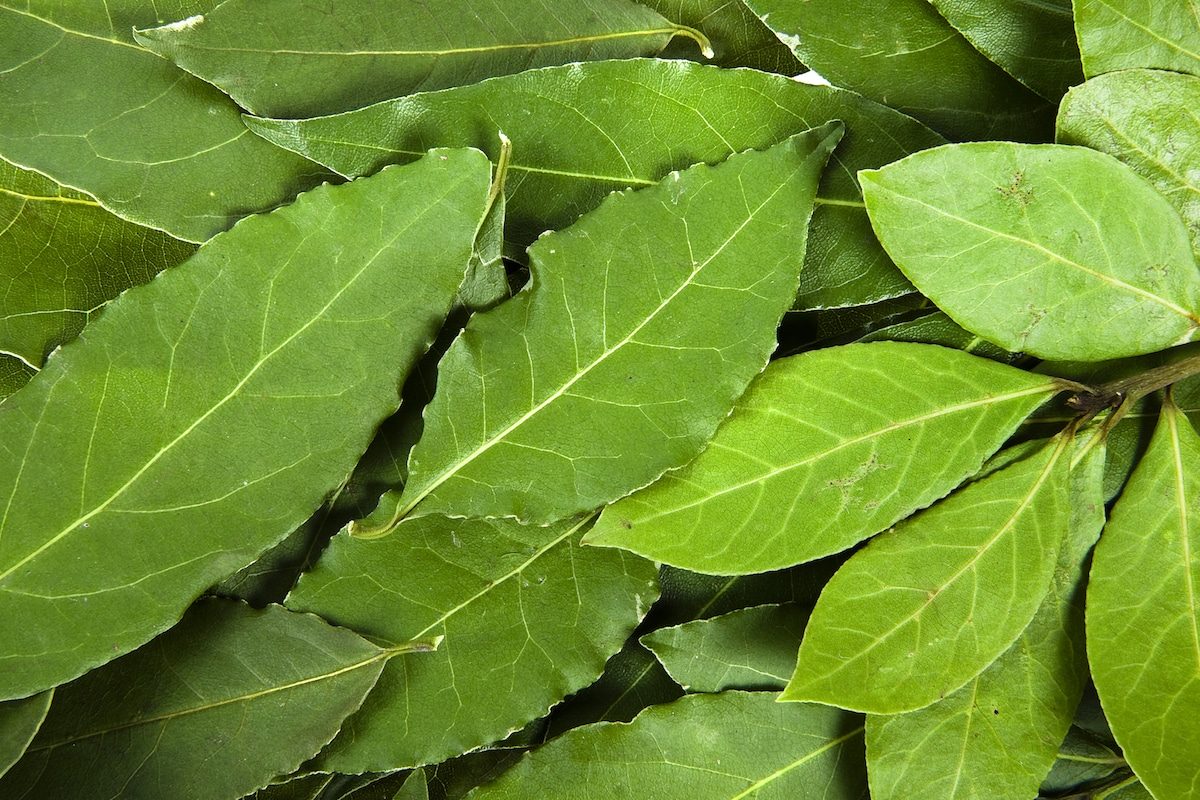
Bay leaves do their work slowly and quietly. J. Kenji López-Alt describes their flavor as very subtle next to most herbs and spices, says they bring out the meaty flavors of beef and chicken, and calls them optional in most dishes, though things are better with them.1 The practical questions are which bay to buy, when to add it, how many leaves to use, and how to make sure none ends up in someone’s mouth. For the plant and its chemistry, see the bay leaves profile.
At a glance
| Question | Answer | Source |
|---|---|---|
| Fresh or dried? | Dried works well; fresh is stronger, so use about half | ATK; Milk Street23 |
| Which kind? | Turkish bay (bay laurel) is the common kind and ATK’s preference; California bay is stronger | ATK; López-Alt21 |
| When to add | Early, because the taste builds as it cooks; sources differ on when to take it out | PROSEA; Milk Street43 |
| How many | One or two leaves in most recipes; a single leaf is enough in some | ATK2 |
| Whole or crushed? | Whole is easy to remove; crushed needs a sachet or straining | Daily Meal; Saveur56 |
| Serve it? | No. Remove whole leaves before serving | PROSEA; case reports478 |
Which bay leaf
The jar labeled bay leaves usually holds Turkish bay, the leaf of the bay laurel. America’s Test Kitchen calls Turkish bay the most common kind and its preferred variety.2 California bay grows on a different tree, an evergreen native to coastal California and Oregon,2 and López-Alt says it has a much stronger menthol flavor than the milder, sweeter Turkish leaf. If a recipe written for Turkish bay is made with California bay, he suggests starting with a quarter to half the amount.1 Atlas Obscura adds that California bay contains umbellulone, a compound that can induce headaches.9
Several other leaves sold as “bay” are different plants with different flavors, including the Indian bay leaf, a close relative of the cinnamon tree.9 If a South Asian recipe calls for bay leaf, check which one it means. See bay leaves and curry leaves vs. bay leaves.
Fresh or dried
Most herbs lose flavor when dried, but America’s Test Kitchen explains that in herbs from hot, dry climates, bay included, the aromatic molecules are less volatile, so the flavor survives drying. ATK calls properly stored dried bay leaves an excellent choice, and does not recommend replacing a dried Turkish leaf with a fresh California one.2
Fresh bay laurel is stronger. Milk Street cooked plain rice with fresh bay laurel, dried Turkish bay and dried Indian bay: the fresh leaf was easily the most prominent, with a striking eucalyptus-like flavor. Its advice when substituting fresh for dried is to use half as much, or smaller leaves, because too much fresh bay can easily overpower a dish.3
A common claim says fresh and dried bay leaves usually come from two different trees. ATK’s comparison of dried Turkish with fresh California bay shows that the two can differ,2 but Milk Street’s fresh leaf was bay laurel,3 and we found no source on which tree supplies most fresh bay sold.
When to add, and when to take out
Bay goes in with the liquid, not at the end. PROSEA advises adding bay leaves early in cooking because the taste gradually intensifies.4 Sources disagree about how long to leave them:
| Source | Advice |
|---|---|
| PROSEA | Add early; the taste builds through cooking; remove before serving4 |
| Milk Street | In long-cooking stews and soups, remove the leaves midway through cooking3 |
| Common kitchen advice | Taste as you go and pull the leaves when the bay is strong enough |
Milk Street does not say why it removes them midway. A common claim says bay turns a dish bitter if it cooks too long; we found no source that tests it, though too much bay leaf covers what to do if a pot tastes medicinal. The safe reading of the sources is: add bay early, taste partway through a long cook, and fish the leaves out once the flavor is where you want it.
Bay belongs in dishes with liquid and time: stocks, soups, stews, braises, sauces, beans and rice. That list is common practice. The classic French bouquet garni ties a bay leaf with sprigs of parsley and thyme for a soup, stew, sauce or poaching liquid, and is removed before serving.10 In Indian rice pilafs, whole spices go into the fat first: Erin Alexander’s pilaf on Food52 sautés 2 bay leaves with cardamom, cinnamon and cloves in ghee for 2 to 3 minutes to release their oils before the rice goes in.11 For using bay outside liquid, Milk Street’s Matt Card uses bay leaves by the handful in roasted vegetables.3
How many
Most recipes call for one or two leaves; that is common practice, not a tested rule. ATK found bay most noticeable, and most necessary, in recipes with fewer ingredients, where a single leaf can bring out the brightness of tomato and the savory notes of chicken broth.2 In other dishes, ATK still prefers to include bay but says missing a leaf or two will not make or break them.2 So bay matters most where little else is competing with it, which is the reverse of a widely repeated idea that it should be paired with assertive spices such as cumin.
The University of Delaware groups bay leaf among the herbs to use with care because their flavors stand out, at roughly 1 teaspoon for six servings.12 That is a general figure for the group, and bay is usually counted in leaves.
Whole, crushed or ground
The whole leaf is the easy one to get back out of a pot.5 Crushed and ground bay behave differently, and sources disagree about whether breaking the leaf matters:
| Source | Position |
|---|---|
| The Daily Meal (Tom Maxwell) | Breaking or grinding the leaf releases a strongly flavored oil that can ruin a dish5 |
| The Spice House | Ground bay can be stirred into sauces, stews and rubs and does not need to be removed13 |
If you use crushed bay, tie it in cheesecloth or strain the liquid. Saveur’s choucroute garnie, for example, bundles juniper, cloves, garlic and bay leaf in cheesecloth.6 For conversions, NMSU Extension gives 1/4 teaspoon crushed bay for 1 whole leaf,14 and The Spice House gives about 1/8 to 1/4 teaspoon ground.13 See crushed vs. whole bay leaves.
Take them out before serving
Bay leaves are not poisonous; Atlas Obscura calls that belief a misconception.9 The reason to remove them is physical. López-Alt says dried leaves are so tough that eating one is like eating a fish bone.1 PROSEA notes that their sharp edges can cause internal injuries.4 Doctors have reported bay leaves lodged in the esophagus8 and a 2 cm piece of bay leaf penetrating the bowel wall; the surgeons describe the leaves as rigid, with sharp points and margins.7 These are case reports, which show the hazard is real but not how often it happens. Count the leaves in and count them out, and if one goes missing, tell the people you are serving.
Storage
López-Alt keeps dried bay leaves in the freezer, where he says they last indefinitely.1 The Daily Meal notes that the longer bay leaves sit in storage, the less flavor they add.5 We found no published shelf-life figure from a regulator or standards body for bay leaves kept in a cupboard. If a crushed leaf smells faint, it has faded.
Related
- Bay leaves, the full profile
- Bay leaf substitutes
- Crushed vs. whole bay leaves
- Too much bay leaf
- Bouquet garni and pickling spice
- Bay leaves vs. basil and curry leaves vs. bay leaves
Footnotes
-
David Leite with J. Kenji López-Alt, “Bay leaves are an optional ingredient”, The Splendid Table, 2014. splendidtable.org · Publication ↩ ↩2 ↩3 ↩4 ↩5
-
Emily Rahravan, “What Do Bay Leaves Actually Do?”, America’s Test Kitchen, 2023. americastestkitchen.com · Publication ↩ ↩2 ↩3 ↩4 ↩5 ↩6 ↩7 ↩8 ↩9
-
“What’s the Deal with Bay Leaves and Do You Actually Have to Use Them?”, Milk Street, 2020. 177milkstreet.com · Publication ↩ ↩2 ↩3 ↩4 ↩5 ↩6
-
Laurus nobilis, Plant Resources of South-East Asia (PROSEA). uses.plantnet-project.org · Reference work ↩ ↩2 ↩3 ↩4 ↩5
-
Tom Maxwell, “Here’s Why Bay Leaves Are Always Cooked Whole”, The Daily Meal, 2023. thedailymeal.com · Publication ↩ ↩2 ↩3 ↩4
-
“Sauerkraut With Pork and Sausages (Choucroute Garnie)”, Saveur. saveur.com · Publication ↩ ↩2
-
Bell and Mustard, “Bay leaf perforation of Meckel’s diverticulum”, Canadian Journal of Surgery, 1997. canjsurg.ca · Peer-reviewed ↩ ↩2
-
Ahmed and McCormick, “Bay-leaf: an unusual oesophageal foreign body”, Journal of Laryngology & Otology, 1993. cambridge.org · Peer-reviewed ↩ ↩2
-
Andrew Coletti, “What Is a Bay Leaf, Exactly?”, Atlas Obscura, 2023. atlasobscura.com · Publication ↩ ↩2 ↩3
-
“Bouquet garni”, Encyclopaedia Britannica. britannica.com · Reference work ↩
-
Erin Alexander, “Indian Rice Pilaf With Tomato-Onion Raita & Crispy Papad”, Food52. api.food52.com · Publication ↩
-
“Using Herbs and Spices”, University of Delaware Cooperative Extension, 2025. udel.edu · Reference work ↩
-
“Bay Leaf Substitute”, The Spice House, 2021. thespicehouse.com · Merchant ↩ ↩2
-
“In a Pinch Ingredient Substitution” (E-131), New Mexico State University Cooperative Extension. pubs.nmsu.edu · Reference work ↩