Spice Comparisons · Comparison
Crushed vs. Whole Bay Leaves: Flavor, Removal and How Much to Use
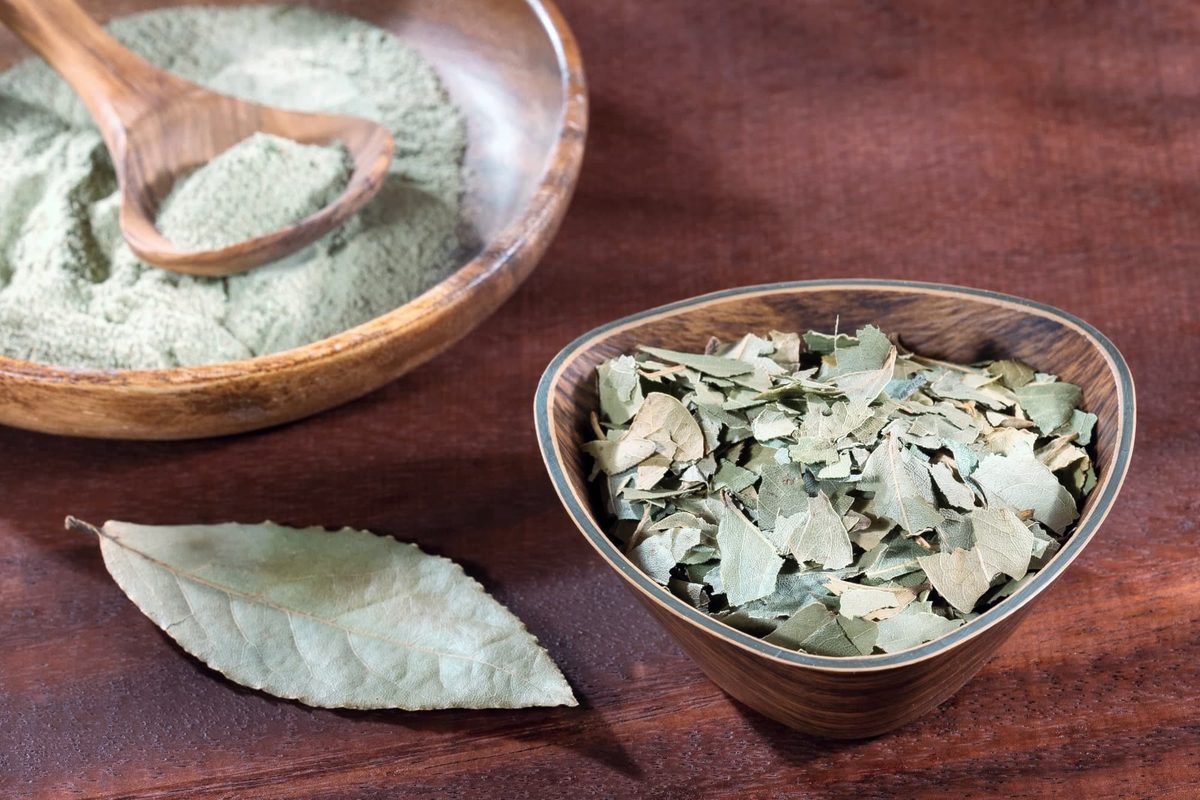
Crushed and whole bay leaves are the same leaf of the bay laurel, Laurus nobilis, in two forms.1 USDA’s purchasing specification for spices lists “crushed” as a form alongside whole and ground.2 The flavor is the same plant’s flavor; what differs is how fast it comes out, whether you can get the leaf back out of the pot, and how much you need. One whole leaf is commonly converted to about 1/4 teaspoon crushed.34
Side by side
| Whole bay leaves | Crushed bay leaves | |
|---|---|---|
| Source | Dried leaf of Laurus nobilis, laurel family (Lauraceae)1 | Same leaf, broken into flakes2 |
| Size | Leaf blades 3 to 15 cm long and 2 to 5 cm wide, leathery (PROSEA, botanical description)5 | Small flakes (no standard size found) |
| Main aroma compound | 1,8-cineole led the oil in one Italian sample (31.9%), with sabinene and linalool6 | Same leaf, same oil6 |
| Equivalent | 1 leaf | About 1/4 teaspoon crushed (NMSU) or cracked (NDSU)34 |
| Removal | Easy to fish out in one piece7 | Cannot be fished out; contain it or leave it in |
| Typical uses | Simmered dishes, added early and removed before serving5 | Pickling spice blends;5 dishes where the bay is strained out or contained |
The differences that change a dish
The whole leaf has to come out
PROSEA says bay leaves should be removed before serving because they stay fibrous and their sharp edges can cause internal injuries.5 That is not a theoretical worry. Medical journals describe whole bay leaves lodged in the esophagus8 and a 2 cm piece of bay leaf found penetrating the bowel wall; the authors note the leaves are rigid, with sharp points and margins.9 J. Kenji López-Alt puts it in kitchen terms: dried bay leaves are tough, and eating one is “like eating a fish bone.”10 The idea that bay leaves are poisonous is a misconception,11 and the FDA lists bay laurel among spices generally recognized as safe;12 the problem is texture and shape.
A whole leaf is the easy case: The Daily Meal points out that one leaf is far easier to fish out of a pot of soup than small pieces.7 Crushed bay cannot be fished out, so it needs a different plan (below).
Speed of release: sources disagree on whether it matters
PROSEA says whole bay leaves should go in early because their taste gradually intensifies during cooking.5 That is the opposite of the idea, sometimes repeated, that whole leaves give up only a little flavor however long they cook.
On crushing, the sources split:
| Source | Position |
|---|---|
| The Daily Meal (Tom Maxwell, 2023) | Bay leaves hold a strongly flavored oil that can be released and ruin your dish if the leaf is broken or ground7 |
| PROSEA | Crushed or powdered bay leaves are an essential ingredient of mixed pickling spices5 |
| The Spice House | Ground bay can be stirred into sauces, stews and rubs and does not need to be removed13 |
None of these measures how fast crushed bay releases its oil compared with whole leaves, and we found no study that does. The reasonable reading is that crushing gives faster, stronger release, so crushed bay is easier to overdo in a short time, while the whole leaf builds gradually. That is our judgment, not a measurement.
Flavor
America’s Test Kitchen describes bay as adding mild, herbaceous, tea-like notes, and says that in hot, dry-climate herbs like bay the aromatic molecules are less volatile, so the flavor survives drying.14 Chewed, a bay leaf tastes unpleasantly intense.11 Both forms come from the same leaf, so they share these traits; only the dose and timing differ.
Freshness
The Daily Meal notes that the longer bay leaves sit in storage, the less flavor they add.7 López-Alt says bay leaves keep indefinitely in the freezer.10 The Spice House says ground spices lose potency faster, in about six months to a year.13 We found no figure specific to crushed bay leaves.
Can one stand in for the other?
Yes. The conversions below come from our bay leaf substitutes page:
| Swap | Amount | Treatment |
|---|---|---|
| Crushed in place of 1 whole leaf | 1/4 teaspoon crushed (NMSU); 1/4 teaspoon cracked (NDSU)34 | Computed |
| Ground in place of 1 whole leaf | About 1/8 to 1/4 teaspoon ground (The Spice House)13 | Attributed |
| Whole in place of 1/4 teaspoon crushed | 1 leaf (the same conversions, reversed) | Computed |
Using crushed bay. Tie it in cheesecloth or put it in a tea ball so it can be lifted out, or strain the liquid before serving. Saveur’s choucroute garnie, for example, bundles juniper, cloves, garlic and bay leaf in cheesecloth.15 Because crushed bay may release faster, adding it later in a long simmer is a sensible precaution (our judgment, see above).
Using whole leaves for crushed. Add the whole leaf early, as PROSEA advises,5 and give it time; remove it before serving. If a recipe needs bay in a dry rub or a blend, crumble a dried leaf finely, or use ground bay, which The Spice House says needn’t be removed.13
When to use each
- Whole: stocks, soups, braises, beans and sauces that simmer long enough for the leaf to work, and anywhere you can pull the leaf before serving (common practice, consistent with PROSEA’s add-early, remove-before-serving advice).5
- Crushed: pickling spice and other blends,5 quick-cooked dishes where the bay is contained in a sachet or strained out, and seafood seasonings: USDA’s specification for Chesapeake Bay style seafood seasoning lists bay leaves alongside cloves and allspice.2
What isn’t known
- No study compares how quickly crushed and whole bay leaves release flavor; the speed difference is an expectation, not a measurement.
- No source gives a shelf life for crushed bay leaves.
- The 1/4-teaspoon conversion is published by extension services without a stated method.
- The bay oil figures come from one Italian sample; 1,8-cineole varies a lot between studies.
Related
- Bay leaves, the full profile
- Bay leaf substitutes
- Cooking with bay leaves and too much bay leaf
- Bay leaves vs. basil and curry leaves vs. bay leaves
- Pickling spice
- Ground vs. whole cloves and cumin seeds vs. ground cumin
Footnotes
-
Laurus nobilis L., Plants of the World Online, Royal Botanic Gardens, Kew. powo.science.kew.org · Reference work ↩ ↩2
-
Commercial Item Description A-A-20001C: Spices and Spice Blends, USDA Agricultural Marketing Service, 2023. ams.usda.gov · Regulator ↩ ↩2 ↩3
-
“In a Pinch Ingredient Substitution” (E-131), New Mexico State University Cooperative Extension. pubs.nmsu.edu · Reference work ↩ ↩2 ↩3
-
Julie Garden-Robinson, “Ingredient Substitutions” (FN198), NDSU Extension. ksre.ksu.edu · Reference work ↩ ↩2 ↩3
-
Laurus nobilis, Plant Resources of South-East Asia (PROSEA). uses.plantnet-project.org · Reference work ↩ ↩2 ↩3 ↩4 ↩5 ↩6 ↩7 ↩8 ↩9
-
Caputo et al., “Laurus nobilis: Composition of Essential Oil and Its Biological Activities”, Molecules, 2017. mdpi.com · Peer-reviewed ↩ ↩2
-
Tom Maxwell, “Here’s Why Bay Leaves Are Always Cooked Whole”, The Daily Meal, 2023. thedailymeal.com · Publication ↩ ↩2 ↩3 ↩4
-
Ahmed and McCormick, “Bay-leaf: an unusual oesophageal foreign body”, Journal of Laryngology & Otology, 1993. cambridge.org · Peer-reviewed ↩
-
Bell and Mustard, “Bay leaf perforation of Meckel’s diverticulum”, Canadian Journal of Surgery, 1997. canjsurg.ca · Peer-reviewed ↩
-
David Leite with J. Kenji López-Alt, “Bay leaves are an optional ingredient”, The Splendid Table, 2014. splendidtable.org · Publication ↩ ↩2
-
Andrew Coletti, “What Is a Bay Leaf, Exactly?”, Atlas Obscura, 2023. atlasobscura.com · Publication ↩ ↩2
-
21 CFR 182.10, Spices and other natural seasonings and flavorings, U.S. Food and Drug Administration. ecfr.gov · Regulator ↩
-
“Bay Leaf Substitute”, The Spice House, 2021. thespicehouse.com · Merchant ↩ ↩2 ↩3 ↩4
-
Emily Rahravan, “What Do Bay Leaves Actually Do?”, America’s Test Kitchen, 2023. americastestkitchen.com · Publication ↩
-
“Sauerkraut With Pork and Sausages (Choucroute Garnie)”, Saveur. saveur.com · Publication ↩