Spice Fixes · Fix
Too Much Tarragon? Fixes for an Anise-Heavy Dish
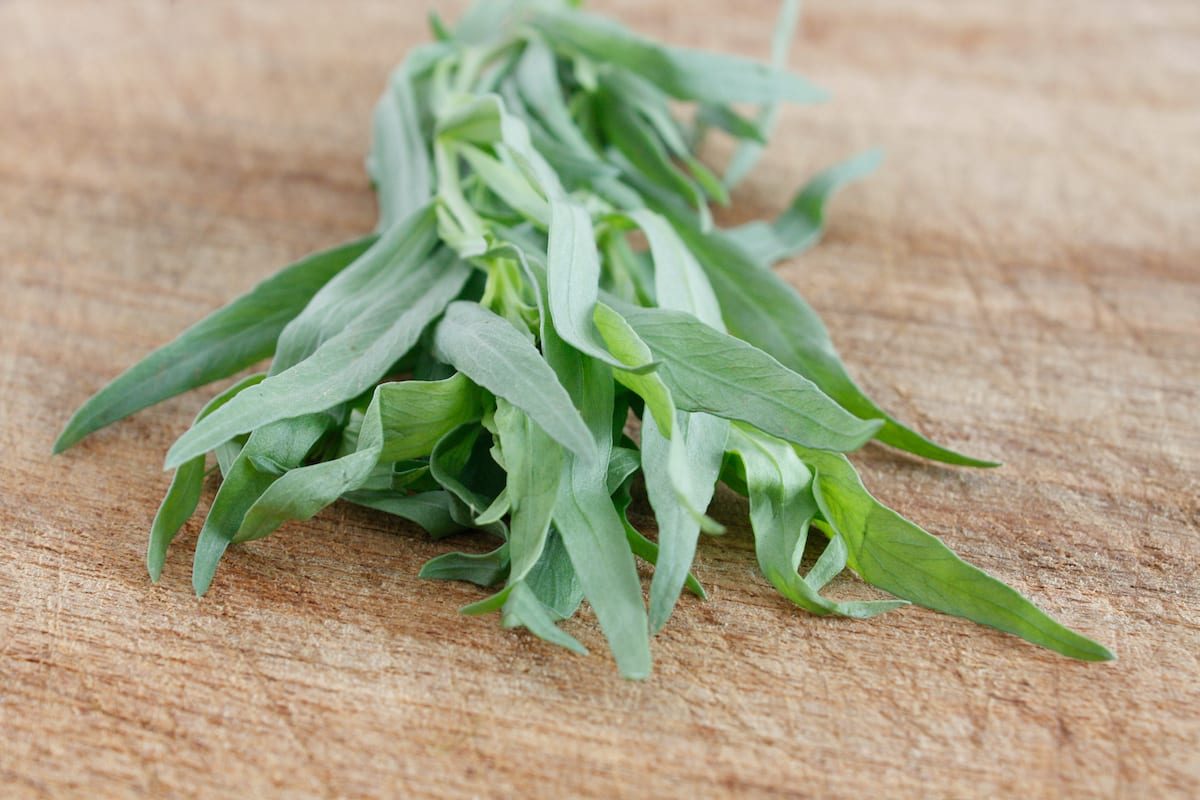
Tarragon has a sweet, anise-like flavor that suits eggs, chicken, fish, vinaigrettes and creamy French sauces in modest amounts. Too much, and the licorice note takes over; some cooks also notice a bitter edge. Fresh tarragon added late can often be fished out; dried tarragon and long-cooked dishes need dilution.
Quick answer
| What’s wrong | Fastest fix | If that’s not enough |
|---|---|---|
| Fresh leaves in a raw sauce or dressing | Fish them out or strain | Make more of the dressing or sauce |
| Too much tarragon, overall | Add more of everything else | Add more of a dairy or tomato ingredient already in the dish |
| Cooked sauce or braise | Dilute; simmer a few minutes more | Add more of the acidic ingredients the dish already uses |
| Bitter edge | A pinch of salt | A little sugar where it fits |
What’s overpowering the dish
Tarragon’s essential oil is dominated by one compound, estragole. The EU’s former Scientific Committee on Food listed estragole at 60 to 75 percent of tarragon essential oil; for comparison, it gave 20 to 43 percent for sweet basil oil.1 We found no source that ties tarragon’s licorice note to estragole alone, so we don’t claim it.
Tarragon is sometimes said to taste soapy in excess. We found no source for that. The best-studied soapy-herb effect concerns cilantro: a genetic study tied the perception to an odor receptor that binds cilantro’s aldehydes,2 which are different compounds from tarragon’s estragole. If a tarragon dish tastes soapy to someone, we can’t say why.
Caught early: take it out
In raw preparations such as a vinaigrette, a cold sauce or a compound butter, fresh tarragon that is torn or roughly chopped can be fished out with a fork, or the sauce can go through a strainer. Whole sprigs in a poaching liquid or braise lift straight out. Finely minced tarragon, and dried tarragon, won’t come out; go to dilution.
Sheer volume: too much tarragon for the dish
Dilute. Add more of every ingredient except tarragon. This keeps the dish true to its recipe, since you aren’t introducing anything new. Many dishes that use tarragon are cheap and fast to scale up: make more vinaigrette, beat more eggs, add more stock to a sauce. If adding to the pot isn’t practical, Tasting Table suggests (for garlic) making a second batch without the overdosed ingredient and combining the two.3 The arithmetic is the same for tarragon.
Add more dairy, if the dish has some. In a cream sauce, a little more cream, milk, crème fraîche or yogurt adds volume and a mild richness that softens the overall impression. Treat this as kitchen judgment: we found no source showing that dairy mutes or binds tarragon’s flavor compounds. Adding dairy to a dish that had none changes the dish, so do it only where it fits.
Balance with tomato or wine. In a dish that already includes tomatoes or red wine, adding more brings acidity and, with tomato, some sweetness that can pull the flavors back toward balance. This is a balancing technique, not a neutralizer; we found no source that acid breaks down or masks tarragon’s licorice note. Raw wine needs time to cook in, so use it only in a sauce or braise that will simmer.
Bitter edge
In controlled taste tests with pure solutions, sweet tastes and sodium salts suppressed bitterness, while citric acid was the weakest suppressor.4 That is a laboratory finding, not a test on tarragon, but it suggests a pinch of salt or sugar will do more against bitterness than extra vinegar or lemon.
Cooking it out
LSU AgCenter’s general rule for fresh herbs is to add them near the end of cooking, because prolonged heat can cause flavor and aroma losses.5 The page doesn’t single out tarragon, and we found no test of how fast tarragon’s flavor fades in a simmering sauce. A few more minutes of gentle simmering is a reasonable try in a sauce or braise that can take it; beyond that, dilute. This won’t help a raw dressing or an egg dish that’s already done.
Is a lot of tarragon unsafe?
The same 2001 EU opinion concluded that estragole is genotoxic and carcinogenic, based mainly on studies in which mice were dosed orally, and said it could not establish a safe exposure limit, calling for reductions in exposure and restrictions in use levels.1 It estimated average estragole intake at 4.3 mg a day for consumers, a figure that covers all sources including added flavorings, and noted it could not separate how much came from herbs and spices.1 It gave no limit for tarragon in home cooking, and it expressed exposure as average daily intake rather than as an amount per dish.1
Preventing it next time
Add fresh tarragon late. Following LSU AgCenter’s general rule for fresh herbs, stir it in near the end or just before serving.5
Convert carefully between fresh and dried. LSU AgCenter’s rule of thumb is one teaspoon of crumbled dried herb for one tablespoon of fresh.5 More in dried tarragon vs. fresh.
Start small with dried. LSU AgCenter’s general advice is to begin with 1/4 teaspoon of most ground spices or ground dried herbs and adjust.5 No source we found gives a tarragon-specific amount.
Related
- Tarragon uses
- Tarragon substitutes
- How to store tarragon
- Fines herbes
- Tarragon vs. dill
- Too much dill
- Too much basil
Footnotes
-
Opinion of the Scientific Committee on Food on Estragole, European Commission, 2001. food.ec.europa.eu · Regulator ↩ ↩2 ↩3 ↩4
-
Eriksson N et al., A genetic variant near olfactory receptor genes influences cilantro preference, Flavour, 2012. link.springer.com · Peer-reviewed ↩
-
Simple Ways To Tone Down The Pungency Of Garlic, Harmony Colangelo, Tasting Table, 2023. tastingtable.com · Publication ↩
-
Green BG et al., Taste Mixture Interactions: Suppression, Additivity, and the Predominance of Sweetness, Physiology & Behavior, 2010. pmc.ncbi.nlm.nih.gov · Peer-reviewed ↩
-
Flavorful Herbs, LSU AgCenter. lsuagcenter.com · Reference work ↩ ↩2 ↩3 ↩4