Cooking · Uses
Winter Savory Uses: Beans, Game, Organ Meats and Stuffing
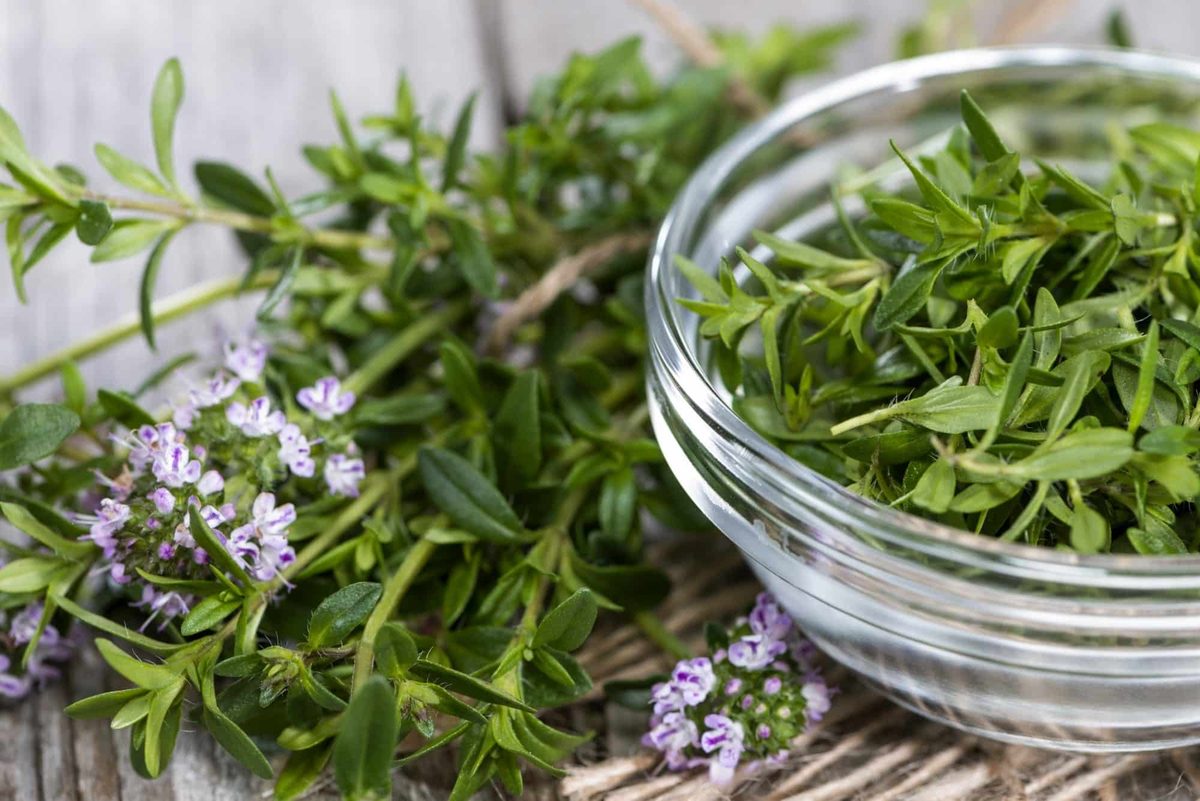
Winter savory (Satureja montana) is a woody perennial subshrub native from south-central and southern Europe to Lebanon.1 In the kitchen it does the same jobs as summer savory: Britannica says it can be used similarly in cooking but has a harsher, more bitter flavor,2 and America’s Test Kitchen (ATK) notes that it has a coarser texture.3 Gernot Katzer calls it more pungent than summer savory.4 That strength points it toward hearty food: beans, game, organ meats and stuffing. This page covers what to use it in. For technique, the cooking with summer savory page applies to both herbs, with the adjustments below.
Winter savory uses at a glance
| Use | Named source | Note |
|---|---|---|
| Bean dishes | Monticello; Duden; Katzer564 | The classic savory use |
| Organ meats and wild game | Monticello5 | Hearty, strongly flavored meats |
| Bread stuffing | Illinois Extension: 2 teaspoons7 | Interchangeable with poultry seasoning in that recipe |
| Bouquet garni for a bean pot | Katzer4 | Not part of the French classic8 |
Beans and lentils
Monticello’s notes on the herb suggest its leaves for hearty foods such as bean dishes.5 The German word for savory, Bohnenkraut, defined by Duden as an herb used especially to season bean dishes, applies to both species.6 Katzer says savory is very often used for legumes, especially dishes of dried lentils or beans.4
For long-simmered beans, winter savory’s extra bite matters less than you might expect. Katzer says boiling drastically reduces savory’s pungency, to the point that the two varieties become equivalent.4 In a quick dish, such as sautéed green beans, the difference shows, so use less winter savory than a summer savory recipe calls for (our suggestion, not a tested ratio).
A widely repeated claim says winter savory prevents gas from beans. We found no source that supports it.
Game and organ meats
Monticello suggests winter savory for organ meats and wild game.5 Venison, liver and kidneys are our examples of what fits that description. Lamb is often added to the list, but we found no source that names it.
Stuffing
Britannica says savory seasons poultry and stuffings in particular, and that winter savory can be used similarly.2 University of Illinois Extension’s savory bread stuffing calls for 2 teaspoons of winter savory, or the same amount of poultry seasoning.7 See good stuffing spices.
Bouquet garni
Britannica’s classic bouquet garni is parsley, thyme and a bay leaf,8 without savory. Katzer notes that savory often goes into German versions of the bundle.4 A sprig of winter savory tied in with the other herbs is an easy way to flavor a bean pot and pull the woody stems out afterward. See bouquet garni.
In the garden, and in history
Unlike annual summer savory, winter savory is a perennial,2 so a garden plant lasts for years. Monticello’s notes say it was grown in New England gardens in the seventeenth century, and record an 1820 offer of marjoram, winter savory and thyme to Thomas Jefferson from his neighbor George Divers.5 See the winter savory profile for the plant itself.
Uses we could not confirm
These appear in many lists, but no source we opened supports them:
- Winter savory tea for digestion. We found no evidence that it treats flatulence, indigestion or diarrhea, and this page makes no such claim.
- Winter savory vinegar. Colorado State University Extension’s list of fresh herbs for flavored vinegar does not include savory.9 Steeping it in vinegar is possible, but we found no tested recipe.
- Oily fish such as eel and mackerel, tomato sauce and vinaigrettes: no source found.
- Introduction to northern Europe by the Romans: no source found.
How much to use
The University of Delaware puts savory in its medium-strength group, for which it suggests 1 to 2 teaspoons for 6 servings (Attributed; it does not separate the two savories).10 Illinois Extension’s 2 teaspoons in a bread stuffing is the one named winter savory amount we found.7 Because Britannica and Katzer both describe winter savory as the sharper of the two,24 start at the low end.
Related
- Winter savory
- Winter savory substitutes
- Summer savory uses
- Summer savory vs. winter savory
- Summer savory
Footnotes
-
Satureja montana L., Plants of the World Online, Royal Botanic Gardens, Kew. powo.science.kew.org · Reference work ↩
-
“Savory”, Encyclopaedia Britannica. britannica.com · Reference work ↩ ↩2 ↩3 ↩4
-
“Cooking with Savory”, America’s Test Kitchen. americastestkitchen.com · Publication ↩
-
Gernot Katzer, “Savory”, Gernot Katzer’s Spice Pages. gernot-katzers-spice-pages.com · Reference work ↩ ↩2 ↩3 ↩4 ↩5 ↩6 ↩7
-
“Winter Savory”, Thomas Jefferson Foundation, Monticello. monticello.org · Reference work ↩ ↩2 ↩3 ↩4 ↩5
-
“Savory Bread Stuffing”, University of Illinois Extension. extension.illinois.edu · Reference work ↩ ↩2 ↩3
-
“Bouquet garni”, Encyclopaedia Britannica. britannica.com · Reference work ↩ ↩2
-
Grubb, Shackelton and Bunning, “Making Flavored Vinegar” (9.340), Colorado State University Extension, 2021. foodsmartcolorado.colostate.edu · Reference work ↩
-
Diane Oliver (rev.), “Using Herbs and Spices”, University of Delaware Cooperative Extension, 2025. udel.edu · Reference work ↩