Spice Substitutes · Substitutes
Culantro Substitutes for Sofrito, Pho and Salsa
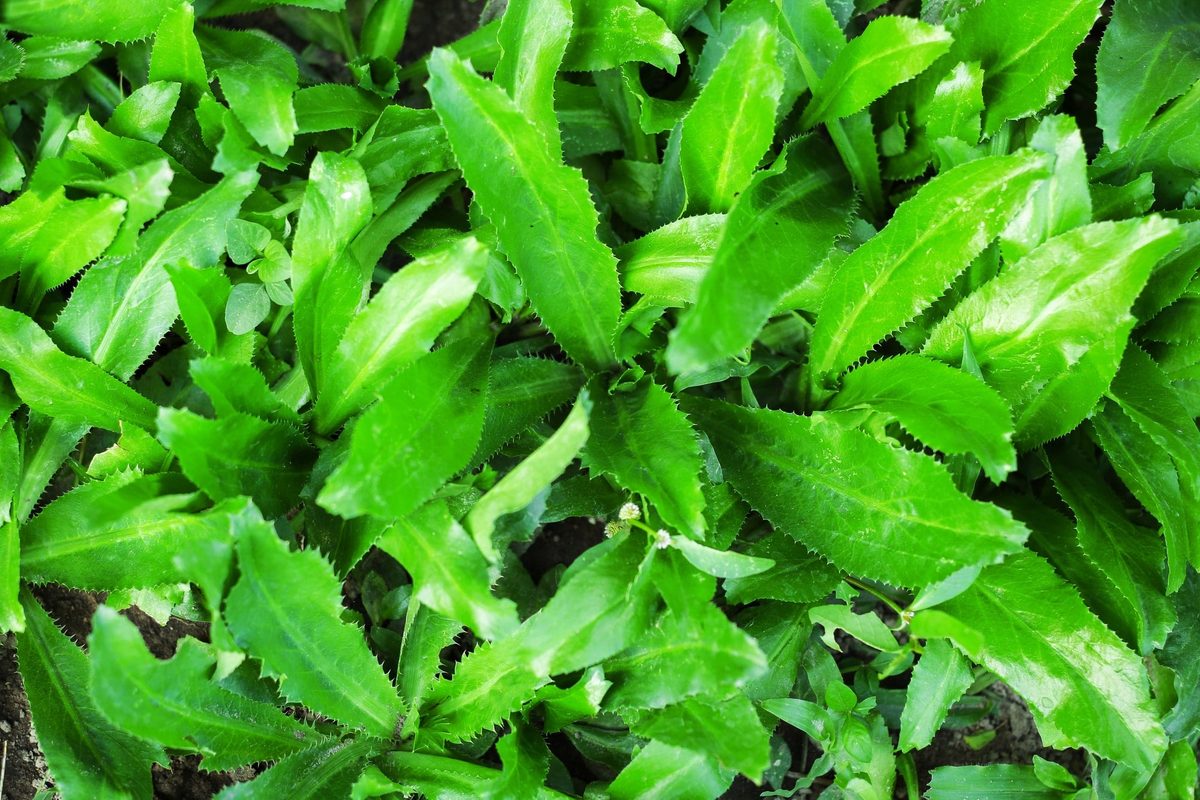
Culantro is the leaf of Eryngium foetidum, a tropical American plant of the carrot and parsley family. PROSEA says its leaves smell like coriander,1 and the University of Florida says they smell similar to cilantro but give a stronger flavor.2 It is called recao in Puerto Rico, where it is a key ingredient in sofrito,23 and ngò gai in Vietnam, where it goes on the herb plate for pho.4 Andrea Nguyen notes it is usually sold at Vietnamese, Latin and Caribbean markets,4 so it can be hard to find elsewhere.
The good news is that its closest substitute is in every supermarket.
Quick answer
| What culantro is doing | Best substitute | Starting amount, per 1 part culantro | Treatment |
|---|---|---|---|
| Blended into sofrito or recaíto, or cooked into stews | Cilantro, leaves and tender stems | About 2 parts, then taste | Method |
| Same, if you want the real flavor | Frozen culantro or a prepared recaíto | See below | Method |
| Raw on a pho plate or in noodle salads | Cilantro, rau ram or Thai basil | 2 parts cilantro, or 1 part of the others | Method |
| Raw in salsa, where a strong herbal bite is wanted | Pápalo | 1/2 part, then taste | Method |
| Green color and body only | Flat-leaf parsley with lime | 1 to 2 parts | Method |
Every amount on this page is a starting point. We found no published ratio for any culantro substitute.
How the ratios on this page are labeled
Every ratio carries one of four labels.
- Computed: based on a measurable physical relationship, with the source named.
- Attributed: a named source publishes this ratio. We quote it as theirs.
- Disputed: named sources give different answers to the same swap. We show each one and do not average them.
- Method: we found no published ratio. We give a direction and a cautious starting point, and say so.
All the ratios below are Method. A widely repeated claim says culantro is “ten times” stronger than cilantro, and that you need eight to ten times as much cilantro to replace it. No measurement supports either figure.
Why cilantro works
Culantro and cilantro are in the same plant family, Apiaceae (Umbelliferae),35 but in different genera, and they share their key aroma compound. In a Malaysian sample summarized by PROSEA, (E)-2-dodecenal made up 59.7 percent of culantro leaf oil.1 PROSEA’s coriander entry lists the same compound as the largest single component of cilantro leaf oil, at 15.6 percent, among aldehydes that make up more than 80 percent of its volatile compounds.6 Those two figures come from different samples and methods, so they show shared chemistry, not a measured ratio of strength. PROSEA also records that culantro was brought to Southeast Asia by the Chinese as a substitute for coriander,1 which is the same swap in reverse.
The difference is texture and durability. Culantro leaves are tough and best finely chopped.2 Cilantro is delicate: LSU AgCenter lists it among the herbs to add in the last minute or two, because prolonged heat costs flavor and aroma.7
If culantro is blended into sofrito or cooked into a dish
In Puerto Rico, the University of Puerto Rico counted about 25 companies making sofrito, also called recaíto, with significant amounts of recao.3 Here culantro is part of a cooked seasoning base, so its strength matters more than its look.
1. Cilantro, leaves and stems
Ratio (Method): We found no published ratio. Because culantro is described as stronger,2 start with about twice as much chopped cilantro as the recipe’s culantro, include the tender stems, and taste the finished base before adding more. Since cilantro fades with long cooking,7 stirring a little extra fresh cilantro in at the end can bring back some of what is lost; that is our judgment, not a tested finding.
2. The real thing, preserved
The Puerto Rico bulletin says culantro leaves keep for several days in plastic bags in the refrigerator, and that for longer keeping they should be ground and frozen.3 If you find culantro, it is worth buying extra and freezing it ground. A prepared recaíto is another way to get culantro flavor, but it is a blend: check the label for onion, garlic, peppers and salt, and reduce those in the recipe.
Ratio (Method): Use frozen ground culantro in place of fresh, measure for measure. For a prepared recaíto there is no fixed conversion, because recipes differ: start with a tablespoon or two in place of the culantro and the matching aromatics, then taste.
If culantro is raw on a herb plate
On a Vietnamese pho garnish plate, culantro is one of several herbs. Andrea Nguyen’s plate includes 3 or 4 culantro leaves alongside mint, Thai basil and rice paddy herb.4 Because each diner adds herbs to taste, the others on the plate can stand in for one another.
1. Cilantro
Ratio (Method): Put out about twice as many cilantro sprigs as you would culantro leaves, raw, for diners to add themselves.
2. Rau ram (Vietnamese coriander)
Rau ram, Persicaria odorata, is in a different family, the Polygonaceae.8 PROSEA describes its flavor as reminiscent of lemon and coriander leaves, with a slight radish-like, pungent aftertaste, and says the flavor is destroyed by prolonged cooking.8 Its leaf oil is mainly alkane aldehydes, not culantro’s (E)-2-dodecenal,81 so it echoes culantro without matching it.
Ratio (Method): No published ratio was found. Start with the same amount as the culantro, raw, and taste.
3. Thai basil
Thai basil takes the dish in a different direction. In a 2018 study of basils grown in Chiang Mai, Thai basil oil was led by estragole, geranial and neral, and linked to anise, lime-like and fresh aromas.9 Expect anise and lime, not cilantro.
Ratio (Method): No published ratio was found. Start with the same amount.
If culantro is raw in salsa
1. Pápalo
Pápalo, Porophyllum ruderale, is an herb of the aster family.10 University of Maryland Extension’s Maryland Grows blog says it is not exactly like cilantro but close enough to work as an alternative, warns against overdoing it until you are used to the flavor, and advises using it raw or adding it at the very end of cooking.10 It suits salsas and garnishes, not long-cooked sofrito.
Ratio (Method): No published ratio was found. Given the advice not to overdo it, start with about half the culantro amount.
If culantro is mainly color and body
1. Flat-leaf parsley with lime
PROSEA describes parsley as playing a role in Western cooking similar to that of coriander leaves in Asia, and calls the flat-leaved type stronger flavored than the curly.11 It gives a green, fresh look but none of culantro’s aroma. In our judgment, a squeeze of lime helps it along in a salsa or soup.
Ratio (Method): No published ratio was found. Start with the same amount as the culantro, or up to twice as much if it is the only herb.
What isn’t known
- No published measurement compares the strength of culantro and cilantro. The “ten times” figure that circulates online has no traceable source.
- No source we found tests how well culantro holds its flavor through long cooking compared with cilantro. Adding culantro early and cilantro late is common kitchen practice.
- No published ratio exists for any culantro substitute. Every amount above is a Method starting point.
- Rue is sometimes suggested as a culantro substitute for long-cooked dishes. We found no source that supports the swap, and it is not recommended here.
Related
- Culantro and culantro vs. cilantro
- Cilantro, cilantro substitutes and too much cilantro
- Cilantro vs. parsley, parsley and Thai basil
- Coriander vs. cilantro and Caribbean spices
Footnotes
-
M.H. van den Bergh, Eryngium foetidum, Plant Resources of South-East Asia (PROSEA). uses.plantnet-project.org · Reference work ↩ ↩2 ↩3 ↩4
-
Culantro, Gardening Solutions, University of Florida IFAS Extension. gardeningsolutions.ifas.ufl.edu · Reference work ↩ ↩2 ↩3 ↩4
-
Luis Reinaldo Santiago Santos, La producción de recao o culantro (Eryngium foetidum L.) en Puerto Rico, Estación Experimental Agrícola, Universidad de Puerto Rico, 2001. uprm.edu · Reference work ↩ ↩2 ↩3 ↩4
-
Andrea Nguyen, Pho Garnish Plate, from The Pho Cookbook, via The Splendid Table, 2017. splendidtable.org · Publication ↩ ↩2 ↩3
-
Coriander, Encyclopaedia Britannica. britannica.com · Reference work ↩
-
Coriandrum sativum, Plant Resources of South-East Asia (PROSEA). uses.plantnet-project.org · Reference work ↩
-
Flavorful Herbs, LSU AgCenter. lsuagcenter.com · Reference work ↩ ↩2
-
L.P.A. Oyen and Dzuong Duc Huyen, Persicaria odorata, Plant Resources of South-East Asia (PROSEA). uses.plantnet-project.org · Reference work ↩ ↩2 ↩3
-
Tangpao, Chung and Sommano, Aromatic Profiles of Essential Oils from Five Commonly Used Thai Basils, Foods, 2018. mdpi.com · Peer-reviewed ↩
-
Erica Smith, Papalo: the “summer cilantro”, Maryland Grows, University of Maryland Extension, 2019. marylandgrows.umd.edu · Reference work ↩ ↩2
-
I.B. Ipor and L.P.A. Oyen, Petroselinum crispum, Plant Resources of South-East Asia (PROSEA). uses.plantnet-project.org · Reference work ↩