Spice Comparisons · Comparison
Culantro vs. Cilantro: Two Plants, One Signature Aroma
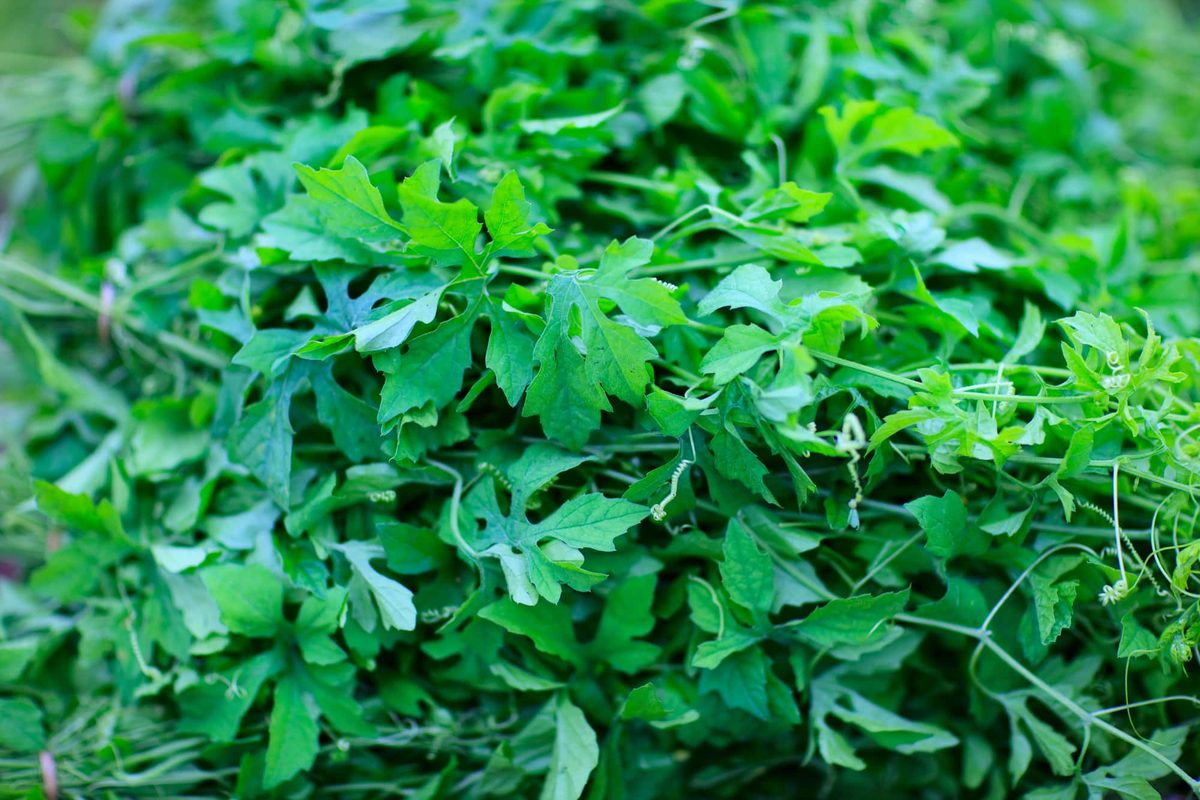
Culantro and cilantro are different plants with similar names and a shared smell. Culantro is Eryngium foetidum, a tropical American plant with long, spiny-edged leaves;12 cilantro is the leaf of Coriandrum sativum, the plant that also gives the spice coriander.3 Both are in the carrot family, Apiaceae.43 PROSEA says culantro’s leaves smell like coriander, and that it reached Southeast Asia as a substitute for it.2 The two share their leading aroma compound, which is why one can stand in for the other. The differences are in strength, toughness and how each handles heat.
Side by side
| Culantro | Cilantro | |
|---|---|---|
| Species | Eryngium foetidum1 | Coriandrum sativum5 |
| Family | Apiaceae (Umbelliferae)4 | Apiaceae3 |
| Native range | Mexico to tropical America (Kew)1 | Eastern Mediterranean to western Pakistan5 |
| Plant | Biennial of the wet tropics1 | Feathery annual3 |
| Leaves | Long, with spiny-toothed margins;2 tough, best finely chopped6 | Feathery3 |
| Leading aroma compound | (E)-2-dodecenal, 59.7% of leaf oil in one Malaysian sample (PROSEA)2 | (E)-2-dodecenal, 15.6% of leaf oil; aldehydes over 80% of the volatiles (PROSEA)7 |
| Strength | Smells similar to cilantro but stronger in flavor (UF)6 | Milder (no measurement found) |
| Keeping | Packaged, up to 2 weeks at 10 °C (PROSEA);2 several days refrigerated, or ground and frozen (Puerto Rico bulletin)4 | Cut leaves about a week refrigerated (Wisconsin)8 |
| Typical uses | Puerto Rican sofrito;6 soups, curries, stews, rice and fish;2 the Vietnamese pho plate9 | Latin American, Indian and Chinese dishes;3 Mexican salsas and meat dishes8 |
| Where to buy | Usually Vietnamese, Latin and Caribbean markets9 | Most supermarkets (common knowledge) |
The two (E)-2-dodecenal figures come from separate analyses summarized by PROSEA, and they are shares of each plant’s oil, not amounts per leaf. They show that the compound leads in both; they do not measure how much stronger culantro is.
The differences that change a dish
Strength
The University of Florida says culantro smells similar to cilantro but produces a stronger flavor,6 and Andrea Nguyen calls it a hot-weather herb with a strong, slightly sweet cilantro flavor.9 A figure of “ten times stronger” is widely repeated; we found no measurement behind it.
Toughness and heat
Culantro’s leaves are tough, so UF recommends using them finely chopped.6 Cilantro is tender: LSU AgCenter lists it among the delicate herbs best added in the last minute or two, because prolonged heat costs flavor and aroma.10 That is the practical split in the kitchen. Culantro is cooked into Puerto Rican sofrito, where UF calls it a key ingredient,6 and PROSEA lists soups, curries, stews, rice and fish dishes among its uses.2 Cilantro is usually stirred in at the end or served raw. No study has tested how well culantro’s flavor survives long cooking compared with cilantro’s, so its reputation for holding up rests on how cooks use it.
The soapy question
Some people find cilantro soapy. In a study of more than 14,000 people, the trait was linked to a genetic variant near olfactory receptor genes, and the authors identify cilantro’s key aroma components as aldehydes.11 Wisconsin’s extension notes that descriptions of cilantro range from citrusy with a biting tang to soapy.8 Culantro’s oil is dominated by the same leading aldehyde,27 so people who dislike cilantro may well dislike culantro too. No study has tested that directly.
Growing and buying
Cilantro tends to bolt, or go to seed, in hot weather;8 culantro is a wet-tropics plant, and UF notes that shade helps keep it from bolting.16 In the US, culantro is usually sold at Vietnamese, Latin and Caribbean markets.9 PROSEA notes that Trinidad exports it to North America and Europe.2
Storage
The Puerto Rico bulletin says culantro leaves keep several days in the refrigerator, and that for longer storage they should be ground and frozen.4 PROSEA gives up to 2 weeks for packaged leaves at 10 °C.2 Wisconsin gives cut cilantro about a week in the refrigerator.8 These were measured or advised under different conditions, so they don’t show which herb lasts longer. For cilantro, see how to store cilantro and can you freeze cilantro?
Safety
The FDA has an import alert on fresh cilantro from the Mexican state of Puebla, after recurring cyclosporiasis outbreaks in 2012 to 2015.12 We found no comparable regulator action on culantro.
Can one stand in for the other?
Yes, more closely than most herb swaps, because they share their main aroma compound. No published ratio exists in either direction, so both are Method starting points, reused from our substitute pages:
| Swap | Starting amount | Notes |
|---|---|---|
| Culantro in place of cilantro (raw) | About 1/2 the amount, finely chopped, then taste | Tough leaves; chop fine.6 See cilantro substitutes. |
| Cilantro in place of culantro (sofrito, stews) | About 2 times the amount, leaves and tender stems | Add a little extra fresh cilantro at the end, since it fades with long cooking.10 See culantro substitutes. |
| Cilantro in place of culantro (pho plate) | About twice as many sprigs as culantro leaves | Nguyen’s plate uses 3 or 4 culantro leaves.9 |
What isn’t known
- No measurement compares the strength of culantro and cilantro; the “ten times” figure is untraceable.
- No study tests whether people who find cilantro soapy react the same way to culantro.
- No head-to-head storage test; the keeping figures come from different sources and conditions.
- No source tests how culantro’s flavor holds up in long cooking compared with cilantro’s.
Related
- Culantro and cilantro, the full profiles
- Culantro substitutes and cilantro substitutes
- Coriander vs. cilantro, cilantro vs. parsley, basil vs. cilantro, chervil vs. cilantro, cilantro vs. oregano
- Cooking with cilantro, too much cilantro, dried cilantro vs. fresh
Footnotes
-
Eryngium foetidum L., Plants of the World Online, Royal Botanic Gardens, Kew. powo.science.kew.org · Reference work ↩ ↩2 ↩3 ↩4 ↩5
-
M.H. van den Bergh, Eryngium foetidum, Plant Resources of South-East Asia (PROSEA). uses.plantnet-project.org · Reference work ↩ ↩2 ↩3 ↩4 ↩5 ↩6 ↩7 ↩8 ↩9 ↩10
-
“Coriander”, Encyclopaedia Britannica. britannica.com · Reference work ↩ ↩2 ↩3 ↩4 ↩5 ↩6
-
Luis Reinaldo Santiago Santos, La producción de recao o culantro (Eryngium foetidum L.) en Puerto Rico, Estación Experimental Agrícola, Universidad de Puerto Rico, 2001. uprm.edu · Reference work ↩ ↩2 ↩3 ↩4
-
Coriandrum sativum L., Plants of the World Online, Royal Botanic Gardens, Kew. powo.science.kew.org · Reference work ↩ ↩2
-
“Culantro”, Gardening Solutions, University of Florida IFAS Extension. gardeningsolutions.ifas.ufl.edu · Reference work ↩ ↩2 ↩3 ↩4 ↩5 ↩6 ↩7 ↩8
-
Coriandrum sativum, Plant Resources of South-East Asia (PROSEA). uses.plantnet-project.org · Reference work ↩ ↩2
-
Susan Mahr, “Cilantro”, Wisconsin Master Gardener Program, University of Wisconsin-Madison Extension, 2017. mastergardener.extension.wisc.edu · Reference work ↩ ↩2 ↩3 ↩4 ↩5
-
Andrea Nguyen, “Pho Garnish Plate”, from The Pho Cookbook, via The Splendid Table. splendidtable.org · Publication ↩ ↩2 ↩3 ↩4 ↩5
-
“Flavorful Herbs”, LSU AgCenter. lsuagcenter.com · Reference work ↩ ↩2
-
Eriksson et al., “A genetic variant near olfactory receptor genes influences cilantro preference”, Flavour, 2012. link.springer.com · Peer-reviewed ↩
-
Import Alert 24-23, U.S. Food and Drug Administration. accessdata.fda.gov · Regulator ↩