Spice Fixes · Fix
Too Much Cilantro? How to Fix It, and When It’s Not the Amount
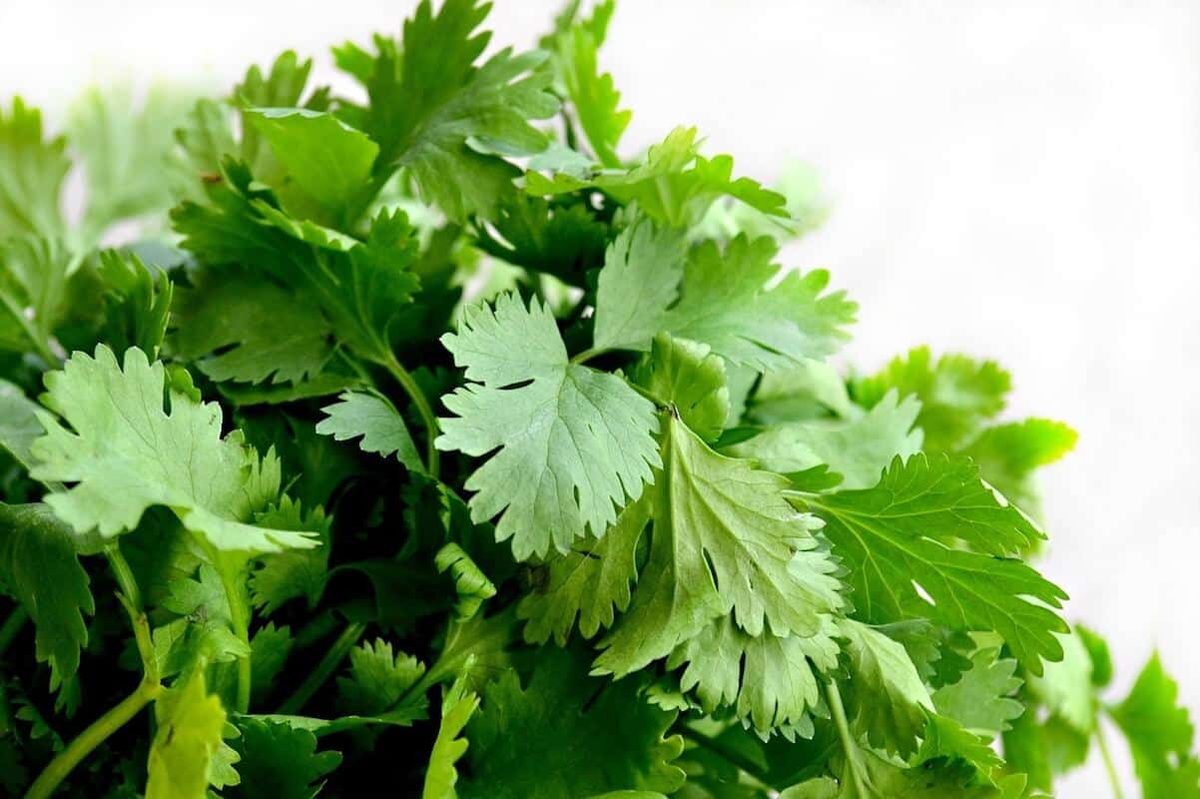
Too much cilantro usually means a dish where the herb’s sharp, green, citrusy aroma has taken over: a salsa that tastes mostly of leaves, a curry finished with a fistful too many. For some people it means something else, a soapy taste, and that is partly about the person eating rather than the amount in the bowl. Work out which you’re dealing with first.
Quick answer
| What’s wrong | Fastest fix | If that’s not enough |
|---|---|---|
| Just added, leaves or sprigs still visible | Pick them out | Dilute |
| Raw salsa, pico de gallo, guacamole | Add more of the base: tomato, onion, avocado, chile | Make a cilantro-free second batch and combine |
| Cooked curry, soup or rice dish | Add more of the base; simmer a few more minutes | Second batch and combine |
| Bitter edge | A pinch of salt, or a little sugar where it fits | Dilute |
| One person says it tastes like soap | Serve cilantro on the side | Make their portion without it |
Is it the amount, or the person?
Cilantro’s aroma comes mainly from aldehydes, in particular (E)-2-alkenals and n-aldehydes.1 In a 2012 genetic study of 14,604 people of European ancestry who reported whether cilantro tasted soapy to them, researchers found a genetic variant in a cluster of olfactory receptor genes on chromosome 11.1 One gene in that cluster, OR6A2, codes for a smell receptor that binds strongly to several of the aldehydes behind cilantro’s odor.1 Participants of African-American, Latino, East Asian and South Asian ancestry were all significantly less likely than Europeans to report a soapy taste.1
The genetic link is real but small. The variant explains only about 0.5 percent of the variation in whether people find cilantro soapy, and the authors note that environmental factors may also contribute.1
What this means in the kitchen: if most of the table is happy and one person finds the dish soapy, the dish may not have too much cilantro at all. Diluting it may not satisfy them. Serving cilantro at the table, or setting aside a portion before it goes in, is the more reliable fix.
Caught early: take it out
Fresh cilantro added as whole sprigs or roughly chopped leaves can be picked out with tongs or a fork, or lifted off a soup with a slotted spoon. This is the only fix that removes cilantro rather than diluting or masking it. Finely minced cilantro mixed into a salsa won’t come back out, so go to dilution.
Sheer volume: too much cilantro for the dish
Dilute. Add more of everything except cilantro. For a raw salsa or pico de gallo, that means more tomato, onion and chile; for guacamole, another avocado. If you can’t simply add to the bowl, Tasting Table suggests (for garlic) making a second batch without the overdosed ingredient and combining the two.2 The arithmetic works the same for cilantro. A second batch is quick for a salsa or sofrito and slow for a long-cooked dish like a curry or arroz con pollo, where adding more of the base liquid and vegetables is usually more practical.
Add a competing flavor the dish already has. More onion or more chile (fresh jalapeño, or a small pinch of cayenne) gives the palate something else to register. This is kitchen judgment, not a mechanism: we found no source showing onion or chile heat neutralizes cilantro. In a raw dish, extra raw onion can easily become the new problem, so add a little at a time. In a cooked dish, give added onion a few minutes to soften. Start with less chile than you think; it is easy to add heat and hard to take it away.
Cooking it out
LSU AgCenter lists cilantro among the delicate herbs best added a minute or two before cooking ends, because prolonged heat causes flavor and aroma losses.3 That supports simmering a cooked dish a few more minutes to soften an overdose. We found no test of how long it takes, and it only works where the rest of the dish can take more cooking. It is no help for a raw salsa or a garnish.
Bitter edge
If the dish tastes bitter as well as strong, reach for salt before lime. In controlled taste tests with pure solutions, sweet tastes and sodium salts suppressed bitterness, and citric acid was the weakest suppressor.4 That is a laboratory finding, not a test on cilantro, but it suggests a pinch of salt, or a little sugar in a dish that suits it, is more likely to help than more lime.
Preventing it next time
Add it at the end. LSU AgCenter suggests adding delicate herbs, cilantro included, in the last minute or two of cooking or sprinkling them on just before serving.3 Late cilantro is also easier to see, taste and adjust.
Serve it on the side for mixed company. Because some diners find cilantro soapy, it is common practice to put chopped cilantro on the table rather than in the pot.
Convert carefully from dried. LSU AgCenter’s rule of thumb is one teaspoon of crumbled dried herb for one tablespoon of fresh.3 More in dried cilantro vs. fresh.
Check what the recipe means. If the recipe called for ground coriander seed and you used it heavily, that’s a different problem: see too much coriander.
Related
- Cooking with cilantro
- Cilantro substitutes
- How to store cilantro
- Culantro vs. cilantro
- Too much parsley
Footnotes
-
Eriksson N et al., A genetic variant near olfactory receptor genes influences cilantro preference, Flavour, 2012. link.springer.com · Peer-reviewed ↩ ↩2 ↩3 ↩4 ↩5
-
Simple Ways To Tone Down The Pungency Of Garlic, Harmony Colangelo, Tasting Table, 2023. tastingtable.com · Publication ↩
-
Flavorful Herbs, LSU AgCenter. lsuagcenter.com · Reference work ↩ ↩2 ↩3
-
Green BG et al., Taste Mixture Interactions: Suppression, Additivity, and the Predominance of Sweetness, Physiology & Behavior, 2010. pmc.ncbi.nlm.nih.gov · Peer-reviewed ↩