Cooking · Profile
Caribbean Spices: Allspice, Scotch Bonnet, Nutmeg, Ginger, Thyme and the Seasonings Around Them
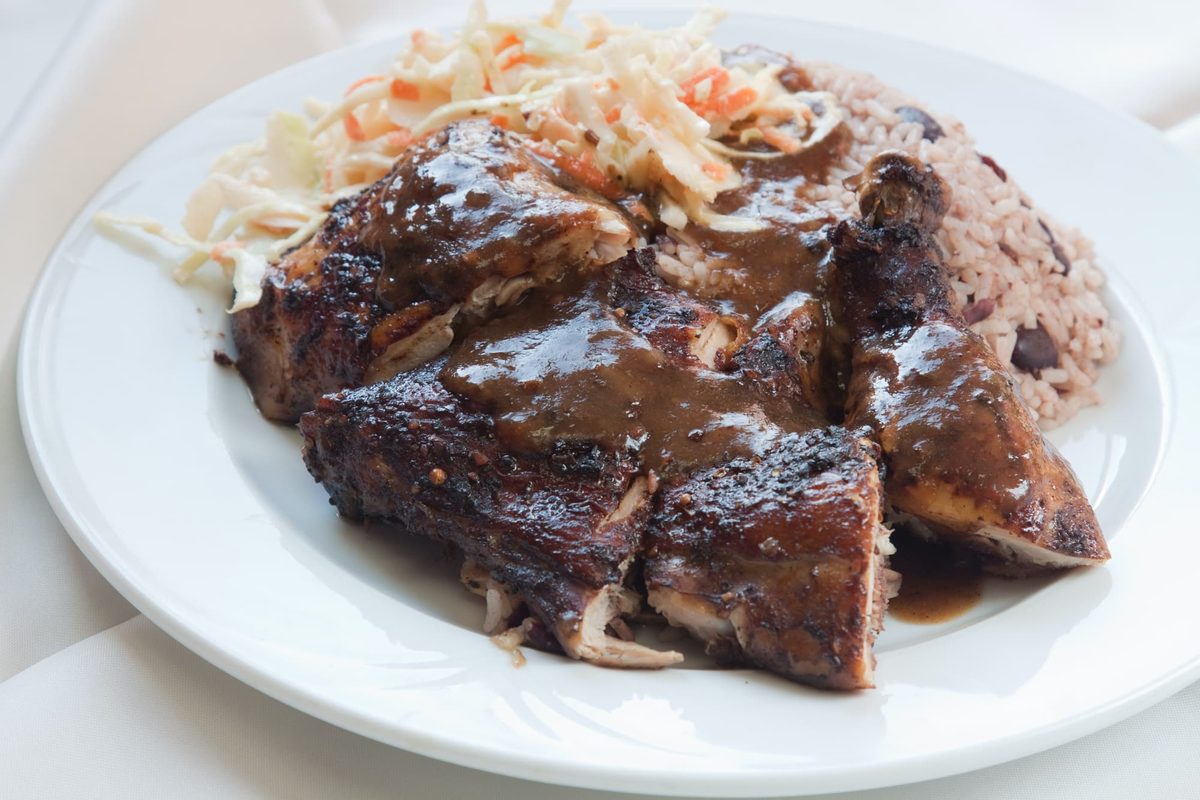
The Caribbean is many islands with many cuisines, shaped by Indigenous, African, European and South Asian cooks, so no single spice list fits all of them. A handful of flavors recur across most islands, though, and two of them, allspice and the Scotch bonnet chile, grow in the region itself. This page covers each, with what the sources say and links to our full profiles.
At a glance
| Spice | Native to the Caribbean? | What it brings | Signature use |
|---|---|---|---|
| Allspice (pimento) | Yes: native from southern Mexico to Central America and the Caribbean1 | Warm, clove-like aroma, mostly from eugenol2 | Jamaican jerk3 |
| Scotch bonnet and its relatives | The species is mostly associated with the Caribbean4 | Very high heat with a fruity, flowery scent4 | Jerk paste and hot sauces4 |
| Nutmeg | No; brought to the West Indies from the Banda Islands5 | Sweet, warm aroma | Drinks, desserts and baking |
| Ginger | No; carried to the Caribbean by Europeans6 | Pungent warmth | Jerk, drinks |
| Thyme | No; a Mediterranean herb7 | Herbal, savory | Jerk, stews, seasoning pastes3 |
| Curry powder | A blend | Warm, earthy | Curried goat in Jamaica8 |
Measured values
2 figures, sourced| Measure | Value | Scope | Source |
|---|---|---|---|
| Allspice: eugenol | 50 to 80 % of berry oil | allspice berry oil (PROSEA) | uses.plantnet-project.org |
| Hottest C. chinense cultivars: pungency Conventional range | around 200,000 to 300,000 SHU | hottest Capsicum chinense cultivars (Katzer); no measurement citedReference-work figure, no sample or method stated | gernot-katzers-spice-pages.com |
Each figure is quoted as its source states it, with the samples or standard it applies to. Where sources differ, both are shown; nothing is averaged. All measured values
Allspice (pimento)
Allspice is a single spice, the dried berry of Pimenta dioica, not a blend; Britannica lists its other names as Jamaican pepper and pimento.9 The tree is native from southern Mexico through Central America and the Caribbean.1 PROSEA says Jamaican pimento is considered the best quality.2
Britannica says the spice is so named because the flavor of the dried berry resembles a combination of cloves, cinnamon and nutmeg.9 The main aroma compound is eugenol, 50 to 80% of the berry oil.2
Allspice is central to Jamaican jerk. Smithsonian Magazine calls pimento berries and Scotch bonnet pepper the essential ingredients of the seasoning, and notes that authentic jerk is smoked over pimento wood.3 See allspice, jerk seasoning, allspice vs. cloves and allspice substitutes.
Scotch bonnet and other Capsicum chinense chiles
The Scotch bonnet belongs to Capsicum chinense, a chile species that Katzer says is mostly associated with the Caribbean, where most of its cultivars are grown today.4 He names the Scotch bonnet in Jamaica and the habanero in Cuba and Yucatán among its best-known types, along with island-named varieties such as Red Dominica, Jamaican hot and Trinidad seasoning pepper.4
Heat and flavor. The hottest C. chinense cultivars run to around 200,000 to 300,000 Scoville heat units, and Katzer writes that their extreme heat matters in Caribbean cookery.4 He describes the Scotch bonnet types as very hot, with a typical flower-like scent.4
Uses. Jerk paste uses these chiles.4 They also go into hot sauces, pepper sauces and fresh seasoning pastes across the region; that is common practice. See habanero powder, cayenne pepper and red pepper flakes.
Nutmeg
Nutmeg came to the Caribbean from the Banda Islands in Indonesia. FAO’s 1995 handbook on the crop records nutmeg growing on St. Vincent by 1802 and the first nutmeg planted in Grenada from seed brought from Banda in 1843.5 The tree is why Grenada is called the Isle of Spice.10 PROSEA estimates that about 60% of the nutmeg and mace on the world market comes from Indonesia and about 30% from Grenada; the entry gives no year for those shares, so treat them as old.11
Grated nutmeg goes into punches, eggnog-style drinks, cakes and puddings across the islands, and occasionally into savory dishes. That is common practice rather than a sourced finding. See nutmeg, nutmeg uses, mace and too much nutmeg, which explains why large amounts are a safety matter.
Ginger
Ginger is not native to the Americas. An AramcoWorld history of the spice says Europeans carried it to the West African coast and the Caribbean.6 It appears in modern jerk recipes,3 and is the main flavor in ginger beer and many sorrel (hibiscus) drinks; the drinks are common practice and not a sourced finding. See ginger and cooking with ginger.
Thyme, scallions and garlic
Smithsonian lists Scotch bonnet peppers, scallions, garlic, ginger, pimento, thyme and cinnamon among the ingredients of modern jerk recipes.3 Thyme itself is a Mediterranean plant; Kew gives its native range as southwestern Europe and southeastern Italy.7 Blended with hot pepper and other herbs, the same ingredients make fresh seasoning pastes such as Bajan seasoning, which has two named recipes from Barbados on its page.
See thyme, thyme uses, garlic, and chives vs. green onions.
Cinnamon
Cinnamon appears in modern jerk recipes,3 and much more often in sweet drinks and desserts such as Puerto Rican coquito; the dessert use is common practice. What is sold as cinnamon may be true Ceylon cinnamon or cassia; see Ceylon vs. cassia.
Curry powder
Indian immigrants began arriving in Jamaica in 1845, more than 36,000 of them by 1917, and the African Caribbean Institute of Jamaica credits them with the use of curry powder to season meats and with curried goat, now a Jamaican specialty.8 See Jamaican curry powder and Jamaican vs. Indian curry powder.
Related pages
- Jamaican spices, Cuban spices and Haitian spices
- Jerk seasoning and jerk seasoning substitutes
- Adobo seasoning and sazón
- Culantro
- The master list of herbs and spices
Footnotes
-
Pimenta dioica (L.) Merr., Plants of the World Online, Royal Botanic Gardens, Kew. powo.science.kew.org · Reference work ↩ ↩2
-
D. Sulistiarini, Pimenta dioica (PROSEA), Plant Resources of South-East Asia. uses.plantnet-project.org · Reference work ↩ ↩2 ↩3
-
Vaughn Stafford Gray, “A Brief History of Jamaican Jerk”, Smithsonian Magazine, 2020. smithsonianmag.com · Publication ↩ ↩2 ↩3 ↩4 ↩5 ↩6
-
Gernot Katzer, Chiles (Capsicum), Gernot Katzer’s Spice Pages. gernot-katzers-spice-pages.com · Reference work ↩ ↩2 ↩3 ↩4 ↩5 ↩6 ↩7 ↩8
-
G.B. Marcelle, Production, handling and processing of nutmeg and mace and their culinary uses, Section I, FAO, 1995. fao.org · Reference work ↩ ↩2
-
Jeff Koehler, “Spice Migrations: Ginger”, AramcoWorld, 2021. aramcoworld.com · Publication ↩ ↩2
-
Thymus vulgaris L., Plants of the World Online, Royal Botanic Gardens, Kew. powo.science.kew.org · Reference work ↩ ↩2
-
Rochelle Clarke, “A Brief History of East Indian Heritage in Jamaica”, African Caribbean Institute of Jamaica / Institute of Jamaica. acij-ioj.org.jm · Reference work ↩ ↩2
-
“Allspice”, Encyclopaedia Britannica. britannica.com · Reference work ↩ ↩2
-
Production, handling and processing of nutmeg and mace and their culinary uses, Introduction, FAO, 1995. fao.org · Reference work ↩
-
M. Flach and M. Tjeenk Willink, Myristica fragrans (PROSEA), Plant Resources of South-East Asia. uses.plantnet-project.org · Reference work ↩