Spice Comparisons · Comparison
Cajun vs. Creole Seasoning: What the Labels, the Cooks and the Specs Say
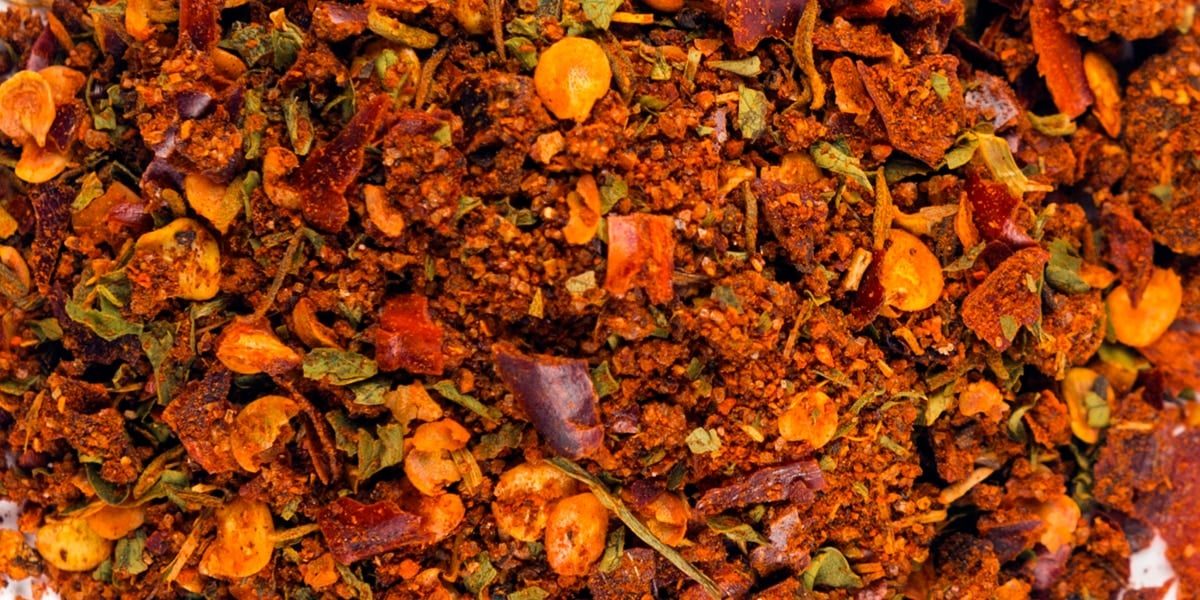
On a store shelf, Cajun and Creole seasoning are close to the same product: most jars of either are salt first, then red pepper, black pepper and garlic.1234 The real difference is in the names. They come from two different Louisiana communities with two different styles of cooking, and that difference shows up in the dish (tomatoes, roux, city versus country) far more than in the jar.5 Cook’s Country tests the two seasonings as a single category,6 and the one source that separates them by ingredient is a federal purchasing specification, not a description of what stores sell.7
Side by side
| Cajun seasoning | Creole seasoning | |
|---|---|---|
| Named for | The Cajuns: “Cajun” comes from les Acadiens, French colonists of the Acadia region of Canada5 | Creoles: originally people born in the Louisiana colony to French and Spanish settler families5 |
| Cooking style it evokes | “Country food”5 | “City food,” centered on New Orleans5 |
| Typical label, in order | Salt, black pepper, red pepper, garlic (Slap Ya Mama);1 salt, then spices including paprika, red pepper, thyme, black pepper and celery seed, then garlic and onion (McCormick Signature)2 | Salt, red pepper, black pepper, chili powder, garlic (Tony Chachere’s);3 salt, then spices including chili pepper, red pepper and paprika, then dextrose, garlic, sugar, onion (Zatarain’s)4 |
| Sodium per 1/4 tsp, by label | 310 mg (Slap Ya Mama); 160 mg (McCormick Signature)12 | 340 mg (Tony Chachere’s); 300 mg (Zatarain’s)34 |
| USDA purchasing minimum | Salt and spices: red pepper, paprika, garlic and onion7 | Salt, paprika, granulated garlic, cayenne, black pepper, mustard and fresh lemon peel7 |
| Herbs named on the label | Thyme on one of the three labels below2 | None named on either label below34 |
| Heat | No published heat measurement for any blend; heat comes from the capsaicinoids in the red pepper8 | Same8 |
| Fixed recipe | No7 | No6 |
The labels are a snapshot of a few well-known products, not a survey of the market. Brands publish only the order of ingredients, not the proportions.
Two cuisines, not two spice racks
“Cajun” traces to the Acadians. Britannica describes Cajuns as descendants of French Canadians whom the British drove from the captured colony of Acadia in the 18th century, and who settled in the bayou country of southern Louisiana.9 Creole cooking has a wider ancestry. The Louisiana Office of Tourism’s guide calls it the product of many cultures meeting in New Orleans over centuries, and names French, Spanish, African, Caribbean, Native American, German and Italian among them.5
The same guide draws the practical lines between the two cuisines:5
| Creole | Cajun | |
|---|---|---|
| Tomatoes | Used, as in Creole gumbo and jambalaya | Generally not, though some dishes such as sauce piquante use them |
| Roux | Butter and flour | Oil and flour |
| Shared base | The “holy trinity” of onion, celery and bell pepper | Same |
Britannica draws the same tomato line for jambalaya: tomatoes go into the New Orleans version and stay out of the Cajun version of the bayou country.10
Cajun country cooking grew out of thrift. Long before refrigerators, the guide says, early Cajuns wasted nothing at a hog butchering, or boucherie, which gave rise to boudin (a sausage of pork, rice, seasoning and often liver) and to tasso and andouille, preserved with salt and smoke.5 It is salt and smoke, not spice, that the guide credits with preserving the meat. Paprika, thyme, filé, parsley and green onions fill out the Cajun pantry.5
None of these distinctions is about a seasoning blend. The guide does not discuss bottled seasonings at all.5
What is actually in the jars
| Blend | Ingredients, in order given | Sodium per 1/4 tsp | Source |
|---|---|---|---|
| Slap Ya Mama Original Blend (Cajun) | Salt, black pepper, red pepper, granulated garlic | 310 mg | 1 |
| McCormick Signature Seasonings Cajun | Salt, spices (including paprika, red pepper, thyme, black pepper, celery seed), garlic and onion | 160 mg | 2 |
| McCormick Gourmet Cajun | Spices (including paprika, black pepper, red pepper, celery seed), garlic, sea salt, onion, red and green bell pepper | Not listed on the retailer page | 11 |
| Tony Chachere’s Original Creole | Salt, red pepper, black pepper, chili powder (chili pepper, spices, salt, garlic powder), dehydrated garlic, silicon dioxide | 340 mg | 3 |
| Zatarain’s New Orleans Style Creole | Salt, spices (including chili pepper, red pepper and paprika), dextrose, garlic, sugar, onion, disodium inosinate and guanylate, paprika and rosemary extractives | 300 mg | 4 |
| Cook’s Country homemade “Louisiana seasoning,” offered for both | 5 tbsp paprika; 2 tbsp garlic powder; 1 tbsp each dried thyme, cayenne, celery salt, salt and black pepper | Not given | 6 |
Four of the five store blends list salt first, and the Creole jars here are no milder on paper than the Cajun ones: both put red pepper in their second ingredient, while Slap Ya Mama’s Cajun lists it third.1234 Cook’s Country found that commercial blends generally combine paprika, garlic, salt and pepper with a bit of heat, usually cayenne or red pepper, and that some add dried herbs such as thyme or oregano.6 It did not tie the herbs to one name or the other.
The USDA’s line. The federal purchasing specification is the only source we found that gives the two blends different ingredient lists. Its Creole minimum adds black pepper, mustard and fresh lemon peel to the salt, paprika, garlic and cayenne it shares with its Cajun minimum.7 It says each blend “should include, but is not limited to” its list, and it governs government purchases only.7 Neither Creole label above lists mustard or lemon.34
Is Cajun hotter, and is Creole more herbal?
These are the two most repeated differences. The sources do not settle either one.
| Claim | What a source says | Source |
|---|---|---|
| Cajun is the spicier blend | Tasting Table, citing MasterClass, describes Cajun seasoning as spicier and Creole as more earthy | 12 |
| Cajun food is not necessarily hot | The Louisiana tourism guide says Cajun food is well seasoned, which is sometimes misunderstood as spicy, and that cayenne is “seasoning, not the main event” | 5 |
| The jars | Both Creole labels above put red pepper in their second ingredient; the Slap Ya Mama Cajun label lists it third | 134 |
On heat, then, one food publication says Cajun is hotter, the Louisiana source says Cajun cooking is not about heat, and the labels show red pepper high on both kinds. Without a published heat measurement for any blend, the jar in your hand is the only guide: the closer red pepper or cayenne sits to the top of the list, the hotter it is likely to be. That last point is our reading of label order, not a measured result.
On herbs, no source we found says Creole blends are built on oregano, thyme and marjoram. Of the labels above, the only herb named is thyme, in a Cajun blend.2 Where thyme does appear, its character comes from thymol and carvacrol, the characteristic constituents of its oil.13
Can one stand in for the other?
Yes, with one adjustment for salt. Tasting Table, citing MasterClass, says the two can be used interchangeably,12 and Cook’s Country offers a single homemade blend for both.6 What changes from jar to jar is mostly sodium, and that can be worked out from the labels. Our Cajun seasoning substitutes and Creole seasoning substitutes pages carry the full treatment; the short version:
| Swap | Ratio | Treatment |
|---|---|---|
| Tony Chachere’s Creole for Slap Ya Mama Cajun | 1:1; about 110% of the sodium (340 vs. 310 mg) | Computed (salt) |
| Tony Chachere’s Creole for McCormick Signature Cajun | About 1/2 as much, then paprika or garlic powder for bulk (340 vs. 160 mg) | Computed (salt) |
| McCormick Signature Cajun for Tony Chachere’s Creole | 1:1, plus about 1/3 tsp table salt per teaspoon | Computed (salt) |
| Creole for Cajun, wanting more heat | Add red pepper flakes, per Tasting Table; no amount given. Start with a small pinch per teaspoon | Attributed (direction), Method (amount) |
The salt figures are arithmetic from the Nutrition Facts panels: a teaspoon of Tony Chachere’s carries about 1,360 mg of sodium and a teaspoon of McCormick Signature about 640 mg, and Morton lists its table salt at 590 mg per quarter teaspoon.3214 They apply to the products named. For scale, FDA’s Daily Value for sodium is less than 2,300 mg a day.15 Whichever blend you use, season with it first and add plain salt only after tasting. If a recipe was written for a paprika-led homemade blend like Cook’s Country’s, a salt-first jar will make it noticeably saltier.6
Using them
Cook’s Country suggests its Louisiana seasoning for chicken jambalaya, chicken sauce piquant and pork grillades.6 Beyond that, cooks use either blend on chicken, pork, shrimp and fish, in rice dishes and as a dry rub; that is common practice rather than a sourced finding. If you are cooking a dish from one tradition, the cuisine matters more than the label on the seasoning: tomatoes and a butter roux point to Creole, no tomatoes and an oil roux to Cajun.5
What isn’t known
- No published heat measurement exists for any Cajun or Creole blend, so “Cajun is hotter” cannot be checked against data.
- Brands publish ingredient order, not proportions.
- No source we found draws a consistent ingredient line between retail Cajun and Creole blends; the USDA lists are a purchasing specification.7
- When bottled Cajun and Creole blends first appeared is not documented in any source we reviewed.
Related
- Cajun seasoning and Cajun seasoning substitutes
- Creole seasoning and Creole seasoning substitutes
- Old Bay vs. Creole seasoning, jambalaya spices, gumbo filé powder
- The ingredients: paprika, cayenne pepper, black pepper, garlic powder, thyme, oregano, celery salt
Footnotes
-
Slap Ya Mama Original Blend Cajun Seasoning, ingredients and nutrition label, via Giant Food Stores. giantfoodstores.com · Merchant ↩ ↩2 ↩3 ↩4 ↩5 ↩6
-
McCormick Signature Seasonings Cajun, ingredients and nutrition label, via Giant Food Stores. giantfoodstores.com · Merchant ↩ ↩2 ↩3 ↩4 ↩5 ↩6 ↩7 ↩8
-
Tony Chachere’s Original Creole Seasoning, ingredients and nutrition label, via Giant Food Stores. giantfoodstores.com · Merchant ↩ ↩2 ↩3 ↩4 ↩5 ↩6 ↩7 ↩8 ↩9
-
Zatarain’s New Orleans Style Creole Seasoning, ingredients and nutrition label, via H-E-B. heb.com · Merchant ↩ ↩2 ↩3 ↩4 ↩5 ↩6 ↩7 ↩8
-
Jay D. Ducote, “Cajun vs. Creole Food: What is the Difference?”, Explore Louisiana (Louisiana Office of Tourism). explorelouisiana.com · Publication ↩ ↩2 ↩3 ↩4 ↩5 ↩6 ↩7 ↩8 ↩9 ↩10 ↩11 ↩12
-
Cook’s Country, “Louisiana Cajun or Creole Seasoning”, America’s Test Kitchen, 2019. americastestkitchen.com · Publication ↩ ↩2 ↩3 ↩4 ↩5 ↩6 ↩7
-
Commercial Item Description A-A-20001C, Spices and Spice Blends, USDA Agricultural Marketing Service, 2023. ams.usda.gov · Regulator ↩ ↩2 ↩3 ↩4 ↩5 ↩6 ↩7
-
Bosland and Walker, “Measuring Chile Pepper Heat”, New Mexico State University, 2010. pubs.nmsu.edu · Reference work ↩ ↩2
-
“Cajun”, Encyclopaedia Britannica. britannica.com · Reference work ↩
-
“Jambalaya”, Encyclopaedia Britannica. britannica.com · Reference work ↩
-
McCormick Gourmet Cajun Seasoning, ingredients, via Giant Food Stores. giantfoodstores.com · Merchant ↩
-
Stephanie Friedman, “Is It Possible To Substitute Creole Seasoning For Cajun Seasoning?”, Tasting Table, 2023. tastingtable.com · Publication ↩ ↩2
-
S.H. Widodo, Thymus vulgaris, Plant Resources of South-East Asia (PROSEA). uses.plantnet-project.org · Reference work ↩
-
Morton Iodized Table Salt, product page, Morton Salt. mortonsalt.com · Merchant ↩
-
“Sodium in Your Diet”, U.S. Food and Drug Administration. fda.gov · Regulator ↩