Blog · Storage
How to Dry Garlic: Curing Bulbs, Dehydrating Cloves and Making Garlic Powder
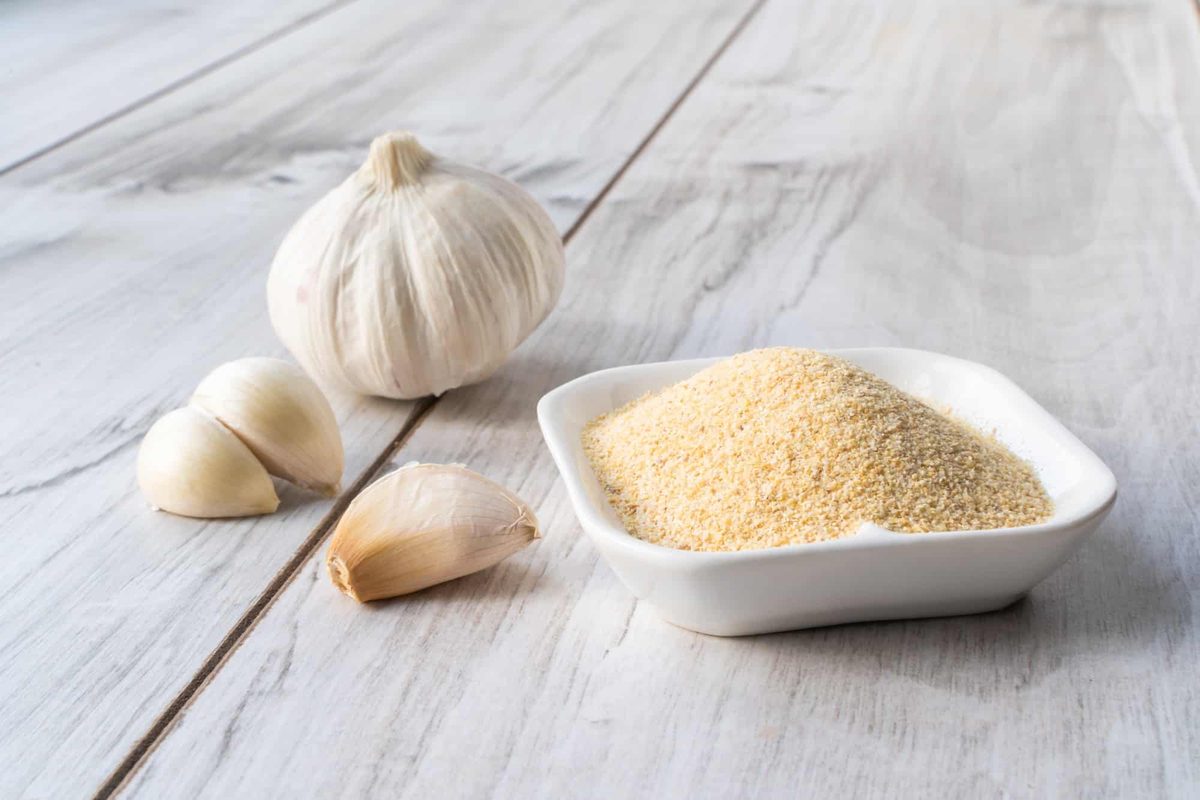
“Drying garlic” means two different jobs. Gardeners cure whole bulbs after harvest so they keep through the winter. Cooks dehydrate peeled cloves into crisp chips that can be ground into garlic powder. Both have extension-tested instructions, and both are below. One safety point matters more than any flavor tip: garlic and oil together can grow the bacterium that causes botulism, and the rules for dried garlic in oil differ between extension services.12
At a glance
| Question | Short answer |
|---|---|
| Curing bulbs | Spread or hang in a warm, airy spot out of the sun and rain; skins turn papery in 2 to 3 weeks.13 |
| Storing cured bulbs | Cool, dry, dark, ventilated; 3 to 5 months at about 60°F (16°C), by UC ANR’s figure.1 |
| Dehydrating cloves | Peeled halves at 140°F (60°C) for 2 hours, then 130°F (55°C) for 4 to 6 hours (UC ANR); Oregon State says 140°F for 2 to 3 hours.14 |
| Done when | Crisp or brittle; pieces snap instead of bending.1 |
| Oven or air drying cloves | No extension-tested instructions found. |
| Garlic powder | Grind fully dried garlic in a blender until fine.14 |
| Storing dried garlic | Airtight, at room temperature or in the freezer.1 |
| Fresh garlic in oil | Never at room temperature; refrigerate no more than 4 days, or freeze.1 |
Curing whole bulbs after harvest
Colorado State University Extension says to harvest when the green tops turn brown and die down, and to stop watering about two weeks before.3 Then:
- Lift the bulbs and let them dry for a couple of days.3 You can trim the leaves before curing, as long as you don’t cut into the bulb.3
- Spread them out or hang them somewhere warm and airy, out of direct sun and rain. A covered patio works; a light cotton sheet can shade them, but plastic or heavy fabric will restrict the air.31
- Wait. The outer skins turn papery in about 2 to 3 weeks, though the total time depends on temperature and humidity.1
| Source | Curing time |
|---|---|
| UC ANR1 | Skins papery in about 2 to 3 weeks; depends on temperature and humidity. Elephant garlic needs slightly longer, and for best flavor and stability it may be cured 4 to 6 weeks. |
| Colorado State University Extension3 | Two to three weeks |
UC ANR’s reason for curing is plain: well-cured bulbs don’t rot in storage.1
Where to keep cured bulbs
The two sources disagree about cool storage:
| Source | Recommendation |
|---|---|
| Colorado State University Extension3 | Store at 40 to 60°F after curing |
| UC ANR1 | Cool (60°F, 16°C), dry, dark conditions: 3 to 5 months. The home refrigerator, typically 40°F, is not suitable for long-term storage because that temperature stimulates sprouting. |
UC ANR adds that softneck varieties keep longer than hardneck, and that garlic kept too long may shrivel or sprout.1 Since whole cured bulbs keep for months anyway, dehydrating is for garlic you want to turn into chips, flakes or powder.
Dehydrating garlic cloves
Prepare. Use only fresh, firm cloves with no bruises.1 Separate and peel them. UC ANR cuts every clove in half lengthwise;1 Oregon State halves small cloves and slices large ones ¼ inch thick.4 No pretreatment is needed.1
Dry. Lay the pieces on the dehydrator trays. The two extension services give different schedules:
| Source | Cut | Schedule |
|---|---|---|
| UC ANR1 | Halves | 140°F (60°C) for 2 hours, then 130°F (55°C) for another 4 to 6 hours, until brittle or crisp |
| Oregon State University Extension4 | Halves, or ¼-inch slices of large cloves | 140°F for 2 to 3 hours, or until crisp |
Both start at 140°F and both end at crisp, so check early and stop when the pieces pass the test below.
Test. Dried halves should break, not bend.1 UC ANR’s test for garlic going into oil is stricter: fully dried slices or halves snap when bent, and chopped pieces don’t stick to each other or to the jar.1
Oven and air drying
We found no extension-tested instructions for drying garlic in an oven or in open air. The common advice to use the oven’s lowest setting with the door propped open for about 30 minutes, or to air-dry slices on a rack for two weeks, has no named source behind it. UC ANR’s instructions are for a dehydrator only.1 Without a dehydrator, the tested option for a surplus is to cure and store whole bulbs.
Heat and flavor
ATK explains that wetting garlic powder activates alliin and the enzyme alliinase, which together create allicin.5 The Linus Pauling Institute notes that commercial garlic powder is made from cloves usually sliced and dried at a low temperature, and that heat can inactivate alliinase.6 We found no study measuring how home dehydrator temperatures affect it.
Making garlic powder and garlic salt
Grind fully dried garlic in a blender or food processor until fine.14 For garlic salt, UC ANR’s recipe is 4 parts salt to 1 part garlic powder, blended for only 1 to 2 seconds; blended longer, the salt gets too fine and cakes into clumps.1 Homemade powder behaves like the store-bought kind: ATK found that garlic powder straight from the jar has not developed its full flavor, and recommends hydrating it in water before use.5 More: garlic powder, garlic salt and granulated garlic vs. garlic powder.
Storing dried garlic
Pack dried garlic in an airtight container and keep it at room temperature or in the freezer.1 Oregon State says to keep powder and garlic salt in a closed container in a dark, dry place.4 UC ANR warns that where the relative humidity stays above 60%, dried garlic can pick up moisture from the air if it isn’t stored properly.1 Neither source gives a shelf life for dried garlic, and we found no regulator that does.
Garlic in oil: the safety rules
Fresh garlic. UC ANR says garlic-in-oil mixtures held at room temperature give Clostridium botulinum ideal conditions to grow and produce toxin, and the same applies to roasted garlic in oil. At least four botulism outbreaks linked to garlic in oil were reported in North America in the late 1980s and 1990s, two of them from garlic in oil made at home.1 The rules:
- Do not store garlic in oil at room temperature.14
- Refrigerate peeled cloves in oil for no more than 4 days, and label them with the date.14
- Or freeze them; UC ANR says frozen garlic in oil keeps for several months.1
Dried garlic. Here the extension services disagree:
| Source | Dried garlic in oil |
|---|---|
| UC ANR1 | Fully dried (brittle or crisp) garlic may be safely used to flavor oils, as long as it has not been rehydrated and no moisture gets in |
| Oregon State University Extension2 | Oil seasoned with dried garlic or dried herbs must be refrigerated and used within 4 days, or frozen |
Refrigerating the oil and using it within 4 days satisfies both.
Not yet measured
- Shelf life of home-dried garlic or homemade garlic powder.
- Any tested method for drying garlic in a home oven or in open air.
- How home drying temperatures affect garlic’s flavor enzyme.
Related
- Garlic
- Garlic powder
- Garlic powder vs. garlic
- Granulated garlic vs. garlic powder
- Garlic salt
- Black garlic
- Fresh garlic substitute
- Too much garlic
Footnotes
-
Linda J. Harris, Garlic: Safe Methods to Store, Preserve, and Enjoy, ANR Publication 8568, University of California Agriculture and Natural Resources, 2016. ccfruitandnuts.ucanr.edu · Reference work ↩ ↩2 ↩3 ↩4 ↩5 ↩6 ↩7 ↩8 ↩9 ↩10 ↩11 ↩12 ↩13 ↩14 ↩15 ↩16 ↩17 ↩18 ↩19 ↩20 ↩21 ↩22 ↩23 ↩24 ↩25 ↩26 ↩27 ↩28 ↩29 ↩30
-
Raab and Woodburn, Herbs and vegetables in oil, Oregon State University Extension Service, 2025. extension.oregonstate.edu · Reference work ↩ ↩2
-
Harvesting Garlic, PlantTalk Colorado, Colorado State University Extension. planttalk.colostate.edu · Reference work ↩ ↩2 ↩3 ↩4 ↩5 ↩6 ↩7
-
Nellie Oehler, Preserving garlic, Oregon State University Extension Service, 2024. extension.oregonstate.edu · Reference work ↩ ↩2 ↩3 ↩4 ↩5 ↩6 ↩7 ↩8
-
Carolyn Grillo, For Great Garlic Bread, Hydrate Your Garlic Powder First, America’s Test Kitchen, 2021. americastestkitchen.com · Publication ↩ ↩2
-
Garlic, Linus Pauling Institute, Oregon State University. lpi.oregonstate.edu · Reference work ↩