Spices · Profile
Garlic Powder: How It’s Made, How It Tastes, and How Much Equals a Clove
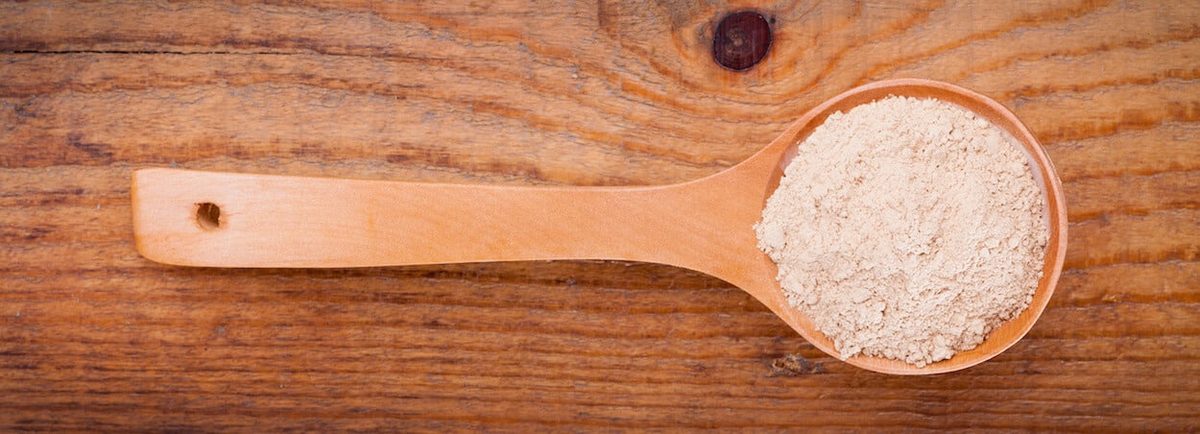
Garlic powder is garlic that has been dried and ground. It tastes of garlic but behaves differently from a fresh clove: the enzyme that makes garlic’s sharp flavor sits dormant in the dry powder and only gets to work once the powder meets water. That one fact explains most of what cooks notice about it, from its flat taste straight from the jar to the way it can scorch in a hot pan. This page covers how it is made, what it tastes like and why, how much replaces a clove (sources disagree), how to use and store it, and what the evidence says about health and safety.
At a glance
| Made from | Cloves of garlic, Allium sativum L.1 |
| Plant family | Amaryllidaceae1 |
| Native range of the plant | Central Asia to northeastern Iran1 |
| How it is made | Cloves sliced and dried, usually at low temperature, then milled2 |
| Largest producer with official figures we could check | India grew 3,565,321 tonnes of garlic in 2024-25 (final figure); no breakdown for powder3 |
| Key flavor chemistry | Alliin plus the enzyme alliinase, which together form allicin once the powder is wet42 |
| One teaspoon weighs | 3.1 g (USDA)5 |
| Forms sold | Powder, granulated garlic, minced and flaked dried garlic, garlic salt |
Measured values
5 figures, sourced| Measure | Value | Scope | Source |
|---|---|---|---|
| Energy Nutrient | 331 kcal per 100 g | USDA FoodData Central, garlic powder (SR Legacy) | fdc.nal.usda.gov |
| Fiber Nutrient | 9.0 g per 100 g | USDA FoodData Central, garlic powder (SR Legacy) | fdc.nal.usda.gov |
| Potassium Nutrient | 1,190 mg per 100 g | USDA FoodData Central, garlic powder (SR Legacy) | fdc.nal.usda.gov |
| Vitamin B6 Nutrient | 1.65 mg per 100 g | USDA FoodData Central, garlic powder (SR Legacy) | fdc.nal.usda.gov |
| Sodium Nutrient | 60 mg per 100 g | USDA FoodData Central, garlic powder (SR Legacy) | fdc.nal.usda.gov |
Each figure is quoted as its source states it, with the samples or standard it applies to. Where sources differ, both are shown; nothing is averaged. All measured values
What garlic powder is
Powdered or dehydrated garlic is made from garlic cloves that are usually sliced and dried at a low temperature.2 Heat inactivates alliinase, the enzyme behind garlic’s flavor;2 ATK’s test below shows what that costs when it happens in the pan. What ends up in the jar is a dry mix of the enzyme and its raw material, alliin, which react only once water is present.4
It is the same plant as fresh garlic. Kew places Allium sativum in the Amaryllidaceae, native from Central Asia to northeastern Iran, and lists it as introduced across much of Europe, Asia, Africa and the Americas.1 See the garlic profile for the plant, its history and its production.
Garlic powder sits alongside several other dried forms. Granulated garlic is coarser; see granulated garlic vs. garlic powder. Garlic salt is garlic powder blended with salt. In UC Agriculture and Natural Resources’ home recipe, 4 parts salt to 1 part garlic powder, salt makes up four-fifths of the blend.6 See garlic salt and garlic powder vs. garlic salt.
Flavor and the chemistry behind it
Straight from the jar, garlic powder smells of garlic but tastes flatter and sweeter than a fresh clove, with less of the raw, hot bite and none of the browned, nutty notes of garlic cooked in fat. That description is ours. The chemistry explains much of it.
Fresh garlic’s sharpness comes from allicin, which forms when cutting or crushing lets alliinase reach alliin.2 Garlic powder holds both, still separate. Wet it and the reaction runs: America’s Test Kitchen describes adding water as activating alliin and alliinase, which then create allicin, the main flavor compound.4 Its advice follows from that: powder straight from the jar has not developed its full flavor, so stir it into an equal amount of water before using it.4
ATK’s experiment shows what happens when you skip that step or get it in the wrong order:
| What ATK did with the powder | Result |
|---|---|
| Stirred dry into mashed potatoes | Harsh and garlicky, but not particularly complex7 |
| Sautéed in butter before it met any moisture | Almost no garlic flavor at all, because the heat destroyed the enzyme first7 |
| Hydrated first, for garlic bread | Recommended method: wake the powder in water, then use it4 |
The practical lesson: give garlic powder some moisture before it hits high heat, and taste a dish after the powder has had time to hydrate, not the moment it goes in.
How much powder replaces a clove
Published equivalents disagree, sometimes on the same page:
| Source | Garlic powder | Fresh garlic |
|---|---|---|
| NDSU Extension, FN1988 | 1/8 tsp | 1 small clove |
| NMSU Extension, E-1319 | 1/8 tsp | 1 small clove |
| McCormick organic garlic powder page, product details10 | 1/4 tsp | 1 clove |
| McCormick organic garlic powder page, image tip10 | 1/8 tsp | 1 clove |
These are round-number kitchen rules, not measurements, and they don’t agree on clove size. None of them compares the flavor of powder and fresh garlic directly. NDSU also gives 1/4 teaspoon of instant minced garlic for a small clove, and 3/4 teaspoon of garlic salt for a medium clove.8 A reasonable starting point is 1/8 teaspoon per clove, then taste and add more. For the fuller comparison see garlic powder vs. garlic, and for other swaps garlic powder substitutes and fresh garlic substitutes.
How garlic powder is used
By common practice, garlic powder goes where fresh garlic is awkward: dry rubs and spice blends, seasoned flour, popcorn and fries, compound butter, dips and dressings, and long-simmered sauces where it disappears into the background. It is a standard ingredient in blends such as taco seasoning, cajun seasoning, adobo seasoning, Italian seasoning and seasoned salt, and it pairs naturally with onion powder, paprika and black pepper. Those are kitchen observations rather than measured facts.
Technique
- Hydrate first. For garlic bread, butters and dressings, mix the powder with an equal amount of water and let it sit before adding it.4
- Keep it out of a hot, dry pan. Ground spices don’t do well under intense heat and can turn bitter.11 ATK’s butter test shows the other cost: powder heated before it gets wet loses most of its flavor.7 Add it with liquid, or after the aromatics.
- Taste late. A dry rub or quick sauce tastes weaker right after seasoning than it will once the powder has absorbed moisture from the food. If a dish goes too far, see too much garlic powder.
For using the aged, sweet form, see black garlic powder uses.
Buying and quality
We found no international grading standard for dried garlic that could be opened during this review, so there are no official grade limits to report here. In practice, good garlic powder is free-flowing, off-white to pale cream, and smells clearly of garlic when you open the jar; clumps mean it has taken on moisture. Those are kitchen judgments.
Storage
UC Agriculture and Natural Resources advises packing dried garlic in an airtight container and storing it at room temperature or in the freezer.6 It gives no shelf life for dried garlic or powder, and we found no regulator or standards body that does; the one- to four-year figures that circulate online have no traceable source. Because the flavor depends on an enzyme that needs water, keeping the powder dry matters more than any date on the jar. Smell and taste a pinch: if it is faint once hydrated, replace it. To make your own, see how to dry garlic.
Nutrition
At cooking amounts garlic powder adds flavor, not meaningful nutrition. USDA data for garlic powder, per 100 g, show 331 kcal, 9.0 g fiber, 1,190 mg potassium, 1.65 mg vitamin B6 and 60 mg sodium.5 A teaspoon weighs 3.1 g,5 so it supplies about 10 kcal, 37 mg potassium (under 1% of the FDA Daily Value of 4,700 mg) and about 0.05 mg vitamin B6 (3% of the 1.7 mg Daily Value).512 Plain powder adds very little sodium: about 2 mg per teaspoon.5
Health claims: what the evidence shows
Most health research on garlic uses supplements, often powdered garlic in tablets, not the amounts used in cooking. NCCIH, part of the US National Institutes of Health, summarizes it this way:13
| Question | What NCCIH says |
|---|---|
| Cholesterol | Garlic supplements may reduce total and LDL cholesterol a little in people with high cholesterol |
| Blood pressure | Limited evidence that supplements may reduce blood pressure in people with hypertension |
| Blood sugar | Supplements may reduce blood sugar to a small extent in people with diabetes |
| Stomach cancer | Eating garlic does not seem to reduce the risk |
| Colorectal cancer | Uncertain whether garlic affects the risk |
| Colds and immune function | Very little research; a 2022 review found only two studies suggesting possible benefit |
The Linus Pauling Institute adds a caution specific to powder supplements: most powdered garlic tablet brands tested have been found to produce little allicin.2 For comparison, the USP standard for powdered garlic used as a supplement ingredient requires at least 0.3% alliin.2 No evidence reviewed here shows that garlic powder in food treats, cures or prevents any disease.
Safety
- Bleeding. Garlic supplements may increase the risk of bleeding; NCCIH advises telling your health care providers, especially before surgery or if you take medicines that affect bleeding.13 LPI notes garlic may enhance the effects of warfarin, and that in one study garlic supplements cut the bioavailability of the HIV drug saquinavir by 50%.2 These findings concern supplements, not seasoning amounts.
- Side effects. Garlic taken by mouth can cause breath and body odor, stomach pain, gas and nausea, and some people have allergic reactions.13
- Dust. LPI reports asthma in people with occupational exposure to garlic powder or dust.2
- Pregnancy. NCCIH says garlic in amounts greater than those in food may not be safe during pregnancy.13
Substitutes and comparisons
- Garlic powder substitutes
- Garlic powder vs. garlic
- Garlic powder vs. garlic salt
- Granulated garlic vs. garlic powder
- Onion powder
- Garlic salt
- Too much garlic powder
Footnotes
-
Allium sativum L., Plants of the World Online, Royal Botanic Gardens, Kew. powo.science.kew.org · Reference work ↩ ↩2 ↩3 ↩4
-
Garlic, Linus Pauling Institute Micronutrient Information Center, Oregon State University. lpi.oregonstate.edu · Reference work ↩ ↩2 ↩3 ↩4 ↩5 ↩6 ↩7 ↩8 ↩9
-
Spice wise area and production in India, 2021-22 to 2025-26, Spices Board India. indianspices.com · Regulator ↩
-
Carolyn Grillo, For Great Garlic Bread, Hydrate Your Garlic Powder First, America’s Test Kitchen, 2021. americastestkitchen.com · Publication ↩ ↩2 ↩3 ↩4 ↩5 ↩6
-
Spices, garlic powder (FDC ID 171325), USDA FoodData Central. fdc.nal.usda.gov · Regulator ↩ ↩2 ↩3 ↩4 ↩5
-
Linda J. Harris, Garlic: Safe Methods to Store, Preserve, and Enjoy, UC Agriculture and Natural Resources, 2016. ccfruitandnuts.ucanr.edu · Reference work ↩ ↩2
-
Experiment: Bringing Out the Best in Garlic Powder, America’s Test Kitchen. americastestkitchen.com · Publication ↩ ↩2 ↩3
-
Julie Garden-Robinson, Ingredient Substitutions (FN198), NDSU Extension, 2018. ksre.ksu.edu · Reference work ↩ ↩2
-
In a Pinch Ingredient Substitution (E-131), NMSU Cooperative Extension, 2016. pubs.nmsu.edu · Reference work ↩
-
McCormick Gourmet Organic Garlic Powder product page, McCormick. mccormick.com · Merchant ↩ ↩2
-
Marco Rossi, How To Improvise Instant Pot Seasoning Without Burning Your Spices, Tasting Table, 2023. tastingtable.com · Publication ↩
-
Daily Value on the Nutrition and Supplement Facts Labels, U.S. Food and Drug Administration. fda.gov · Regulator ↩
-
Garlic: Usefulness and Safety, National Center for Complementary and Integrative Health, 2025. nccih.nih.gov · Regulator ↩ ↩2 ↩3 ↩4