Blog · Storage
How to Store Dill: Fridge, Freezer and Drying, With What the Sources Say
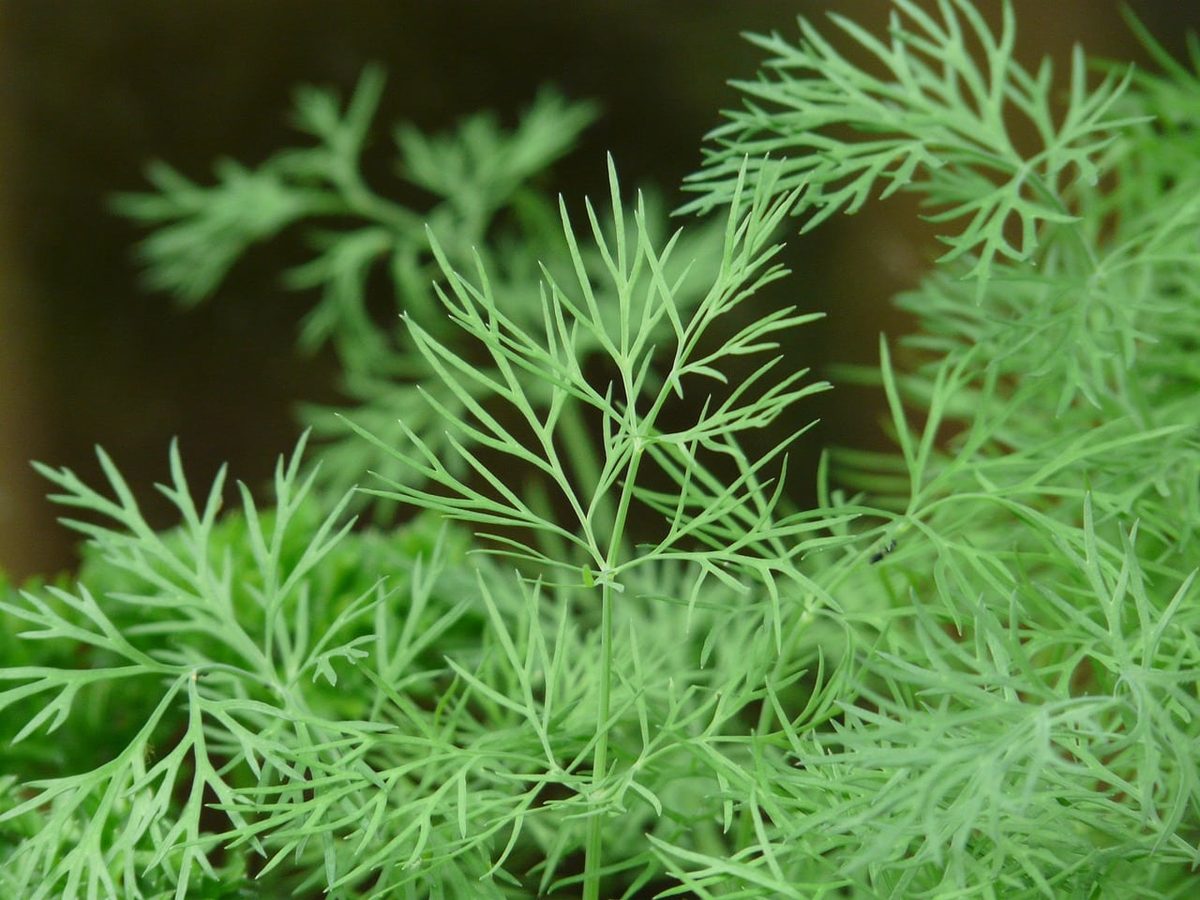
Fresh dill is one of the shortest-lived herbs in the kitchen. Its leaves are delicate, they wilt if they dry out and rot if they sit wet, and the published fridge life is measured in days, not weeks.12 If you need dill to last, freeze it: drying removes most of what makes dill smell like dill.3
At a glance
| Goal | Method | What sources say |
|---|---|---|
| Use within days | Fridge, wrapped in a slightly damp paper towel in a bag, or stems in water | Purdue Extension: about two days either way1 |
| Keep for weeks or months | Freeze, whole or chopped, or in ice cubes | Penn State and Purdue both name dill as a herb that freezes well14 |
| Keep a jar of dried dill | Dry at low heat, store airtight, cool and dark | Oregon State: use within six months to a year5 |
| Dill seed | Airtight glass jar, cool and dark | Purdue: up to six months1 |
Storing fresh dill in the fridge
The method. America’s Test Kitchen groups dill with the delicate herbs (basil, parsley, cilantro, mint, chives, tarragon) that take in and release a lot of water and must be kept moist so they don’t wilt, but whose leaves should not touch liquid, “which encourages rot.”2 Its standard method for delicate herbs is to wrap them in slightly damp paper towels, put them in an open zipper-lock bag and refrigerate.2 Purdue Extension gives two options for dill: a damp paper towel inside a plastic bag, or the stems standing in a glass of water like cut flowers.1
How long. Purdue says dill kept either way “will only last about two days.”1 Longer spans are often quoted: a week or more wrapped in towels, two weeks in a jar of water with regular changes. We could not find a named source for either figure, and Purdue’s number is much shorter. Treat anything past a few days as a bonus and check for yellowing or slimy fronds.
Washing. A common rule says never to wash dill before storing it. No source we found says that. What ATK does say is that if you rinse delicate herbs, dry them thoroughly, for example by spinning them in a salad spinner lined with paper towels.2 The point in both ATK passages is water left sitting on the leaves.
Commercially, PROSEA notes that fresh dill is kept at low temperatures, 6–12°C, in sealed polythene bags.6 That is trade handling, not a home fridge figure.
Freezing dill
Freezing is the best way to keep dill for more than a few days. Penn State Extension lists dill among the herbs that freeze well, alongside parsley, basil, chives, lemon balm, mint and tarragon,4 and Purdue says dill can be frozen chopped or whole in a freezer-proof container.1
Loose leaves. Penn State’s method is to strip the leaves from the stems, spread them in a single layer on a cookie sheet and freeze them, then pack them.4 Freezing them spread out first keeps them from setting into one lump, so you can take out what you need (editorial).
Ice cubes. Purdue, Penn State and PROSEA all describe freezing dill in ice cube trays with water.146 Penn State’s version: fill a tray half full of water, push about a tablespoon of herbs into each section, freeze, then move the cubes to a labeled, dated freezer bag.4
In oil. Penn State also freezes chopped herbs mixed with oil, about ⅓ to ½ cup of oil to 2 cups of herbs, in ice cube trays, small jars or a flat layer in a zipper-lock bag.4 This one has a safety rule: add oil only if the herbs will be frozen, and never keep herbs in oil at room temperature.4 Nummer and colleagues, reviewing home-prepared vegetables and herbs in oil, note that these mixtures provide conditions for botulinum toxin production and call freezing the safest option.7
Using frozen dill. Penn State says frozen herbs can be used in the same amounts as fresh, but they go limp when thawed, so they suit cooked dishes better than garnishes. Add them to the pot still frozen.4
How long frozen dill keeps. A figure of “up to a year” is widely repeated. Neither Penn State nor Purdue gives a time limit, and we found no source for one.
Drying dill
Drying works, but it costs dill most of its aroma. A 1985 Finnish study found that dill’s main aroma compounds were severely reduced by drying. Hot-air-dried samples kept only trace amounts to 1.3% of the compound the authors identify as dill’s most important aroma component, and even freeze-dried dill held only about a quarter of the aroma compounds of fresh.3 Drying also produced new compounds that made up over half of the volatiles in the dried herb.3 PROSEA adds that leaving cut dill to dry too long in the field loses a lot of oil.6 So if you have the freezer space, freezing is the better choice for flavor. More on the difference in fresh vs. dried dill.
If you do dry it, Oregon State University Extension’s guidance for herbs:
- Dehydrator. Preheat to 95–115°F; in humid areas up to 125°F may be needed.5 Higher temperatures cause flavor loss.5
- Air drying. Tie herbs in small bunches, because large amounts will mold, and hang them inside a paper bag with vent holes cut in the top and sides, where air can circulate.5 Laid on paper towels on a tray, herbs usually take 5–10 days to air-dry.5
- Not in the sun. Sun drying affects the herb’s color and flavor.5
- Done when the herbs crumble easily between your fingers and the stems are brittle.5
Penn State lists oven drying and microwave drying as options without giving temperatures.8 We found no extension temperature for oven-drying dill, so we don’t give an oven method here.
Storing dried dill and dill seed
Store dried herbs and seeds in airtight containers in a cool, dry, dark place, not near the stove, sink or a windowsill.8 Keep the leaves whole until you use them: Penn State says whole herbs hold their oil longer,8 and Oregon State says crushing or grinding herbs and seeds for storage increases the loss of aroma and flavor.5
| Source | What it covers | Figure |
|---|---|---|
| Oregon State Extension5 | Home-dried herbs in general | Use within 6 months to 1 year for best flavor |
| Penn State Extension8 | Dried herbs in general | Most keep well for 1 year |
| Purdue Extension1 | Dill seed, in an airtight glass container, cool and dark | Up to 6 months |
None of these figures is a measured shelf life for dill, and they are quality windows, not safety dates. Penn State also allows dried herbs in the refrigerator or freezer, in freezer jars or heavy-duty foil, but warns that taking them from the cold into a warm room can cause condensation that the herbs absorb.8
How to tell dill has faded
Start with good dill: Purdue says the leaves should be green and feathery, and advises avoiding stems and leaves that are wilting or yellowing.1 The same signs tell you stored dill is past its best. For dried dill, crumble a little and smell it. If the aroma is faint, it will add little to the dish.
Not yet measured
- Fridge life of fresh dill under each method, beyond Purdue’s two days.
- How long frozen dill keeps its aroma.
- A tested oven-drying method for dill.
- Shelf life of dried dill weed measured on dill.
Related
- Dill
- Fresh vs. dried dill
- Dill seed vs. dill weed
- Cooking with dill
- Dill substitutes
- Too much dill
- Dried herbs vs. fresh
- How to rehydrate herbs
Footnotes
-
FoodLink: Dill, Purdue University Extension. extension.purdue.edu · Reference work ↩ ↩2 ↩3 ↩4 ↩5 ↩6 ↩7 ↩8 ↩9 ↩10
-
Our Guide to Fresh Herbs, America’s Test Kitchen. americastestkitchen.com · Publication ↩ ↩2 ↩3 ↩4
-
Huopalahti, Kesälahti and Linko, Journal of Agricultural Science in Finland, 1985. journal.fi · Peer-reviewed ↩ ↩2 ↩3
-
Freezing Herbs, Penn State Extension. extension.psu.edu · Reference work ↩ ↩2 ↩3 ↩4 ↩5 ↩6 ↩7 ↩8
-
Drying Herbs, Oregon State University Extension Service. extension.oregonstate.edu · Reference work ↩ ↩2 ↩3 ↩4 ↩5 ↩6 ↩7 ↩8 ↩9
-
Anethum graveolens, Plant Resources of South-East Asia (PROSEA). uses.plantnet-project.org · Reference work ↩ ↩2 ↩3
-
Nummer et al., Food Protection Trends, 2011. foodprotection.org · Peer-reviewed ↩
-
Preserving Herbs by Drying, Penn State Extension. extension.psu.edu · Reference work ↩ ↩2 ↩3 ↩4 ↩5